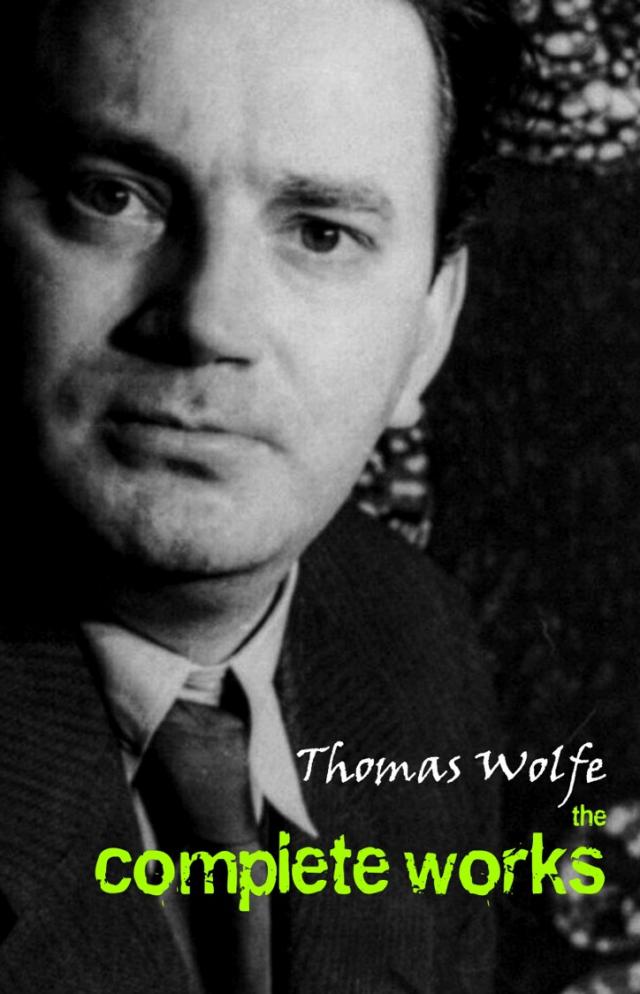
Thomas Wolfe, page 79


The old earth went floating past then in that first gaunt light of the morning, and it seemed to be the face of time itself, and the noise the train made was the noise of silence. They were fixed there in that classic design of time and silence. The engine smoke went striding out upon the air, the old earth—field and wood and hill and stream and wood and field and hill—went stroking, floating past with a kind of everlasting repetitiveness, and the train kept making on its steady noise that was like silence and forever—until it almost seemed that they were poised there in that image of eternity forever—in moveless movement, unsilent silence, spaceless flight.
All of the noises, rhythms, sounds and variations of the train seemed to belong to all the visions, images, wild cries and oaths and songs and haunting memories of the night before, and now the train itself seemed united to this infinite monotone of silence, and the boy felt that this land now possessed his life, that he had known it forever, and could now think only with a feeling of unbelief and wonder that yesterday—just yesterday—he had left his home in the far mountains and now was stroking eastward, northward towards the sea.
And against the borders of the East, pure, radiant, for the first time seen in the unbelievable wonder of its new discovery, bringing to all of us, as it had always done, the first life that was ever known on this earth, the golden banner of the day appeared.
[¬]
VI
In morning sunlight on a hospital porch, five flights above the ground, an old dying spectre of a man was sitting, looking mournfully out across the sun-hazed sweep of the city he had known in his youth. He sat there, a rusty, creaking hinge, an almost severed thread of life, a shockingly wasted integument of skin and bone, of which every fibre and sinew was almost utterly rotted out, consumed and honey-combed by the great plant of the cancer which flowered from his entrails and had now spread its fibrous roots to every tissue of his life. Everything was gone: everything was wasted from him: the face was drawn tight and boney as a beak, the skin was clean, tinged with a fatal cancerous yellow, and almost delicately transparent. The great thin blade of nose cut down across the face with knife-like sharpness and in the bony, slanting, almost reptilian cage-formation of the skull, the smallish cold-gray-green eyes were set wearily, with a wretched and enfeebled dullness, out across the great space of the city which swept away and melted at length into the sun-hazed vistas of October.
Nothing was left but his hands. The rest of the man was dead. But the great hands of the stonecutter, on whose sinewy and bony substance there was so little that disease or death could waste, looked as powerful and living as ever. Although one of his hands—the right one—had been stiffened years before by an attack of rheumatism, they had lost none of their character of power and massive shapeliness.
In the huge shapely knuckles, in the length and sinewy thickness of the great fingers—which were twice the size of an ordinary man’s—and in the whole length and sinewy contour of the hand, there was a quality of sculptural design which was as solid and proportionate as any of the marble hands of love and grace which the stonecutter had so often carved upon the surface of a grave-yard monument.
Thus, as he sat there now, staring dully out across the city, an emaciated and phantasmal shadow of a man, there was, in the appearance of these great living hands of power (one of which lay with an enormous passive grace and dignity across the arm of his chair and the other extended and clasped down upon the handle of a walking stick), something weirdly incongruous, as if the great strong hands had been unnaturally attached to the puny lifeless figure of a scarecrow.
Now, wearily, desperately, the old enfeebled mind was trying to grope with the strange and bitter miracle of life, to get some meaning out of that black, senseless fusion of pain and joy and agony, that web that had known all the hope and joy and wonder of a boy, the fury, passion, drunkenness, and wild desire of youth, the rich adventure and fulfilment of a man, and that had led him to this fatal and abominable end.
But that fading, pain-sick mind, that darkened memory could draw no meaning and no comfort from its tragic meditation.
The old man’s land of youth was far away in time, yet now only the magic lonely hills of his life’s journey, his wife’s people, seemed sorrowful, lonely, lost, and strange to him. Now he remembered all places, things, and people in his land of youth as if he had known them instantly and forever!
Oh, what a land, a life, a time was that—that world of youth and no return. What colors of green-gold, magic, rich plantations, and shining cities were in it! For now when this dying man thought about this vanished life that tragic quality of sorrow and loneliness had vanished instantly. All that he had read in books about old wars seemed far and lost and in another time, but when he thought about these things that he had known as a boy, he saw them instantly, knew them, breathed them, heard them, felt them, was there beside them, living them with his own life. He remembered now his wife’s people!—tramping in along the Carlisle Pike on that hot first morning in July, as they marched in towards Gettysburg. He had been standing there with his next older brother Gil, beside the dusty road, as they came by.
And he could see them now, not as shadowy, lost, phantasmal figures of dark time, the way they were in books; he saw them, heard them, knew them again as they had been in their shapeless rags of uniforms, their bare feet wound in rags, their lank disordered hair, sometimes topped by stove-pipe hats which they had looted out of stores.
“God!” the old man thought, wetting his great thumb briefly, grinning thinly, as he shook his head, “What a scare-crow crew that was! In all my days I never saw the like of it! A bum-looking lot, if ever there was one!—And the bravest of the brave, the finest troops that ever lived!”—his mind swung upward to its tide of rhetoric—“Veterans all of them, who had been through the bloodiest battles of the war, they did not know the meaning of the word ‘fear,’ and they would have gone into the valley of death, the jaws of hell, at a word from their Commander!” His mind was alive again, in full swing now, the old voice rose and muttered on the tides of rhetoric, the great hand gestured, the cold-gray, restless eyes glared feverishly about—and all of it began to live for him again.
He remembered how he and Gil had been standing there beside the road, two barefoot farmer boys, aged thirteen and fifteen, and he remembered how the rebels would halt upon their march, and shout jesting remarks at the two boys standing at the road. One shouted out to Gil:
“Hi, there, Yank! You’d better hide! Jeb Stuart’s on the way an’ he’s been lookin’ fer you!”
And Gil, older, bolder, more assured than he, quick-tempered, stubborn, fiercely partisan, had come back like a flash:
“He’ll be lookin’ fer you when we get through with you!” said Gil and the rebels had slapped their ragged thighs and howled with laughter, shouting at their crestfallen, grinning comrade:
“’Y, God! I reckon you’ll be quiet now! He shore God put it on ye that time!”
And he was there beside his brother, seeing, hearing, living it again, as he remembered his strange first meeting with the Pentland tribe, the haunting miracle of that chance meeting. For among that ragged crew he had first seen his wife’s uncle, the prophet, Bacchus Pentland, and he had seen him, heard him that hot morning, and had never been able to forget him, although it would be twenty years, after many strange turnings of the roads of destiny and wandering, before he was to see the man again, and know his name, and join together the two halves of fated meeting.
Yes, there had been one among the drawling and terrible mountaineers that day who passed there on that dusty road, and paused, and talked, and waited in the heat, one whose face he had never been able to forget—one whose full, ruddy face and tranquil eyes were lighted always by a smile of idiot and beatific saintliness, whose powerful fleshy body gave off a stench that would have put a goat to shame, and who on this account was called by his jesting comrades, “Stinking Jesus.” Yes, he had been there that morning, Bacchus Pentland, the fated and chosen of God, the supernatural appearer on roads at nightfall, the harbinger of death, the prophet, chanting even then his promises of Armageddon and the Coming of the Lord, speaking for the first time to the fascinated ears of those two boys, the full, drawling, unctuous accents of the fated, time-triumphant Pentlands.
They came, they halted in the dust before the two young brothers, the lewd tongues mocked and jested, but that man of God, the prophet Bacchus Pentland, was beautifully unmoved by their unfaith, and chanted, with a smile of idiot beatitude, his glorious assurances of an end of death and battle, everlasting peace:
“Hit’s a comin’!” cried the prophet with the sweet purity of his saintly smile. “Hit’s a comin’! Accordin’ to my figgers the Great Day is almost here! Oh, hit’s a comin’, boys!” he sweetly, cheerfully intoned, “Christ’s kingdom on this airth’s at hand! We’re marchin’ in to Armageddon now!”
“Hell, Back!” drawled one, with a slow grin of disbelief. “You said the same thing afore Chancellorsville, an’ all I got from it was a slug of canister in my tail!”—and the others slapped their ragged thighs and shouted.
“Hit’s a comin’!” Bacchus cried, with a brisk wink, and his seraphic smile, unmoved, untouched, by their derision. “He’ll be here a-judgin’ an’ decreein’ afore the week is over, settin’ up His Kingdom, an’ sortin’ us all out the way it was foretold—the sheep upon His right hand an’ the goats upon His left.”
“An’ which side are you goin’ to be on, Back, when all this sortin’ starts?” one drawled with evil innocence. “Are you goin’ to be upon the sheep-side or the goat-side?” he demanded.
“Oh,” cried Bacchus cheerfully, with his seraphic smile, “I’ll be upon the sheep-side, brother, with the Chosen of the Lord.”
“Then, Back,” the other slowly answered, “you’d shore God better begin to smell a whole lot better than you do right now, for if the Lord starts sortin’ in the dark, Back, He’s goin’ to put you where you don’t belong—He’ll have you over thar among the goats!”—and the hot brooding air had rung then with their roars of laughter. Then a word was spoken, an order given, the ragged files trudged on again, and they were gone.
Now this was lost, a fume of smoke, the moment’s image of a fading memory, and he could not say it, speak it, find a word for it—but he could see that boy of his lost youth as he sat round the kitchen table with the rest of them. He could see his cold-gray, restless, unhappy eyes, the strange, gaunt, almost reptilian conformation of his staring face, his incredibly thin, blade-like nose, as he waited there in silence, looking uneasily at the others with his cold-gray, shallow, most unhappy eyes. And the old man seemed to be the spy of destiny, to look at once below the roofs of a million little houses everywhere and on the star-shone, death-flung mystery of the silent battlefield.
He seemed to be a witness of the secret weavings of dark chance that threads our million lives into strange purposes that we do not know. He thought of those dead and wounded men upon the battlefield whose lives would touch his own so nearly, the wounded brother that he knew, the wounded stranger he had seen that day by magic chance, whom he could not forget, and whose life, whose tribe, in the huge abyss and secret purpose of dark time would one day interweave into his own.
Oh, he could not find a word, a phrase to utter it, but he seemed to have the lives not only of those people in him, but the lives of millions of others whose dark fate is thus determined, interwove, and beyond their vision or their knowledge, foredone and made inevitable in the dark destiny of unfathomed time. And suddenly it seemed to him that all of it was his, even as his father’s blood and earth was his, the lives and deaths and destinies of all his people. He had been a nameless atom in the great family of earth, a single, unknown thread in the huge warp of fate and chance that weaves our lives together and because of this he had been the richest man that ever lived; the power, grandeur, glory of this earth and all its lives of men were his.
And for a moment he forgot that he was old and dying, and pride, joy, pain, triumphant ecstasy that had no tongue to utter it rose like a wordless swelling pæan in his throat, because it seemed to him that this great familiar earth on which his people lived and wrought was his, that all the mystery, grandeur and beauty in the lives of men were his, and that he must find a word, a tongue, a door to utter what was his, or die!
How could he say it! How could he ever find a word to speak the joy, the pain, the grandeur bursting in the great vine of his heart, swelling like a huge grape in his throat—mad, sweet, wild, intolerable with all the mystery, loneliness, wild secret joy, and death, the ever-returning and renewing fruitfulness of the earth!
A cloud-shadow passed and left no light but loneliness on the massed green of the wilderness! A bird was calling in a secret wood! And there was something going, coming, fading there across the sun—oh, there was something lonely and most sorrowful, his mother’s voice, the voices of lost men long, long ago, the flowing of a little river in the month of April—and all, all of it was his!
A man had passed at sunset on a lonely road and vanished unknown years ago! A soldier had toiled up a hill at evening and was gone! A man was lying dead that day upon a bloody field!—and all, all, all of it was his!
He had stood beside a dusty road, feet bare, his gaunt boy’s face cold-eyed, staring, restless, and afraid. The ragged jesting rebels passed before him in the dusty heat, the huge drowse and cricketing stitch of noon was rising from the sweet woods and nobly swelling, fertile fields of Pennsylvania and all, all, all of it was his!
A prophet passed before him in the road that day with the familiar haunting unction of an unmet, unheard tribe; a wounded prophet lay that night below the stars and chanted glory, peace, and Armageddon; the boy’s brother lay beside the prophet bleeding from the lungs; the boy’s people grimly waited all night long in a little house not fourteen miles away; and all, all, all of it was his!
Over the wild and secret earth, the lonely, everlasting, and unchanging earth, under the huge tent of the all-engulfing night, amid the fury, chaos, blind confusions of a hundred million lives, something wild and secret had been weaving through the generations, a dark terrific weaving of the threads of time and destiny.
But it had come to this: an old man dying on a porch, staring through the sun-hazed vistas of October towards the lost country of his youth.
This was the end of man, then, end of life, of fury, hope, and passion, glory, all the strange and bitter miracle of chance, of history, fate, and destiny which even a stonecutter’s life could include. This was the end, then:—an old man, feeble, foul, complaining and disease-consumed who sat looking from the high porch of a hospital at the city of his youth. This was the sickening and abominable end of flesh, which infected time and all man’s living memory of morning, youth, and magic with the death-putrescence of its cancerous taint, and made us doubt that we had ever lived, or had a father, known joy: this was the end, and the end was horrible in ugliness. At the end it was not well.
On the last morning when his sons came, Gant was there on the high porch of the hospital, among the other old men who were sitting there. All of the old men looked very feeble, shrunk, and wasted, their skins had the clear and frail transparency that men get in hospitals, and in the bright tremendous light of morning and October, the old men looked forlorn.
Some looked out wearily and vacantly across the sun-hazed vistas of the city, with the dull and apathetic expression of men who are tired of pain and suffering and disease, and who wish to die. Others, who were in a state of convalescence after operations, looked out upon the sun-lit city with pleased, feeble smiles, awkwardly holding cigars in their frail fingers, putting them in their mouths with the uncertain and unaccustomed manner which a convalescent has, and looking up slowly, questioningly, with a feeble and uncertain smile into the faces of their relatives, wives, or children, as if to ask if it could really be true that they were going to live instead of die.
Their smiles and looks were pitiful in their sense of childish trust, of growing hopefulness, of wondering disbelief, but there was something shameful in them, too. In these feeble smiles of the old men there was something pleased and impotent, as if they had been adroitly castrated in the hospital, and shorn of their manhood. And for some reason, one felt suddenly a choking anger and resentment against some force in life which had betrayed these old men and made them impotent—something unspeakably ruthless, cruel, and savage in the world which had made these old and useless capons. And this anger against this unknown force suddenly took personal form in a blind resentment against doctors, nurses, internes, and the whole sinister and suave perfection of the hospital which, under glozing words and cynical assurances, could painlessly and deftly mutilate a living man.
The great engine of the hospital, with all its secret, sinister, and inhuman perfections, together with its clean and sterile smells which seemed to blot out the smell of rotting death around one, became a hateful presage of man’s destined end. Suddenly, one got an image of his own death in such a place as this—of all that death had come to be—and the image of that death was somehow shameful. It was an image of a death without man’s ancient pains and old gaunt aging—an image of death drugged and stupefied out of its ancient terror and stern dignities—of a shameful death that went out softly, dully in anesthetized oblivion, with the fading smell of chemicals on man’s final breath. And the image of that death was hateful.
Thus, as Gant sat there, his great figure wasted to the bone, his skin yellow and transparent, his eyes old and dead, his chin hanging loose and petulant, as he stared dully and unseeingly out across the great city of his youth, his life seemed already to have been consumed and wasted, emptied out into the void of this cruel and inhuman space. Nothing was left, now, to suggest his life of fury, strength and passion except his hands. And the hands were still the great hands of the stone-cutter, powerful, sinewy, and hairy as they had always been, attached now with a shocking incongruity to the wasted figure of a scarecrow.