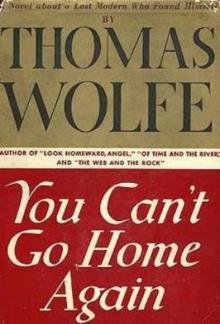
Thomas Wolfe, page 532
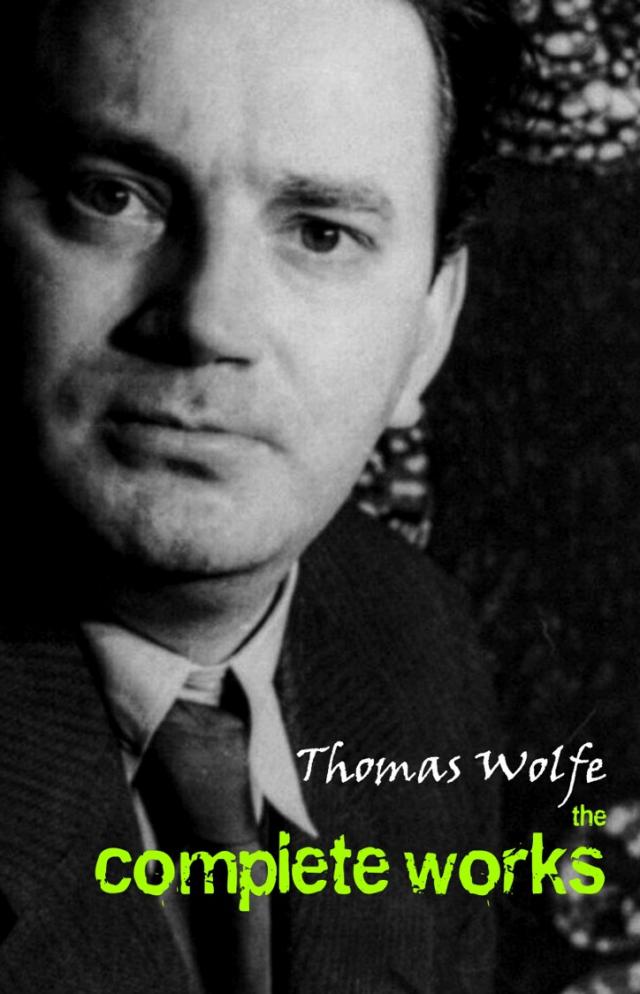


Even in 1935 when, after an absence of almost five years, I saw the country again, and for the first time under the regime of Adolph Hitler, the evidences of this noble enthusiasm, now submerged and mutilated, were apparent in the most touching way. It has been said by some people that there are no more good books published in Germany, because good books can no longer be published or read. This is not true, as so many things one reads about Germany today are not true. And about Germany today we must be very true. And the reason that we must be very true is that the thing we are against is false: we cannot turn the other cheek to wrong, but also we cannot be wrong about wrong. We cannot meet wrong with wrong: we must be right about it. And we cannot meet lies and falsehood with lies and falsehood, although there are people who argue that we must. So it is not true to say that good books can no longer be published in Germany. And because it is not true, the tragedy of Germany, and the survival of the great German spirit, even in the devious and distorted ways in which it does now manifest itself, is more movingly evident than it would be if it were true. Good books are still published where the substance and material of good books does not in any way controvert or either openly or by implication criticize the present regime. It would be simply foolish and stupid to assert that any good book must so controvert or criticize the present regime, just because it is a good book.
For all these reasons, the eagerness, the curiosity, and the enthusiasm of Germans for the books which they are still allowed to read has been, if anything, movingly intensified. Their eagerness to find out what is going on in the world, what is being written and published outside of Germany, the generous enthusiasm for such American writing as they are allowed to read, is as overwhelming as it is pathetic. One might liken the survival of the German spirit, under these conditions, to that of a man dying of thirst in a dry land, gulping greedily at a flask of water; or to a man who is drowning, clutching desperately at the floating spar of his own wrecked ship.
Everywhere about me, as time went on during that spring and summer of 1935, I saw the evidences of this dissolution, this shipwreck of a great spirit, this miasmic poison that sank like a pestilential fog through the very air, tainting, sickening, blighting with its corrosive touch, through fear, pressure, suppression, insane distrust, and spiritual disease, the lives of everyone I met. It was, and was everywhere, as invisible as a plague, and as unmistakable as death; it sank in on me through all the golden singing of that May, until at last I felt it, breathed it, lived it, and knew it for the thing it was.
I returned to Germany again for the last time perhaps that I shall ever be allowed to visit or to see that magic land again, in 1936.
This time, the welcome that I got was even greater than it had been the year before. My second book had just been published; it had received a great reception: now everywhere I went there were people who knew my work. But something had gone out of life for me.
It was the season of the great Olympic Games, and every day I went to the Stadium in Berlin. And, just as that year of absence had marked the evidence of a cruel and progressive dissolution in the lives of all the people I had known, so it had also marked the overwhelming evidence of an increased concentration, a stupendous organization, a tremendous drawing together and ordering, in the vast collective power of the whole land. And as if these Games had been chosen as a symbol of this new collected might, the means of showing to the world in concrete terms what this new power had come to be, it seemed that every energy and strength in the whole country had been collected and disciplined to this end. It is probable that no more tremendous demonstration has been known in modern times: the Games were no longer Games, no longer a series of competitive exercises to which the nations of the world had sent their chosen teams. The Games were an orderly and overwhelming demonstration in which the whole nation had been schooled, and in which the whole nation took a part.
No one who ever witnessed that tremendous demonstration will ever forget it. In the sheer pageantry of the occasion, the Games themselves were overshadowed. But the great organizing strength and genius of the German people, which has been used so often to such noble purpose, had never been more thrillingly displayed than it was now. There had never been in the whole history of the Games, such complete and perfect preparation, and such calm and ordered discipline.
With no past experience in such affairs, the German people had constructed a mighty stadium which was not only the most beautiful, but the most perfect in its design and purpose that any nation has designed in modern times.
And all the attendant and accessory elements of this great plant—the swimming pools, the great halls, and the lesser stadia—had all been laid out and designed with the same cohesion of beauty and of use.
The organization was superb. Day after day enormous crowds, such as no other city in modern times has had to cope with, and such as would certainly have congested and maddened the traffics of New York, and all its transportational facilities, were handled with a quietness, an order, and a speed that was astounding.
The daily spectacle was overwhelming in its beauty and magnificence. From one end of Berlin to another, from the Lustgarten to the Brandenburger Tor, along the whole broad sweep of Unter den Linden, through the vast alleys and avenues of the faery green Tiergarten, out through the great West of Berlin to the very portals of the Stadium, the town was a thrilling pageantry of royal banners—not merely endless yards of looped-up bunting, but banners fifty feet in height, such as might have graced the battle tent of some great emperor. It was a thrilling tournament of color that caught the throat, and that in its massed splendor, and grand dignity, made all the gaudy decorations of our own Worlds’ Fairs, inaugurations, great parades, look like a scheme of shoddy carnivals in comparison.
And all through the day, from morning on, Berlin became a mighty Ear, attuned, attentive, focused, on the Stadium. From one end of the city to the other, the air became a single voice. The green trees along the Kurfürstendamm began to talk: out of the viewless air, concealed and buried in ten thousand trees, a voice spoke to four million people from the Stadium—and for the first time in his life, a Yankee ear had the strange adventure of hearing the familiar terms of track and field translated in the tongue that Goethe used. He would be informed now that the Vorlauf would be run—and now the Zwischenlauf—at length the Endlauf—and the winner: Owens—Oo—Ess—Ah.
Meanwhile, through those tremendous banner-laden ways, the crowds thronged ceaseless all day long. From end to end the great wide promenade of Unter den Linden was solid with a countless horde of patient, tramping German feet. Fathers, mothers, children, young folk, old, the whole material of the nation was there from every corner of the land, trudged wide-eyed, full of wonder, past the marvel of those ceaseless banner-laden ways from morn to night.
And in between one saw the glint of foreign faces: the dark features of the Frenchman or Italian, the ivory grimace of the Jap, the straw hair and blue eyes of the Swede, the bright stabs of color of Olympic jackets, the big Americans, natty in straw hats, blue coats crested with the Olympic seal, and white flannels: and other teams from other nations, with gay and jaunty colors of their own.
And there were great displays of marching men, sometimes ungunned but rhythmic, great regiments of brown shirts swinging through the streets; again, at ease, young men and laughing, talking with each other, long lines of Hitler’s bodyguards, black-uniformed and leather-booted, the Schutz-Staffel men, stretching in unbroken lines from the Leader’s residence in the Wilhelmstrasse up to the arches of the Brandenburger Tor; then suddenly the sharp command, and instantly, unforgettably, the liquid smack of ten thousand leather boots as they came together, with the sound of war.
By noon, all of the huge approaches to the Games, that enchanted laneway that the Leader would himself take from the Wilhelmstrasse to the great Stadium, miles away, were walled in by troops, behind which patient, dense, incredible, the masses of the nation waited day by day.
And if the inside of the Stadium was a miracle of color, structure, planned design, the outside, that enormous mass of people waiting, waiting, was a memory one could not forget. All had been planned and shaped to this triumphant purpose, maybe; but the people—they had not been planned. They just stood there and waited day by day—the poor ones of the earth, the humble ones of life, the workers and the wives, the mothers and the children of the land. They were there because they had not money enough to buy the magic little cardboard square that would have given them a place within the magic ring. They were there for just one purpose—to wait from morn to night for just two brief and golden moments of the day: the moment when the Leader came, the moment when he went.
And at last he came: and something like a wind across a field of grass was shaken through that crowd, and from afar the tide rolled up with him, in which was born the hope, the voice, the prayer of the land. And Hitler came by slowly in a shining car, erect and standing, moveless and unsmiling, with his hand upraised, palm outward, not in Nazi-wise salute, but straight up, with such blessing and such gesture that the Buddha or Messiahs use.
[¬]
PLAYS
thomas wolfe
THE MOUNTAINS
A Play in One Act
The University of North Carolina Press, Pat M. Ryan, ed., 1970
O the Maountains, the Maountains,
They styarve a man, they styarve a man.
They grin, like sin,
They pin you in,
Till you go out and kyarve a man.
doris halman
The 47 Varieties (1922)
[The text follows the first edition.]
characters
weaver, a mountain doctor
richard, his son
laura, his daughter
tom weaver, the doctor’s brother
mag weaver, Tom’s Wife
roberts, sam, mountaineers
scene: A Mountain District in the Western Part of North Carolina.
time: The Present; along toward sundown of a day in June.
setting: The living room in the home of Dr. Weaver, a substantial, comfortable country dwelling. So far as a room may have atmosphere, some subtle reflection of the personalities of fine but opposite people who have lived here, this room is rich in its mixture of strength and sweetness. There is a sober pensive tone almost of melancholy, but not of gloom. This is probably due to the dark walnut panellings and doors, the old oaken furniture with the marble-topped table in the center and the dark-brown papering of the walls which, on even so bright a day as this, shades and softens the light. It is along toward sundown on a day early in June, and the opening of the hearth at the left center has been closed with an iron grating. [Two rifles stand against wall up L. from hearth.] Brassheaded pokers and tongs and a shovel flank the hearth, leaning against the hooks that are driven for this purpose. There is an old-fashioned ornateness about this room which does not prove objectionable, maybe because its essential quality absorbs its small frivolities. The very hooks for the tongs, for instance, have ornate brass knobs and perched athwart the iron match safe on the mantel above is a very knowing looking iron sparrow, inviting the touch on his back that will make him dive like a shot into the box and bring up a match impaled on his long beak. There is a large wooden clock on the mantel and a tall vase at either end flaring out to a fluted rim and decorated with gilt flowers. At the left backstage is the entrance opening to a hall which runs through the house. Across this hall may be seen a sofa with a hat rack and a mirror above. The entrance to the porch is through this hall and a corner of the porch can be seen through the double windows which are at the center and right backstage. A low-hanging pine bough comes down before the window. Dr. Weaver’s desk is at the right upstage; it is a high old walnut desk.
Lower down right is a bookcase filled with heavy medical-looking volumes. There is a door opening to a closet at the left upstage and hanging over the mantel is the portrait of a woman, frail and extraordinarily beautiful, dressed in the manner of thirty years ago. The floor is carpeted with a fine old faded rug and the marble-topped table in the center is strewn with books and papers. Comfortable looking arm chairs are grouped around the table. Through the window at the back may be seen a stretch of green valley land and reaching across in the distance a panorama of great wooded mountains, spotted with the passing of clouds between them and the sun, and covered with a blue haze which deepens like a heavy veil on the most distant peaks. In the extreme background, and isolated from the other mountains, is a crag, a freak of nature’s architecture, which at this distance resembles strikingly the profile of an old, hook-nosed, sardonically grinning man. The view could not be called “peaceful.” It is mighty in its great repose and full of power and quiet depth.
Laura comes up through the hall and enters the room. She is a small, beautifully moulded girl of twenty-two with dark mobile features and a flashing crown of brown hair. She goes over to the table and absently re-arranges the books, moves restlessly to the window and looks out for a moment then returns to the hearth, where she stands for a moment gazing at the portrait. She drums nervously on the mantel with her fingers and returns to the table and seats herself there. She selects a book at random and thumbs the pages indifferently. Scarcely is she seated when Richard appears outside the window and enters the hall. He carries a stem of laurel in his hand which he tosses with his cap on the sofa. Richard is of medium height and slight figure. He moves with a swift, erect sureness that gives authority and dignity to his bearing. His face is thin, but its features are strong and finely drawn, his eyes are dark and brooding and set far back in his head, his movements are quick and nervous, and when he talks he uses his whole body. His speech may be slow and thoughtful, or it may be staccato in its rush, one word fairly snapping at the heels of another, the while he is running his hands in his pockets or jerking them out again with lightning-like rapidity. He is a talkative, imaginative young man, given to boomerang speculations which end where they start, too often, and return to plague their author. Restraint, compromise, or the path generally called “the middle way” are held in contempt and disdain by Richard. He would tell you that on the level of a principle there can be no compromise, he believes that there is no middle way,—he can visualize only two forces in life;—a Spirit that seeks truth and one that denies it. Life to him means a conflict between these two. This is dualism, if you like. Richard knows of only one way to absorb his negations; that is to forget them and conquer them,—or be conquered. He wants to be either a splendid success or an impressive failure, and he is bound to be one or the other; for one has only to look at this boy to know that he would fit a respectable mediocrity no better than a square peg a round hole. Older men would probably say that he is fine but foolish,—in short, an “idealist.” He could take fire at an idea and burn with such a steady flame that it might consume him. He can visualize evil or good as forces in as intense and tangible a form as a mystic of the middle ages; this requires imagination, and its fusing spirit runs like a flame through all the processes of his inner life.
As a man of medicine and a scientist his possibilities are incalculable. Most of the classmates who have recently graduated from medical college with him will go out and be fine, honest gentlemen, and a credit to their profession,—steady, earnest and useful men. But from Richard you can expect something more than this. He will tell you that he can see God through a microscope and, without his telling you, you would know he can see beauty and unity in the vast things of Nature,—or perhaps, something malignant and evil there. He has the capacity for work and yet, time and again, the things his classmates sweated to know came to him in one blinding flash of light. As he grows older and wiser he will use this same quality on men, and much of the beauty and the tragedy and the mystery in the hearts of men will be revealed to his deeper insight, to thrill and exalt him. It has been his fate, and it will continue to be his lot to struggle with the Angel of Vision, but from that uneven contest may emerge, if nothing destructive happens, a spirit that can look serenely through the rags of the world about him and still see that which is real and eternal. If this seems too eulogistic we can only reply that it fails in adequately conveying the fineness of Richard.
He stands in the doorway a moment mopping his brown face with a handkerchief and dusting the trousers of his rough grey tweed. As he enters the room Laura rises to meet him and we see he is very little the taller; there is in him both an elusive fineness of bearing and mould that identifies them as brother and sister.
laura: Oh, you, Dick?
richard: Hello. Is pa home yet?
laura [rises]: He went to Beetree early this morning to see Ben Weathers. (She looks out of the window). [Turns to right]. He ought to be here now. There’s no telling, though, Pa keeps going from morning to night. A country doctor has a hard time, Dick.
richard [Dick to chair L.]: I suppose I’ll be initiated soon. [1 step down stage.]
laura: Yes. He has more than he can do. Pa is getting old, Dick. [Two steps forward.] Have you noticed? (After a moment.) [Down to table R.] But where have you been all day? I waited dinner an hour for you.
richard: I visited my old friend.
laura: Who’s that?
richard: Bald Pate. (He moves to the window and looks at the peak.)
laura: Doubletop’s much prettier. (Laura goes to window.)
richard: From here, you mean. (Goes to window.) Bald Pate is my only friend among them. The rest are a lot of sneaking hypocrites pretending to be soft and green and waiting a chance to grind you down. [Comes down to chair R.]
laura: You’re the same as you always were, Dick—about the mountains. (Turns to window.)
richard: They hem you in and hold you and never let you go.