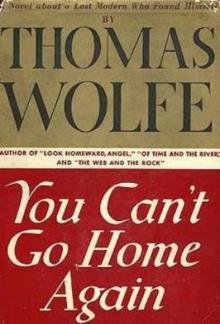
Thomas Wolfe, page 556
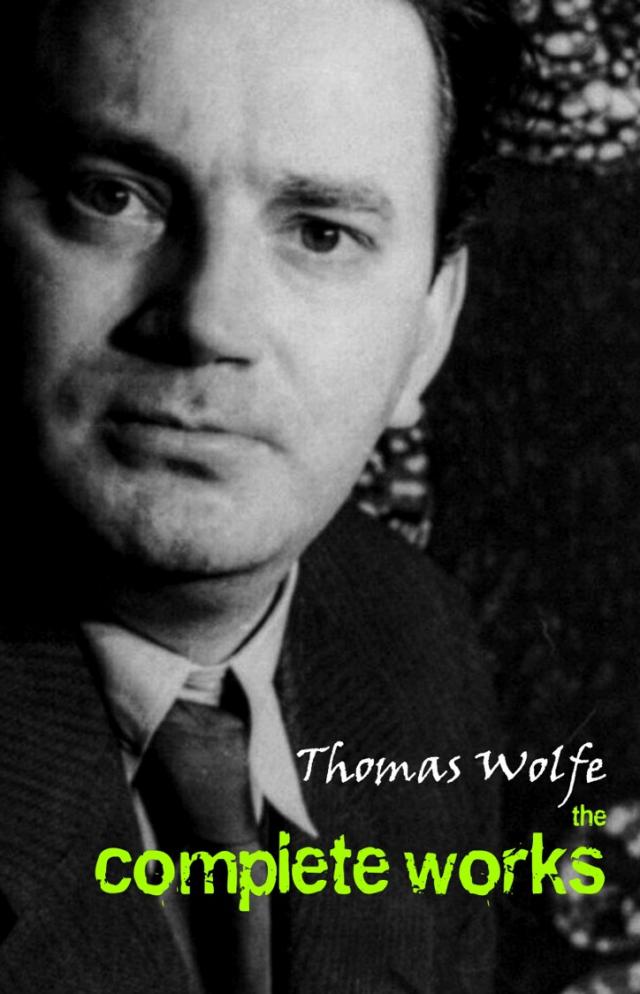


The quality of my memory is characterized, I believe, in a more than ordinary degree by the intensity of its sense impressions, its power to evoke and bring back the odors, sounds, colors, shapes, and feel of things with concrete vividness. Now my memory was at work night and day, in a way that I could at first neither check nor control and that swarmed unbidden in a stream of blazing pageantry across my mind, with the million forms and substances of the life that I had left, which was my own, America. I would be sitting, for example, on the terrace of a café watching the flash and play of life before me on the Avenue de l’Opéra and suddenly I would remember the iron railing that goes along the board walk at Atlantic City. I could see it instantly just the way it was, the heavy iron pipe; its raw, galvanized look; the way the joints were fitted together. It was all so vivid and concrete that I could feel my hand upon it and know the exact dimensions, its size and weight and shape. And suddenly I would realize that I had never seen any railing that looked like this in Europe. And this utterly familiar, common thing would suddenly be revealed to me with all the wonder with which we discover a thing which we have seen all our life and yet have never known before. Or again, it would be a bridge, the look of an old iron bridge across an American river, the sound the train makes as it goes across it; the spoke-and-hollow rumble of the ties below; the look of the muddy banks; the slow, thick, yellow wash of an American river; an old flat-bottomed boat half filled with water stogged in the muddy bank. Or again, it would be an American street with all its jumble of a thousand ugly architectures. It would be Montague Street or Fulton Street in Brooklyn, or Eleventh Street in New York, or other streets where I had lived; and suddenly I would see the gaunt and savage webbing of the elevated structure along Fulton Street, and how the light swarmed through in dusty, broken bars, and I could remember the old, familiar rusty color, that incomparable rusty color that gets into so many things here in America. And this also would be like something I had seen a million times and lived with all my life.
I would sit there, looking out upon the Avenue de l’Opéra and my life would ache with the whole memory of it; the desire to see it again; somehow to find a word for it; a language that would tell its shape, its color, the way we have all known and felt and seen it. And when I understood this thing, I saw that I must find for myself the tongue to utter what I knew but could not say. And from the moment of that discovery, the line and purpose of my life was shaped. The end toward which every energy of my life and talent would be henceforth directed was in such a way as this defined. It was as if I had discovered a whole new universe of chemical elements and had begun to see certain relations between some of them but had by no means begun to organize the whole series into a harmonious and coherent union. From this time on, I think my efforts might be described as the effort to complete that organization, to discover that articulation for which I strove, to bring about that final coherent union. I know that I have failed thus far in doing so, but I believe I understand pretty thoroughly just where the nature of my failure lies, and of course my deepest and most earnest hope is that the time will come when I will not fail.
At any rate, from this time on the general progress of the three books which I was to write in the next four and a half years could be fairly described in somewhat this way. It was a progress that began in a whirling vortex and a creative chaos and that proceeded slowly at the expense of infinite confusion, toil, and error toward clarification and the articulation of an ordered and formal structure. An extraordinary image remains to me from that year, the year I spent abroad when the material of these books first began to take on an articulate form. It seemed that I had inside me, swelling and gathering all the time, a huge black cloud, and that this cloud was loaded with electricity, pregnant, crested, with a kind of hurricane violence that could not be held in check much longer; that the moment was approaching fast when it must break. Well, all I can say is that the storm did break. It broke that summer while I was in Switzerland. It came in torrents, and it is not over yet.
I cannot really say the book was written. It was something that took hold of me and possessed me, and before I was done with it—that is, before I finally emerged with the first completed part—it seemed to me that it had done for me. It was exactly as if this great black storm cloud I have spoken of had opened up and, mid flashes of lightning, was pouring from its depth a torrential and ungovernable flood. Upon that flood everything was swept and borne along as by a great river. And I was borne along with it.
There was nothing at first which could be called a novel. I wrote about night and darkness in America, and the faces of the sleepers in ten thousand little towns; and of the tides of sleep and how the rivers flowed forever in the darkness. I wrote about the hissing glut of tides upon ten thousand miles of coast; of how the moonlight blazed down on the wilderness and filled the cat’s cold eye with blazing yellow. I wrote about death and sleep, and of that enfabled rock of life we call the city. I wrote about October, of great trains that thundered through the night, of ships and stations in the morning; of men in harbors and the traffic of the ships.
I spent the winter of that year in England from October until March, and here perhaps because of the homely familiarity of the English life, the sense of order and repose which such a life can give one, my work moved forward still another step from this flood tide chaos of creation. For the first time the work began to take on the lineaments of design. These lineaments were still confused and broken, sometimes utterly lost, but now I really did get the sense at last that I was working on a great block of marble, shaping a figure which no one but its maker could as yet define, but which was emerging more and more into the sinewy lines of composition.
From the beginning—and this was one fact that in all my times of hopelessness returned to fortify my faith in my conviction—the idea, the central legend that I wished my book to express had not changed. And this central idea was this: the deepest search in life, it seemed to me, the thing that in one way or another was central to all living was man’s search to find a father, not merely the father of his flesh, not merely the lost father of his youth, but the image of a strength and wisdom external to his need and superior to his hunger, to which the belief and power of his own life could be united.
Yet I was terribly far away from the actual accomplishment of a book—how far away I could not at that time foresee. But four more years would have to pass before the first of the series of books on which I was now embarked would be ready for the press, and if I could have known that in those next four years there would be packed a hundred lives of birth and death, despair, defeat, and triumph and the sheer exhaustion of a brute fatigue, I do not know whether or not I could have found the power within myself to continue. But I was still sustained by the exuberant optimism of youth. My temperament, which is pessimistic about many things, has always been a curiously sanguine one concerning time, and although more than a year had now gone by and I had done no more than write great chants on death and sleep, prepare countless notes and trace here and there the first dim outlines of a formal pattern, I was confident that by the spring or the fall of the next year my book would somehow miraculously be ready.
So far as I can describe with any accuracy, the progress of that winter’s work in England was not along the lines of planned design, but along this line that I have mentioned—writing some of the sections which I knew would have to be in the book. Meanwhile what was really going on in my whole creative consciousness, during all this time, although I did not realize it at the moment, was this: What I was really doing, what I had been doing all the time since my discovery of my America in Paris the summer before, was to explore day by day and month by month with a fanatic intensity, the whole material domain of my resources as a man and as a writer. This exploration went on for a period which I can estimate conservatively as two years and a half. It is still going on, although not with the same all-absorbing and fanatical intensity, because the work it led to, the work that after infinite waste and labor it helped me wonderfully to define, that work has reached such a state of final definition that the immediate task of finishing it is the one that now occupies my energy and interest.
In a way, during that period of my life, I think I was like the Ancient Mariner who told the Wedding Guest that his frame was wrenched by the woeful agony which forced him to begin his tale before it left him free. In my own experience, my wedding guests were the great ledgers in which I wrote, and the tale which I told to them would have seemed, I am afraid, completely incoherent, as meaningless as Chinese characters, had any reader seen them. I could by no means hope to give a comprehensive idea of its whole extent because three years of work and perhaps a million and a half words went into these books. It included everything from gigantic and staggering lists of the towns, cities, counties, states, and countries I had been in, to minutely thorough, desperately evocative descriptions of the undercarriage, the springs, wheels, flanges, axle rods, color, weight, and quality of the day coach of an American railway train. There were lists of the rooms and houses in which I had lived or in which I had slept for at least a night, together with the most accurate and evocative descriptions of those rooms that I could write—their size, their shape, the color and design of the wallpaper, the way a towel hung down, the way a chair creaked, a streak of water rust upon the ceiling. There were countless charts, catalogues, descriptions that I can only classify here under the general heading of Amount and Number. What were the total combined populations of all the countries in Europe and America? In how many of those countries had I had some personal and vital experience? In the course of my twenty-nine or thirty years of living, how many people had I seen? How many had I passed by on the streets? How many had I seen on trains and subways, in theatres, at baseball or football games? With how many had I actually had some vital and illuminating experience, whether of joy, pain, anger, pity, love, or simple casual companionship, however brief?
In addition, one might come upon other sections under some such cryptic heading as “Where now?” Under such a heading as this, there would be brief notations of those thousands of things which all of us have seen for just a flash, a moment in our lives, which seem to be of no consequence whatever at the moment that we see them, and which live in our minds and hearts forever, which are somehow pregnant with all the joy and sorrow of the human destiny, and which we know, somehow, are therefore more important than many things of more apparent consequence. “Where now?” Some quiet steps that came and passed along a leafy night-time street in summer in a little town down South long years ago; a woman’s voice, her sudden burst of low and tender laughter; then the voices and the footsteps going, silence, the leafy rustle of the trees. “Where now?” Two trains that met and paused at a little station at some little town at some unknown moment upon the huge body of the continent; a girl who looked and smiled from the window of the other train; another passing in a motor car on the streets of Norfolk; the winter boarders in a little boarding house down South twenty years ago; Miss Florrie Mangle, the trained nurse; Miss Jessie Rimmer, the cashier at Reed’s drug store; Dr. Richards, the clairvoyant; the pretty girl who cracked the whip and thrust her head into the lion’s mouth with Johnny J. Jones Carnival and Combined Shows.
“Where now?” It went beyond the limits of man’s actual memory. It went back to the farthest adyt of his childhood before conscious memory had begun, the way he thought he must have felt the sun one day and heard Peagram’s cow next door wrenching the coarse grass against the fence, or heard the street car stop upon the hill above his father’s house at noon; and Earnest Peagram coming home to lunch, his hearty voice in midday greeting; and then the street car going, the sudden lonely green-gold silence of the street car’s absence and an iron gate slamming, then the light of that lost day fades out. “Where now?” He can recall no more and does not know if what he has recalled is fact or fable or a fusion of the two. Where now—in these great ledger books, month after month, I wrote such things as this. Not only the concrete, material record of man’s ordered memory, but all the things he scarcely dares to think he has remembered; all the flicks and darts and haunting lights that flash across the mind of man that will return unbidden at an unexpected moment; a voice once heard; a face that vanished; the way the sunlight came and went; the rustling of a leaf upon a bough; a stone, a leaf, a door.
It may be objected, it has been objected already by certain critics, that in such research as I have here attempted to describe there is a quality of intemperate excess, an almost insane hunger to devour the entire body of human experience, to attempt to include more, experience more, than the measure of one life can hold, or than the limits of a single work of art can well define. I readily admit the validity of this criticism. I think I realize as well as anyone the fatal dangers that are consequent to such a ravenous desire, the damage it may wreak upon one’s life and on one’s work. But having had this thing within me, it was in no way possible for me to reason it out of me, no matter how cogently my reason worked against it. The only way I could meet it was to meet it squarely not with reason, but with life.
It was part of my life; for many years it was my life; and the only way I could get it out of me was to live it out of me. And that is what I did. I have not wholly succeeded in that purpose yet, but I have succeeded better than I at one time dared to hope. And now I really believe that so far as the artist is concerned, the unlimited extent of human experience is not so important for him as the depth and intensity with which he experiences things. I also know now that it is a great deal more important to have known one hundred living men and women in New York, to have understood their lives, to have got, somehow, at the root and source from which their natures came than to have seen or passed or talked with 7,000,000 people upon the city streets. And what finally I should most like to say about this research which I have attempted to describe is this: That foolish and mistaken as much of it may seem, the total quality, end, and impact of that whole experience was not useless or excessive. And from my own point of view, at least, it is in its whole implication the one thing I may have to tell about my experience as a writer which may be of some concrete value to other people. I consider this experience on the whole the most valuable and practical in my whole life thus far as a writer. With all the waste and error and confusion it led me into, it brought me closer to a concrete definition of my resources, a true estimate of my talents at this period of my life, and, most of all, toward a rudimentary, a just-beginning, but a living apprehension of the articulation I am looking for, the language I have got to have if, as an artist, my life is to proceed and grow, than any other thing that has ever happened to me.
I know the door is not yet open. I know the tongue, the speech, the language that I seek is not yet found, but I believe with all my heart that I have found the way, have made a channel, am started on my first beginning. And I believe with all my heart, also, that each man for himself and in his own way, each man who ever hopes to make a living thing out of the substances of his one life, must find that way, that language, and that door—must find it for himself as I have tried to do.
III
When I returned to America in the spring of 1931, although I had three or four hundred thousand words of material, I had nothing that could be published as a novel. Almost a year and a half had elapsed since the publication of my first book and already people had begun to ask that question which is so well meant, but which as year followed year was to become more intolerable to my ears than the most deliberate mockery: “Have you finished your next book yet?” “When is it going to be published?”
At this time I was sure that a few months of steady work would bring the book to completion. I found a place, a little basement flat in the Assyrian quarter in South Brooklyn, and there I went about my task.
The spring passed into the summer; the summer, into autumn. I was working hard, day after day, and still nothing that had the unity and design of a single work appeared. October came and with it a second full year since the publication of my first book. And now, for the first time, I was irrevocably committed so far as the publication of my book was concerned. I began to feel the sensation of pressure, and of naked desperation which was to become almost maddeningly intolerable in the next three years. For the first time I began to realize that my project was much larger than I thought it was. I had still believed at the time of my return from Europe that I was writing a single book, which would be comprised within the limits of about 200,000 words. Now as scene followed scene, as character after character came into being, as my understanding of my material became more comprehensive, I discovered that it would be impossible to write the book I had planned within the limits I had thought would be sufficient.
All of this time I was being baffled by a certain time element in the book, by a time relation which could not be escaped, and for which I was now desperately seeking some structural channel. There were three time elements inherent in the material. The first and most obvious was an element of actual present time, an element which carried the narrative forward, which represented characters and events as living in the present and moving forward into an immediate future. The second time element was of past time, one which represented these same characters as acting and as being acted upon by all the accumulated impact of man’s experience so that each moment of their life was conditioned not only by what they experienced in that moment, but by all that they had experienced up to that moment. In addition to these two time elements, there was a third which I conceived as being time immutable, the time of rivers, mountains, oceans, and the earth; a kind of eternal and unchanging universe of time against which would be projected the transience of man’s life, the bitter briefness of his day. It was the tremendous problem of these three time elements that almost defeated me and that cost me countless hours of anguish in the years that were to follow.