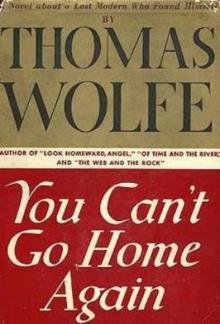
Thomas Wolfe, page 131



For the weariness of flesh was like the weariness a man has after a great burst of love with a potent and adored mistress—the back was drawn in, half-broken, toward his trembling, wrung, depleted loins, his limbs faltered and his fingers shook, his breath came heavily, his body respired slowly in a state of languorous exhaustion, but where the weariness of triumphant love brings to a man a sense of completion, victory, and finality, the weariness of the class brought to him only a feeling of sterility and despair, a damnable and unresting exacerbation and weariness of the spirit, a sense of having yielded up and lost irrevocably into the sponge-like and withdrawing maws of their dark, oily and insatiate hunger, their oriental and parasitic gluttony, all of the rare and priceless energies of creation: he thought with a weary and impotent fury of great plans and soaring ecstasies of hope and ambition—of poems, stories, books which once had swarmed exultantly their cries of glory, joy, and triumph through his brain—and now all this seemed lost and wasted, flung riotously and fruitlessly away into the blind maw of a headless sucking mouth, a dark brainless, obscene and insatiate hunger.
As he looked at them, a horrible memory returned of the great fish which once he had caught in deep-sea water outside Boston harbor: he could feel again the sudden heavy living tug, the wriggling vitality, at the end of 200 feet of line, and then the wet line slipping harshly through his fingers as exultantly he drew the great fish upward to the surface. Then he remembered the sense of loss and disgust and horror when he saw it: it swam upward wriggling heavily in a flail of heavy dying protest, through a thickened murk of greenish water, and he saw that to its brain was fastened some blind horror of the sea, a foul snake-like shape a foot or more in length, a headless, brainless mouth, a blind suck and sea-crawl, a mindless abomination, glued implacably, fastened in fatal suck in one small rim of bloody foam against the brain-cage of the great dying fish. How often, in a mad fury of escape and freedom, it had lashed its brain to bloody froth against some razored edge, some coral stype upon the swarming jungle of the sea, he did not know; but the memory of it had returned a thousand times in abominable waking-sleeping visions of the night to haunt him with its blind and mouthless horror, and now he thought of it again, as they drew in on him their sucking glut of dark insatiate desire.
Their dark flesh had in it the quality of a merciless tide which not only overwhelmed and devoured but withdrew with a powerful sucking glut all rich deposits of the earth it fed upon: they had the absorptive quality of a sponge, the power of a magnet, the end of each class left him sapped, gutted, drained, and with a sense of sterility, loss, and defeat, and in addition to this exhaustion of the mind and spirit, there was added a terrible weariness and frustration of the flesh: the potent young Jewesses, thick, hot, and heavy with a female odor, swarmed around him in a sensual tide, they leaned above him as he sat there at his table, pressing deliberately the crisp nozzles of their melon-heavy breasts against his shoulder, slowly, erotically they moved their bellies in to him, or rubbed the heavy contours of their thighs against his legs; they looked at him with moist red lips through which their wet red tongues lolled wickedly, and they sat upon the front rows of the class in garments cut with too extreme a style of provocation and indecency, staring up at him with eyes of round lewd innocence, cocking their legs with a shameless and unwitting air, so that they exposed the banded silken ruffle of their garters and the ripe heavy flesh of their underlegs.
Thus, to all his weariness of mind, the terror and torment of his spirit, a thousand erotic images of an aroused, but baffled and maddened sensuality, were added: they swarmed around him like the embodiment of all the frustrate hunger, desire, and fury he had come to know in the city, with a terrible wordless evocation of men starving in the heart of a great plantation, of men dying of thirst within sight of a shining spring, with a damnable mockery, a nightmare vision of proud, potent and hermetic flesh, of voluptuous forms in hell, forever near, forever palpable, but never to be known, owned, or touched.
The girls, the proud and potent Jewesses with their amber flesh, schooled to a goal of marriage, skilled in all the teasings of erotic trickery, with their lustful caution and their hot virginity pressed in around him in a drowning sensual tide: with looks of vacant innocence and with swift counter-glances of dark mockery, they pressed upon him, breathing, soft and warm and full, as they cajoled, teased, seduced with look or gesture, questioned trivially, aggressively, uselessly—those with a body, and no mind, intent alone upon seduction spurred on perhaps by some belief that promotion and reward in all the business of life could best be got at in this way; and those with minds and bodies both, intent upon some painful mixture of sharp protest, struggle, and seduction which made erotic musings in their soul: “Oh, but I don’t—ag-gree with you at aw-ull! That’s not the meaning that I saw in it, at aw-ull! I think you’re being very supe-er-fish-al. I don’t ag-gree with you at aw-ull!”—the rich voices, aggrieved, injured, hen-like and sensual, omened with deep undernotes of ripe hysteria, rose and fell with undulant duckings of yolky protest—the rich sensual voices of the Jewesses receiving, giving, returning and withdrawing, rose and fell in curved undulance of yolky hen-clucking protest, with omens of a ripe hysteria. Receiving, clucking, and protesting with their warm hen-feathered cries, they seemed to say, “Oh, come and take me, break me, but I don’t ag-ree with you at aw-ull; Cluck-cluck-cluck-cluck-cluck! Oh, do, oh, don’t, we will, we won’t, but we don’t ag-ree with you at aw-ull!”—the rich injured undulations of aggrieved protest, the omened menace of impending hysteria awoke in an alien spirit a powerful surge of desire and humor, a wave of wild choking laughter mixed with love and lust as one listened to the sensual, aggrieved, hen-clucking protest of their souls.
The Jewish women were as old as nature, and as round as the earth: they had a curve in them. They had gone to the wailing walls of death and love for seven thousand years, the strong convulsive faces of the Jews were ripe with grief and wisdom, and the curve of the soul of the Jewish women was still unbroken. Female, fertile, yolky, fruitful as the earth, and ready for the plow, they offered to the famished wanderer, the alien, the exile, the baffled and infuriated man, escape and surcease of the handsome barren women, the hard varnished sawdust dolls, the arrogant and sterile women, false in look and promise as a hot-house peach, who walked the streets and had no curves or fruitfulness in them. The Jewish women waited with rich yolky cries for him, and the news they brought him, the wisdom that they gave to him was that he need not strangle like a mad dog in a barren dark, nor perish, famished, unassuaged, within the wilderness beside a rusted lance—but that there was still good earth for the plow to cleave and furrow, deep cellars for the grain, a sheath for the shining sword, rich pockets of spiced fertility for all the maddened lunges of desire.
They pressed around him at his table with insistent surge, and he looked at them and saw that they were young; and sometimes they belonged to the whole vast family of the earth: they were like all the young people who had ever lived—they seemed clumsy, and noisy and good, full of hope and loyalty and folly; and sometimes again, it seemed to him that none of them had ever known youth or innocence, that they had been born with old and weary souls, that they were born instructed in the huge dark history of pain, the thousand mad and tortured sicknesses of the soul, and that the only thirst and hunger that they knew, the desire that drove them with an insatiate lust, was for sorrow, grief, and human misery. Had they ever cried into the howling winds at night? Had they ever felt the sharp and tongueless ecstasy of spring, or held their breath at night when great wheels pounded at the rail, or trembled with a vast dark wave of pain, a wordless cry of joy, when they heard ships calling at the harbor’s mouth and thought of new lands in the morning? Or had they always been so old and wise, so full of grief and evil?
The girls pressed in on him their sensual wave, and the boys stood farther off, behind them, waiting, and he saw the dark and furtive glances of the men pass slyly, each to each, in swift final looks of cynical communication. They waited for the women to have done, with a kind of hard and weary patience, an old and knowing agreement, a sense of acceptance, as if they had known for thousands of years that their women would betray them with a Gentile lover, and yet with a kind of triumph, as if they also knew they would regain them and be victorious in the end.
They seemed to have gained from life the terrible patience, the old and crafty skill and caution that come from long enduring of pain: as he looked at them he knew that they would never be wild and drunken, or beat their knuckles bloody on a wall, or lie beaten and senseless in the stews, but he knew that with smooth faces they would decant the bottle for some man who did, and that they would read him quietly to his desperate fate with their dark, mocking, and insatiate eyes. They had learned that a savage word would break no bones and that the wound of betrayal or a misprized love is less fatal than the stroke of the sword, the thrust of the knife: in the years that followed he saw that physically they were, for the most part, incorrupt, old and cautious, filled with skill and safety—that they had lived so long and grown so wise and crafty that their subtile, million-noted minds could do without and hold in dark contempt the clumsy imperfections of a fleshly evil—that they could evoke and live completely in a world of cruel and subtle intuitions, unphrased and unutterable intensities of cruelty, shame, and horror, without lifting a finger or turning a hand. Thus, in these years, as his own mind grew mad and twisted with the insane fabrications of a poisonous jealousy—as it immediately and without a bridge or break translated into terms of literal physical actuality an insane picture of cruelty and horror: of daughters who acted as procurers to their mothers, of sons and husbands going unperturbed to sleep in houses where their sisters, wives, and children lay quilted in the lust and evil abominations of an adulterous love, of calm untelling faces, looks and glances of a childlike purity, an air of goodness, faith and morning innocence throughout, while the whole knowledge of an unspeakable evil trembled in their hearts forever with an obscene and soundless laughter—these abominations of his fancy, this vile progeny which his mad brain translated into literal fact, were probably for the most part only images the cruel and subtile minds of the old, wise, patient Jews had evoked and played with in their complex fantasy; and as he looked at the swarm of dark insistent faces round him at the table, an overwhelming sensation of defeat and desolation drowned his spirit—their dark looks read, and ate, and mocked at him, and yet were full of affection and tenderness as if they loved the food they fed upon: it seemed to him that he alone must die; that he must break his heart and smash his bones, lie beaten, drunken, mashed and senseless in the dives, must wreck his reason, lose his sanity, destroy his talent, and die a mad-dog howling in the wilderness while they—they alone—these old, wise, weary, patient, pain-devouring subtile-minded Jews—endured.
[¬]
LIV
Robert’s mistress had come to town, and Robert asked Eugene to dine with them. In spite of the fact that Robert had talked constantly of his love for Martha, they snapped and snarled at each other throughout the evening. They went to a restaurant on Sixth Avenue in Greenwich Village for dinner. During the course of the meal several people came in whom Robert knew: the moment he saw them he would call sharply to them, or jump up nervously and go to greet them. Then he would bring them back to the table and, in a tone of dogged and sullen intensity, introduce them to Martha, saying: “I want you to meet my wife.” Martha’s face would flush with anger and sullen rage, but she would acknowledge the introduction and mutter a few uncordial words of greeting. As for the people to whom he introduced her, they at first received the news that Martha was his wife with a look of blank stupefaction, managing, at length, to stammer: “B-b-but we didn’t know you were married, Robert! Why didn’t you let some one know about it? When did it happen?”
“About two weeks ago,” he said brusquely, obviously getting a fierce and sullen satisfaction from this absurd lie.
“Where are you living?”
“At the Leopold.”
“Will you be staying there?”
“No, we’re moving out soon.”
“Are you going to live in New York?”
“Yes,” he said doggedly, “we’ve taken an apartment. . . . Going to move in Monday.”
“Why, Robert!” they cried, having now recovered some fluency of speech, “we’re awfully glad to know about this.” And the women with some pretense at cordiality would turn to Martha, saying, “You must come to see us when you’ve settled down,” and the men would wring Robert by the hand, slap him on the back, and dig him in the ribs. It was obvious that Robert derived a fierce and perverse pleasure from his stupid lie, but the girl was in a state of smouldering rage which blazed out at him the moment his friends had gone away. “You damn fool,” she snapped, “what do you mean by telling a lie like that?”
“It’s not a lie,” he said, “it’s the truth. You’re my wife in everything but name!”
“You’re a liar! Take that back! Don’t you believe him,” she said to Eugene, “there’s not a word of truth in what he says. . . . You damned fool!” she blazed out at him. “What do you mean by telling your friends a story like that? Don’t you know they’re going to find out that you lied to them. And then,” she added bitterly, “what are they going to say about me? You never thought of that, did you? Oh, no! You don’t care if you ruin me or not! All you think of is yourself!”
“I don’t care,” he said with a sullen fierceness, “you’re my wife and that’s what I’m going to tell them all!”
“You’re not!”
“I am! I’ll show you if I don’t!”
“I’m not your wife, and you needn’t be so sure I ever will be! I got married once to a sick man, and I’ll think it over a good long time, I assure you, before I get married again to a crazy man! Now, you’d better not be too sure of yourself, Mr. Weaver! You’re not married to me yet by a long shot!”
A bitter quarrel broke out between them: they snarled, snapped, sneered, and wrangled—their voices rose until people at other tables began to look at them and listen curiously, but they paid no attention whatever to any one but themselves. Robert ended the argument suddenly by pushing his chair back from the table, sighing heavily, and saying feverishly and impatiently:
“All right, all right, all right! You’re right! I’m wrong! Only, for God’s sake, shut up and let me have a little peace!” Then they got into a taxi and went back to the hotel. They had a bottle of whiskey and they all went up to Robert’s room, telephoned for ice and ginger ale, and began to drink. It was a little before midnight.
About two o’clock that night, as they sat there, a light, odd step, approaching briskly, came down the corridor and paused outside Robert’s door: then some one rapped lightly and sharply at the door, and with this same movement of an odd, light and exuberant vitality. They looked at one another with the sudden startled look of people who feel the interruption of an intense silence around them—for the Leopold for two hours had been steeped in this silence of sleep, and they now experienced its living and animate presence for the first time. A good many sensations of guilt—all but the real one—flashed through their minds: that they had been drinking and making more noise than they should, and that a guest had complained to the office about them; or that some one had discovered that Robert had a woman in his room, and that, in the interests of hotel decorum, she was to be commanded to leave and go to her own quarters. The rapping at the door was repeated, more brisk and loud. They were all very still, Robert looked at Eugene nervously, remembering, perhaps, the sum of his past errors at the hotel and his precarious standing there.
“You go see who it is,” he said.
Eugene went to the door and opened it. A man—or rather, the wisp, the breath, the fume of what had been a man—stood there: it was a small figure with nothing on its skeleton of fragile bone which was recognizable as living flesh, with only the covering, it seemed, of a parchment-like skin so tightly drawn over the contours of the face and head that the skull widened and flared with an impression of enormous dome-like width and depth above a face so wizened and shrunken that one remembered it later only as a feverish glint of teeth, an unshaved furze of beard, and two blazing flags of red, darkened and shadowed by the sunken depth of the sockets of the eye, where burned a stare of an incredible size and brilliance—that and the whispering ghost of a voice, the final, dominant, and unforgettable impression.
This wraith was clothed, or rather, engulfed, in garments which, although of good cut and quality, it seemed never to have worn before: they swathed it around and fell away in shapeless folds so that the body was as indecipherable among them as a stick, and the neck emerged from a collar through which it seemed the whole figure of the man might have slipped as easily as through a hoop.
And yet the creature was burning with a savage energy which coursed like an electric current through his withered body: it bore him along at a light, odd step, capricious and buoyant as the bobbing of a cork, and it foamed and bubbled in him now as he stood impatiently rapping at the door, and it blazed in his eyes with a corrupt and fatal glee, a mad flaming exuberance, a focal intensity of triumph, joy, and hate.
He entered the room immediately as soon as Eugene opened the door: he went in briskly at his light corky step and immediately said briskly and jovially in his whispering thread of voice: “Good evening! Are we all here? Is every one well? Did some one say something?”—he looked around inquiringly, then, with a disappointed air, continued—“No? I thought some one spoke. Well, then, come in, Mr. Upshaw. Thank you, I will. Won’t you sit down? Yes, indeed!” He seated himself. “Will you have a drink? I should be delighted”—here he took the bottle, poured a stiff shot of whiskey into a glass, and drank it at one gulp. When he had finished, he looked around more quietly until his gaze rested with a kind of evil temperance on his wife: “Hello, Martha,” he said casually and quietly. “How are you?” She did not answer and in a minute he repeated, still with his evil calm but with a more vicious intensity of tone, “Listen, you God-damned bitch! . . . When I ask you a question, you answer. How are you?”