Thomas Wolfe, page 554
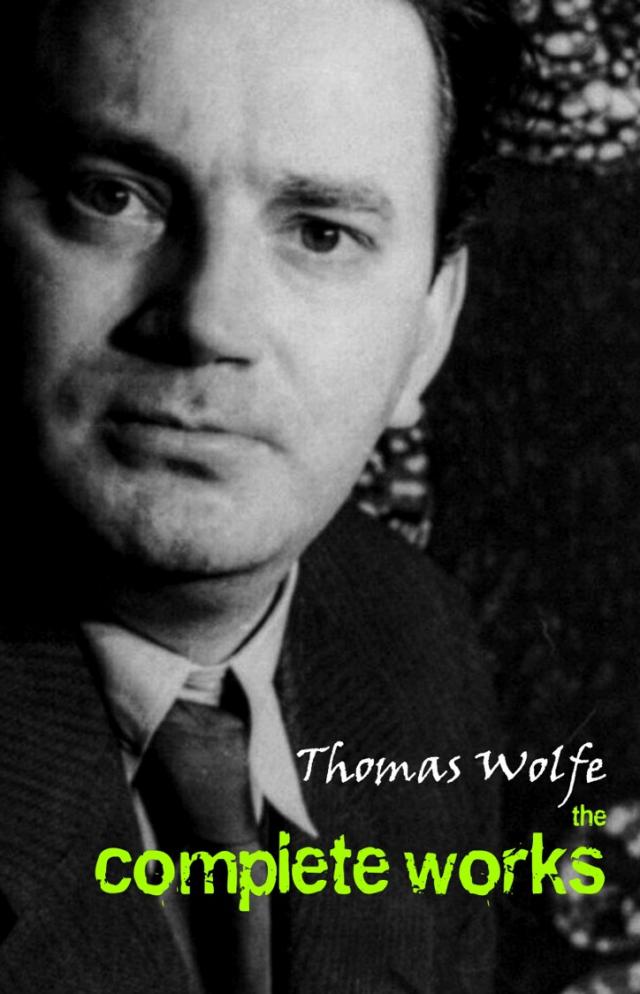


Since last spring the work of The Carolina Playmakers has gone steadily ahead. Shortly before Christmas the third series of plays was produced and the reception given them demonstrated that the work of the Playmakers had lost none of its interest to the students. By way of variety the Playmakers produced in March Oscar Wilde’s three act comedy The Importance of Being Earnest, and the work of the players showed an exceptionally polished technique.
The fourth series of plays has just been produced. The first trip of the Playmakers, taking their wares to the people has just been made. On Friday, May 7, the latest program was given to the people of Greensboro. The new Municipal Theatre in that town was well-filled and the Greensboro News next morning stated conservatively the opinion of the townspeople when it said, “The plays were marked by an exceptional order of dramatic talent.”
Are the students at Chapel Hill writing any plays that are really worth while? Perhaps the comment of Professor Manly, head of the English Department at the University of Chicago, and a distinguished authority on the drama, will answer the question. Several of the plays, which are going to be included in the Playmakers’ first book, were sent to Professor Manly for editing and possible changes in dialogue. After he had finished editing Peggy, a one-act play dealing with the life of the tenant farmer in North Carolina, Mr. Manly penciled in the margin the following: “There are flashes of dialog in this play that remind me of Synge’s best style.” Incidentally a firm of theatrical producers is considering Peggy with a view toward production.
Mr. Koch feels that the time for classing the work in Dakota and North Carolina as an “interesting experiment” has passed. The work and the results of the Playmakers organization is proof of its own success. He looks now for the extension of the work so well begun, to see it spread in time to every hamlet in the state, and to go beyond. He dreams of the day when every township will have its own community theatre, and when that theatre will be the workshop for people who will literally be making their own plays out of their own lives, will all be Playmakers.
Mr. Koch illustrates every day the fact that he and his “Idea” are inseparable. If you visit him at his home he will be “talking shop” to you before he knows it, but to talk shop with a man who believes in his wares to the consuming extent that Mr. Koch does, is a very lively and interesting conversation. He becomes indignant if he hears the individual Playmakers classified as amateurs or the work of the Playmakers as an amateur production. “We’re not amateurs,” he says, “in the sense that our work is amateurish. We have nothing in common with . . .
[¬]
ATTRIBUTIONS
[¬]
TAR HEELS DESPITE DEFEAT OF LAST WEEK AWAIT VIRGINIANS
[The Tar Heel, November 15, 1919]
North Carolina’s football machine suffered a bad attack of carburetor rheumatism last Saturday on Emerson Field and V. M. I. won 29–7. The Great God Dope left the field immediately after the game and his bellows of agony could be heard on the campus until 10 o’clock that night, when he died in Battle Park.
The game was replete with thrilling plays and first class football. The trouble was: V. M. I. held the monopoly.
The fast. . . . . and powerful Carolina backfield ripped through the V. M. I. line and tore around the ends with the speed of the agile steam tractor as it leaps nimbly o’er the hillside.
The battle was friendly fought throughout and the size of the score was at all times in doubt. First Mr. Leach, who attends school at V. M. I., would grab the ball and race 40 yards up the field when Carolina’s unpregnable defence would stiffen and throw him for a loss. Then Mr. Leach would go around end for 15 yards only to run against the same obstacle as before.
Before defense such as this V. M. I. was helpless and was held to a haggardly 29 points.
Seriously, however, the game was a bitter pill, but such doses are often needed. We need our overconfidence well cleaned out. And the game was the best thing that could have happened to our student body and our team.
To be beaten by a team which in its turn has been swamped the week before by N. C. State, an eleven we have trounced, is no easy dose. But it happened. And let there be no mistaking this part. The light cadet team had the upper hand at all stages; they played rings all around us. They deserved to win. The only time our boys recovered from their semi-hypnotic trance was at the beginning of the second half when they received the ball and drove straight through the cadet line for five first downs and a score.
The team is not to be blamed. Overconfidence perhaps played a small part in their defeat. What is more likely however is that the mid-season slump which comes to many teams struck us at this period. And it is exceedingly fortunate that it does come now. The first climax of the season was reached October 23 at Raleigh when, after weeks of strained tension we defeated N. C. State in a grueling contest.
The natural tendency was to relax; the team did this.
Making no excuses for our defeat from the splendid cadet eleven, we are still firm in our contention that with the Carolina team playing as it played N. C. State, the cadets would have bit the dust.
But—we look forward now. Defeat will help our team. They are coming out of their slump and on Turkey Day (this is our prediction), we will see the machine at its highest form.
[¬]
YE WHO HAVE BEEN THERE ONLY KNOW
[The Tar Heel, December 13, 1919]
“On to Richmond!”
Thanksgiving after Thanksgiving daring would rise that challenge, and the day before the game would see an entire student body migrating. Frantic preparations everywhere, pleading letters to dad, wholesale borrowing from everybody. Bonfires and pep and always more pep, with always some wild eyed dervish leading on in split Carolinas. Do you remember how old Henry, and short Bill Jones and Dean Andy used to campaign for weeks to raise capital enough to make the trip on?
When twilight comes, the long train moves slowly out of Carrboro, to University, to Durham and then North the railheads clicking “On to Richmond, On to Richmond, On to Richmond.” Somehow there is an air abroad that catches men’s enthusiasm. From one end of the train to the other, there is feverish delight. A kind of quivering anticipation for the morrow would prevent one from sleep, coiled up on the red plush seats, even if ambitious fellow travelers would permit it. Some ingenious soul has fabricated a palatial couch, and is just about to sink into sleep when the voice of energy cries in his ear. “On to Richmond” and the arm of enthusiasm dumps him upon the floor of the coach. Dopesters run wild while about them an eager bunch find just how the game is going. Hours of sustained revelry steal away the night and gray morning finds old Richmond stealing by. We come to rest beside the James.
Every man makes his own day. Troop up the streets. Stop at the stands and deck yourself in blue and white. Take your own way, but come at last to the Jefferson and there under the columns yell yourself hoarse in a rapt vindication of the worth of a great football team. Sure we were beaten last year and the year before and . . . but never mind that. Today we win.
March in the wild revolutionary mob to the Park. Crush and crunch yourself into the Broad St. stands and then for an hour and a half forget all these little things of life and living. Somehow your very soul is out there with those eleven men, fighting, fighting in the interest of a cause that you feel to be worthy of any sacrifice.
Was the scene for us or against us? Too often against us. And yet while the bitterness of defeat or the flush of victory is vivid. We know that whatever the result the game was worth while. Strength, cleanness, swiftness, all have been dramatized before us.
Supper, the report of the game, speeches in the Murphy from the lobby table, the Lyric, all pass in swift and dazed before a pair of sleep-blurred eyes. How you ever found your car you do not know, or how you tumbled into a berth or curled up on a seat for that sweet sleep that could come at last when all the shouting and tumult had spent itself.
You come back to the Hill now as you came back then. Once again in your memory let flash the vivid scenes that you will never forget. The touchdown with Bill Folger over the line . . . men chanting victory and dancing in serpentine coils . . . Roy Homewood and his tribe arm and arm through the streets . . . the faculty le-hic-ture at the rear of the homebound car . . . and then with the red dawn of a new college day and a new college generation come back across the campus and with that which thou hast in that heavy ragged suitcase of thine give a toast “To the Days that are Gone.”
[¬]
USEFUL ADVICE TO CANDIDATES
[The Tar Heel, February 28, 1920]
Mr. O. Max Gardners’ address to the student body on Wednesday night, marks the beginning of a series of addresses to be made here by all the Democratic candidates for Governor, and the Republicans, also, if they can be brought here. Thus does the University step boldly into the arena of impartial politics and gives the pleasant challenge to these gentlemen to come here and show their wares. Not having had time to prepare our invaluable little booklet: “Handbook of Useful Information to those Gubernatorially Inclined, Who Will Speak at Chapel Hill,” we beg to herewith append a few admonitions that may be useful to them.
1. Remember that you are speaking to a fair-minded, impartial group of men, who have small respect for petty appeals of a partisan nature.
2. Remember that you will be hospitably and courteously received, whether we approve of you or not. It is therefore your own fault if you don’t appear to your best advantage.
3. Tell us something we don’t already know. We will agree quite freely that the Old North State is the peer of them all and that the labor situation is serious. But if you will come boldly forward and exhibit two or three planks out of your platform that shows you have been doing some real thinking on your own part, we will have more respect for you, no matter if we don’t all agree with you.
4. And remember lastly, gentlemen, that you yourself will be either the vindication or condemnation to your claims for the Governorship. We are interested in you, the man; in the evidences of your own individuality and not in your party politics. You find us with minds open, receptive and unprejudiced; in the one brief hour that is yours before us we’ll make our decision about you, and the tag we put upon you is likely to be the right one. Yours with kindness and friendship.—The Student Body.
[¬]
THE BIBIOGRAPH
[The Tar Heel, March 13, 1920]
It is an excellent thing to watch
The work of Frederick Henry Koch
If thou art one who wields the hammer
Upon our present boudoir drammer,
Or if a stage you crave that’s better,
A true-folk drama to the letter,
You’ll get right here the artist’s thrill
The Renaissance of Chapel Hill.
And soon ’neath every roof and steeple
You’ll hear the “Drammer of the Peepul.”
And if you have the will to act
But live in ignorance to this fact,
An erstwhile unpotential factor
Will be o’ernight a polished actor.
The very crudest hick, in truth,
Becomes straightway a stalwart youth;
Fame, fortune, and the arts come whizzin’,
In fact, o’ernight, the world is his’n.
His life set free from boudoir’s fetters
His name appears in gilded letters,
And Eubanks windows hastes to say
That “C. McBoob in his own play,
Will present tonight in one brief act act
That polished gem: ‘Her Lack of Tact,’
This program being the top notch
Of Director-General Frederick Koch.”
Thus doth this man the lowly raise
And carry to fame by writing plays.
It is an excellent thing to say
That thou are “F. K’s” protégé.
[¬]
OTHER
TEXTS
[The texts follow the magazine publications.]
THE STORY OF A NOVEL
[The Saturday Review, December 14–28, 1935]
I
A great editor, who is also a good friend of mine, told me about six months ago that he was sorry he had not kept a diary about the work that both of us were doing, the whole stroke, catch, flow, stop, and ending, the ten thousand fittings, changings, triumphs, and surrenders that went into the making of a book. This editor remarked that some of it was fantastic, much incredible, all astonishing, and he was also kind enough to say that the whole experience was the most interesting he had known during the twenty-five years he had been a member of the publishing business.
I propose to tell about this experience. I cannot tell anyone how to write books; I cannot attempt to give anyone rules whereby he will be enabled to get his books published by publishers or his stories accepted by high paying magazines. I am not a professional writer; I am not even a skilled writer; I am just a writer who is on the way to learning his profession and to discovering the line, the structure, and the articulation of the language which I must discover if I do the work I want to do. It is for just this reason, because I blunder, because every energy of my life and talent is still involved in this process of discovery, that I am speaking as I speak here. I am going to tell the way in which I wrote a book. It will be intensely personal. It was the most intense part of my life for several years. There is nothing very literary about it. It is a story of sweat and pain and despair and partial achievement. I don’t know how to write a story yet. I don’t know how to write a novel yet. But I have learned something about myself and about the work of writing, and if I can, I am going to try to tell what it is.
I don’t know when it occurred to me first that I would be a writer. I suppose that like a great many other children in this country of my generation, I may have thought that it would be a fine thing because a writer was a man like Lord Byron or Lord Tennyson or Longfellow or Percy Bysshe Shelley. A writer was a man who was far away like these people I have mentioned, and since I was myself an American and an American not of the wealthy or university going sort of people, it seemed to me that a writer was a man from a kind of remote people that I could never approach. I don’t know how I became a writer, but I think it was because of a certain force in me that had to write and that finally burst through and found a channel. My people were of the working class of people. My father, a stonecutter, was a man with a great respect and veneration for literature. He had a tremendous memory, and he loved poetry, and the poetry that he loved best was naturally of the rhetorical kind that such a man would like. Nevertheless it was good poetry, Hamlet’s Soliloquy, “Macbeth,” Mark Antony’s Funeral Oration, Grey’s “Elegy,” and all the rest of it. I heard it all as a child; I memorized and learned it all.
He sent me to college to the state university. The desire to write which had been strong during all my days in high school, grew stronger still. I was editor of the college paper, the college magazine, etc., and in my last year or two I was a member of a course in play-writing which had just been established there. I wrote several little one-act plays, still thinking I would become a lawyer or a newspaper man, never daring to believe I could seriously become a writer. Then I went to Harvard, wrote some more plays there, became obsessed with the idea that I had to be a playwright, left Harvard, had my plays rejected, and finally in the autumn of 1926, how, why, or in what manner I have never exactly been able to determine, I began to write my first book in London. I was living all alone at that time. I had two rooms—a bedroom and a sitting room—in a little square in Chelsea in which all the houses had that familiar, smoked brick and cream-yellow-plaster look of London houses. They looked exactly alike.
As I say, I was living alone at that time and in a foreign country. I did not know why I was there or what the direction of my life should be, and that was the way I began to write my book. I think that is one of the hardest times a writer goes through. There is no standard, no outward judgment, by which he can measure what he has done. By day I would write for hours in big ledgers which I had bought for the purpose; then at night I would lie in bed and fold my hands behind my head and think of what I had done that day and hear the solid, leather footbeat of the London bobby as he came by my window, and remember that I was born in North Carolina and wonder why the hell I was now in London lying in the darkened bed, and thinking about words I had that day put down on paper. I would get a great, hollow, utterly futile feeling inside me, and then I would get up and switch on the light and read the words I had written that day, and then I would wonder: why am I here now? why have I come? I worked there every day with such feelings as I have described, and came back to America in the winter and worked here. I would teach all day and write all night, and finally about two and a half years after I had begun the book in London, I finished it in New York.
I should like to tell about this, too. I was very young at the time, and I had the kind of wild, exultant vigor which a man has at that period of his life. The book took hold of me and possessed me. In a way, I think it shaped itself. Like every young man, I was strongly under the influence of writers I admired. One of the chief writers at that time was Mr. James Joyce with his book “Ulysses.” The book that I was writing was much influenced, I believe, by his own book, and yet the powerful energy and fire of my own youth played over and, I think, possessed it all. Like Mr. Joyce, I wrote about things that I had known, the immediate life and experience that had been familiar to me in my childhood. Unlike Mr. Joyce, I had no literary experience. I had never had anything published before. My feeling toward writers, publishers, books, that whole fabulous far-away world, was almost as romantically unreal as when I was a child. And yet my book, the characters with which I had peopled it, the color and the weather of the universe which I had created, had possessed me, and so I wrote and wrote with that bright flame with which a young man writes who never has been published, and who yet is sure all will be good and must go well. This is a curious thing and hard to tell about, yet easy to understand in every writer’s mind. I wanted fame, as every youth who ever wrote must want it, and yet fame was a shining, bright, and most uncertain thing.