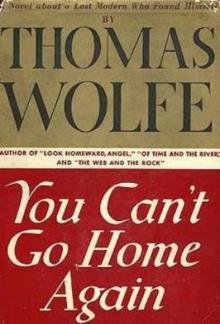
Thomas Wolfe, page 68
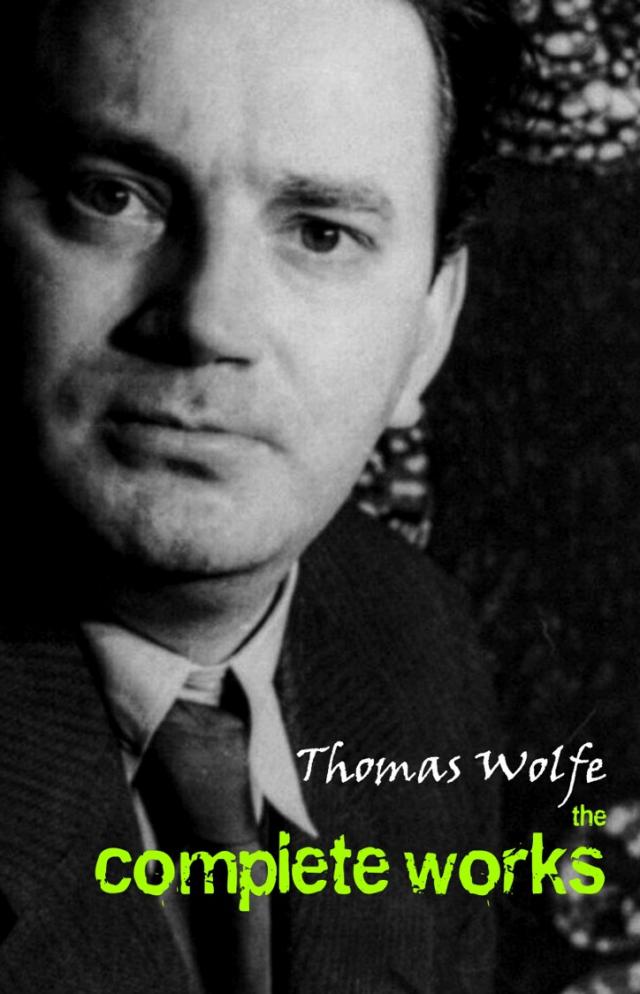


“Ben, are you a ghost?”
Ben did not mock.
“No,” he said. “I am not a ghost.”
There was silence again, while Eugene sought timorously for words.
“I hope,” he began presently, with a small cracked laugh, “I hope, then, this doesn’t mean that I’m crazy?”
“Why not?” said Ben, with a swift flickering grin. “Of course you’re crazy.”
“Then,” said Eugene slowly, “I’m imagining all this?”
“In heaven’s name!” Ben cried irritably. “How should I know? Imagining all what?”
“What I mean,” said Eugene, “is, are we here talking together, or not?”
“Don’t ask me,” said Ben. “How should I know?”
With a strong rustle of marble and a cold sigh of weariness, the angel nearest Eugene moved her stone foot and lifted her arm to a higher balance. The slender lily stipe shook stiffly in her elegant cold fingers.
“Did you see that?” Eugene cried excitedly.
“Did I see what?” said Ben, annoyed.
“Th-th-that angel there!” Eugene chattered, pointing with a trembling finger. “Did you see it move? It lifted its arm.”
“What of it?” Ben asked irritably. “It has a right to, hasn’t it? You know,” he added with biting sarcasm, “there’s no law against an angel lifting its arm if it wants to.”
“No, I suppose not,” Eugene admitted slowly, after a moment. “Only, I’ve always heard——”
“Ah! Do you believe all you hear, fool?” Ben cried fiercely. “Because,” he added more calmly, in a moment, drawing on his cigarette, “you’re in a bad way if you do.”
There was again silence while they smoked. Then Ben said:
“When are you leaving, ’Gene?”
“To-morrow,” Eugene answered.
“Do you know why you are going, or are you just taking a ride on the train?”
“I know! Of course—I know why I’m going!” Eugene said angrily, confused. He stopped abruptly, bewildered, chastened. Ben continued to scowl at him. Then, quietly, with humility, Eugene said:
“No, Ben. I don’t know why I’m going. Perhaps you’re right. Perhaps I just want a ride on the train.”
“When are you coming back, ’Gene?” said Ben.
“Why—at the end of the year, I think,” Eugene answered.
“No,” said Ben, “you’re not.”
“What do you mean, Ben?” Eugene said, troubled.
“You’re not coming back, ’Gene,” said Ben softly. “Do you know that?”
There was a pause.
“Yes,” said Eugene, “I know it.”
“Why aren’t you coming back?” said Ben.
Eugene caught fiercely at the neckband of his shirt with a clawed hand.
“I want to go! Do you hear!” he cried.
“Yes,” said Ben. “So did I. Why do you want to go?”
“There’s nothing here for me,” Eugene muttered.
“How long have you felt like this?” said Ben.
“Always,” said Eugene. “As long as I can remember. But I didn’t know about it until you—” He stopped.
“Until I what?” said Ben.
There was a pause.
“You are dead, Ben,” Eugene muttered. “You must be dead. I saw you die, Ben.” His voice rose sharply. “I tell you, I saw you die. Don’t you remember? The front room upstairs that the dentist’s wife has now? Don’t you remember, Ben? Coker, Helen, Bessie Gant who nursed you, Mrs. Pert? The oxygen tank? I tried to hold your hands together when they gave it to you.” His voice rose to a scream. “Don’t you remember? I tell you, you are dead, Ben.”
“Fool,” said Ben fiercely. “I am not dead.”
There was a silence.
“Then,” said Eugene very slowly, “which of us is the ghost, I wonder?”
Ben did not answer.
“Is this the Square, Ben? Is it you I’m talking to? Am I really here or not? And is this moonlight in the Square? Has all this happened?”
“How should I know?” said Ben again.
Within Gant’s shop there was the ponderous tread of marble feet. Eugene leaped up and peered through the broad sheet of Jannadeau’s dirty window. Upon his desk the strewn vitals of a watch winked with a thousand tiny points of bluish light. And beyond the jeweller’s fenced space, where moonlight streamed into the ware-room through the tall side-window, the angels were walking to and fro like huge wound dolls of stone. The long cold pleats of their raiment rang with brittle clangor; their full decent breasts wagged in stony rhythms, and through the moonlight, with clashing wings the marble cherubim flew round and round. With cold ewe-bleatings the carved lambs grazed stiffly across the moon-drenched aisle.
“Do you see it?” cried Eugene. “Do you see it, Ben?”
“Yes,” said Ben. “What about it? They have a right to, haven’t they?”
“Not here! Not here!” said Eugene passionately. “It’s not right, here! My God, this is the Square! There’s the fountain! There’s the City Hall! There’s the Greek’s lunch-room.”
The bank-chimes struck the half hour.
“And there’s the bank” he cried.
“That makes no difference,” said Ben.
“Yes,” said Eugene, “it does!”
I am thy father’s spirit, doomed for a certain term to walk the night——
“But not here! Not here, Ben!” said Eugene.
“Where?” said Ben wearily.
“In Babylon! In Thebes! In all the other places. But not here!” Eugene answered with growing passion. “There is a place where all things happen! But not here, Ben!”
My gods, with bird-cries in the sun, hang in the sky.
“Not here, Ben! It is not right!” Eugene said again.
The manifold gods of Babylon. Then, for a moment, Eugene stared at the dark figure on the rail, muttering in protest and disbelief: “Ghost! Ghost!”
“Fool,” said Ben again, “I tell you I am not a ghost.”
“Then, what are you?” said Eugene with strong excitement. “You are dead, Ben.”
In a moment, more quietly, he added: “Or do men die?”
“How should I know,” said Ben.
“They say papa is dying. Did you know that, Ben?” Eugene asked.
“Yes,” said Ben.
“They have bought his shop. They are going to tear it down and put up a skyscraper here.”
“Yes,” said Ben, “I know it.”
We shall not come again. We never shall come back again.
“Everything is going. Everything changes and passes away. To-morrow I shall be gone and this——” he stopped.
“This—what?” said Ben.
“This will be gone or—O God! Did all this happen?” cried Eugene.
“How should I know, fool?” cried Ben angrily.
“What happens, Ben? What really happens?” said Eugene. “Can you remember some of the same things that I do? I have forgotten the old faces. Where are they, Ben? What were their names? I forget the names of people I knew for years. I get their faces mixed. I get their heads stuck on other people’s bodies. I think one man has said what another said. And I forget—forget. There is something I have lost and have forgotten. I can’t remember, Ben.”
“What do you want to remember?” said Ben.
A stone, a leaf, an unfound door. And the forgotten faces.
“I have forgotten names. I have forgotten faces. And I remember little things,” said Eugene. “I remember the fly I swallowed on the peach, and the little boys on tricycles at Saint Louis, and the mole on Grover’s neck, and the Lackawanna freight-car, number 16356, on a siding near Gulfport. Once, in Norfolk, an Australian soldier on his way to France asked me the way to a ship; I remember that man’s face.”
He stared for an answer into the shadow of Ben’s face, and then he turned his moon-bright eyes upon the Square.
And for a moment all the silver space was printed with the thousand forms of himself and Ben. There, by the corner in from Academy Street, Eugene watched his own approach; there, by the City Hall, he strode with lifted knees; there, by the curb upon the step, he stood, peopling the night with the great lost legion of himself—the thousand forms that came, that passed, that wove and shifted in unending change, and that remained unchanging Him.
And through the Square, unwoven from lost time, the fierce bright horde of Ben spun in and out its deathless loom. Ben, in a thousand moments, walked the Square: Ben of the lost years, the forgotten days, the unremembered hours; prowled by the moonlit façades; vanished, returned, left and rejoined himself, was one and many—deathless Ben in search of the lost dead lusts, the finished enterprise, the unfound door—unchanging Ben multiplying himself in form, by all the brick façades entering and coming out.
And as Eugene watched the army of himself and Ben, which were not ghosts, and which were lost, he saw himself—his son, his boy, his lost and virgin flesh—come over past the fountain, leaning against the loaded canvas bag, and walking down with rapid crippled stride past Gant’s toward Niggertown in young pre-natal dawn. And as he passed the porch where he sat watching, he saw the lost child-face below the lumpy ragged cap, drugged in the magic of unheard music, listening for the far-forested horn-note, the speechless almost captured pass-word. The fast boy-hands folded the fresh sheets, but the fabulous lost face went by, steeped in its incantations.
Eugene leaped to the railing.
“You! You! My son! My child! Come back! Come back!”
His voice strangled in his throat: the boy had gone, leaving the memory of his bewitched and listening face turned to the hidden world. O lost!
And now the Square was thronging with their lost bright shapes, and all the minutes of lost time collected and stood still. Then, shot from them with projectile speed, the Square shrank down the rails of destiny, and was vanished with all things done, with all forgotten shapes of himself and Ben.
And in his vision he saw the fabulous lost cities, buried in the drifted silt of the earth—Thebes, the seven-gated, and all the temples of the Daulian and Phocian lands, and all Oenotria to the Tyrrhene gulf. Sunk in the burial-urn of earth he saw the vanished cultures: the strange sourceless glory of the Incas, the fragments of lost epics upon a broken shard of Gnossic pottery, the buried tombs of the Memphian kings, and imperial dust, wound all about with gold and rotting linen, dead with their thousand bestial gods, their mute unwakened ushabtii, in their finished eternities.
He saw the billion living of the earth, the thousand billion dead: seas were withered, deserts flooded, mountains drowned; and gods and demons came out of the South, and ruled above the little rocket-flare of centuries, and sank—came to their Northern Lights of death, the muttering death-flared dusk of the completed gods.
But, amid the fumbling march of races to extinction, the giant rhythms of the earth remained. The seasons passed in their majestic processionals, and germinal Spring returned forever on the land—new crops, new men, new harvests, and new gods.
And then the voyages, the search for the happy land. In his moment of terrible vision he saw, in the tortuous ways of a thousand alien places, his foiled quest of himself. And his haunted face was possessed of that obscure and passionate hunger that had woven its shuttle across the seas, that had hung its weft among the Dutch in Pennsylvania, that had darkened his father’s eyes to impalpable desire for wrought stone and the head of an angel. Hill-haunted, whose vision of the earth was mountain-walled, he saw the golden cities sicken in his eye, the opulent dark splendors turn to dingy gray. His brain was sick with the million books, his eyes with the million pictures, his body sickened on a hundred princely wines.
And rising from his vision, he cried: “I am not there among the cities. I have sought down a million streets, until the goat-cry died within my throat, and I have found no city where I was, no door where I had entered, no place where I had stood.”
Then, from the edges of moon-bright silence, Ben replied: “Fool, why do you look in the streets?”
Then Eugene said: “I have eaten and drunk the earth, I have been lost and beaten, and I will go no more.”
“Fool,” said Ben, “what do you want to find?”
“Myself, and an end to hunger, and the happy land,” he answered. “For I believe in harbors at the end. O Ben, brother, and ghost, and stranger, you who could never speak, give me an answer now!”
Then, as he thought, Ben said: “There is no happy land. There is no end to hunger.”
“And a stone, a leaf, a door? Ben?” Spoke, continued without speaking, to speak. “Who are, who never were, Ben, the seeming of my brain, as I of yours, my ghost, my stranger, who died, who never lived, as I? But if, lost seeming of my dreaming brain, you have what I have not—an answer?”
Silence spoke. (“I cannot speak of voyages. I belong here. I never got away,” said Ben.)
“Then I of yours the seeming, Ben? Your flesh is dead and buried in these hills: my unimprisoned soul haunts through the million streets of life, living its spectral nightmare of hunger and desire. Where, Ben? Where is the world?”
“Nowhere,” Ben said. “You are your world.”
Inevitable catharsis by the threads of chaos. Unswerving punctuality of chance. Apexical summation, from the billion deaths of possibility, of things done.
“I shall save one land unvisited,” said Eugene. Et ego in Arcadia.
And as he spoke, he saw that he had left the million bones of cities, the skein of streets. He was alone with Ben, and their feet were planted on darkness, their faces were lit with the cold high terror of the stars.
On the brink of the dark he stood, with only the dream of the cities, the million books, the spectral images of the people he had loved, who had loved him, whom he had known and lost. They will not come again. They never will come back again.
With his feet upon the cliff of darkness, he looked and saw the lights of no cities. It was, he thought, the strong good medicine of death.
“Is this the end?” he said. “Have I eaten life and have not found him? Then I will voyage no more.”
“Fool,” said Ben, “this is life. You have been nowhere.”
“But in the cities?”
“There are none. There is one voyage, the first, the last, the only one.”
“On coasts more strange than Cipango, in a place more far than Fez, I shall hunt him, the ghost and haunter of myself. I have lost the blood that fed me; I have died the hundred deaths that lead to life. By the slow thunder of the drums, the flare of dying cities, I have come to this dark place. And this is the true voyage, the good one, the best. And now prepare, my soul, for the beginning hunt. I will plumb seas stranger than those haunted by the Albatross.”
He stood naked and alone in darkness, far from the lost world of the streets and faces; he stood upon the ramparts of his soul, before the lost land of himself; heard inland murmurs of lost seas, the far interior music of the horns. The last voyage, the longest, the best.
“O sudden and impalpable faun, lost in the thickets of myself, I will hunt you down until you cease to haunt my eyes with hunger. I heard your foot-falls in the desert, I saw your shadow in old buried cities, I heard your laughter running down a million streets, but I did not find you there. And no leaf hangs for me in the forest; I shall lift no stone upon the hills; I shall find no door in any city. But in the city of myself, upon the continent of my soul, I shall find the forgotten language, the lost world, a door where I may enter, and music strange as any ever sounded; I shall haunt you, ghost, along the labyrinthine ways until——until? O Ben, my ghost, an answer?”
But as he spoke, the phantom years scrolled up their vision, and only the eyes of Ben burned terribly in darkness, without an answer.
And day came, and the song of waking birds, and the Square, bathed in the young pearl light of morning. And a wind stirred lightly in the Square, and, as he looked, Ben, like a fume of smoke, was melted into dawn.
And the angels on Gant’s porch were frozen in hard marble silence, and at a distance life awoke, and there was a rattle of lean wheels, a slow clangor of shod hoofs. And he heard the whistle wail along the river.
Yet, as he stood for the last time by the angels of his father’s porch, it seemed as if the Square already were far and lost; or, I should say, he was like a man who stands upon a hill above the town he has left, yet does not say “The town is near,” but turns his eyes upon the distant soaring ranges.
The End.
[¬]
thomas wolfe
OF TIME AND THE RIVER
A Legend of Man’s Hunger in his Youth
Charles Scribner’s Sons, 1935
“Who knoweth the spirit of man that goeth upward, and the spirit of the beast that goeth downward to the earth?”
[The text follows the 1939 Grosset and Dunlap edition.]
OF TIME AND THE RIVER
[¬]
BOOK I · ORESTES: FLIGHT BEFORE FURY
I · II · III · IV · V · VI
BOOK II · YOUNG FAUSTUS
VII · VIII · IX · X · XI · XII · XIII · XIV · XV · XVI · XVII · XVIII · XIX · XX · XXI · XXII · XXIII · XXIV · XXV · XXVI · XXVII · XXVIII · XXIX · XXX · XXXI · XXXII · XXXIII · XXXIV · XXXV · XXXVI · XXXVII · XXXVIII
BOOK III · TELEMACHUS
XXXIX · XL · XLI · XLII · XLIII · XLIV · XLV
BOOK IV · PROTEUS: THE CITY
XLVI · XLVII · XLVIII · XLIX · L · LI · LII · LIII · LIV · LV · LVI · LVII · LVIII · LIX · LX · LXI · LXII · LXIII · LXIV · LXV · LXVI · LXVII
BOOK V · JASON’S VOYAGE
LXVIII · LXIX · LXX · LXXI · LXXII · LXXIII · LXXIV · LXXV · LXXVI · LXXVII · LXXVIII · LXXIX · LXXX · LXXXI · LXXXII · LXXXIII · LXXXIV · LXXXV · LXXXVI · LXXXVII · LXXXVIII · LXXXIX
BOOK VI · ANTÆUS: EARTH AGAIN
XC · XCI · XCII · XCIII · XCIV · XCV