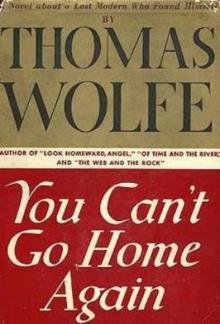
Thomas Wolfe, page 155



Thursday—November 27, 1924: At one, after working till five this morning. Dining at Drouant’s—very rich, red restaurant filled with business men talking of Les Anglais, Les Américaines, et cinq cent mille francs—at Drouant’s—a cold consommé, a rumpsteak grille—avec des pommes soufflées—a fond d’artichaut mornay (a cheese and cream dressing and the ends of artichokes—delicious) a coffee and a half bottle of Nuit St. Georges couvert 4 fr. total 44 frs.
At one table three Frenchmen of 50 or more—one of 40—one with black beard—coal black, neatly trimmed, naked around jaws—another a heavy distinguished man—grey beard pompadoured—grey close-cropped moustache—high colored—nervous grey eyes shot with red—hands white, taut and tapping constantly, while the face smiles—talks politely—another a red gnarled satanic face—fierce with rich foods and wines—smooth shaven—and the youngest—black hair, a black moustache—a quiet smiling, well-fleshed type. He had rich color—red shot with richness, the satanic yet not unpleasant cast of face—the cropped brown moustache and such pompadoured brownish hair—a Gallic type.
LATER: Seated at the café in front of Magasin du Louvre and Palais Royale—Heard a high even monotone that tickles the ear like a dynamo—It made me think of a great locomotive in the yards at Altamont—steam shut off (perhaps) and the high small ear-tickling dynamic noise they make.
Tuesday—December 2, 1924:
MOCK LITERARY ANECDOTES:
Young mannered voice of Harvard johnny: “Oh! Simply priceless! Don’t you l-o-o-ve that?
. . . Marvellous!” etc.—telling what Oscar said to Whistler, and what Whistler answered him.
A certain kind of mind collects these—pale, feeble, rootless, arty, hopeless, lost—Joel Pierce tells them, too. First time I heard them at Harvard what sophisticated raconteurs I thought them!—God, how green I was! “You will, Oscar, you will,” and all the rest of it!—Today, sitting on terrace at Taverne Royale, I made some of my own. Here they are:
One day as Whistler was standing before a window in St. James Street observing some prints of Battersea Bridge, he was accosted by Oscar Wilde coming in the opposite direction. “You will, James, you will,” said Wilde with generous impulsiveness.
“Gad,” remarked the inimitable James, imperturbably adjusting his monocle, “I wish I had said that!”
One day in June, Anatole France went to Rodin’s studio for luncheon. The talk having turned to early Greek primitives, Rodin remarked:
“Some writers have a great deal to say and an atrocious style. But you, dear Master, have a delicious style.”
“And you, Master?” queried France ironically, allowing his eyes to rest upon the torso of The Thinker, “since when did you become a critic?”
In the burst of laughter that followed the thrust, Rodin had to admit himself floored for once.
A young actor who had, it must be confessed, more ambition than talent, one day rushed excitedly up to Sir Henry Irving during the rehearsal of “Hamlet”:
“It seems to me, sir,” he burst out without preliminaries, “that some actors ruin their parts by overplaying them.”
“And some,” remarked Sir Henry, after an awful pause, “don’t.”
One day Sir James Barrie discovered Bernard Shaw while he was lunching at the Atheneum, staring somewhat disconsolate at an unsavory mess of vegetables that adorned his plate.
“I hear you are working on a new play,” remarked Barrie, whimsically eyeing the contents of the platter.
For once G. B. S. had no answer ready.
Why won’t these do?
(Suggestion to Young American writing Book Reviews for New York Times in classical, simple, god-like manner of Anatole France.)
“The new book of Monsieur Henry Spriggins, which lies before me on my desk, fills me with misgivings. The author is young and intolerant of simple things. He is full of talent, but he is proud, and has not a simple heart. What a pity!” (etc.)
Wednesday—December 3, 1924: Comédie Française tonight Les Plaideurs—and Phèdre—Respect for play grew and for actors diminished and went on—The French applauded loudly when Madame Weber ended a long declamation on a screech.
LATER: To Régence and Harry’s—Bought some books along the quays—Saw Mrs. Martin at hotel today—Story of how she had been robbed—The picture galleries and antique shops of Rue des Saints Pères.
Saturday—December 6,
Young Icarus lies drowned, God knows where.
Oxford in pursuit of a woman—one of the most dreary spectacles God hath given—Buol’s in the afternoon——
Foolish Question: Why are the Tories so eager to say Democracy has failed?
Hair like a copper cloud—feather and flame come back again.
The gutted plums bee-burrowed.
The poisoned inch around the heart.
The cancerous inch.
The burning inch of tongue.
The hairy grass.
The long sea-locks.
The hairy seas.
The other gate of ivory——
Ida—Cadmus—blunt drummed woodenly with blunt fingers. Sir Leoline the baron rich—Thunder-cuffing Zeus—Erasmus fed on rotten eggs—what a breath—Has an angel local motion or “The goose-soft snow.”
Feathery snow—The feather-quilted snow.
Freckled eyes.
Wild Ceres through the wheat.
The slow dance of dancers.
The gull swerves seaward like hope—September full of departing leaves and wings.
He sat alone four thousand miles from home—the lonely death of seas at dawn.
The decent and untainted eyes that look on spattered death—Myself dreaming of old battles—For a child the spear goes clearly through—The musical horns beg and the battles press—The phantasy of bloody death: The cloven brain-pan—the one lost second near enough to touch its brother life, but infinitely far.
The wind-blown lights of the town.
A branch of stars.
A hen and a pig.
Quills—frills.
Mired—feathers.
The vast low stammer of the night.
By the rim—the geese go waddling to the Fair.
The minute-winning flies buzz home to death.
“Old England will muddle through, my lads”——
She has muddled and she’s through: but she’s not through muddling.
Gull-cry and gull are gone.
Shadow and hawk are gone.
Shadow and hawk are gone.
Shadow and hawk are——
Friday Night—December 12, 1924: The Fratellini Brothers: How in his rich robe I saw him—the younger brother—waiting for the act—the waiting is all over—The burlesque musical act—They were great, sad, epic—what clowns should be.
Salle Rubens with all the meat—All the people clustered about—dull.
Mona Ugly Lisa.
The Virgin with Saint Anne—a great picture.
Guido Reni—the sainted and sugared faces.
The Italians—Veronese—The Cana—The Gigantic three-storey canvases.
Zurberan—Goya and the Grey—Picture of a Gentleman on horseback—Nicolas Maes—Rembrandt’s picture of his brother.
Sam’s—The man from San Francisco with the loud, dark, debauched face.
“We had ham and eggs for lunch across at Ciro’s, Anne”—the two barkeepers in Harry’s, “Chip” and Bob—names of dogs and horses.
Velasquez in the Louvre.
Vetzel’s again 12:30 Apéritif (X365) The arch of the opera I have never seen before, things sit like this.
(here follows drawing)
Remember Faust at The Opera.
The Promenoirs—The vast stage—click-clack of feet in the music.
I awoke this morning in a crucifixion of fear and nervousness—What if they hadn’t written? What? What? What?
My agony as I approached the place—My distrust of Paris in peril—City of light disloyalties. Sun never shines more than two days (for me) here—Went to American Express—Harry’s Bar—The men at Vetzel’s eating——
The French are not bad but children—old men too wise and kind for hatred—but French French French and Suspicious.
How beautiful the Fratellini are! How fine a thing is a French circus! Their enormous interest in children—The lion-taming act—by far the best and finest I have ever seen—and I felt sorry for the lions—Savoir is right in this.
Monday—December 15, 1924: I am getting a new sense of control—millions of books don’t annoy me so much—went along the Seine today after Louvre—most of it worthless old rubbish I must begin to put up my fences now—I can’t take the world or this city with me.
Things in Paris I must see at once—Père Lachaise—Also investigate old quarter again around Place des Vosges—Go there first thing tomorrow—Go to Cluny Musée again—And up and down Rue de la Seine—Also Isle St. Louis.
Books I want: Julien Benda—New one by Soupault (?) Charles Derennes—L’Education Sexuelle. Read one of the Vautel things.
Get for inspection—and at random Le Petit Livre—Mon Livre Favori—Bibl. Nationale—Livre Epatant—go into Court of Palais Royale—investigate there——
Louvre today—Mantegnas picture of St. Sebastian C.
Giotto’s great picture of St. Francis D’Assisi receiving stigma from Christ——
Gros—Pictures of Napoleon at war—The one of the leper’s house at Jaffa a good one—Huge naked leper held in kneeling position—Weight of body.
Books I want—Go to bookstalls in Seine for books on Paris twenty or thirty years ago with naughty illustrations.
Tuesday—December 16, 1924: Along Seine again—Looked at thousands of books and bought one—a critique on Julien Benda—Miles and miles of books—but also, miles and miles of repetitions——
The pictures—cavaliers seducing pretty ladies; one of women half naked embracing pillow—called Le Rêve—People in old French stage-comedies—Then 1000’s of La Chimie, La Physique, La Géologie, L’Algèbre, Le Géometrie——
Letters—Morceaux Choisis of XVIII S. All the authors I have never heard of—but that is the same at home.
Wednesday—December 17, 1924: Today bought books—Bookshop on Rue St. Honoré—Stock’s.
Bought Benda there—Along the river—Tons of Trash—L’Univers—The Miracle of France—4 mos. in the United States, etc. etc.—Les Cicéron, Ovide, Sénèque, etc.
Bought Confessions of Alfred Musset—Stall at Pont Neuf with dirty books—Journal d’une Masseuse.
Sadie Blackeyes—Lovers of The Whip—The Pleasures of Married Life—The Galleries of The Palais Royale where the bookshops are—Whole series edited by Guillaume Apollinaire——
Pictures, stamps, coins—Daumier-like picture of man having tooth pulled—Then the near dirty ones of ladies with silver wings—Silhouettelike—Then the near XVIII Century ones.
Old Books—Seem to be millions of these too—Essais de L’Abbé Chose sur la Morale, etc.
The Faustian hell again!
At La Régence: Semaine de Noël, 1924:
The people who say they “read nothing but the best,” are not, as some people call them, snobs. They are fools. The battle of the Spirit is not to read and to know the best—it is to find it—The thing that has caused me so much toil and trouble has come from a deeprooted mistrust in me of all cultured authority. I hunger for the treasure that I fancy lies buried in a million forgotten books, and yet my reason tells me that the treasure that lies buried there is so small that it is not worth the pain of disinterment.
And yet nearly everything in the world of books that has touched my life most deeply has come from authority. I have not always agreed with authority that all the books called great are great, but nearly all the books that have seemed great to me have come from among this number.
I have not discovered for myself any obscure writer who is as great a novelist as Dostoievsky, nor any obscure poet with the genius of Samuel Taylor Coleridge.
But I have mentioned Coleridge, and although my use of his name will not, I believe, cause any protest, it may cause surprise. Why not Shelley, or Spenser, or Milton?—It is here that my war with Authority—to which I owe everything—begins again.
There are in the world of my spirit certain gigantic figures who, although great as well in the world of authority, are yet overshadowed, and in some places, loom as enormous half-ghosts—hovering upon the cloudy borderland between obscurity and living remembrance.
Such a man is Samuel Taylor Coleridge. To me, he is not one of the great English poets. He is The Poet. To me he has not to make obeisance at the throne of any other monarch—he is there by Shakespeare and Milton and Spenser.
At La Régence: Remembering the whore with rotten teeth that I talked to last night on Rue Lafayette:
My dirt is not as dirty as your dirt. My clean-ness is cleaner than your clean-ness.
If I have a hole in my sock that is cunning.
If you have a hole in your stocking love flies out of the window. Why are we like this? Boredom is the bedfellow of all the Latin peoples—the English, in spite of the phrase “bored Englishman,” are not bored.
The Germans are eager and noisy about everything they are told they should be interested in.
The Americans are interested in everything for a week—a week at a time—except Sensation: they are interested in that all the time.
I have heard a great deal of the “smiling Latins,” the “gay Latins,” etc. I have seen few indications that the Latins are gay. They are noisy—they are really a sombre and passionate people—the Italian face when silent is rather sullen.
In New York the opportunities for learning, and acquiring a culture that shall not come out of the ruins, but belong to life, are probably greater than anywhere else in the world.
This is because America is young and rich and comparatively unencumbered by bad things.
Tradition, which saves what is good and great in Europe, also saves what is poor, so that one wades through miles of junk to come to a great thing.
In New York books are plentiful and easy to get. The music and the theatre are the best in the world.
The great trouble with New York is that one feels uncomfortable while enjoying these things—In the daytime a man should be making money. The time to read is at night before one goes to bed. The time to hear music or go to the theatre is also at night. The time to look at a picture is on Sunday.
Another fault comes from our lack of independence. I am sure some of the most knowing people in the world, about the arts, are in America. I cannot read a magazine like The Dial, or The Nation and The New Republic without getting frightened. One man wrote a book called Studies in Ten Literatures—which of course, is foolish. We want to seem knowing about all these things because we have not enough confidence in ourselves.
We have had niggers for 300 years living all over the place—but all we did about it was to write minstrel shows, and ’coon stories, until two or three years ago when the French discovered for us how interesting they are. We let Paul Morand, and the man who wrote Batouala, and Soupault do it for us—Then we began to write stories about Harlem, etc.
Instead of whining, that we have no traditions, or that we must learn by keeping constantly in touch with European models, or by keeping away from them, we should get busy telling some of the stories about America that have never been told.
A book like Main Street, which made such a stir, is like Main Street. It is like “I’ve seen all Europe” tourists, who have spent two days in each country in a round-the-town bus.
In a magazine like The American Mercury the stories are also too much of a pattern—they’re all about how the “Deacon Screwed the Methodist Minister’s Wife,” and how the “Town Prostitute Was Put in Jail for Coming to Church on Sunday and Mixing with the Good Folks.”
When you hear people saying about Babbitt—that it is not the whole story and that much more can be said, you agree with them. Then they begin to talk about “the other side” and you lose hope. You see they mean by other side, Dr. Crane and Booth Tarkington.
So far from these being “the other side,” there are a million other sides. And so far from Babbitt being too strong, the stories that may be written about America will make Babbitt an innocent little child’s book to be read at the Christmas School entertainment along with The Christmas Carol and “Excelsior.” The man who suggests the strangeness and variety of this life most is Sherwood Anderson. Or was. I think, he’s got too fancy since he wrote Winesburg, Ohio.
A French writer who said there was no real variety in the life of the French because they all had red wine on the table, sat at little tables in cafés to gossip, and had mistresses, would be called a fool. Yet an American will criticize his country for standardization on no better grounds—namely that most of them are Methodists or Baptists, Democrats or Republicans, Rotarians or Kiwanians.
Babbitt is a very interesting book. But I believe it would be possible for a German writer with a talent similar to Sinclair Lewis to write a book called Schmidt or Bauer which would be just as sweeping a portrait.
Do you want to know what the gentleman looks like? He is much easier to describe than Babbitt.
Tuesday—December 23, 1924: The mystery explained! Today, at American Library, found out what it is:
“Time—that dimension of the world which we express in terms of before and after—the temporal sequence pervades mind and matter alike.”
Time the form of the internal sense, and space the form of the external sense.
Theory of Relativity—the time-units of both time and space are neither points nor moments—but moments in the history of a point.
W. James—Within a definite limited interval of duration known as the specious present there is a direct perception of the temporal relations.
After an event has passed beyond the specious present it can only enter into consciousness by reproductive memory.
James “The Object of Memory is only an object imagined in the past to which the emotion of belief adheres.”