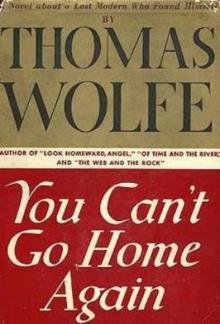
Thomas Wolfe, page 468
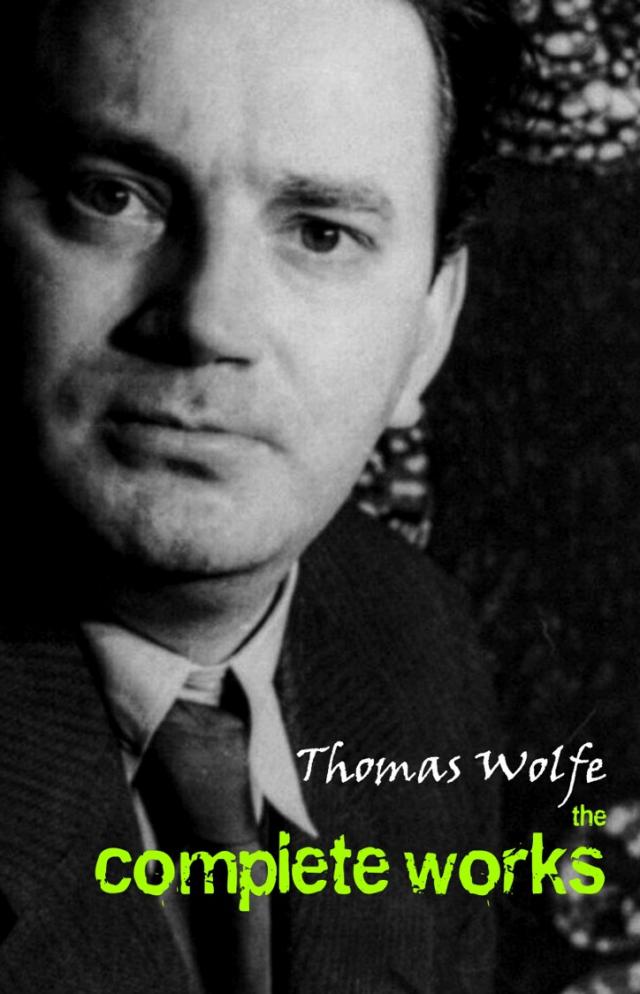


It is a strange adventure—the adventure of being very tall—and in its essence it comes to have a singular and instinctive humanity. In an extraordinary way, a tall man comes to know things about the world as other people do not, cannot, know them. And the reason for this lies mainly in the purely fortuitous quality of a tall man’s difference from average humanity. In no respect, save in respect to his unusual height, is a tall man different from other men. In no way is he less his brother’s brother, or his father’s son. In fact—astonishing as this fact may seem—the overwhelming probability is that the tall man never thinks of being tall, never realizes, indeed, that he is tall until other people remind him of his height.
Thus, when this tall man was alone, he never thought of his great height; it never occurred to him that his dimensions were in any way different from those of most people that he saw around him every day upon the streets. In fact, he was the victim of an extraordinary delusion: for some reason which he could not define, he had a secret and unspoken conviction—an image of himself that was certainly not the product of his conscious reasoning, but rather the unconscious painting of his desire—that he was really a person of average height and size—a man of five feet eight or nine, no more. A moment’s reflection would, of course, tell him that this picture of himself was wrong, but his natural and instinctive tendency was to think—or rather feel—himself in this perspective. It was, therefore, only natural, that when his attention was rudely and forcibly brought to a realization of his unusual height—as it was a hundred times a day now by people on the street—he should receive the news with a sense of shocked surprise, bewilderment, and finally with quick flaring anger and resentment.
He would be going along the street at five o’clock when the city was pouring homeward from its work, and suddenly he would become conscious that people were watching him: would see them stare at him and nudge each other, would see their surprised looks traveling curiously up his frame, would hear them whisper to each other in astonished voices, and see them pass him laughing, and hear their oaths and words of astonished disbelief, hilarious surprise. When this happened, he could have strangled them. As he heard their scoffs and jokes and exclamations—those dreary husks of a stale and lifeless humor which are the same the world over, which never change, and which have worn their weary rut into a tall man’s heart and brain until he knows them as no one else can ever know them—he felt almost that he could choke them into wisdom, seize them, knock their heads together, snarl at them:
“God-damn you, but I’ll show you that I am the same as you if I have to shake you into owning it!”
Thus he was the butt, a hundred times a day, of those clumsy, tiresome but well-intentioned jocularities to which, in the course of time, a tall man becomes so patiently accustomed, so wearily resigned. And his own response to them was probably the same as that of every other tall man that ever lived and had to weather the full measure of man’s abysmal foolishness. At first, he felt only the fierce and quick resentment of youth, the truculent sensitivity of youth’s wounded pride, its fear of ridicule, its swift readiness to take offense, to feel that it was being flouted, mocked, insulted, its desire to fight and to avenge its wounded honor.
And then he felt a kind of terrible shame and self-abasement: a feeling of personal inferiority that made him envy the lot of the average man, that made him bitterly regret the accident of birth and nature that had imprisoned a spirit fierce and proud and swift as flight and burning as a flame in such a grotesque tenement. And this feeling of shame and self-abasement and hatred of his flesh is the worst thing that a tall man knows, the greatest iniquity that his spirit suffers. For it is during this period that he comes to hate the body that has been given him by birth and nature, and by his act of hatred, he degrades himself and dishonors man. For this loathing for his body is like the ignoble hatred that a man may have for a loyal and ugly friend whose destiny is coherent with his own, and who must endure. And endure he does—this loyal ugly friend that is man’s grotesque tenement—and goes with him everywhere in all his mad and furious marchings, and serves man faithfully like no other friend on earth, and suffers the insults and injuries that man heaps upon him, the frenzy, passion, and brute exhaustion, the scars, the sickness, and the pain, the surfeits of his master’s intolerable hunger, and at the end, all battered, scarred, debased, befouled, and coarsened by his master’s excess, is still with him, inseparable as his shadow, loyal to the end—a friend homely, true, devoted, good as no one else can ever be, who sticks with us through every trouble, stays by us through every brawl, bears the brunt of all our drinking, eating, and our brutal battery, reels in and out of every door with us, and falls with us down every flight of stairs, and whom we one day find again before us—as a madman may discover light and sanity again and see the comrade, the protector, and the victim of his madness steady there before him, grinning at him wryly through his puffed and battered lips, and saying with a rueful but an all-forgiving humor:
“Well—here we are again.”
It is a strange adventure, a hard but precious education, that a tall man knows. For finally he comes to learn, through sweat and toil and a little aging, a stern but not desolate humanity. He gets a kind of lonely wisdom that no one else on earth can get. And by the strange and passionate enigma of his destiny, he is drawn close to man by the very circumstance that shuts him out. He enters life through the very door that once he thought was shut against him, is of the earth, more earthy, by the fact of his exclusion. A tall man could not escape from life, or flee the world, even if he desired it: he is at once life’s exile and life’s prisoner; wherever he goes, life reaches out and pulls him to it, will not let him go. And at the end, he learns the truth of Ernest Renan’s bitter observation—that the only thing that can give one a conception of the infinite is the extent of human stupidity. And in the jibes, the jests, the drolleries that are shouted at him a dozen times a day in the streets because of his great height, in the questions that are asked concerning it, and in the innumerable conversations that it provokes, he acquires a huge and damning accumulation of evidence concerning man’s fatal unity, the barren paucity of his invention, the desolate consonance of his rut.
It never changed, it was always the same: it went on day by day and month by month in the narrow crowded streets all around him, and it would go on year after year in a hundred cities, a dozen countries, among the thousand scattered places in all quarters of the world, and it would always be the same—a barren formula endlessly renewed with the unwearied pertinacity of an idiot monotony—it would always be the same.
He never found the slightest deviation in that barren formula. No one ever made an interesting or amusing observation about his height—and ten thousand people talked to him about it. No one ever said a funny or a witty thing about his height, and ten thousand people had their fling about it. No one ever showed the slightest understanding of the nature of a tall man’s life, or asked a single shrewd and penetrating question about it—and yet the curiosity that his tallness caused was almost incredible, the conversations that he had, the questions that he had to answer, were innumerable.
The barren formula was so endlessly repeated that at length it had worn its dull grooves into his brain, and he answered without thinking, replied without listening, giving mechanically the answers that they wished to hear, the tried and trusted formula that had served its purpose so many thousand times before, knowing in advance what every one would say.
Was it wit? Then let the diligent historian of the nation’s wit give ear and pay attention to these drolleries which were shouted after one tall man’s receding figure as he trod the pavements of ten thousand streets:
“Hey-y!”
“Hey-y! Youse guy!”
“Hey-y-y! . . . Holy Jeez! . . . Cheezus! . . . Look ut duh guy!”
“Hey-y, Mis-teh! . . . Is it rainin’ up deh? . . . Cheezus! . . . Ho-lee Chee! . . . Will yuh look at duh guy?”
“Hey-y—Mis-teh! . . . How’s duh weatheh up deh? . . . Ho-lee Chee! . . . Take a look ut duh size of ’m, will yah?”
Such, then, were the evidences of the national humor upon this subject—by a high authority it can solemnly be affirmed that these evidences were all there were.
Or was it conversation of a more polite and genteel sort—well-bred consolation, soothing affirmations, suave flatteries meant to hearten and give cheer? The formula in this kind of conversation ran as follows:
“You’re ver-ree tall, aren’t you?”
“Yes—hah! hah!—yes—hah! hah!—I suppose I am—hah! hah!—I suppose you noticed it!”
“Yes, I did—when you got up, it did seem ra-ther overwhelming the first time—[with hasty correction]—only, of course, one doesn’t notice it at all later . . . I mean one forgets all about it . . . I ree-lee think you’d be awf-lee glad you are that way . . . I mean, that’s the way most people would like to be . . . it does give you such an advantage, doesn’t it? . . . I mean, after all, everyone would be that way if they could—no one wants to be short, do they? . . . Every one would much rather be tall . . . I mean, it makes every one look up to you, doesn’t it, wherever you go. . . . Reelee, I shouldn’t think you’d mind at all . . . I should think you’d be glad you are that way . . . I mean, after all, it does give you a great advantage, doesn’t it? . . . Do you see what I mean?”
“Yes . . . ah-hah-hah! . . . I certainly do! . . . ah-hah-hah! . . . Yes, I certainly do see what you mean . . . ah-hah-hah! You’re right about it . . . ah-hah-hah! . . . I certainly do!”
Or was it friendly banter now, a kindly curiosity of a rougher sort, among a simple yet good-natured kind of men? Suppose a scene, then: such a scene as one has found ten thousand times within the labyrinth of night upon the seaboard of the continent. It is an airless groove in an old wall behind blind windows set in rotting birch: within, a slab of bar, its wet shine puddled here and there with rings of glasses; a battered rail of brass, not polished recently; and a radiance of hard dead light; Leo, the bar-man, with his jowled, squatty face of night, professionally attentive; and at the end, the dead stamped visages of night, the rasping snarl of drunken voices, the elbows of the bar-flies puddled in beer slop.
The buzzer rings, good Leo peers with hard mistrust through opened slot, the door is opened, and the tall man enters, to whom at once Pat Grogan, wit by nature, Celt by birth, and now the antic of good Leo’s bar—approaches, with the small red eyes of rheum and murder comically a-stare, ape-shoulders stooped, ape-knees bowed and tucked under, the jowled ape-visage comically turned upward in a stare of ape-like stupefaction—all most comical to see—while good Leo looks and chuckles heavily and all the barflies grin. So, now, as follows:
Grogan (still crowding): “Je-sus. . . Christ!. . . Ho-lee Jeez! . . . What’s dat guy standin’ on, anyway? . . . (Leo and all the grinning bar-flies chortle with appreciative delight, and thus encouraged, Jolly Grogan carries on) . . . Jee-zus! (with a slow deliberate lifting of his red-jowled face, he calculates the visitor from foot to head—a delicate stroke, not lost by any means on grinning Leo and his appreciative clientele) . . . Say-y! . . . When I foist saw dat guy, I t’ought he was standin’ on a box or somep’n . . . (turning to Leo with an air of fine bewilderment). . . . Take a lookut ’im, will yuh? Ho-lee Chee! . . . Who is dis guy, anyway? . . . (turning to all the grinning others) . . . When I foist sees duh guy, I says t’ myself . . . What is dis, anyway? . . . Is duh coicus in town or somep’n? (turns again, gesturing to tall visitor with air of frank bewilderment) . . . Take a look at’m, will yuh? . . . (Satisfied with his success, he rejoins his grinning and appreciative comrades, and for some time further regales them by taking astounded glances at the tall visitor, shaking his head in a bewildered way, and saying in an unbelieving tone) . . . But Je-sus!. . . Take a look at’m, will yuh?” etc.
And now Leo, shaking his head slowly to himself with appreciative admiration of his client’s wit, approaches the tall visitor, and still chuckling heartily at the recollection, leans over the bar and whispers confidingly:
“Dat’s Misteh Grogan. . . . (a trifle apologetically) He’s been drinkin’ a little, so don’t pay attention to anything he says. . . . He didn’t mean nuttin’ by it—(with ponderous assurance) Nah-h! . . . He’s one of duh nicest guys you eveh saw when he’s not drinkin’ . . . he’s only kiddin’, anyway . . . he don’t mean nuttin’ by it . . . but Je-sus! (suddenly laughs heartily at the recollection, a heavy, swarthy, and deliberate hah-hah-hah that sets all his night-time jowls a-quiver) . . . When he pulled dat one aboutcha standin’ on a box or somep’n, I had t’ laff. . . duh way he said it! . . . Standin’ on a box or somep’n—dat’s a good one! . . . Hah! Hah! Hah! Hah! Hah!” . . . (and goes heavily away, heaving with slow nocturnal laughter, shaking his head slowly to himself).
Now, as the visitor stands drinking by himself, the bar-flies cluster at the other end in excited controversy, from which disputatious murmurs may be heard from time to time—such vehement scraps of affirmation or denial as the following:
“Nah-h! . . . Guhwan! . . . Whatcha givin’ me? . . . He’s more’n dat . . . I’ll betcha on it! . . . Nah-h! Guhwan! . . He’s oveh seven if he’s an inch! . . . Guhwan! . . . I’ll betcha on it! . . . All right! All right! . . . Guh-wan and ast him den! . . . But he’s more’n dat! I’ll betcha on it!” . . .
One of the debaters now detaches himself from his disputatious group and, beer glass in hand, approaches the lone visitor. . . . A face not bad, not vicious, not unfriendly: face of a city-man in the late forties—the face of the cartoonist-drawing—lean, furrowed, large-nosed, deeply seamed, a little sunken around the mouth, almost metallically stamped and wisely knowing, cynically assured—the nerve-ends stunned, the language strident, utterly, unmistakably, the city’s child.
The City’s Child (grinning amiably, a trifle apologetically, lowering his voice, and speaking with a natural tensity of his lips, out of the corners of his mouth): . . . “Podden me, Mac . . . I hope yuh don’t mind my astin’ yuh a question . . . but my frien’s and me has been havin’ a little oggument aboutcha . . . an’ I gotta little question dat I’d like t’ ast yuh. . . . Yuh don’t mind, do yuh?”
The Tall Stranger (grinning mechanically and laughing an agreeable and complaisant laugh of utter falseness): “Why, no! . . . ah-hah-hah! . . . Not at all! . . . ah-hah-hah! . . . Go right ahead, it’s perfectly all right. . . . Ah-hah-hah.”
The City’s Child: “Because if yuh do, I wantcha t’ say so . . . I guess a lotta guys ast yuh the same question, an’ I t’ought mebbe yuh might get tired of hearin’ it—you know what I mean? . . . A lotta guys might get tired of bein’ ast duh same question so many times . . . (with an expression of difficulty on his face, shrugs his shoulders expressively and says hopefully) You know?
The Tall Stranger: “Why . . . ah-hah-hah! . . . Yes . . . I think I do. . . . That is to say, go right ahead . . . ah-hah-hah . . . it’s quite all right.”
The City’s Child: “I guess so many guys have ast yuh dis same question dat yuh can guess already what it is—can’t yuh?”
The Tall Stranger: “Why, yes—no—ah-hah-hah! . . . That is to say—Yes! . . . I think I can!”
The City’s Child: Well, den, Mac . . . if yuh don’t mind . . . if it’s all right . . . I was just goin’t’ ast yuh . . . (whispering persuasively) . . . just to settle a little oggument I been havin’ wit’ my frien’s—How tall are yuh? (lustily) . . . Now if yuh don’t want t’ tell me, it’s O.K. . . . Yuh know how it is, some guys . . .”
The Tall Stranger: “Not at all—ah-hah-hah . . . that is to say, yes—ah-hah-hah . . . it’s quite all right . . . I don’t mind at all. . . . I’m between six feet five and six feet six . . . that is, I haven’t measured for some time . . . but I was between six feet five and six feet six the last time that I measured. . . . (apologetically) That’s been some time ago . . . several years ago since I last measured . . . but . . . ah-hah-hah . . . it was between six feet five and six feet six and I don’t think I’ve grown much since then . . . ah-hah-hah. . . . Between six feet five and six feet six.”
The City’s Child (with an astonished but somewhat disappointed air): “Is dat a fact? . . . I t’ought yuh was more’n dat! . . . I t’ought you was aroun’ seven foot . . . but anotheh guy oveh heah said you wasn’t more’n six foot seven or eight (reflectively). . . . I t’ought you was more’n dat!”
The Tall Stranger: “No . . . ah-hah-hah . . . a lot of people think so . . . but I guess that’s right . . . about six feet five or six.”
The City’s Child (jocularly): “Say! . . . Yuh know watta a guy like you ought to do! . . . You know what I’d do if I was big as you—”
The Tall Stranger: “Why, no . . . ah-hah-hah—What’s that?”
The City’s Child: “I’d go in duh ring an’ fight Dempsey . . . I’d fight all dose guys. . . . Dat’s what I’d do . . . . A guy as big as you could hit an awful wallop . . . an’ wit your reach dey couldn’t touch yuh. . . . Dat’s what I’d do if I had yoeh size! I’d go in duh ring—yes, sir!—Dat’s just duh t’ing I’d do if I was big as you.”
The Tall Stranger (rising glibly and mechanically to the occasion): “Well, you’d better be glad you’re not. . . . You don’t know how lucky you are.”
The City’s Child (in a slow, interested voice): “Oh, yeah?”
The Tall Stranger (getting off his little speech rapidly and glibly): “Sure. A guy like me has nothing but trouble everywhere he turns.”
The City’s Child (with awakened interest): “Oh, yeah?”
The Tall Stranger: “Sure. They don’t make anything big enough to fit you.”