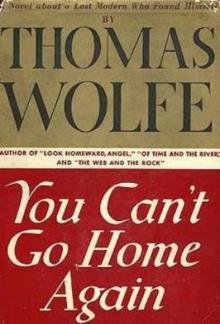
Thomas Wolfe, page 520



We have found frequent occasion to pay tribute to their sterling honesty, the devotion of their public service, their brilliant skill in politics and government, which have given them a record of unselfish and incorruptible administration that is, we believe, unequaled by any other people in the world. Where else in the world may a people be found who will so cheerfully and uncomplainingly take over the onerous and thankless burden of running the government, and whose devotion to the principles of law and order, sobriety, reasonable conciliation, and selfless and unseeking consecration to the common weal are as high, loyal, and untarnished in their idealism as are those of the Irish? Where else, among all the peoples who make up the vast polyglot of American life, will another people be found whose patriotism is not only one hundred per cent American, but maintains a constant average of one hundred and thirty-seven per cent?
We have considered it not only a duty but an agreeable privilege to refer to these well-known facts on several occasions, and if we finally desisted, it was largely because of the quiet protests of our Irish friends themselves.
For, said they, the only reward they ever desired or hoped for was the knowledge of public duty modestly done and honorably completed. Virtue was its own exceeding great reward. There were, it is true, among other peoples, certain odious demagogues who were always making public speeches in their own behalf, and slapping themselves proudly on their own breasts; there were even those contemptible characters who regarded politics as a means of feathering their own nests out of the common funds. As for themselves, however, all they asked was the joyful privilege of serving their state or their city as well as they could, giving to their country the last full measure of their devotion. That was reward enough, and the knowledge that one had given his all for his country should be sufficient for any man. Certainly, the thought of public acknowledgment for such a noble and idealistic service was odious, and would we please not affront their deepest and most sacred feelings by speaking of it further?
Since the matter was presented to us in this way by many of our Irish friends, we consented reluctantly to refrain from further public display of our enthusiasm rather than incur the reproaches of a people who, as is well known, are among the shyest and most modest races in the world. In matters of literary judgment, however, we trust we may be allowed a more full and free expression of our emotions, since every race, no matter how innately modest, how consecrated to a public trust, may be justly proud of its artistic achievements, and justly boastful of all its men of genius.
We take it as a matter of general consent that Ireland has always swarmed with geniuses. Old Erin has been for centuries running over with them—has, in fact, so many of this glorious type that it has been necessary to establish a kind of emigration service for the exportation of Irish geniuses to other nations which, though bigger, are lamentably deficient in their genius supply.
The leading customer for the importation of Irish geniuses has been our own fair land. In fact, we do not believe it any extravagant exaggeration to say that where genius is concerned, the Irish brand tops the list with us. Here in America we’d rather have one good, bona fide, Irish genius than a half-dozen Polish, Swedish, Czechoslovakian, or Hungarian specimens, no matter what their reputations.
It is true that visiting Englishmen are still in considerable demand, and ply a thriving trade before the Culture Clubs and Female Forums of the Corn Belt. Almost any ninth-rate scribbler from Great Britain can still come over here and insult the country with the choicest and most indecipherable sneers in his whole Oxford vocabulary, and command prices from his adoring audiences that no American could dream of asking. Yes, there is still a good market for the English genius, but among the haut ton, so to say, the true sophisticates of culture, the Irish bards and story tellers come first. A bad English writer may still put in a profitable six or eight months and eat and drink his way across the pampas from Portland, Maine, to Tacoma, Washington, at the expense of this great, benevolent, and culture-loving people. But to do so requires considerable traveling, and the English genius cannot always pick his spots; he must occasionally prepare himself for the uncomfortable exigencies of one-night stands, bad accommodations, and poor food.
An Irish genius is faced with none of these embarrassing possibilities. He can pick his spots and do as he damn pleases. He can remain in New York in the perfumed salons of the art-loving plutocracy, and can always have the very best of everything at no cost to himself, provided he exercises only a very small degree of caution and has sense enough to know upon which side his cake is caviared. An Englishman may have to stand an occasional round of drinks, or stay with the second-best family in Hamtramck, Michigan, but a visiting Irishman—never! A visiting Englishman may have to have at least the vestige of a reputation—to have received the endorsement of Hugh Walpole, or to have in his pocket a letter of introduction from J. B. Priestley—but a visiting Irishman needs nothing. It is naturally preferable if someone has heard of him before, but it is by no means essential. The main thing is that he be a visiting Irish writer, and, of course, all visiting Irish writers are geniuses, and not only geniuses, but the most Extra-Special, A-Number-1, Eighteen-Carat Geniuses in existence.
After that, no introduction is necessary, He can just call himself Sean Mulligan or Seamus O’Toole or some other whimsical appellative of this nature, and everything will be all right. He needs only to get off the boat and announce to the reporters that he is the author of an untranslated and untranslatable epic, written in pure Gaelic (he disdains, of course, to use the English speech, unless it be to cash a check; otherwise he abhors the race that has cruelly, bloodily, and damnedly oppressed Old Erin for a thousand years, etc., etc., etc.), and from that time on, his path is smooth, his bed is roses.
If, in addition, he will only come down the gangplank muttering through his whiskers something about “a green leprechaun which they do be sayin’ an old man in the west was afther seein’ on the hill behint his house, year afther year, bedad,” or some other elfin talk of this nature, by which the bearded adults of his race strive to convince themselves and other people that they are really just a lot of little boys, the whole thing will be lapped up greedily, will travel the rounds of the salons, and be hailed as a perfect masterpiece of whimsy, just too Irish, quaint, and delightful for words. Many a visiting Irish bard has established a reputation, achieved celebrity, and eaten and drunk his way into the Great American Heart on no better grounds than this.
It may be perfectly true, of course, that while all this is going on—while the Irish genius is muttering through his whiskers about the fairies and the leprechauns, and is being coddled in the silken laps of the adoring plutocracy as a reward for his whimsical caprice—some poor, benighted bastard of a native son, some gaunt-eyed yokel from Nebraska, Texas, Tennessee, or Minnesota, may be eating his heart out in a Greenwich Village garret, opening canned beans at midnight, and wreaking out his vision of his life here in America with all the passion, fury, terror, suffering, poverty, cruelty, and neglect which a young man in this abundant land can know. It may be true, we say, that while the visiting Seans and Seamuses are chirping on Park Avenue about their leprechauns to an adoring audience of silken wenches, some wild-eyed native youth may be pounding at the wall of his garret with bloody knuckles, wondering where, when, and how in God’s name, in a swarming city of eight million, he can find a woman, or even slake his hunger for a moment with the bought and bitter briefness of a whore.
Yet, while the lovely legs cross slowly, and slide the silken thighs, while the fragrant bellies heave in unction to the elfin blandishments of Sean, a boy may be burning in the night, burning in the lone, stern watches of darkness, and giving a tongue to silence that will shape new language long after silken thighs and Sean and Seamus are no more.
But have no perturbations, gentle reader. When the boy has won through from the agony of silence to an uttered fame, when his toiling and imperiled soul has beat its way to shore, when by his own unaided effort he stands safe on land, you may depend on it that he will be at once encumbered with the help he no longer needs. Lovely legs and silken thighs and fragrant bellies will then heave amorously for him, as they do now for Sean, and every little whore of wealth and fashion will contend for the honors of the bed that poverty had bachelored and that fame has filled. The youth, once left to rot and starve, will now be fawned upon and honeyed over by the very apes of fashion who previously ignored him, and who now seek to make him their ape. And the treachery of their adoration will be more odious than the treachery of their neglect, for it stands written in Fame’s lexicon that he who lets himself be whored by fashion will be whored by time.
Perhaps the reader may detect in these grave lines a color of some bitterness. Perhaps he may be shocked to realize that there is some slight neglect among the people of this present age, in this enlightened and art-loving nation, toward the young native artist. It is conceivable that the reader may espy here, in this true picture of our native customs, some tincture of injustice, some snobbery of fashion, some conceit of taste. But there are high authorities on these matters who will quickly inform the reader that if he thinks any of these things he is seriously mistaken.
It is necessary to look at what George Webber learned in college to call “The Deeper and More Significant Aspects of the Situation.” Seen in this light, things which may have seemed a little difficult and puzzling become beautifully clear. Elsewhere I have told the story of George Webber’s life in considerable detail, and in that chronicle I have shown that the usual reception of our young native artist during the years of his apprenticeship is a good, swift kick in the teeth, followed by a good, swift kick in the seat of the pants that will send him flying out of doors onto the pavement. The reason why this happens to the poor, young, native son, while Sean and Seamus eat and drink and wench it to their heart’s content, is not because anyone means to be cruel or indifferent, but because great men and lovely women of the Cultured Classes have found out long since that the best thing that could possibly happen to a poor young man of native stock and talent is to get a few good kicks in the face. They know that he can come to his full maturity only through adversity, so they kick him out of doors just to help him along.
In this way he is prevented from getting soft. People who live in luxury, on assured incomes, have very stern and Spartan notions about getting soft. To be sure, everyone is willing to sympathize with a young man’s early struggles after he has had them, but, obviously, there can be no sympathy unless he has had them.
Any enlightened millionaire can explain “The Deeper and More Significant Aspects of the Situation.” It is really part of what we call “The American Dream.” It belongs to our ideal of rugged individualism. The more often one gets kicked in the teeth, the more rugged he becomes. It is our method of doing things, and such a simple and direct expression of our life that we have even invented a name for it. We speak of it proudly as “The American Way.”
[¬]
THE RETURN OF THE PRODIGAL
[The Hills Beyond, Harper & Brothers 1941]
1. THE THING IMAGINED
Eugene Gant was a writer, and in the great world he had attained some little fame with his books. After a while, indeed, he became quite a famous person. His work was known, and everywhere he went he found that his name had preceded him. Everywhere, that is, except where he would most have wished it—at home.
The reason for this anomaly was not far to seek. His first novel had been based in large measure upon a knowledge of people derived from his boyhood in a little town. When the book came out, the townspeople read it and thought they recognized themselves in the portraits he had drawn, and almost to a man the town rose up against him. He received threatening letters. He was warned never to show his face again in the precincts from which his very life had sprung.
He had not expected anything like this, and the shock of it had a profound effect upon him. He took it hard. And for seven years thereafter he did not go home again. He became an exile and a wanderer.
And through all these seven years when he did not go back, his thoughts went back forever. At night as he walked the streets of distant cities or tossed sleepless in his bed in foreign lands, he would think of home, recalling every feature of the little town’s familiar visage, and wondering what reception he would get at home if he should decide at last to visit it again.
He thought of this so often with the intensity of nostalgic longing that in the end his feelings built up in his mind an image which seemed to him more true than anything that he had ever actually experienced. After that it became an image that never varied. It came back to haunt him a thousand times—this image of what it would be like if he did go home again:
One blustery night toward the end of October a man was walking swiftly down a street in the little town of Altamont in the hill district of Old Catawba. The hour was late, and a small, cold rain was falling, swept by occasional gusts of wind. Save for this solitary pedestrian, the street was bare of life.
The street itself was one of those shabby and nondescript streets whereon the passage of swift change and departed grandeur is strikingly apparent. Even at this dreary season and hour it was possible to see that the street had known a time of greater prosperity than it now enjoyed and that it had once been a pleasant place in which to live. The houses were for the most part frame structures in the style of that ugly, confused, and rather pretentious architecture which flourished forty or fifty years ago, and, so late at night, they were darkened and deserted looking. Many of them were set back in yards spacious enough to give an illusion of moderate opulence and security, and they stood beneath ancient trees, through the bare branches of which the wind howled mournfully. But even in the darkness one could see on what hard times the houses and the street had fallen. The gaunt and many-gabled structures, beaten and swept by the cold rain, seemed to sag and to be warped by age and disrepair, and to confer there dismally like a congress of old crones in the bleak nakedness of night and storm that surrounded them. In the dreary concealments of the dark, one knew by certain instinct that the old houses had fallen upon grievous times and had been unpainted for many years, and even if one’s intuition had not conveyed this, the strangely mixed and broken character of the street would have afforded telling evidence of the fate which had befallen it. Here and there the old design of pleasant lawns had been brutally deformed by the intrusion of small, cheap, raw, and ugly structures of brick and cement blocks. These represented a variety of enterprises: one or two were grocery stores, one was a garage, some were small shops which dealt in automobile accessories, and one, the most pretentious of the lot, was a salesroom for a motor car agency. In the harsh light of a corner lamp, broken by the stiff shadows of bare, tangled boughs, the powerful and perfect shapes of the new automobiles glittered splendidly, but in this splendor there was, curiously, a kind of terrible, cold, and desolate bleakness which was even more cruel, lonely, and forbidding than all the other dismal bleakness of the dark old street.
The man, who was the only evidence of life the street provided at this hour, seemed to take only a casual and indifferent interest in his surroundings. He was carrying a small suitcase, and from his appearance he might have been taken for a stranger, but his manner—the certain purpose in his stride, and the swift, rather detached glances he took from time to time at objects along the way—indicated that the scene was by no means an unfamiliar one but had at some period in his life been well known to him.
Arrived at length before an old house set midway down the street, he paused, set down his suitcase on the pavement, and for the first time showed signs of doubt and indecision. For some moments he stood looking with nervous and distracted intentness at the dark house as if trying to read upon its blank and gloomy visage some portent of the life within, or to decipher in one of its gaunt and ugly lineaments some answer to the question in his mind. For some time he stood this way, but at length, with an impatient movement, he picked up his suitcase, mounted the brief flight of concrete steps that went up to the yard, advanced swiftly along the walk and up the steps onto the porch, set down his suitcase at the door, and after a final instant of disturbed hesitancy shook his head, impatiently and almost angrily, and rang the bell.
The bell sent through the old dark hall within, lit dimly at the farther end by one small light, a sharp and vital thring of sound that drew from the man a shocked and involuntary movement, almost of protest and surprise. For a moment his jaw muscles knotted grimly; then, thrusting his hands doggedly into the pockets of his raincoat, he lowered his head and waited.
—They flee us who beforetime did us seek, with desolate pauses sounding between our chambers, in old chapters of the night that sag and creak and pass and stir and come again. They flee us who beforetime did us seek. And now, in an old house of life, forever in the dark mid-pause and watches of the night, we sit alone and wait.
What things are these, what shells and curios of outworn custom, what relics here of old, forgotten time? Festoons of gathered string and twines of thread, and boxes filled with many buttons, and bundles of old letters covered with scrawled and faded writings of the dead, and on a warped old cupboard, shelved with broken and mended crockery, an old wooden clock where Time his fatal, unperturbed measure keeps, while through the night the rats of time and silence gnaw the timbers of the old house of life.
A woman sits here among such things as these, a woman old in years, and binded to the past, remembering while storm shakes the house and all the festoons of hung string sway gently and the glasses rattle, the way the dust rose on a certain day, and the way the sun was shining, and the sound of many voices that are dead, and how sometimes in these mid-watches of the night a word will come, and how she hears a step that comes and goes forever, and old doors that sag and creak, and something passing in the old house of life and time in which she sits alone.