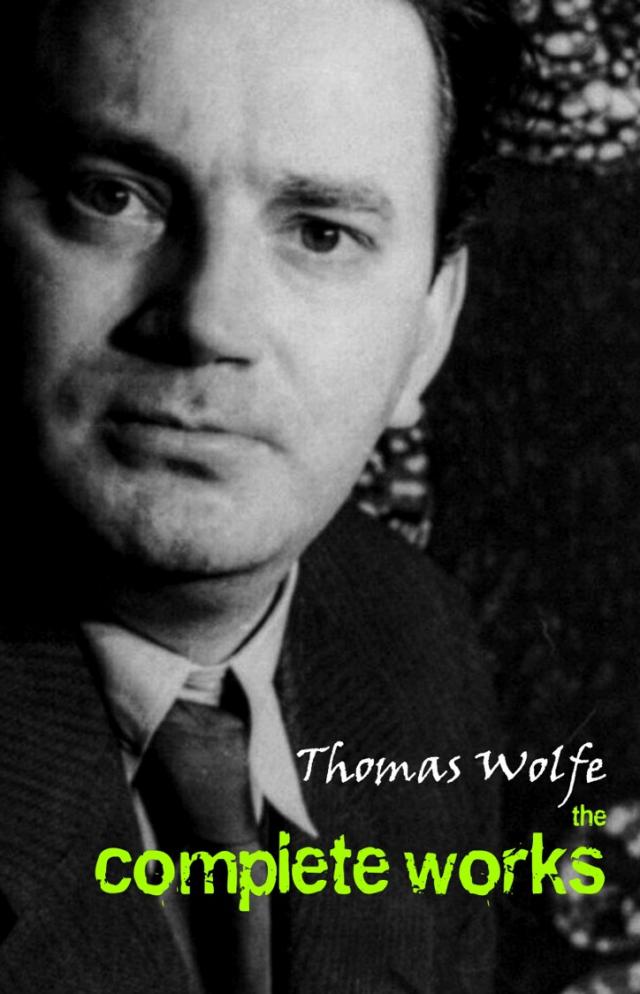
Thomas Wolfe, page 309


“But not ‘too autobiographical,’” George went on earnestly. “If the critics had just crossed those words out and written in their place ‘not autobiographical enough,’ they’d have hit it squarely. That’s where I failed. That’s where the real fault was.” There was no question that he meant it, for his face was twisted suddenly with a grimace, the scar of his defeat and shame. “My young hero was a stick, a fool, a prig, a snob, as Dedalus was—as in my own presentment of the book I was. There was the weakness. Oh, I know—there were lots of autobiographical spots in the book, and where it was true I’m not ashamed of it, but the hitching post I tied the horses to wasn’t good enough. It wasn’t true autobiography. I’ve learned that now, and learned why. The failure comes from the false personal. There’s the guilt. That’s where the young genius business gets in—the young artist business, what you called a while ago the wounded faun business. It gets in and it twists the vision. The vision may be shrewd, subtle, piercing, within a thousand special frames accurate and Joycean—but within the larger one, false, mannered, and untrue. And the large one is the one that matters.”
He meant it now, and he was down to solid rock. Randy saw the measure of his suffering. And yet, now as before, he seemed to be going to extremes and taking it too hard. In some such measure all men fail, and Randy said:
“But was anything ever as good as it could be? Who succeeded anyway?”
“Oh, plenty did!” he said impatiently. “Tolstoy when he wrote War and Peace. Shakespeare when he wrote King Lear. Mark Twain in the first part of Life on the Mississippi. Of course they’re not as good as they might have been—nothing ever is. Only, they missed in the right way: they might have put the shot a little further—but they were not hamstrung by their vanity, shackled by their damned self-consciousness. That’s what makes for failure. That’s where I failed.”
“Then what’s the remedy?”
“To use myself to the top of my bent. To use everything I have. To milk the udder dry, squeeze out the last drop, until there is nothing left. And if I use myself as a character, to withhold nothing, to try to see and paint myself as I am—the bad along with the good, the shoddy alongside of the true—just as I must try to see and draw every other character. No more false personal, no more false pride, no more pettiness and injured feelings. In short, to kill the wounded faun.”
Randy nodded: “Yes. And what now? What comes next?”
“I don’t know,” he answered frankly. His eyes showed his perplexity. “That’s the thing that’s got me stumped. It’s not that I don’t know what to write about.—God!” he laughed suddenly. “You hear about these fellows who write one book and then can’t do another because they haven’t got anything else to write about!”
“You’re not worried about that?”
“Lord, no! My trouble’s all the other way around! I’ve got too much material. It keeps backing up on me—” he gestured around him at the tottering piles of manuscript that were everywhere about the room—“until sometimes I wonder what in the name of God I’m going to do with it all—how I’m going to find a frame for it, a pattern, a channel, a way to make it flow!” He brought his fist down sharply on his knee and there was a note of desperation in his voice. “Sometimes it actually occurs to me that a man may be able to write no more because he gets drowned in his own secretions!”
“So you’re not afraid of ever running dry?”
He laughed loudly. “At times I almost hope I will,” he said. “There’d be a kind of comfort in the thought that some day—maybe after I’m forty—I would dry up and become like a camel, living on my hump. Of course, I don’t really mean that either. It’s not good to dry up—it’s a form of death. . . . No, that’s not what bothers me. The thing I’ve got to find out is the way!” He was silent a moment, staring at Randy, then he struck his fist upon his knee again and cried: “The way! The way! Do you understand?”
“Yes,” said Randy, “I think I do. But how?”
George’s face was full of perplexity. He was silent, trying to phrase his problem.
“I’m looking for a way,” he said at last. “I think it may be something like what people vaguely mean when they speak of fiction. A kind of legend, perhaps. Something—a story—composed of all the knowledge I have, of all the living I’ve seen. Not the facts, you understand—not just the record of my life—but something truer than the facts—something distilled out of my experience and transmitted into a form of universal application. That’s what the best fiction is, isn’t it?”
Randy smiled and nodded encouragement. George was all right. He needn’t have worried about him. He would work his way out of the morass. So Randy said cheerfully:
“Have you started the new book yet?”
He began to talk rapidly, and again Randy saw worried tension in his eyes.
“Yes,” he said, “I’ve written a whole lot. These ledgers here—” he indicated a great stack of battered ledgers on the table—“and all this manuscript—” he swept his arms in a wide gesture around the room—“they are full of new writing. I must have written half a million words or more.”
Randy then made the blunder which laymen so often innocently make when they talk to writers.
“What’s it about?” he said.
He was rewarded with an evil scowl. George did not answer. He began to pace up and down, thinking to himself with smoldering intensity. At last he stopped by the table, turned and faced Randy, and, with the redemptive honesty that was the best thing in him, bluntly said:
“No, I haven’t started my new book yet! . . . Thousands of words—” he whacked the battered ledgers with a flattened palm—“hundreds of ideas, dozens of scenes, of scraps, of fragments—but no book! . . . And—” the worried lines about his eyes now deepened—“time goes by! It has been almost five months since the other book was published, and now—” he threw his arms out toward the huge stale chaos of that room with a gesture of exasperated fury—“here I am! Time gets away from me before I know that it has gone! Time!” he cried, and smote his fist into his palm and stared before him with a blazing and abstracted eye as though he saw a ghost—“Time!”
His enemy was Time. Or perhaps it was his friend. One never knows for sure.
Randy stayed in New York several days, and the two friends talked from morning till night and from night till morning. Everything that came into their heads they talked about. George would stride back and forth across the floor in his restless way, talking or listening to Randy, and suddenly would pause beside the table, scowl, look around him as though he were seeing the room for the first time, bring down his hand with a loud whack on a pile of manuscript, and boom out:
“Do you know what the reason is for all these words I’ve written? Well, I’ll tell you. It’s because I’m so damned lazy!”
“It doesn’t look like the room of a lazy man to me,” said Randy, laughing.
“It is though,” George answered. “That’s why it looks this way. You know—” his face grew thoughtful as he spoke—“I’ve got an idea that a lot of the work in this world gets done by lazy people. That’s the reason they work—because they’re so lazy.”
“I don’t follow you,” said Randy, “but go on—spill it—get it off your chest.”
“Well,” he said, quite seriously, “it’s this way: you work because you’re afraid not to. You work because you have to drive yourself to such a fury to begin. That part’s just plain hell! It’s so hard to get started that once you do you’re afraid of slipping back. You’d rather do anything than go through all that agony again—so you keep going—you keep going faster all the time—you keep going till you couldn’t stop even if you wanted to. You forget to eat, to shave, to put on a clean shirt when you have one. You almost forget to sleep, and when you do try to you can’t—because the avalanche has started, and it keeps going night and day. And people say: ‘Why don’t you stop sometime? Why don’t you forget about it now and then? Why don’t you take a few days off?’ And you don’t do it because you can’t—you can’t stop yourself—and even if you could you’d be afraid to because there’d be all that hell to go through getting started up again. Then people say you’re a glutton for work, but it isn’t so. It’s laziness—just plain, damned, simple laziness, that’s all.”
Randy laughed again. He had to—it was so much like George—no one else could have come out with a thing like that. And what made it so funny was that he knew George saw the humor of it, too, and yet was desperately in earnest. He could imagine the weeks and months of solemn cogitation that had brought George to this paradoxical conclusion, and now, like a whale after a long plunge, he was coming up to spout and breathe.
“Well, I see your point,” Randy said. “Maybe you’re right. But at least it’s a unique way of being lazy.”
“No,” George answered, “I think it’s probably a very natural one. Now take all those fellows that you read about,” he went on excitedly—“Napoleon—and—and Balzac—and Thomas Edison—” he burst out triumphantly—“these fellows who never sleep more than an hour or two at a time, and can keep going night and day—why, that’s not because they love to work! It’s because they’re really lazy—and afraid not to work because they know they’re lazy! Why, hell yes!” he went on enthusiastically. “I know that’s the way it’s been with all those fellows! Old Edison now,” he said scornfully, “going around pretending to people that he works all the time because he likes it!”
“You don’t believe that?”
“Hell, no!”—scornfully. “I’ll bet you anything you like that if you could really find out what’s going on in old Edison’s mind, you’d find that he wished he could stay in bed every day until two o’clock in the afternoon! And then get up and scratch himself! And then lie around in the sun for a while! And hang around with the boys down at the village store, talking about politics, and who’s going to win the World Series next fall!”
“Then what keeps him from it, if that’s what he wants to do?”
“Why,” he cried impatiently, “laziness! That’s all. He’s afraid to do it because he knows he’s so damned lazy! And he’s ashamed of being lazy, and afraid he’ll get found out! That’s why!”
“Ah, but that’s another thing! Why is he ashamed of it?”
“Because,” he said earnestly, “every time he wants to lie in bed until two o’clock in the afternoon, he hears the voice of his old man——”
“His old man?”
“Sure. His father.” He nodded vigorously.
“But Edison’s father has been dead for years, hasn’t he?”
“Sure—but that doesn’t matter. He hears him just the same. Every time he rolls over to get an extra hour or two, I’ll bet you he hears old Pa Edison hollering at him from the foot of the stairs, telling him to get up, and that he’s not worth powder enough to blow him sky high, and that when he was his age, he’d been up four hours already and done a whole day’s work—poor, miserable orphan that he was!”
“Really, I didn’t know that. Was Edison’s father an orphan?”
“Sure—they all are when they holler at you from the foot of the stairs. And school was always at least six miles away, and they were always barefooted, and it was always snowing. God!” he laughed suddenly. “No one’s old man ever went to school except under polar conditions. They all did. And that’s why you get up, that’s why you drive yourself, because you’re afraid not to—afraid of ‘that damned Joyner blood in you.’ . . . So I’m afraid that’s the way it’s going to be with me until the end of my days. Every time I see the Ile de France or the Aquitania or the Berengaria backing into the river and swinging into line on Saturday, and see the funnels with their racing slant, and the white breasts of the great liners, and something catches at my throat, and suddenly I hear mermaids singing—I’ll also hear the voice of the old man yelling at me from as far back as I can remember, and telling me I’m not worth the powder to blow me up. And every time I dream of tropic isles, of plucking breadfruit from the trees, or of lying stretched out beneath a palm tree in Samoa, fanned by an attractive lady of those regions clad in her latest string of beads—I’ll hear the voice of the old man. Every time I dream of lying sprawled out with Peter Breughel in Cockaigne, with roast pigs trotting by upon the hoof, and with the funnel of a beer bung in my mouth—I’ll hear the voice of the old man. Thus conscience doth make cowards of us all. I’m lazy—but every time I surrender to my baser self, the old man hollers from the stairs.”
George was full of his own problems and talked about them constantly. Randy was an understanding listener. But suddenly one day, toward the end of Randy’s visit, the thought struck George as strange that his friend should be taking so much time off from his job. He asked Randy about it. How had he managed it?
“I haven’t got a job,” Randy answered quietly with his little embarrassed laugh. “They threw me out.”
“You mean to say that that bastard Merrit—” George began, hot with instant anger.
“Oh, don’t blame him,” Randy broke in. “He couldn’t help it. The higher-ups were on his tail and he had to do it. He said I wasn’t getting the business, and it’s true—I wasn’t. But what the Company doesn’t know is that nobody can get the business any more. It isn’t there, and hasn’t been for the last year or so. You saw how it was when you were home. Every penny anybody could get hold of went into real estate speculation. That was the only business they had left down there. And now, of course, that’s gone, too, since the bank failed.”
“And do you mean to say,” George commented, speaking the words slowly and with emphasis—“do you mean to say that Merrit seized that moment to throw you out on your ear? Why, the dirty——”
“Yes,” said Randy. “I got the sack just a week after the bank closed. I don’t know whether Merrit figured that was the best time to get rid of me or whether it just happened so. But what’s the difference? It’s been coming for a long time. I’ve seen it coming for a year or more. It was just a question of when. And believe me,” he said with quiet emphasis, “I’ve been through hell. I lived from day to day in fear and dread of it, knowing it was coming and knowing there wasn’t anything I could do to head it off. But the funny thing is, now it’s happened I feel relieved.” He smiled his old clear smile. “It’s the truth,” he said. “I never would have had the guts to quit—I was making pretty good money, you know—but now that I’m out, I’m glad. I’d forgotten how it felt to be a free man. Now I can hold my head up and look anybody in the eye and tell the Great Man, Paul S. Appleton himself, to go to the devil. It’s a good feeling. I like it.”
“But what are you going to do, Randy?” asked George with evident concern.
“I don’t know,” said Randy cheerfully. “I haven’t any plans. All the years I was with the Company I lived pretty well, but I also managed to save a little something. And, luckily, I didn’t put it in the Citizens Trust, or in real estate either, so I’ve still got it. And I own the old family house. Margaret and I can get along all right for a while. Of course, jobs that pay as well as the one I had don’t turn up around every corner, but this is a big country and there’s always a place for a good man. Did you ever hear of a good man who couldn’t find work?” he said.
“Well, you can’t be too sure of that,” said George, shaking his head dubiously. “Maybe I’m wrong,” he went on, pausing and frowning thoughtfully, “but I don’t think the Stock Market crash and the bank failure in Libya Hill were isolated events. I’m coming to feel,” he said, “that we may be up against something new—something that’s going to cut deeper than anything America has experienced before. The papers are beginning to take it seriously. They’re calling it a depression. Everybody seems to be scared.”
“Oh, pshaw!” said Randy with a laugh. “You are feeling low. That’s because you live in New York. Here the Stock Market is everything. When it’s high, times are good; when it’s low, they’re bad. But New York is not America.”
“I know,” said George. “But I’m not thinking about the Stock Market. I’m thinking about America. . . . Sometimes it seems to me,” he continued slowly, like a man who gropes his way in darkness over an unfamiliar road, “that America went off the track somewhere—back around the time of the Civil War, or pretty soon afterwards. Instead of going ahead and developing along the line in which the country started out, it got shunted off in another direction—and now we look around and see we’ve gone places we didn’t mean to go. Suddenly we realize that America has turned into something ugly—and vicious—and corroded at the heart of its power with easy wealth and graft and special privilege. . . . And the worst of it is the intellectual dishonesty which all this corruption has bred. People are afraid to think straight—afraid to face themselves—afraid to look at things and see them as they are. We’ve become like a nation of advertising men, all hiding behind catch phrases like ‘prosperity’ and ‘rugged individualism’ and ‘the American way.’ And the real things like freedom, and equal opportunity, and the integrity and worth of the individual—things that have belonged to the American dream since the beginning—they have become just words, too. The substance has gone out of them—they’re not real any more. . . . Take your own case. You say you feel free at last because you’ve lost your job. I don’t doubt it—but it’s a funny kind of freedom. And just how free are you?”
“Well, free enough to suit me,” said Randy heartily. “And, funny or not, I’m freer than I’ve ever been before. Free enough to take my time and look around a bit before I make a new connection. I don’t want to get in with another outfit like the old one. I’ll land on my feet,” he said serenely.
“But how are you going to do it?” asked George. “There can’t be anything for you in Libya Hill, with the bottom dropped out of everything down there.”
“Hell, I’m not wedded to the place!” said Randy. “I’ll go anywhere. Remember, I’ve been a salesman all my life—I’m used to traveling around. And I have friends in the game—in other lines—who’ll help me. That’s one good thing about being a salesman: if you can sell one thing, you can sell anything, and it’s easy to switch products. I know my way around,” he concluded with strong confidence. “Don’t you worry about me.”