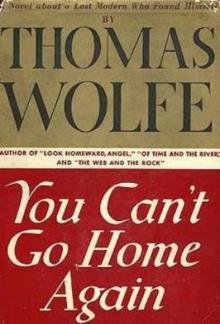
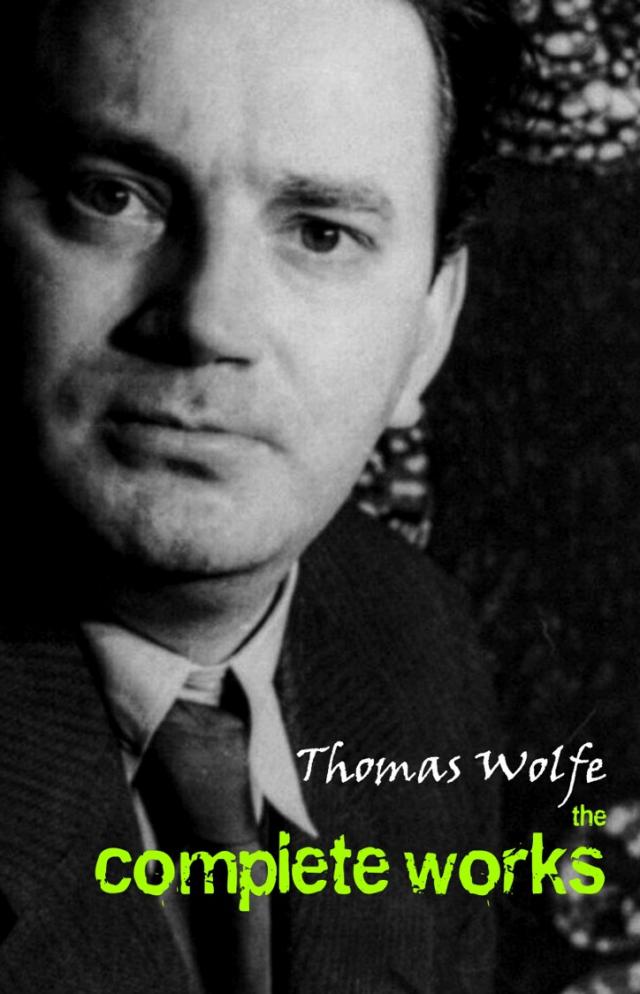
Thomas Wolfe, page 251


Mr. Malone gave the young man’s manuscript to Lulu Scudder, and she, in turn, did with it whatever it is that literary agents do, and in the end—yes, in the end—something came of it. But weary months were still to pass before that something happened, and meanwhile Monk—young hopeless, hopeful, hapless Monk—was sunk down fathoms deeper than he’d ever been before in sea-depths of self-doubt and black despair beyond all caring.
[¬]
BOOK VI
LOVE’S BITTER MYSTERY
The party had had an unexpectedly depressing effect on Monk. He came away from it feeling more strongly than ever that he was no good, and that his book would never achieve the consummation of print.
But it was more than that—much more. For he knew that Esther was in some way inextricably involved in the web and weft from which his bitter and despairing mood was spun. There in the luxury of her home he had rubbed elbows with the great ones of the earth whose rare and glorious lot had been the object of his distant envy and ambition. And now that he had moved among them, seen and talked to them, what he observed had filled him with dismay, a cold constriction of the heart.
Still too close to the event to sort out and make clear just what it was that so affected him, yet he knew, with an instant, certain, deadly knowledge, that a dear illusion had been shattered. And so strong had been the pull of this illusion, so central since his childhood to all his hopes, that now he had the sense that he himself—all his directing energies, his work, his very life—was broken, shattered, torn asunder, and destroyed, inescapably laid low in the wreckage of his golden dream.
[¬]
36
A VISION OF DEATH IN APRIL
That Spring—in the green sorcery of that final, fatal, and ruinous April—a madness which was compounded of many elements took possession of him and began to exert completely its mastery of death, damnation, and horror over the whole domain of his body, mind, and spirit. He thought that he was lost, and he looked on life with the eye, not of a dead man, but of a man who had died against his will, who had been torn bitterly out of the glorious music of the day, and who, out of the shades of death, revisits all the glory he has lost and feeds upon it with a heart of fire, a tongueless cry, a passion of soundless grief, an agony of regret and loss.
And in the tortured, twisted crevices of his brain, he felt, with a wave of desolating self-pity and despair, that Esther had contrived this ruin against him. He saw her at the center of a corrupt and infamous world, inhabited by rich, powerful, and cynical people—great, proud, and potent beak-nosed Jews, their smooth-skinned wives who made a fashion and a cult of books and plays and nigger carvings, the so-called leaders in the arts themselves, the painters, writers, poets, actors, critics, sly and crafty in their knowingness and in their hate and jealousy of each other—and in this picture of her world, the only thing, he thought, that gave joy to these dead, sterile, and hateful lives in their conspiracy of death was the castration of the spirit of a living man. They had used Esther as a bait to snare the yokel. And it seemed to him that they had succeeded. It seemed that he was fairly caught at last in the trap which they had laid, and into which his own folly had led him, that his ruin was complete and incurable, that he was shorn of his strength forever, and that for him there was no hope of recovery or salvation.
He was now twenty-seven years old, and like a man who has waited too long before the approaching hoof beats of disaster, who has watched with too dull, too careless, or too assured an eye the coming of a flood, the approach of the enemy, or like an ignorant young fighter who, having never been hurt, having never tested the full strength of an immense and merciless power, having never been stung by the bitter asp of defeat, having never been made wary by a blow of incredible, unrealizable force, and who thinks in his insolence and pride that he is the measure of all things and will be triumphant in every conflict, so, now, it seemed to him he had been overtaken by disaster, and was fairly, fatally engulfed in an abyss of ruin he had not foreseen.
And yet he thought that no Spring ever came more sweetly or more gloriously to any man than that one came to him. The sense of ruin, the conviction that he was lost, the horrible fear that all the power and music in his life, like the flying remnants of a routed army, had been blown apart into the fragments of a ghastly dissolution so that they would never come back to him, never again the good times, the golden times, the nights his spirit prowled with the vast stealth and joy of a tiger across the fields of sleep, and the days when his power leaped on from strength to strength, from dream to dream, to the inevitable and sustained accomplishment of a great, exultant labor—the sense of having lost all this forever, so far from making him hate the Spring and the life he saw around him, made him love it more dearly and more passionately than he had ever done before.
In the backyard of the old brick house in which he lived, one of those small, fenced backyards of a New York house, a minute part in the checkered pattern of a block, there was, out of the old and worn earth, a patch of tender grass, and a single tree was growing there. That April, day by day, he watched the swift coming of that tree into its glory of young leaf again. And then one day he looked into its heart of sudden and magical green and saw the trembling lights that came and went into it, the hues that deepened, shifted, changed before one’s eye to every subtle change of light, each delicate and impalpable breeze, and it was so real, so vivid, so intense that it made a magic and a mystery, evoking the whole poignant dream of time and of man’s life upon the earth, and instantly, it seemed to Monk, the tree became coherent with his destiny, and his life was one with all its brevity from birth to death.
The peculiar power and property of Spring for evoking the whole sense of man’s unity with all the elusive and passionate enigmas of life came, Monk felt, from the effect of the color green upon his memory and his sense of time. The first green of the year, and particularly the first green in the city, had a power not only of drawing all the swarming chaos and confusion of the city into one great lyrical harmony of life, it had also such a magical power over all his memories that the life that moved and passed around him became an instant part of all the moments of his life. So, too, the past became as real as the present, and he lived in the events of twenty years ago with as much intensity and as great a sense of actuality as if they had just occurred. He felt that there was no temporal past or present, no now more living than any reality of then; the fiction of temporal continuity was destroyed, and his whole life became one piece with the indestructible unity of time and destiny.
Thus over his whole mind that Spring there hung the sorcery of this enchanted green, and for this reason his life that Spring attained the focal intensity of a vision. And it was a vision of death and dissolution, ever present in a thousand images that swarmed incredibly in his brain. He saw the world in the hues of death, not because he was trying to fly from reality, but because he was trying to embrace it, not because he wanted to escape out of a life that he had found unendurable into some pleasing fable of his own devising, but because for years the hunger that had driven him with a desire for knowledge so insatiate that he wanted to pluck the final core and essence out of every object still moved him forward towards an escape into life. But now it seemed to him that life itself had played him false.
Save for those hours each day when Esther stayed with him, and the hours when he had to go to the school to meet his classes, he spent his time either in a mad and furious walking of the streets from night to morning, or at home in a contemplation of complete solitude. For hours at a time he would sit immovable in a chair, or lie extended on his cot with his hands folded beneath his head, apparently sunk in senseless apathy, but in reality, although he did not stir a muscle, every faculty was engaged in the most furious activity he had ever known. The images of the past and present swept through his mind in a stream of blinding light.
As he thought of Esther, of her world, and of the ruin in which he felt she had involved him, suddenly he would be roused by the sound of deathless birdsong in the tree. Then he would start up from his cot and go to the window, and as he looked into the magic heart of the green tree, the moments of lost time awoke with all their tragic memories, as actual as the room in which he stood.
Suddenly he thought of the time in his childhood when he had seen a man shaken like a rat, slapped in the face, retreating and cringing before his enemy while his wife and young son looked on with white and staring faces. And he knew that from that moment that man’s spirit and his life were broken. He remembered the day, the time, the ghastly and unnatural silence of the neighborhood which heard and saw it all. And for months thereafter the man had walked by all the curious, staring, and quietly contemptuous faces of the town with a lowered head, and when he spoke to anyone, when he tried to smile, his smile was horrible—a pitiful grimace, an ingratiating and servile smirk rather than a smile. And his wife and his son went silently and alone thereafter, with furtive glances, frightened, stricken, and ashamed.
Again, when he was twelve years old, he had seen a man publicly whipped and slapped by his wife’s lover. The man was a shabby little creature, the husband of a bold and sensual woman, whose lover, a strong, handsome, brutal-looking man of wealth and authority, came to fetch her in his motor every evening after dinner. When this happened, the husband, who at this time would be watering the lawn before the house, would keep his pallid face fixed on the ground before him, never speaking to the lover, or to his own wife as she passed by him on the walk.
One night, however, when the lover came and halted his car before the house and signaled for the woman to come out, the husband had suddenly thrown down his hose, rushed across the lawn and down the cement steps to the place where the car was halted, and begun to speak to the other man in a high, trembling, and excited voice. In a moment there was a low roar of anger and surprise from the big man in the car, he had thrown open the door so violently that the husband was hurled back, and then he had seized the husband, shaken, mauled, and slapped him, cursing him foully and savagely, and with a deliberate arrogance publishing his relations with the man’s wife to the neighborhood and to the whole audience of the silent, staring street.
It was a sight unutterable in its naked shame, and the most shameful thing was the hideous fear of the husband, who, after his first wild impulse of courage, was now squeaking like a rat with terror, pleading to be let go and not to be slapped again. Finally, in his frenzy, he had wrenched free from the other man, and scrambled and stumbled backward up the steps in horrible retreat, his thin hands held out in a protesting and pleading manner before him as the other man followed him heavily, cursing him and mauling at him with clumsy blows that somehow seemed more shameful because of their clumsiness, the man’s heavy panting breath, and the wet and naked silence of the air.
Then the woman had come swiftly from the house, assailed her cowering husband furiously, saying he had disgraced her and himself by “acting like a fool,” and then ordered him into the house like a beaten child. And the man had gone, he had taken it all with a cringing and whimpering apology, and then had half-run, half-stumbled into the merciful concealment of the house, his head lowered and tears streaming down the reddened flanks of his thin, slapped face. Then the woman had got into the car with her cursing and boastfully threatening lover, and had talked to him in a low, earnest, and persuasive voice until he was pacified.
The car drove off, and as it turned the corner at the foot of the hill, Monk could hear the woman’s sudden, rich, and sensual burst of laughter. Then darkness had come, and all the far sounds and brooding mystery of the night, the great stars had flashed into the sky again, and on the porches up and down the street he could hear once more the voices of the neighbors, quiet, sly, and immensely greedy, breaking from time to time into coarse, sudden shouts of laughter. And he had hated that night forever, and it seemed to him there was no darkness in it deep enough to cover his own shame.
These memories and many others now came back to him, and the result was a nightmare vision of man’s cruelty, vileness, defeat, and cowardice so unendurable that he writhed upon his cot, ripping the sheets between convulsive hands, and cursing with a twisted mouth, and finally smashing his bloody knuckles at the wall as the black horror of man’s cruelty and fear writhed like a nest of vipers in his brain.
These things he had seen and known in his childhood, and he had sworn, as every other boy has sworn, that he would die or be beaten to a senseless pulp before he let them happen to him. And he had steeled his heart and set his teeth against the coming of the enemy, and he had sworn he would be ready for him when he came.
But now, at the beginning of that fatal April, it seemed to him that the enemy had come, but not as he expected him, not from the direction where he looked for him, not in the fierce shape and manner he had visioned him. For it seemed to him that the enemy had come on him from an unknown quarter, and that he had not known him when he came, and that he had wrought upon him a defeat, a humiliation, a ruin more horrible and irrevocable than had happened to either of these two men.
And yet, like a man who has been overpowered by his enemies and had the organs of his virility torn from him, he still knew every furious desire, every soaring hope of creation and fulfillment that he ever had. The plans and projects for a dozen books, a hundred stories, worked in his brain like madness: the whole form and body of a book, complete from start to finish, would blaze suddenly and entire within him, and he would hurl himself into it with savage and complete absorption. And this surge of new creation might continue for a week.
At such a time, in the intervals between his furious bursts of writing, he would walk the streets again with something like a return of the joy he once had felt in all the life around him. And just as his whole complex of bitter and confused feelings about Esther had become entwined and interwoven with everything he thought or felt or said that Spring, so, too, he looked now with an eye of wild desire at every other woman that he saw.
One day he saw a handsome, strong, and brawny Irish girl, with the coarse, wild beauty of her race as she came round an ugly corner beneath the brutal rust and slamming racket of the elevated structure. And as she turned the corner a gust of wind drove suddenly at her, thrusting her dress back through her legs, and in a minute her whole figure was stamped and printed nakedly against the wind—broad, potent belly, heavy breasts, and great columnar thighs coming forward with a driving sensual energy. And instantly a feeling of such power rose up in him that he felt he could tear the buildings up by the roots like onions from the earth. The blazing image of the brawny, lusty beauty of the woman was stamped into his brain forever, giving its savage memory of joy to the hideous clamor of the ugly street and all the crowds of grey-faced people that swarmed round her.
Again, in one of the narrow, crowded little streets near lower Broadway, full of the old, rusty, and gloomy-looking buildings of another time, but also filled with the sensuous and basic substances of life and commerce—with bales and crates and powerful machinery, with a smell of coffee, leather, turpentine, and rope, and with the clopping sound and the movement of great, slow-footed horses, the rumble of wheels upon the cobbles, the oaths, cries, and orders of drivers, packers, movers, and bosses—a young woman passed him as he stood before a leather store.
She was tall and slender, yet her figure was tremendously seductive, and she walked with a proud and sensual stride. Her face was thin and delicate, her eyes were clear and radiant, yet a vague and tender look dwelt in them, and her hair was carrot-colored, blown, spun like silk, escaping with a kind of witchcraft from the edges of her hat. She walked past him with a slow and undulant step, her mouth touched faintly with a smile at once innocent and corrupt, benignant and yet filled with a compassionate and seductive tenderness, and he watched her go with a feeling of wild joy and lust, a sense of unutterable loss and pain.
He knew that she was gone forever, that he would never see her again, and at the same moment he was certain he would find her and possess her. It was like magic, and the magic came not only from the lovely girl, but from the old and narrow street with its rich, dingy, and thrilling compost of the past, with its strong, clean odors of sensuous materials, and raw and honest substances, and especially the clean and glorious smell of leather from the leather shop—the smell of the big valises, bags, and cases piled before the shop which came to him strongly as the woman passed—all of this, together with the delicate, strange, and lovely light of April, made a scene of joy and magic which he thought would last forever.
He never forgot the girl, the street, the odor of the leather. It was part of the intolerable joy and pain of all that Spring. And somehow the thought of her, though for what reason he never knew, was joined forever with the thought of ships, the smell of the sea, the slant and drive and frontal breast of a great racing liner, and the wild prophecy of a voyage.
So it was with him in the brief intervals when, for no apparent reason, his spirits rose again and swept him upward for a day or two with new impulses back to life, to love, and to creation. And then, suddenly, out of the heart of joy, and the magical gold and glory and exultant music of the earth, the white blind horror of his madness would return again to stun him and to shatter the sequence of his energy into a thousand pieces.
Sometimes the wave of death and horror came upon the insane impulses of a half-heard word, a rumor of laughter in the street at night, the raucous shout and gibe of young Italian thugs as they passed by below his window in the darkness, or a look of mockery, amusement, curiosity from some insolent face at a restaurant table, some whispered, unheard communication. And sometimes it came from sourceless depths, from no visible or tangible cause whatever. It would come as he sat quietly in a chair at home, as he stared at the ceiling from his cot, from a word in a poem, from a line in a book, or simply as he looked out of the window at that one green tree. But whenever it came, and for whatever cause, the result was always the same: work, power, hope, joy, and all creative energy were instantly engulfed and obliterated in its drowning and overwhelming tide. He would rise with it inside him and hurl himself insanely against the world like a man maddened by an agony of physical pain, like a man stamping and stumbling blindly about a room in an insanity of pain, with every tissue of his life drawn and fed into the maw of a cancerous tumor, or clutching between his frantic hands a whole horrible hell of abscessed and aching teeth.