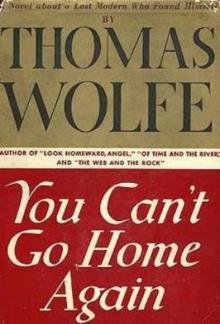
Thomas Wolfe, page 471



“Can yuh swim good?” he says.
“Like a fish,” I tells him. “I’m a regleh fish in duh wateh,” I says. “I loined to swim right off duh docks wit duh odeh kids,” I says.
“What would yuh do if yuh saw a man drownin’,” duh guy says.
“Do? Why, I’d jump in an’ pull him out,” I says. “Dat’s what I’d do.”
“Did yuh eveh see a man drown?” he says.
“Sure,” I says. “I see two guys—bot’ times at Coney Island. Dey got out too far, an’ neider one could swim. Dey drowned befoeh anyone could get to ’em.”
“What becomes of people after dey have drowned out heah?” he says.
“Drowned out where?” I says.
“Out heah in Brooklyn.”
“I don’t know whatcha mean,” I says. “Neveh hoid of no one drownin’ heah in Brooklyn, unless yuh mean in a swimmin’ pool. Yuh can’t drown in Brooklyn,” I says. “Yuh gotta drown somewhere else—in duh ocean, where dere’s wateh.”
“Drownin’,” duh guy says, lookin’ at his map. “Drownin’.”
Jesus! By den I could see he was some kind of nut, he had dat crazy expression in his eyes when he looked at yuh, an’ I didn’t know what he might do. So we was comin’ to a station, an’ it wasn’t my stop, but I got off, anyway, an’ waited for duh next train.
“Well, so long, chief,” I says. “Take it easy, now.”
“Drownin’,” duh guys say, lookin’ at his map. “Drownin’.”
Jesus! I’ve t’ought about dat guy a t’ousand times since den an’ wondered what eveh happed to ’m goin’ out to look at Bensonhoist because he liked duh name! Walkin’ aroun’ t’roo Red Hook by himself at night an’ lookin’ at his map! How many people did I see drowned out heah in Brooklyn! How long would it take a guy wit a good map to know all deh was to know about Brooklyn!
Jesus! What a nut he was! I wondeh what eveh happened to ’m, anyway! I wondeh if someone knocked ’m on duh head, or if he’s still wanderin’ aroun’ in duh subway in duh middle of duh night wit his little map! Duh poor guy! Say, I’ve got to laugh, at dat, when I t’ink about him! Maybe he’s found out by now dat he’ll neveh live long enough to know duh whole of Brooklyn. It’d take a guy a lifetime to know Brooklyn t’roo and t’roo. An’ even den, yuh wouldn’t know it all.
Only the dead know Brooklyn t’roo an’ t’roo.
[¬]
POLYPHEMUS
[The North American Review, June 1935]
A one-eyed Spaniard, one of the early voyagers, was beating his way up the American coasts out of the tropics, perhaps on his way back home, perhaps only to see what could be seen. He does not tell us in the record he has left of the voyage how he happened to be there, but it seems likely that he was on his way home and had been driven off his course. Subsequent events show that he was in a very dilapidated condition, and in need of overhauling: the sails were rent, the ship was leaking, the food and water stores were almost exhausted. During the night in a storm off one of the cruelest and most evilly celebrated of the Atlantic capes, the one-eyed Spaniard was driven in and almost wrecked. By some miracle of good fortune he got through one of the inlets in the dark, and when light broke, he found himself becalmed in an enormous inlet of pearl-gray water.
As the light grew, he made out seaward a long almost unbroken line of sandy shoals and islands that formed a desolate barrier between the sea and the mainland, and made this bay in which he found himself. Away to the west he descried now the line of the shore: it was also low, sandy, and desolate looking. The cool gray water of morning slapped gently at the sides of his ship: he had come from the howling immensity of the sea into the desert monotony of this coast. It was as bleak and barren a coast as the one-eyed Spaniard had ever seen. And indeed, for a man who had come up so many times under the headlands of Europe, and had seen the worn escarpments of chalk, the lush greenery of the hills, and the minute striped cultivation of the earth that greeted the sailor returning from a long and dangerous voyage—and awakened in him the unspeakable emotion of earth which has been tilled and used for so many centuries, with its almost personal bond for the men who have lived there on it, and whose dust is buried in it—there must have been something particularly desolate about this coast which stretched away with the immense indifference of nature into silence and wilderness. The Spaniard felt this, and the barren and desert quality of the place is duly recorded in his log, which, for the most part, is pretty dry reading.
But here a strange kind of exhilaration seizes the Spaniard: it gets into his writing, it begins to color and pulse through the gray stuff of his record. The light of the young rising sun reddened delicately upon the waters; immense and golden, it came up from the sea behind the line of sand-dunes, and suddenly he heard the fast drumming of the wild ducks as they crossed his ship high up, flying swift and straight as projectiles. Great heavy gulls of a size and kind he had never seen before swung over his ship in vast circles, making their eerie creaking noises. The powerful birds soared on their strong even wings, with their feet tucked neatly in below their bodies; or they dove and tumbled through the air, settling to the water with great flutterings and their haunted creaking clamor: they seemed to orchestrate this desolation, they gave a tongue to loneliness, and they filled the hearts of the men who had come there with a strange exultancy. For, as if some subtle and radical changes had been effected in the chemistry of their flesh and blood by the air they breathed, a kind of wild glee now possessed the one-eyed Spaniard’s men. They began to laugh and sing, and to be, as he says, “marvelous merry.”
During the morning the wind freshened a little; the Spaniard set his sails and stood in toward the land. By noon he was going up the coast quite near the shore, and by night he had put into the mouth of one of the coastal rivers. He took in his sails and anchored there. There was nearby on shore a settlement of “the race that inhabits these regions,” and it was evident that his arrival had caused a great commotion among the inhabitants, for some who had fled away into the woods were now returning, and others were running up and down the shore, pointing and gesticulating and making a great deal of noise. But the one-eyed Spaniard had seen Indians before: that was an old story to him now; he was not disturbed. As for his men, the strange exuberance that had seized them in the morning does not seem to have worn off; they shouted ribald jokes at the Indians, and “did laugh and caper as if they had been madde.”
Nevertheless, they did not go ashore that day. The one-eyed Spaniard was worn out, and his crew was exhausted: they ate such food as they had, some raisins, cheese, and wine, and after posting a watch, they went to sleep, unmindful of the fires that flickered in the Indian village, of sounds and chants and rumors, or of the forms that padded softly up and down the shore.
The marvelous moon moved up into the skies, and blank and full, blazed down upon the quiet waters of the sound, and upon the Indian village. It blazed upon the one-eyed Spaniard and his lonely little ship and crew, on their rich dull lamps, and on their swarthy sleeping faces; it blazed upon all the dirty richness of their ragged costumes, and on their greedy little minds, obsessed then as now by the European’s greedy myth about America, to which he remains forever faithful with an unwearied and idiot pertinacity: “Where is the gold in the streets? Lead us to the emerald plantations, the diamond bushes, the platinum mountains, and the cliffs of pearl. Brother, let us gather in the shade of the ham and mutton trees, by the shores of ambrosial rivers: we will bathe in the fountains of milk, and pluck hot buttered rolls from the bread vines.”
Then the moon blazed down upon the vast desolation of the American coasts, and on the glut and hiss of tides, on all the surge and foaming slide of waters on lone beaches. The moon blazed down on the eighteen thousand miles of coast, on the million sucks and hollows of the shore, and on the great wink of the sea, that ate the earth minutely and eternally. The moon blazed down upon the wilderness, it fell on sleeping woods, it dripped through moving leaves, it swarmed in weaving patterns on the earth, and it filled the cat’s still eye with blazing yellow. The moon slept over mountains and lay like silence on the desert, and it carved the shadows of great rocks like time. The moon was mixed with flowing rivers, and it was buried in the heart of lakes, and it trembled on the water like bright fish. The moon steeped all the earth in its living and unearthly substance, it had a thousand visages, it painted continental space with ghostly light; and its light was proper to the nature of all things it touched: it came in with the sea, it flowed with the rivers, and it was still and living on clear spaces in the forest where no men watched.
And in the woodland darkness great birds fluttered to their sleep—in sleeping woodlands strange and secret birds, the teal, the nightjar, and the flying rail went to their sleep with flutterings dark as the hearts of sleeping men. In fronded beds and on the leaves of unfamiliar plants where the tarantula, the adder, and the asp had fed themselves asleep on their own poisons, and on lush jungle-depths where green-golden, bitter red, and glossy blue proud tufted birds cried out with brainless scream, the moonlight slept.
The moonlight slept above dark herds of bison moving with slow grazings in the night, it covered lonely little Indian villages; but most of it fell upon the unbroken undulation of the wilderness where, two centuries later, it would blaze on windows, and move across the face of sleeping men.
Sleep lay upon the wilderness, it lay across the faces of the nations, it lay like silence on the hearts of sleeping men; and low on lowlands and high upon the hills, flowed gentle sleep, smooth sliding sleep—sleep—sleep.
Early the next morning, the Spaniard went ashore with several of his men. “When we reached land,” he writes, “our first act was to fall down on our knees and render thanks to God and the Blessed Virgin without whose intervention we had all been dead men.” Their next act was to “take possession” of this land in the name of the King of Spain and to ground the flag. As we read today of this solemn ceremony, its pathos and puny arrogance touches us with pity. For what else can we feel for this handful of greedy adventurers “taking possession” of the immortal wilderness in the name of another puny fellow four thousand miles away, who had never seen or heard of the place and could never have understood it any better than these men. For the earth is never “taken possession of”: it possesses.
At any rate, having accomplished these acts of piety and devotion, the Spaniards rose from their prayers, faced the crowd of Indians who had by this time ventured quite close to all this unctuous rigmarole, and discharged a volley from their muskets at them (“lest they become too froward and threatening”). Two or three fell sprawling on the ground, and the others ran away yelling into the woods. Thus, at one blast, Christianity and government were established.
The Spaniards now turned their attention to the Indian village—they began to pill and sack it with the deftness of long experience; but as they entered one hut after another, they found no coffers of nuggets or chests of emeralds, and found indeed that not even the jugs and pots and cooking utensils were of gold or silver, but had been crudely fashioned from baked earth; their rage grew; they felt tricked and cheated, and began to smash and destroy all that came within their reach. This sense of injury, this virtuous indignation, has crept into the Spaniard’s record—indeed, we are edified with a bit of early American criticism which, save for a few archaisms of phrasing, has a strangely familiar ring, and might almost have been written yesterday: “This is a wild and barbarous kind of race, full of bloudie ways, it exists in such a base and vile sort of living that is worthier of wild beestes than men: they live in darkness and of the artes of living as we know them they are ignorant, one could think that God Himself has forgot them, they are so farre remote from any lighte.”
He comments with disgust on the dried and “stinkeing fysshe” and the dried meat that hung in all the huts, and on the almost total lack of metals, but he saves his finest disdain for a “kinde of weede or plante,” which they also found in considerable quantity in all the dwellings. He then goes on to describe this “weede or plante” in considerable detail: its leaves are broad and coarse, and when dried, it is yellow and has a strong odor. The barbarous natives, he says, are so fond of the plant that he has seen them put it in their mouths and chew it; when his own men tried the experience, however, they quickly had enough of it, and some were seized with retchings and a puking sickness. The final use to which this plant is put seems to him so extraordinary that he evidently fears his story will be disbelieved, for he goes on, with many assurances and oaths of his veracity, to describe how the plant may be lighted and burned and how “it giveth a fowle stinkeing smoak,” and most wonderful of all, how these natives have a way of setting it afire and drawing in its fumes through long tubes so that “the smoak cometh out again by their mouth and nostryls in such wyse that you mighte thinke them devils out of helle instead of mortyl men.”
Before we leave this one-eyed fellow, it is ironic to note with what contempt he passes over “the gold in the streets” for which his bowels yearn. As an example of one-eyed blindness, it is hard to beat. For here was gold, the inexhaustible vein of gold which the marvelous clay of the region could endlessly produce, and which mankind would endlessly consume and pay for; and the Spaniard, devoured by his lust for gold, ignores it with a grimace of disgust and a scornful dilation of his nostrils. That act was at once a history and a prophecy, and in it is all the story of Europe’s blundering with America.
For it must be said of all these explorers and adventurers, the early ones and the late ones, who came back from their voyages to the Americas embittered because they did not find gold strewn on the earth, that they failed not because there was no gold, but because they did not know where and how to look for it, and because they did not recognize it when they had it under their noses—because, in short, they were one-eyed men. That gold, real gold, the actual ore, existed in great quantities, and often upon the very surface of the earth as these men supposed, has since been abundantly shown: it is only one of the minor and less interesting episodes of American history—a casual confirmation of one of the European fairy tales. They tried to think of the most wonderful fable in the world, these money-haters, and they evolved the story of gold on the ground.
It was a story as naive and not as beautiful as a child’s vision of the lemonade spring, the ice cream mountains, the cake and candy forests, but, at any rate, America confirmed this little fable about gold in one short year of her history, and then proceeded to unpocket and unearth vast stores of wealth that made the visions of these old explorers look absurd. For she unearthed rivers of rich oil and flung them skywards, she dug mountains of coal and iron and copper out of the soil, she harvested each year two thousand miles of golden wheat, she flung great rails across the desert, she bridged the continent with the thunder of great wheels, she hewed down forests of enormous trees and floated them down rivers, she grew cotton for the world, her soil was full of sugars, citric pungencies, of a thousand homely and exotic things, but still the mystery of her earth was unrevealed, her greatest wealth and potencies unknown.
The one-eyed Spaniard, however, saw none of these things. He looted the village, murdered a few of the Indians, and advanced eighty or a hundred miles inland, squinting about for treasure. He found a desolate region, quite flat, with soil of a sandy marl, a coarse and undistinguished landscape, haunted by a lonely austerity, and thickly and ruggedly forested—for the most part with large areas of long-leaf pine. As he went inland, the soil deepened somewhat in hue and texture: it had a clayey, glutinous composition, and when rain fell, he cursed it. It grew coarse grasses and tough thick brush and undergrowth: it could also grow enough of the pungent weed whose fumes had so disgusted him to fill the nostrils of the earth with smoke forever. There was abundance of wild game and fowl, so that the one-eyed Spaniard did not go hungry; but he found no nuggets and not even a single emerald.
The one-eyed Spaniard cursed, and again turned eastward toward the sea. Swift and high and straight as bullets, the ducks passed over him, flying toward the coastal marshes. That was all. The enormous earth resumed its silence. Westward in great hills that he had never seen, cloud shadows passed above the timeless wilderness, the trees crashed down at night athwart the broken bowl of clean steep waters; there was the flash and wink of a billion little eyes, the glide and thrumming stir, the brooding ululation of the dark; there was the thunder of wings, the symphony of the wilderness, but there was never the tread of a booted foot.
The Spaniard took to his ship and set sail gladly. He was one-eyed and he had found no gold.
[¬]
THE FAR AND THE NEAR
[Cosmopolitan, July 1935]
On the outskirts of a little town upon a rise of land that swept back from the railway there was a tidy little cottage of white boards, trimmed vividly with green blinds. To one side of the house there was a garden neatly patterned with plots of growing vegetables, and an arbor for the grapes that ripened late in August. Before the house there were three mighty oaks which sheltered it in their clean and massive shade in summer, and to the other side there was a border of gay flowers. The whole place had an air of tidiness, thrift, and modest comfort.
Every day, a few minutes after two o’clock in the afternoon, the limited express between two cities passed this spot. At that moment, the great train, having halted for a breathing space at the town near by, was beginning to lengthen evenly into its stroke, but it had not yet reached the full drive of its terrific speed. It swung into view deliberately, swept past with a powerful swaying motion of the engine, a low smooth rumble of its heavy cars upon pressed steel, and then it vanished into the cut. For a moment the progress of the engine could be marked by heavy bellowing puffs of smoke that burst at spaced intervals above the edges of the meadow grass, and finally nothing could be heard but the solid clacking tempo of the wheels receding into the drowsy stillness of the afternoon.