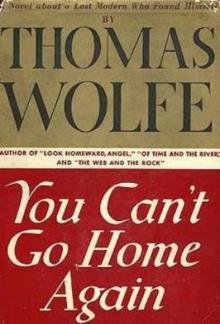
Thomas Wolfe, page 559
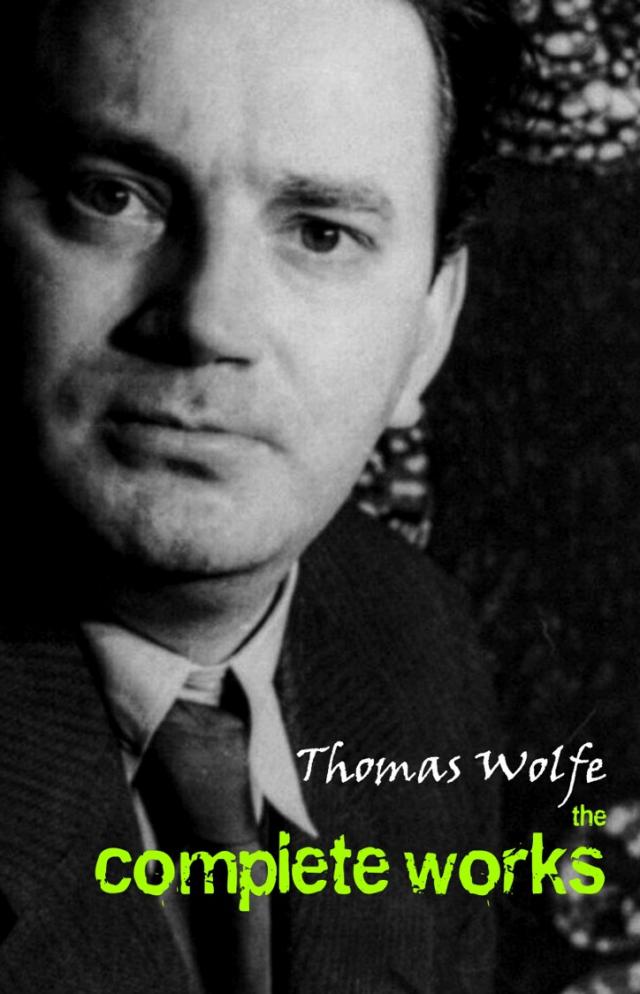


So to our cabin and to dinner in the Lodge. Then to walk along the rear of Big Gorgooby and at the stars immeasurable above the Big Gorgooby just a look—a big look. So good night—and 560 miles today.
Friday, June 24, 1938.
At daybreak, a deer outside the window is cropping grass. Then Miller in at 8:30 but let me sleep—so finally bathed, dressed, and had a good breakfast. Then with Miller, Conway, and the ranger to observation point, the ranger driving while we looked through observation glasses at Old Gorgooby and unvital time. So down to Yavapai Tower and all the people there—the eastern cowboy, and the slut and angel with broad hat and wet red mouth, blonde curls, and riding breeches filled with buttock.
So away and on to Cameron—an Indian Lodgee and an old dog moving in the shadow of a wall. Then into the Painted Desert and blazing heat and baked road and all through the afternoon by the vermilion cliffs. Four small Indian girls in rags and petticoats beside the road awaiting pennies (dimes they got), two upon a burro. Then away, away again—good road, bad road, good and bad again by the demented and fiend-tortured redness of vermilion cliffs: red, mauve, and violet, passing into red again. Now the gorge of Big Gorgooby—the Navajo Bridge and the Gorgooby, brown-red-yellow, a mere 1,000 feet or so below.
On and on now through desert land—now gray, greening sagely into sage—and staring Indians moving about here and there and Indian houses. Then the road rising, rising into hills, and forest now, and all the lovely aspens and the vast and rising rim of range and meadow land. Then the big woods and at last the Lodge, and the scarlet moment, the tremendous twilight of the Big Gorgooby—more concise and more colored, more tremendous here. Then darkness and the lights of the South River.
Later the incredible theatrical performance with the waitresses and bellhops performing—a waitress dressed as Hiawatha chanting the Union Pacific song. Then home with Miller to the cabin, and Conway still wakeful, reading lists and mileages excitably from his records—the moon in 30 hours is possible! And so to bed—and 210 miles today.
Saturday, June 25, 1938.
Rose at 7:30, in the North Rim Lodge, Grand Canyon. Sound of waitresses and maids singing farewell songs, “Till We Meet Again,” et cetera, to passengers departing on busses. They were tendering the usual U. P. sentiment, and Conway declared there were tears in the eyes of the passengers and of some of the girls. Into Lodge for view from terrace of the Big Gorgooby in finest light—and glamorous!—and glamorous! Then into breakfast, served by the waitress with the strange and charming smile. She was from Texas and admitted that sentiment, songs, and kicking her legs in the night-time theatrical entertainment, all at 8,000 feet for dear old U. P., got her wind and at first “made her awfully tired.”
At 11 o’clock on our way out—and down through the forest, and the long sweeping upland meadows with deer and cattle grazing, and the aspen leaves in the bright air. Down and down and then the bottom lands spread below us ever again, the fierce red earth, the tortured buttes and the vermilion cliffs. So on and on across the desert and into Utah, and the Mormon town of Kanab and Perry Lodge—a white house, pleasant, and almost like New England, and a gigantic lovely cool-bright poplar at the corner.
So presently the turn-off to the left for Zion’s Canyon and ahead the mountains rising range on range, no longer fierce red and vermilion now, but of sandy, whitest limestone, striped with strange stripes of salmon pink—scrub-dotted, paler. Now we are on the canyon road and climbing, and now pink rock again, strange shapes and scarrings in the rock, and even vertices upon huge swathes of stone, and plunging down now in stiff canyon folds the sheer solid soaplike block of salmon red again—deeper, yet not so fierce and strange as the Grand Canyon earth—and towering soap-stone blocks of red incredible. Now through a tunnel, out and down and down, and through the great one spaced with even iridium in the rock that gives on magic casements opening on sheer blocks of soapstone red. Then out again in the fierce light and down round dizzy windings of the road into the canyon’s depth. There the Virgin River (how sweet to see sweet water sweetly flowing here between these dizzy soapstone blocks of red) and red the bendings of the river by the soapstone walls of block, fierce red. Now into the valley floor and trees (a little like Yosemite, this valley, yet not so lush, nor so enchanted, nor cooled by the dark blanket of towering pines). But now an oasis and—O miracle!—a swimming pool, and young, wet, half-naked forms—a pool surrounded by the cottonwoods and towered over by sheer soapstone blocks of red, capped by pinnacles of blazing white. O pool in cottonwoods surrounded by fierce blocks of red and temples and kings’ thrones and the sheer smoothness of the blinding vertices of soapstone red, never did pool look cooler nor water better, wetter, more inviting!
So by the road down to the canyon’s end and all around the beetling blocks of soapstone red and river flowing. Then up and up again and finally to the main road north to Salt Lake City. Soon, almost immediately, we find a greener land, and grass in semi-desert fields, and stock and cattle grazing, and now timbered hills in contour not unlike the fields of home. Now farms and green incredible of fields and trees and Canaan pleasantness, the Sevier River flowing and a fruitful valley. Now occasional small Mormon towns, mean and plain and stinted looking. Hills rise to the left—a vista of salmon pink, vermilion cliffs again—the barricades of Bryce. We are halted here by road repair until the convoy from the Canyon passes out—and meanwhile talk to the man with the red flag who says, “We have no deserts here in Utah.” Is Zion then a flowering prairie, and are Salt Lake and the Alkali Flats the grassy precincts of the King’s Paradise?
At last we start and up through sage land into timber on the high plateau. Another ranger’s entrance house, another sticker—seven now—and so into the park and to the Canyon’s rim. There we stand in setting sun, looking out and down upon the least dizzy and least massive of the lot, but perhaps the most astounding: a million wind-blown pinnacles of salmon pink and fiery white all fused together like stick candy—all suggestive of a child’s fantasy of heaven. So to the Lodge with sour-pussed oldsters on the veranda, and to the cafeteria which was much be-Indian-souvenired, betrinketed, somehow depressing and expensive. Then to the Lodge and peeked in at the inevitable ranger and the attentive dutiful sourpusses listening to the inevitable lecture—Flora and Fauna of Bryce Canyon—and so to my cabin to write this.
And after this to Lodge where dinner was going on, and into camp shop where, with some difficulty, I bought beer in cans, and had two, feeling more and more desolate in this State of Utah. Struck up talk with a quaint old gal named Florence who imitates bird calls, and with a dark, rather attractive woman, Canadian, probably French, who had life in her and was thoroughly willing to share it. So talking with them in the lobby until dinner broke up at 10:30 and the young people came out, looking rather lost and vaguely eager, I thought, as if they wanted something that wasn’t there and didn’t know how to find it. I had some depressing reflections on Americans in search of gaiety, and National Park Lodges, and Utah, and frustration. So home, where found C busy with his calculations: “If we do so and so tomorrow, we’ll have only so and so much to do on Monday.” So to bed—and 265 miles today.
Sunday, June 26, 1938.
Arose at Bryce Canyon, at 7:30—dressed, walked with Miller to rim, and looked at Canyon. The sky was somewhat overcast and no sunlight in the Canyon, but it was no less amazing—it looked fragile compared to the other great canyons we had seen, like filigree work of fantastic immenseness, great shouldering bulwarks of eroded sand going down to it, making it look very brittle and soft. The sand erodes at the rate of one inch a year—with something the effect of sugar candy at a carnival, powdery, whitish, melting away.
Here we found an old man, roughly dressed, and with one tooth, and his daughter, a surprisingly smart-looking young female in pajama slacks and smoked goggles, talking geology. The words came trippingly off her tongue: “erosion,” “wind erosion,” “125 million years,” and so on. Then quickly back through woods toward the Lodge, and after last night’s rain, the smell of sage and pine needles was amazingly pungent, sweet, and fragrant. So, breakfast in Lodge and talked with waitress who was from Purdue—studying “home economics” and dress designing, and hoping to be a “buyer” for Chicago store. Observed the tourists—two grim-featured females, school teachers, at the next table, who glowered darkly at everyone and everything with stiff inflexible faces. The tourists rise to depart, and presently comes the sound of the waitresses, maids, and bellhops gathered by the bus, singing “Till We Meet Again” and “Goodbye, Ladies.” One of the sour-looking schoolteachers is dabbing furtively at eyes, and the bus departing, and emotional farewells. The young folks turn back to their work, boasting exultingly: “We got tears out of four of ’em this morning. Oh, I love to see ’em cry, it means business.” Thus the art of pleasing guests and squeezing tears from them—and for me the memory of the sour-faced teacher dabbing at her eyes and stabbing pity in the heart and something that cannot be sad.
And so farewell and down from the Canyon through the woods, and finally into the main road for Salt Lake 250 miles away. So all through the morning up through a great enlarging valley, at first mixed with some desert land—bald, scrub-dotted ridges on each side ascending into lovely timber, then to granite tops. Then semi-desert, semi-green—clumped now with sage and clay, but breaking marvelously into greenery where water is let in—and the River Sevier refreshing it. Then the cool dense green of trees that cluster densely round a little house, and fields ripe with thick green, and fat Mormon steers and cows and horses grazing. And moving bog with ranging marshes and fields strewn with cut mounds of green. And water, the muddy visionness of ditches filled with water so incredibly wet—the miracle of water, always, in the West.
The blazing whiteness of the sunlight now, the light but blueness of the skies, the piled casualness of snowy clouds. And then the dirty little Mormon villages, blazing and blistered in that hot dry heat, and the forlorn little houses—sometimes just little cramped and warped wooden boxes, all unpainted, hidden under the mournful screenings of the dense and sudden trees—sometimes the older Mormon houses of red brick—sometimes still more ancient uses of chinked log—sometimes strangely an old Mormon house of stone. But all are, in that hot immensity of heat, so curiously warped and small and dirty and forlorn. There’s just a touch of strangeness maybe in the set of eaves, the placing of the tag porch, the look of the ship gables—but all is graceless, all denuded, with the curious sterility and coldness and frustration the religion has.
Meanwhile the earth is burgeoning into green and fat fertility—the dense cool green of poplars in the hot bright light and the staunch cool shade of cottonwoods—and the valley winding into Canaan and the Promised Land. The fields are lush now with their green, their planted trees, the great reap of their mowings—strangely Canaan now—hemmed by the desert peaks, the ridges on both sides, denuded and half barren, curiously thrilling in their nakedness. O Canaan magical, the vale irriguous below—the marvelous freshness and fecundity of the great Sevier Valley now.
Now we pass the towns of Joseph, Levan, Nephi—the names Biblical in Canaan—or Spanish Fork and American Fork—the names like those of the pioneers. Ever the towns rise from the desert now: the brightness of new brick, the stamped hard patterns of new bungalows—an air of prosperousness, but still a graceless lack of architectural taste. But now there is a kind of cooler magic in the scenery (impassionate, granite, clearly barren in the ridges of the limestone peaks, the austere blackness of the timber). And the great valley floor is burgeoning with Canaan in between.
Then the cool flat silver of the lake at Provo and the immense smelter plants. In hot bright air the hot bright sunlight of the business street, the brick bungalows, the marvelousness of poplars and of cottonwoods, the dazzling brightness, richness, fragrance of the rambler roses and the full fat land of Canaan all away. Brigham’s great vale irriguous of Canaan is marching, marching northward, between hackled peaks is sweeping, sweeping northward through the backbone of the Promised Land, is sweeping onward, onward toward the Temple and the lake. Now, by a rise approaching the barriers of the hubbed peak, up, up, around the naked shoulder of a great mountain and down, down into the sub-plain of Salt Lake—half-desert still, half burgeoning to richness and irriguous ripe of the sudden green, and walled immensely on three sides by the hackled grandeur of the Mormon hills. But to the West, between the massive peaks, is desert openness and the salve flatness of the Great Salt Lake.
Finally, Salt Lake itself—skyscrapers, hotels, office buildings, an appearance of a city greater than its growth—and in four directions the level streets merging out and ending cleanly under massed dense green at the rises of the barren magic hills. So into town, past a fantastic dance hall, “the world’s biggest”—stores, streets, blocks 600 feet in length, and Sunday hotness, brightness, emptiness—the old feeling of Mormon coldness, desolation—the devoted, the fanatic, and the warped and dead.
First comes the harsh ugly Temple, the Temple sacrosanct, by us unvisited, unvisitable, so ugly, green, grotesque, and blah. Then the great domed roof of the Tabernacle like a political convention hall—the statues of the true saints Brothers Smith, with pious recordings of their fanaticism. A visit to the Lion House, the Beehive House, the Museum, the first cabin—and then enough, enough, of all this folly, this cruelty, and this superstition.
We are back in the white car now and out of town—almost immediate the clear and naked hill beside, and to the left the vast meadows sloping to pale flatness, and the saline, citric flatness, paleness of the lake. It is the Land of Plenty now indeed—now marvelously the orchards bursting with their fruit, and greenness, lushness, watery fertility, the blue of which was never seen before, flanked in the distance by the pale and misty flatness of the lake. Beyond the nesting range of the hackled peaks—aye, with the cruelty of Mormon in it, but with a finality of its own that grips and holds you now. On we drive through ever greater orchards groaning with their fruit, and many plants, and lush fertility. Through the thinning towns of Ogden and of Brigham, whose strange tabernacled Mormon Temple has 8 gables on each side. Then finally the greatest beauty of the day—the swift winding up the canyon among bald and greening knobs, a sense of grandeur, sweetness, and familiarity, and suddenly, cupped in the rim of bald hills, a valley plain, flat as a floor and green as heaven and fertile and more ripe than the Promised Land. And then below the vast, lovely, and most enchanted valley of them all—the great valley named Logan, which makes all that has gone before fade to nothing. It is the very corn and fruit of Canaan, a vast sweet plain of unimaginable richness, loaded with fruit, bursting with cherry orchards, green with its thick and lush fertility and dotted everywhere with the beauty of incredible trees.
So out and on, light darkening now, and at length across the line to Idaho, and into Preston, blazing with Idaho’s electric light. Now on and on in the darkness with a sense of strangeness; it had rained here and to the north the sky was rent with gigantic flashes of Western lightning. And on and on, between high-back ridges that had closed on us, towards Pocatello. There we arrived just before eleven, perhaps somewhat too fatigued by the crowded beauty, splendor, and magnificence of this day to write it down.
And so to bed! And today 467 miles! (And in our first seven days about 2,760 of our journey.)
Monday, June 27, 1938.
Up at 8:10. All through the morning through the great fertile valley of the Snake. The potato storage sheds, sod-roofed on top—the barns with the green loft door and the piles of dark hay—the stockades, the cattle and the horses, the feel and smell of clay and hay and stockades. The few buildings seem curiously forgotten in the Past. The towns—the little blistered houses—the big grain elevators—and water, water everywhere—beside the road in fields, in irrigation ditches, underneath the bridges—wetness of water flowing full to the floor of bridges—magical full water, brown-mud-yellow, wanders everywhere.
At Sugar City the turn-off for Jackson Hole. Then up and up through the pleasant foldings of the hills—and pouring waters and then the steep turnings and the winds. The vision of the timber line and now and then the Pass—and down below the miracle of Jackson Hole—and so, down to it—and into Jackson. The Square of Old West is now be-duded—the Western hands by the filling station and giggling kids upon two broncs. Luncheon in a “coffee shop” and so out and up the edges of the valley by the Tetons and Leigh Lake and Jenny Lake and Jackson Lake.
Up through the sweetness of the Teton Forest, by a winding single road, and then the immediate beginning of Yellowstone. The ride up through hemlock, pine, and spruce trees and then the Thumb of Yellowstone, the Paint Pots, and the boiling waters, sinister, grotesque, like a shimmering unbedded river moving through hot oatmeal. Then the vast bouquet of Old Faithful, and the crater lid, volcanic, the earth rising from a hundred holes, the hot boiling, overslipping of the pot, and then the vast hot plume of steam and water. The people watching—middle-class America watching—kids, old men, women, young men, women—and again the hot plume, the tons of water falling and the hot plume dipping once again.
So to supper at the Lodge and later to the Yellowstone Inn to the bar. There is more merriment here, the people are more pugnacious, less casual, and singing: “We don’t give a damn for the whole state of Utah.” So midnight and a billion stars and to our cabin. Lay awake and talking all together—so to bed.