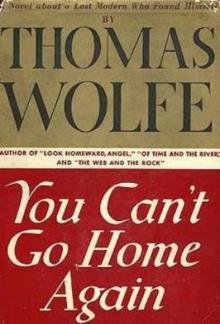
Thomas Wolfe, page 135
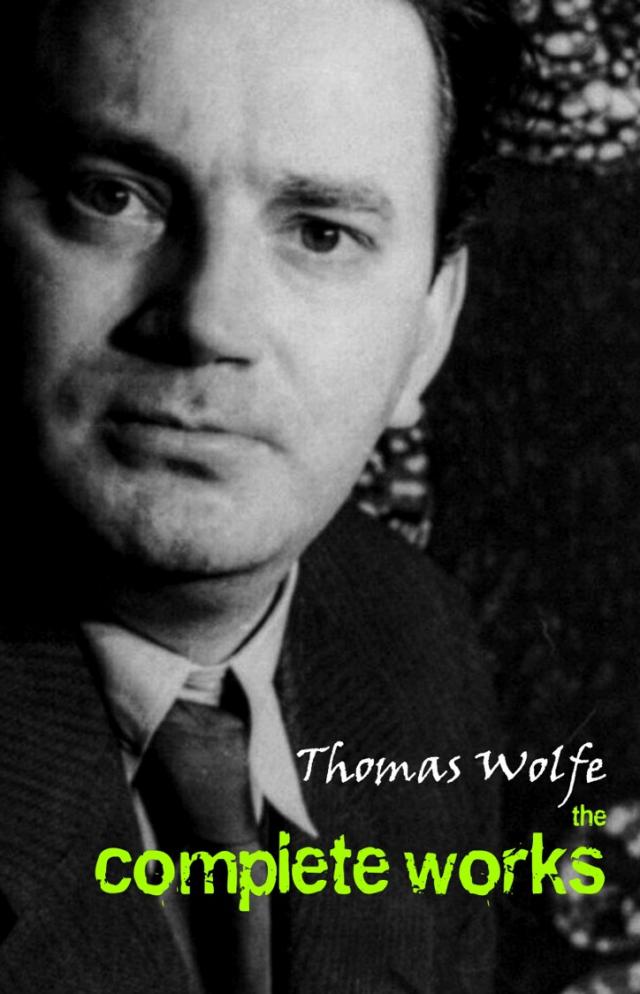


Proud, cruel, everchanging and ephemeral city, to whom we came once when our hearts were high, our blood passionate and hot, our brain a particle of fire: infinite and mutable city, mercurial city, strange citadel of million-visaged time—Oh! endless river and eternal rock, in which the forms of life came, passed and changed intolerably before us, and to which we came, as every youth has come, with such enormous madness, and with so mad a hope—for what?
To eat you, branch and root and tree; to devour you, golden fruit of power and love and happiness; to consume you to your sources, river and spire and rock, down to your iron roots; to entomb within our flesh forever the huge substance of your billion-footed pavements, the intolerable web and memory of dark million-visaged time.
And what is left now of all our madness, hunger, and desire? What have you given, incredible mirage of all our million shining hopes, to those who wanted to possess you wholly to your ultimate designs, your final sources, from whom you took the strength, the passion, and the innocence of youth?
What have we taken from you, protean and phantasmal shape of time? What have we remembered of your million images, of your billion weavings out of accident and number, of the mindless fury of your dateless days, the brutal stupefaction of your thousand streets and pavements? What have we seen and known that is ours forever?
Gigantic city, we have taken nothing—not even a handful of your trampled dust—we have made no image on your iron breast and left not even the print of a heel upon your stony-hearted pavements. The possession of all things, even the air we breathed, was held from us, and the river of life and time flowed through the grasp of our hands forever, and we held nothing for our hunger and desire except the proud and trembling moments, one by one. Over the trodden and forgotten words, the rust and dusty burials of yesterday, we were born again into a thousand lives and deaths, and we were left forever with only the substance of our waning flesh, and the hauntings of an accidental memory, with all its various freight of great and little things which passed and vanished instantly and could never be forgotten, and of those unbidden and unfathomed wisps and fumes of memory that share the mind with all the proud dark images of love and death.
The tugging of a leaf upon a bough in late October, a skirl of blown papers in the street, a cloud that came and went and made its shadow in the lights of April. And the forgotten laughter of lost people in dark streets, a face that passed us in another train, the house our mistress lived in as a child, a whipping of flame at a slum’s cold corner, the corded veins on an old man’s hand, the feathery green of a tree, a daybreak in a city street in the month of May, a voice that cried out sharply and was silent in the night, and a song that a woman sang, a word that she spoke at dusk before she went away,—the memory of a ruined wall, the ancient empty visage of a half-demolished house in which love lay, the mark of a young man’s fist in crumbling plaster, a lost relic, brief and temporal, in all the everlasting variousness of your life, as the madness, pain and anguish in the heart that caused it—these are all that we have taken from you, iron-breasted city, and they are ours and gone forever from us, even as things are lost and broken in the wind, and as the ghosts of time are lost, and as the everlasting river that flowed past us in darkness to the sea.
The river is a tide of moving waters: by night it floods the pockets of the earth. By night it drinks strange time, dark time. By night the river drinks proud potent tides of strange dark time. By night the river drains the tides, proud potent tides of time’s dark waters that, with champ and lift of teeth, with lapse and reluctation of their breath, fill with a kissing glut the pockets of the earth. Sired by the horses of the sea, maned with the dark, they come.
They come! Ships call! The hooves of night, the horses of the sea, come on below their manes of darkness. And forever the river runs. Deep as the tides of time and memory, deep as the tides of sleep, the river runs.
And there are ships there! Have we not heard the ships there? (Have we not heard the great ships going down the river? Have we not heard the great ships putting out to sea?)
Great whistles blow there. Have we not heard the whistles blow there? Have we not heard the whistles blowing in the river? (A harness of bright ships is on the water. A thunder of faint hooves is on the land.)
And there is time there. (Have we not heard strange time, dark time, strange tragic time there? Have we not heard dark time, strange time, the dark, the moving tide of time as it flows down the river?)
And in the night time, in the dark there, in all the sleeping silence of the earth have we not heard the river, the rich immortal river, full of its strange dark time?
Full with the pulse of time it flows there, full with the pulse of all men living, sleeping, dying, waking, it will flow there, full with the billion dark and secret moments of our lives it flows there. Filled with all the hope, the madness and the passion of our youth it flows there, in the daytime, in the dark, drinking with ceaseless glut the land, mining into its tides the earth as it mines the hours and moments of our life into its tides, moving against the sides of ships, foaming about piled crustings of old wharves, sliding like time and silence by the vast cliff of the city, girdling the stony isle of life with moving waters—thick with the wastes of earth, dark with our stains, and heavied with our dumpings, rich, rank, beautiful, and unending as all life, all living, as it flows by us, by us, by us, to the sea!
[¬]
LIX
Full night had come when he got off the train at the town where Joel was to meet him. After the heavy rains of the afternoon, and the stormy sunset, the sky had cleared completely: a great moon blazed in the cloudless bowl of a depthless sky; after the rain, and the sultry swelter of the city streets, the tainted furnace-fumes of city breath, the air was clean and fresh, and marvellously sweet, and the great earth waited, and was still enormously, and one always knew that it was there.
The engine panted for a moment with a hoarse, metallic resonance, in the baggage-car some one threw mail-bags and thick bundles of evening papers off onto the platform, there was the swinging signal of a brakeman’s lantern, the tolling of the engine bell, thick, hose-like jets of steam blew out of her, the terrific pistons moved like elbows, caught, bore down, the terrific flanges spun for a moment, the short, squat funnel belched explosive thunders of hot smoke, the train rolled past with a slow, protesting creak of ties, a hard-pressed rumble of the heavy coaches, and was on her way again.
Then the train was gone, and there was nothing but the rails, the earth, the moon, the river, and strong silence—and the haunting and immortal visage of America by night. It was there, and it was there forever, and he had always known it, and it abode there and was still, and there was something in his heart he could not utter. The rails swept northward towards the dark, and in the moon the rails were like two living strands of burning silver, and between the rails the heavy ballast rock was white as lunar marble, and the brown wooden ties were resinous and dry and very still.
Sheer beside the tracks, the low banks of the ballast-fill sloped to the edges of the mighty river. And the river blazed there in the great blank radiance of the moon, cool waters gently lapped small gluts and pockets of the shore, and in the great wink of the moon the river blazed more brightly than elves’ gold. And farther off, where darkness met it, the light was broken into scallop-shells of gold, it swam and shimmered in a billion winks of fire like a school of herrings on the water, and beyond all that there was just the dark, the cool-flowing mystery of velvet-hearted night, the silent, soundless surge and coolness of the strange, the grand, the haunting, the unceasing river.
Far, far away in darkness, on the other shore—more than a mile away—the river met the fringes of the land, but where the river ended, or the land began, was hard to say. There was just there a greater darkness, perhaps just by a shade, a deeper, dark intensity of night—a dark, perhaps, a shade less lucent, smooth, and fluid, by an indefinable degree more solid.
Yet there were lights there—there were lights—a bracelet of a few, hard lights along the river, a gem-like incandescence, few and hard and bright, and so poignantly lost and lonely in enormous darkness as are all lights in America, sown sparsely on the enormous viewless mantle of the night, and by that pattern so defining it—a scheme of sparse, few lights, hard, bright and small, sown there upon night’s enormous darkness, the great earth’s secret and attentive loneliness, its huge, abiding mystery.
And forever, beyond the mysterious river’s farthest shore, the great earth waited in the darkness, and was still. It waited there with the huge, attentive secrecy of night and of America, and of the wilderness of this everlasting earth on which we live; and its dark visage that we cannot see was more cruel, strange and lonely than the visage of dark death, and its rude strength more savage and destructive than a tiger’s paw, and its wild, mysterious loveliness more delicate than magic, more desireful than a woman’s flesh, and more thrilling, secret and seductive than a woman’s love.
As he stood there, tranced in that powerful spell of silence and of night, he heard swift foot-steps running down the station stairs, he turned and saw Joel Pierce approaching. He ran forward quickly, his tall, thin figure clad in a blue coat and white flannels, alive with the swift boyish eagerness that was one of his engaging qualities.
“Gosh!” he said, in his eager whispered tone, panting a little as he came up, “—I’m sorry that I’m late: we have people staying at the house, I had to drive a woman who’s been staying with us to Poughkeepsie—I tried to get you there, but your train had already gone. I drove like hell getting here.—It’s good to see you!” he burst out in his eager whispering way—at once so gentle, and so friendly and spontaneous—“It’s swell that you could come!” he whispered enthusiastically. “Come on! They’re all waiting for you!”
And picking up his friend’s valise, he walked swiftly across the platform and began to climb the stairs.
Although Joel Pierce would have spoken in this way to any friend—to any one for whom he had a friendly feeling, however casual—and although the other youth knew that he would have spoken this way to many other people—the words filled him with happiness, with an instinctive warmth and affection for the person who had spoken them. Indeed, the very fact that there was in Joel’s words—in all his human relationships—this curious impersonality, gave what he said an enhanced value. For in this way Joel revealed instinctively what every one who knew him well felt about him—an enormous decency and radiance in his soul and character, a wonderfully generous and instinctive friendliness towards humanity—that became finer and more beautiful because of its very impersonality.
This warm, instinctive humanity was evident in all he did, it came out somehow in the most casual words and relationships with people. For example, when they went upstairs into the station waiting-room, which was completely empty, Joel paused for a moment at the ticket-seller’s window and spoke to a man in shirtsleeves inside.
“Joe,” he said casually yet in his eager, whispering way, “if Will comes down will you tell him not to wait? I’ve got every one: there’ll be no one else tonight.”
“All right, Mr. Pierce,” the man said quietly. “If I see him, I’ll tell him.”
Joel’s car, a small, cheap one of a popular make, was backed up against the station curb: he opened the door and put his friend’s suitcase in the back, then they both got in and drove away.
About two miles back from town upon the crest of a hill that gave a good view of the great moon-wink of the noble and haunting river far below, Joel suddenly, and without slackening his reckless speed, swerved from the concrete highway into a dusty and gravel road that went off to the left. And now they were really in the heart of the deep country: on each side of them the moon-drenched fields and dreaming woods of a noble, grand and spacious land slept in the steep, white silence of the moon. From time to time, they would pass cornfields, the high and silent stature, the cool figure of the corn at night, and see a great barn, or small lights burning in some farmer’s house. Then there would be only the deep, dark mystery of sleeping woods beside the road and once, in a field, a herd of cows, all faced one way, bedded down upon their forequarters, the mottled colors of their hides showing plainly in the blazing radiance of the moon. When they had gone about a mile their road swept into another one that joined it at right angles: between these roads, in the angle that they formed, there was a pleasant house—a wooden structure of eight or ten rooms, white and graceful in the moon, and surrounded by a trim, well-kept lawn and well laid-out flower-plots and gardens.
A swift and pleasurable conviction told the youth that this was Joel’s house: he was therefore surprised when the car shot past without slackening its speed and then turned left upon the other road. He turned to Joel and, almost with a note of protest in his voice, said:
“Don’t you live there? Isn’t that your house?”
“What?” Joel whispered quickly, startled from the focal concentration of his driving. He turned to his companion with a surprised inquiring look. “—Oh, that house?” he went on at once. “No,” he said softly. “That’s not our house.—That is, it is our house,” he corrected himself, “it belongs to us, but a friend of ours—Margaret Telfair—lives there now. You’ll meet her tonight,” he went on casually. “She’s at the house now.—You’ll like her,” he whispered with soft conviction, “—she’s grand! An incredible person!” he whispered enthusiastically.
They drove on in silence for some time: more moon-drenched fields, great barns and little farmhouses, and herds of crouching cattle, more dreaming and mysterious woods, the mysterious shadows of great trees against the road, and secrecy, and sweet balsamic scents and cool-enfolding night.—They were now driving back in the direction of the river: the new road led that way.
“When do we come to your place, Joel?” the other youth asked, when they had driven on in silence for a time. “How far is it?”
“What?” Joel whispered quickly, again turning his radiant and inquiring face. “Our place? Oh!” he said. “We’re on our place now.”
“On it?” the other stammered, after a moment’s bewildered pause. “But—but—where—I didn’t see a gate or anything—when?——”
“Oh,” Joel whispered, with an enlightened air. “That! We passed it.”
“Passed it? Where?”
“When we turned in from the main-road,” Joel whispered. “Do you remember?”
“The—the main road?” the other stammered. “You—you mean—that concrete highway way back there?”
“Yes,” Joel whispered. “That was the entrance to our place—one of them. It’s not much of an entrance,” he whispered apologetically. “I don’t wonder that you couldn’t see it.”
“Then—then—everything since then—all we passed—all this—?” the other stammered.
“Yes,” Joel whispered, with his radiant, eager look, “that’s it. That’s our place. It’s really grand country,” he went on matter-of-factly. “I want to show you around tomorrow.”
They swept suddenly around a curve of the gravelled road, bordered with fragrant shrubs. Before them stretched out an immense sward of velvet lawn, darkened by the grand and silent stature of great trees. The car swept forward; through the tree-barred vista of the lawn, the outline of a house appeared. It was a dream house, a house such as one sees only in a dream—the moonlight slept upon its soaring wings, its white purity, and gave the whole enormous structure an aerial delicacy, a fragile loveliness like some enchanted structure that one sees in dreams. And yet, for all this quality of dream-enchantment, there was something hauntingly familiar about it too. The car swept round the drive and halted before the moonlit façade of the house. A back porch level with the ground was flanked by tall, square columns of graceful, slender wood. To one side, far below, beyond the house, and the great moon-sweep of velvet, he could see the wink and glimmer of the Hudson River.
And suddenly that haunting sense of familiarity fused to a blind flash of recognition. The house was the house he had passed a dozen times in darkness, had seen a dozen times at morning from the windows of a speeding train along the river, as he hurtled city-wards again from those blind night passages of desire and fury in a town called Troy.
They got out of the car. Joel took his valise, and like a person walking in a dream, he followed him across the porch, into a large and dimly lit entrance-hall. Joel put his valise down in the hall, and turning, whispered:
“Look. I’ll show you your room later. Mums and some other people are waiting for us on the terrace. Let’s go and say hello to them first.”
He nodded, unable to speak, and in silence followed his guide down the hall and through the house. Joel opened a door: the blazing moonlight fell upon the vast, swarded lawn and sleeping woods of that magic domain known as Far Field Farm. And that haunting and unearthly radiance fell as well upon the white wings of that magic house and on a group of its fortunate inhabitants who were sitting on the terrace.