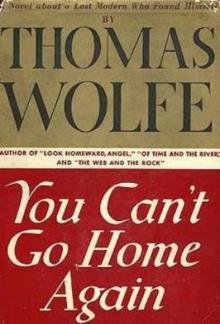
Thomas Wolfe, page 519
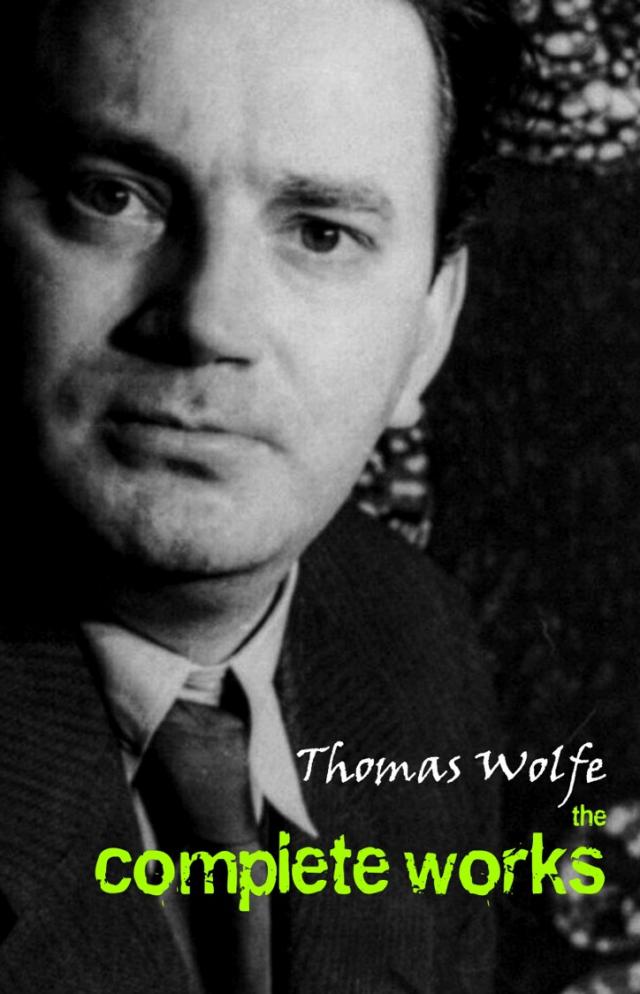


(He hangs up the receiver, lights a cigarette, inserts a fresh sheet in the typewriter, and begins to type it out. The A.P. man comes out chuckling with a piece of paper in his hand.)
A.P. Man: Here’s a hot one. Fellow out in Kansas has made himself a pair of wings and sent word around to all the neighbors that tomorrow’s to be the last day of the world and he’s going to take off for the Promised Land at four o’clock. Everyone’s invited to be present. And what’s more, all of them are coming.
Willis (typing): Not a bad idea at that. (Pulls the paper from the machine viciously and looks at it) Christ! If I could only be sure tomorrow was going to be the last day of the world, what a paper I’d get out! That’s my idea of heaven—to have, just for once in my life, that chance to tell these bastards what they are.
A.P. Man (grinning): Boy, you could sure go to town on that, couldn’t you? Only, you couldn’t get it in the ordinary edition. You’d need an extra-extra-extra feature edition with fourteen supplements.
Willis (clutching the sheet he has just typed and shaking it viciously): Listen to this, will you. (Reads) “Mr. and Mrs. Fred Purtle” (he coughs in an affected tone)—I beg your pardon, “Mr. and Mrs. S. Frederick Purtle”—and be sure to get in the Frederick and don’t leave out the S . . . “Mr. and Mrs. Leroy Dingley . . . Mr. and Mrs. E. Seth Hooten”—and don’t leave out the E . . . “in honor of Mrs. J. Skidmore Pratt”—now there’s a good one! (Throws down the paper savagely) Why, God-damn, it’s enough to make your butt want buttermilk. That bunch of mountaineers—half of ’em never owned an extra pair of pants until they were twenty-one. As for Fred Purtle, he was brought up out in Yancey County on hawg and hominy. His father used to go over him with a curry comb and horse clippers every Christmas, whether he needed it or not. Why, hell yes. They had to throw him down to hold him while they put shoes on him. And now, for Christ’s sake, it’s Mr. S. Frederick Purtle—and don’t leave out the S. My God! What a world! And what a job I could do on all the bastards in this town if I only had the chance! To be able, just for once, to tell the truth, to spill the beans, to print the facts about every crooked son-of-a-bitch of them. To tell where they came from, who they were, how they stole their money, who they cheated, who they robbed, whose wives they slept with, who they murdered and betrayed, how they got here, who they really are. My God, it would be like taking a trip down the sewer in a glass-bottomed boat! But it would be wonderful—if tomorrow were the last day of the world. Only it’s not (he coughs suddenly, chokingly, and spits carefully into his handkerchief and stares intently for a moment at the small blot of spreading blood)—not for most of us.
(In the little office the telegraph instrument begins to clatter, and the A.P. man goes back, types rapidly for a moment, and returns with another paper in his hand.)
A.P. Man: Here’s something, Ted. It might be a story for you. Did you know this guy?
Willis (taking the paper and reading it): “In an official communiqué the French Air Ministry today confirmed the report that Flight Lieutenant Clifford McKinley Brownlow of the Lafayette Escadrille was killed in action Tuesday morning over the lines near Soissons. Lieutenant Brownlow, who in point of service was one of the oldest pilots in the Escadrille, had previously brought down fourteen German planes and had been decorated with the Croix de Guerre. He was twenty-four years old, and a native of Altamont, Old Catawba.”
(When he has finished reading, Theodore Willis is silent for a moment and stares straight ahead of him. Then):
Willis (speaking very slowly, as if to himself): Did I know him? . . . Clifford Brownlow . . . Mrs. Brownlow’s darling boy . . . the one we used to call “Miss Susie” . . . and chase home from school every day, calling (changing his voice to a parody of throaty refinement): “Oh, Clifford! Are you the-ah?” . . . His mother used to call him like that, and we all took it up. Poor little devil! He must have had a wretched life. Clifford seemed a perfect name for him—for his ice cream pants, his effeminate way of walking and of talking, and all the rest of him. And now? Lieutenant Clifford Brownlow . . . Lafayette Escadrille . . . killed in action. . . . Somehow, that seems perfect, too. And not funny, either. There’ll be speeches now, and ceremonies for “Miss Susie.” There’ll be a statue, too, a park named after him, a Clifford Brownlow school, a Brownlow auditorium. And why? What makes a hero, anyway? . . . Was it because we used to call him “Miss Susie” and run him home, calling after him: “Oh, Clifford! Are you the-ah?” Was it because we tormented the poor little bastard until we almost drove him mad? Was it because his mother wouldn’t let him play with us, wouldn’t let him mingle with the rough, rude boys? Is that the way a hero’s made? . . . Poor kid, he used to have a game he had invented that he played all by himself. It was a sort of one-man football game. She wouldn’t let him play with us, so he had a dummy rigged up in the yard, something he had made himself, stuffed with straw and hung on a pulley and a wire. He had a football uniform, too, shoes with cleats, a jersey, shoulder-pads, a brand-new football—everything that all the rest of us didn’t have—she always bought him the best of everything. And we used to go by in the afternoon and see him playing at his one-man game, running with his brand-new ball, tackling his home-made dummy, sprinting for a touchdown through an imaginary broken field. And we—may God have mercy on our souls—we used to stand by the fence and jeer at him! . . . Well, he’s a hero now—about the only hero we have. And there’ll be ceremonies, honors, letters to his mother from the President of the French Republic. He’s a hero, and he’s dead. And we? (He coughs suddenly, chokingly, spits into his wadded handkerchief, and stares intently at the spreading blot.) Well, Joe, (huskily) tomorrow may be the last day of the world. Is there any other war news?
A.P. Man: Just the usual run. The French claim they’ve broken through and gained another hundred yards upon a half-mile front. The Germans say they killed six hundred Frenchmen.
Willis (looking at his watch): Twelve-two. Two minutes after five o’clock in France . . . and some bastard’s getting his right at this moment. . . . Another day. . . . For how many will it be the last day of the world? God, if I only knew that it would be for me! (Coughs, goes through the ritual with the handkerchief, then rises, takes off his eye-shade, throws it on the desk, and stretches slowly with an air of great weariness and disgust.) Ah-h Christ!
(The scene fades out. Far off, in the darkness, is heard the baying of a hound.)
[¬]
NO CURE FOR IT
[The Hills Beyond, Harper & Brothers 1941]
“Son! son! Where are you, boy?”
He heard her call again, and listened plainly to her now, and knew she would break in upon his life, his spell of time, and wondered what it was she wanted of him. He could hear her moving in the front of the house.
Suddenly he heard her open the front door and call out sharply: “Oh, Doctor McGuire! . . . Will you stop in here a minute? . . . There’s something I want to ask you.”
He heard the iron gate slam, and the doctor’s slow, burly tread, the gruff rumble of his voice, as he came up the steps. Then he heard them talking in low voices at the front hall door. He could not distinguish their words until, after a minute or two, she raised her voice somewhat and he heard her say reflectively, “Why-y, no-o!”—and knew that she was pursing her lips in a startled, yet thoughtful manner, as she said it. Then she went on in her curiously fragmentary, desperate, and all-inclusive fashion: “I don’t think so. At least, he’s always seemed all right. Never complained of anything. . . . It’s only the last year or so. . . . I got to thinkin’ about it—it worried me, you know. . . . He seems strong and healthy enough. . . . But the way he’s growin’! I was speakin’ to his father about it the other day—an’ he agreed with me, you know. Says, ‘Yes, you’d better ask McGuire the next time you see him.’”
“Where is he?” McGuire said gruffly. “I’ll take a look at him.”
“Why, yes!” she said quickly. “That’s the very thing! . . . Son! . . . Where are you, boy?”
Then they came back along the hall, and into the sitting room. The gangling boy was still stretched out on the smooth, worn leather of his father’s couch, listening to the time-strange tocking of the clock, and regarding his bare brown legs and sun-browned toes with a look of dreamy satisfaction as they entered.
“Why, boy!” his mother cried in a vexed tone. “What on earth do you mean? I’ve been callin’ for you everywhere!”
He scrambled up sheepishly, unable to deny that he had heard her, yet knowing, somehow, that he had not willfully disobeyed her.
Doctor McGuire came over, looking like a large, tousled bear, smelling a little like his horse and buggy, and with a strong stench of cigar and corn whisky on his breath. He sat his burly figure down heavily on Gant’s couch, took hold of the boy’s arm in one large, meaty hand, and for a moment peered at him comically through his bleared, kindly, dark-yellow eyes.
“How old are you?” he grunted.
Eugene told him he was seven, going on eight, and McGuire grunted indecipherably again.
He opened the boy’s shirt and skinned it up his back, and then felt carefully up and down his spinal column with thick, probing fingers. He wriggled the boy’s neck back and forth a few times, held the skinny arm out and inspected it solemnly, and then peered with grave, owlish humor at the boy’s enormous hands and feet. After that he commanded the boy to stoop over without bending his knees and touch the floor.
Eugene did so; and when the doctor asked him if he could bend no farther, the boy put his hands down flat upon the floor, and remained bent over, holding them that way, until the doctor told him to stand up and let his arms hang naturally. When he stood up and let his arms fall, his hands hung level with his knees, and for a moment McGuire peered at him very carefully. Then he turned and squinted comically at Eliza with his look of owlish gravity, and said nothing. She stood there, her hands clasped in their loose, powerful gesture at her apron strings, and when he looked at her, she shook her puckered face rapidly in a movement of strong concern and apprehension.
“Hm! Hm! Hm! Hm! Hm!” she said. “I don’t like it! It don’t seem natural to me!”
McGuire made no comment and did not answer her. After staring owlishly at her a moment longer, he turned to the boy again and told him to lie down upon the couch. Eugene did so. McGuire then told him to raise his legs and bend them back as far as they would go, and kept grunting, “Farther! Farther!” until the boy was bent double. Then McGuire grunted sarcastically:
“Go on! Is that the best you can do? I know a boy who can wrap his legs all the way around his neck.”
When he said this, the boy stuck his right leg around his neck without any trouble at all, and remained in that posture for some time, happily wriggling his toes under his left ear. McGuire looked at him solemnly, and at last turned and squinted at his mother, saying nothing.
“Whew-w!” she shrieked with a puckered face of disapproval. “Get out of here! I don’t like to look at anything like that! . . . Hm! Hm! Hm! Hm! Hm!” she muttered, shaking her head rapidly with an expression of strong concern, as the boy unwound his legs and straightened out again.
Eugene stood up. For a moment McGuire held him by the arm and squinted comically at him through his bleared eyes, without saying a word. Then his burly, bearlike shoulders began to heave slowly, a low hoarse chuckle rose in his throat, and he said, poking the boy in the ribs with one fat thumb:
“Why, you little monkey!”
“Hah! What say? What is it?” cried his mother in a sharp, startled tone.
The doctor’s huge shoulders heaved mountainously again, the hoarse sound rumbled in his throat, and shaking his head slowly, he said:
“I’ve seen them when they were knock-kneed, bow-legged, cross-eyed, pigeon-toed, and rickety—but that’s the damnedest thing I ever saw! I never saw the beat of it!” he said—and the boy grinned back at him proudly.
“Hah! What say? What’s wrong with him?” Eliza said sharply.
The burly shoulders heaved again:
“Nothing,” McGuire said. “Nothing at all! He’s all right! He’s just a little monkey!”—and the rumbling noises came from his inner depths again.
He was silent for a moment, during which he squinted at Eliza as she stood pursing her lips at him, then he went on:
“I’ve seen them when they shot up like weeds, and I’ve seen them when you couldn’t make them grow at all,” he said, “but I never saw one before who grew like a weed in one place while he was standing still in another! . . . Look at those arms and legs!” he cried. “And good God! Will you look at his hands and feet! Did you ever in your life see such hands and feet on a child his age?”
“Why, it’s awful!” his mother agreed, nodding. “I know it is! We can’t find anything in the stores to fit him now! What’s it goin’ to be like when he gets older? It’s an awful thing!” she cried.
“Oh, he’ll be all right,” McGuire said, as he heaved slowly. “He’ll get all of his parts together some day and grow out of it! . . . But God knows what he’ll grow into!” he said, rumbling inside again and shaking his head as he peered at the boy. “A mountain or an elephant—I don’t know which!” He paused, then added: “But at the present time he’s just a little monkey. . . . That’s what you are—a monkey!” and the tremendous shoulders heaved again.
Just then the iron gate slammed, and the boy heard his father lunge across the walk, take the front porch steps in bounds of three, and come striding around the porch into the sitting room. He was muttering madly to himself, but stopped short as he came upon the little group, and with a startled look in his uneasy cold-gray eyes, he cried out—“Hey?” although no one had spoken to him.
Then, wetting his great thumb briefly on his lips, and slamming down the package he was carrying, he howled:
“Woman, this is your work! Unnatural female that you are, you have given birth to a monster who will not rest until he has ruined us all, eaten us out of house and home, and sent me to the poorhouse to perish in a pauper’s grave! Nor man nor beast hath fallen so far! . . . Well, what’s your opinion, hey?” he barked abruptly at McGuire, half bending toward him in a frenzied manner.
“He’s all right,” McGuire said, heaving slowly. “He’s just a monkey.”
For a moment Gant looked at his son with his restless, cold-gray eyes.
“Merciful God,” he said. “If he had hair on him, they couldn’t tell him from a monkey now!” Then, wetting his great thumb, he grinned thinly and turned away. He strode rapidly about the room, his head thrown back, his eyes swinging in an arc about the ceiling; then he paused, grinned again, and came over to the boy. “Well, son,” he said kindly, putting his great hand gently upon the boy’s head, “I’m glad to know that it’s all right. I guess it was the same with me. Now don’t you worry. You’ll grow up to be a big man some day.”
They all stood looking at the boy—his mother with pursed, tremulous, bantering, proudly smiling lips, his father with a faint, thin grin, and McGuire with his owlish, bleared, half-drunken kindly stare. The boy looked back at them, grinning proudly, worried about nothing. He thought his father was the grandest, finest person in the world, and as the three of them looked at him he could hear, in the hush of brooding noon, the time-strange tocking of his father’s clock.
[¬]
ON LEPRECHAUNS
[The Hills Beyond, Harper & Brothers 1941]
An Armenian friend of ours, a Mr. Vladimir Adzigian of South Brooklyn, has mentioned among the defects of our literary style a certain coldness and economy of manner, which, while it makes for precision and temperance, is likely to err too much on the side of understatement. This critic feels—and rightly, too, we think—that our work would profit if it had a little more exuberance, a more impulsive warmth, even a little exaggeration here and there. “For,” says he, “exaggeration is in itself a form of enthusiasm, and enthusiasm, in my opinion, is the quality that your work, together with almost all American writing, lacks.” This cultivated gentleman then goes on to say that here in America we have never overcome the repressive influences of our Puritan ancestry, and he thinks we will never completely realize ourselves until we do.
While admitting the truth of our friend’s observations and conceding regretfully that our own style does suffer from a kind of puritanic sparseness, an almost frigid restraint, we think we might interpose a few mild, although apologetic, reservations to the general tenor of his remarks. In the first place, if our style does suffer from a puritanic frigidity, it is because we, in our own person, suffer from the same defect. And however much we may regret it, however much we may want to burst through the barriers of our reserve to a warm and free communication with the universe, it is probably better to reflect the color of our soul—even though that color be cold and hard—than to assume a false, unwarranted spontaneity that we do not have. Moreover, even if we could overcome the constrained reserve of our nature and break through to a more impulsive spontaneity, we should hesitate to attempt it, because we have so many friends and readers whose own sense of propriety and personal modesty would be affronted if we did.
Chief among these people are our Irish friends, whom we number by the hundreds. Our admiration and affection for the Irish is, we believe, well known. In addition to the traditional affection for the race in which every American boy is brought up, and which is as natural to him as a sore toe, we have had the privilege time and again in our written works of expressing—as soberly and temperately as any man could, it seemed to us, and certainly far too soberly and temperately to suit the tastes of Mr. Adzigian—what seemed to us to be the shining and distinguishing qualities of the race, its great and lasting contributions to our nation’s life.