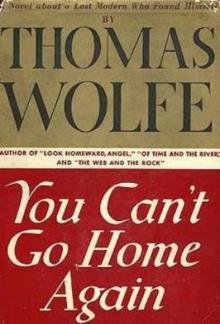
Thomas Wolfe, page 445
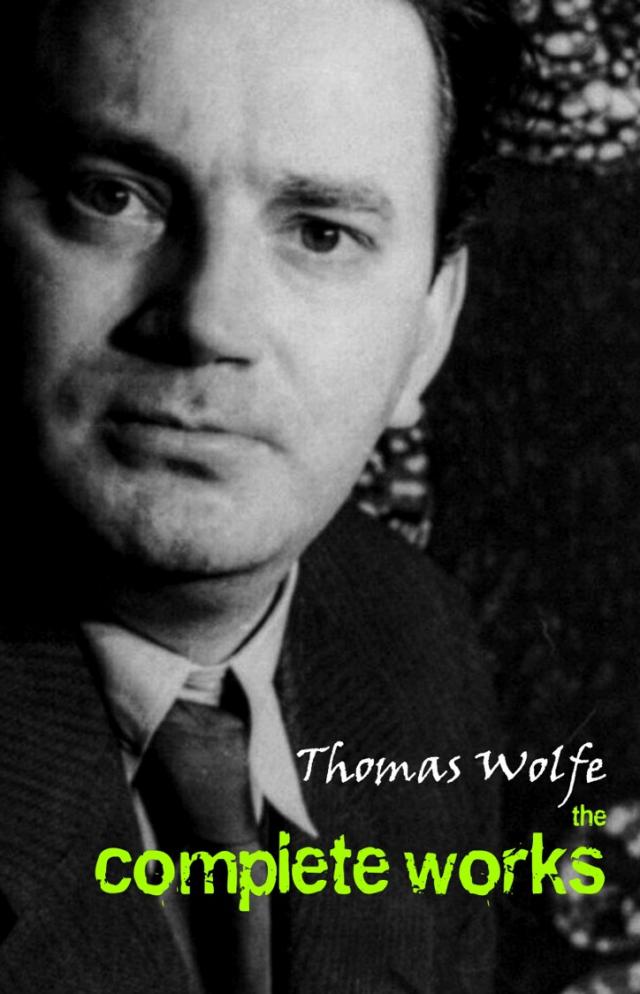


What was that world that we had lost? What was that magic life that was so near to all of us, so intolerably near that it was stranger, farther than Hesperides, so near it seemed almost that all we had to do was say a word, or make a spell, or make a little turning of our arm in space to touch it with our hand again, to enter the lost province of its Eden-glories, to make it live again in all its flashing panoply of movement, pulsing warmth, enchanted color, and exultant joy?
[It was the world of the first summers in my mother’s house, the summer singing and my father’s prime. It was the world of the vanished faces, mystery, the soft low tender laughter of the summer women welling richly from the summer dark, and it was the world of dew-sweet morning with the apple blossoms floating to the ground.] It was the world of the smell of the tar out in the streets at noon, the green-gold aching joy and magic of the dandelions. And it was the world of the spell and wait of drowsy noon, and the time-strange magic of the golden summer.
It was the world where life did not pass in a measured agony of hours and days, and weeks, in grisly endurances of a weary and interminable heat. It was a summer world where life passed magically in one swarming iridescent web of green and gold and velvet night, in a single spell and magic of enchanted time.
It was the world of the vanished faces, the exultant mystery of great-starred, cool-enfolding night, the lilac dark, a woman’s laughter, and the rustling of a leaf. And it was the world where we heard great wheels pounding at the river’s edge in darkness, the tolling of a bell, the whistle wailing far and lonely through the cool sweet mountain valleys of the South at night, and had no thought of sorrow and departure when we heard those sounds, but rather felt a swelling joy and mystery in our hearts, and thought: “Out of the South, the deep dark South, the ever-still, unmoving, ancient and seductive South, South of the tropic depths, the still reptilian secrecies, the tideless sensual rivers, South of the unknown flowers, the strange perfumes of death and love, the silent trees, the hid desire, the low sweet tender voices and the white flesh of magnolia women—oh, who comes, who comes, who comes to us tomorrow from your dark and secret heart, great South?”
It was the world of the voices singing in the summer darkness, the mellow thrum of violins, the thumped piano and the songs they sang. It was the world of “The Chocolate Soldier,” “Tammany,” “Has Anybody Here Seen Kelly?” and of “Love Me and the World Is Mine.” It was the world of the lovely girls, the beautiful and seductive women coming to us from a hundred places, world of the merry, sensuous, pleasure-loving, and free-handed people of the deep and sensuous South, world of summer-magic, time-enchantment, “New Orleans.”
—
And now, of all that world, old Mr. Helm alone was left. From all that life of vanished magic he alone returned, year after year, to revive that lost life in our minds with all the haunting sorrow of its loss. And of us all, old Mr. Helm was the only one who did not know that world had gone forever. He was the only one who did not see how sorrowfully with death my father’s life was changed, the ghostly world in which it now lay sunken, nor feel the huge impending menace of the war, a new life, and a transformed world, that hung above us darkly with its secret and unspoken prophecies of triumph and departure, joy and glory, and love and death that was in us, with us, all about us, and had come before we knew it, and was there.
Rather, with the kindly, stolid, unreflecting faith of all his kind, he could not see that anything on earth had changed a bit. My father, whom he worshipped, was still the grandest man on earth to him, his heart the truest, his mind the keenest, the wildest and most extravagant oaths of his vituperative rhetoric, the pure ore of a balanced judgment and a flawless reason, not for a moment to be subjected to the sacrilege of argument or denial. And that my father was an old and dying man, only sick of his life and waiting in the darkness till death came, the enfeebled shadow of his former self, old Mr. Helm did not understand at all.
Likewise, my mother’s house had not grown old and shabby, and full of a haunting and sorrowful emptiness to Mr. Helm. Nor could he see that the boarders, too, had changed from that first company of life and youth and ever-pulsing movement, and were only sorrowful poor leaves of boarders now, who came and went in silence, were blown casual and lonely through our empty halls.
No, my mother’s house and all the people in it were just the same as they had always been, and nothing in the world had changed at all. Toward all life, and particularly towards his own life, old Mr. Helm felt nothing but the most benevolent satisfaction and assurance that everything had been arranged just as it ought to be. And for that reason, the memory of that good old man as he was that final fatal summer was to haunt my heart forever, and to pierce me with a feeling of anguish, pity, and unutterable regret for all men living when I thought of him.
[For even at that moment as the old man sat there in the summer darkness, worshipfully listening to my father’s voice again, solemnly wagging his ponderous and benevolent old head in pious affirmation of everything my father said, his life was ruined, lost, and broken, and he did not know it.]
A German by birth, Mr. Helm had come to America in his sixteenth year, a fugitive, like many others, from the tyranny of the Prussian military system that would have swallowed him. And although he had now lived for more than fifty years in his adopted country, he had never learned to speak its language save in a guttural, almost broken, accent.
For more than forty years old Mr. Helm had been employed by a great bank in New Orleans, and for over thirty years he had been its chief cashier. This bank had been the central passion and consuming loyalty of the old man’s life. Of its chief officials—the President, the Vice-Presidents—and its great depositors he spoke with hushed awe, quoting their words and judgments with a reverential deference as great as he accorded the opinions of my father. And for the bank itself he felt a holy devotion that was as sincere and deep as any good priest ever felt for the spiritual divinity of the church.
Year after year the old man had come back to us, bringing his kind old wide-hipped wife along with him, and she would sit there with her hands folded on her ample stomach, beaming her pride and approval of everything he said from every corner of her good broad face, as the old fellow smoked his good cigar and told us of his bank.
He boasted of its wealth, the huge amount of its deposits, its invincible strength and unassailable integrity and the boundless faith and confidence which the public had in it. When he spoke of the bank, it was with such love and tenderness and utter humility of pride as a man might feel for a beautiful and beloved son, or as a son might feel for a parent who can do no wrong.
Then he would boast of the goodness, honor and unbounded kindness of the chief directors of the bank, and of the princely generosity they had so often lavished on him.
“Alvays ven I vent avay on my vacation,” he would begin slowly, wagging his big head in slow nods of ponderous affirmation, “He”—no need to name that mighty “He,” for the solemn look, hushed tone, and reverent devotion with which the word was spoken told plainly that old Helm was speaking of the President—“He vould call me in to de office und gif to me a box of fine cigars—ja! I smoke vun of dem now!” the old man cried, proudly lifting the long Havana in his pudgy fingers and putting it into his mouth with a somewhat clumsy gesture but with a look of indescribable satisfaction.
“He vould say, ‘Fritz, I make to you a leetle bresent.’ Und den he vould gif me a whole box of dem—ja! De same kind dat he smokes himself!” the old man said proudly, while his old wife wagged her head in solemn confirmation of this bounty.
“Den I vould tank him for his bresent und start to go,” said old man Helm, “und he vould alvays sdop me going out de door. He vould say, ‘Fritz, vait a minute! Here iss sometink dat I forgot to gif you.’ Und he vould hand to me an envelope mit sometink written on it—alvays de same ting. Vat you tink it say, eh?” said Mr. Helm, beaming slowly around at everyone in a gesture of all-inclusive satisfaction. “‘To Fritz Helm—in token of hiss loyal und valued services to de bank, mit all good vishes for a happy und successful vacation—Mit de compliments of de directors’—a check! Ja!” he would cry excitedly. “A check for ein hundert dollars!” he would shout. “Ein hundert dollars!” he now fairly yelled. “Nod my salary! Nod my chob! Nein! Nein! Nein!” he would cry angrily, as if someone had contradicted him. “A gift! Dey gif it to me! Do you see?”—and the old man would glare wildly at his listeners. “I do nodding for it! Dey gif it to me every year ven I come avay—to—‘To Fritz,’”—and suddenly the old fellow’s eyes had grown blind with tears, and his voice became so husky as to be almost inaudible—“‘To Fritz—from de directors,’” he muttered, and suddenly he wiped his old hand with a rough shamed movement across his eyes, and in a moment went on in a quieter tone, “I try to say sometink —to sbeak to him—to make my tanks fer vat dey do—but I gan not sbeak!” and now his voice was old and husky and his eyes had grown blind with tears again. “It all comes svelling here,” he whispered, and put his hand upon this throat. “I try to sbeak—but I gan zay nodding—it vill not come! Den,”—with a shamefaced smile—“he see I act like a big baby—he make a choak mit me to make me laugh—ja!” he cried, suddenly beginning to chuckle. “He say—‘Now, Fritz, ven you get up dere vere ve gan’t look after you—I vaut you to look out for de merry summer vidows! Dey’re on de look out for younk fellers like you, und I vaut you to vatch out fer dem—ja!” said old man Helm chuckling. “He alvays say sometink like dat ven I go avay! . . . Dat vas a choak!” he dutifully explained.
Then his wife would beam round at everyone, nodding her head slowly in a smile of expansive satisfaction which seemed to say, “Ja. Dot vas a choke—und now you gan all laugh aboud it!”
And my father, who had been leaning forward during the whole recital with a faint grin fixed at the corners of his thin pale lips and with his head cocked slightly to the side in an attitude of almost ravenous attentiveness, so that his enormous leathery-looking ear, from which a big tuft of coarse grey hair was growing, seemed almost to sprout outward from his head and seize the words as fast as they came from Mr. Helm’s mouth, would now look around at us all with a swift glance of his uneasily restless cold-grey eyes, grin thinly, wet his great thumb briefly on his mouth, spit, and then lunge backward in his chair with a grin of satisfaction, a slow, somewhat rusty chuckle, and a sound which it would be impossible to define exactly but which sounded somewhat like “E’God!”
Although my father had heard this story at least a hundred times, always listened to it with the same hungry and unwearied interest, bent forward gauntly, head cocked in an attitude of fixed alertness and with his terrific hands hinged in their great-boned clasp upon his knees.
Later, I could not forget my father’s hands. They were the largest, most powerful, and, somehow, the most shapely hands I had ever seen. And even though his great right hand had been so crippled and stiffened by an attack of inflammatory rheumatism ten years before that he had never regained the full use of it, and since that time could only hold the great wooden mallet that the stonecutters use in a painful and clumsy half-clasp between the thumb and the big stiffened fingers, his hands had never lost their character of life, strength and powerful shapeliness.
The hands gave to the interminable protraction of his living death a kind of concrete horror that it otherwise would not have had. For as his powerful gaunt figure waned and wasted under the ravages of the cancer that was consuming him until he had become only the enfeebled shadow of his former self, his gaunt hands, on which there was so little which death could consume, lost none of their former rock-like heaviness, strength and shapely power. Thus, even when the giant figure of the man had become nothing but a spectral remnant of itself, sunk in a sorrow of time, awaiting death, those great still-living hands of power and strength hung incredibly, horribly from the spectral form of death to which they were attached.
And for this reason those powerful hands of life evoked, as nothing else could have done, in an instant searing flash of memory and recognition the lost world of my father’s life of manual power, hunger, fury, savage abundance and wild joy, the whole enchanted structure of the lost life of magic he had made for us. Constantly, those great hands of life joined with an almost grotesque incongruity to that scarecrow form of wasting death would awake for us, as nothing else on earth could do, all of the sorrowful ghosts of time, the dream-like spell and terror of the years between, the years of phantom death, the horror of unreality, strangeness, disbelief, and memory, that haunted us.
So would it be even in death with my father’s hands. In their powerful, gaunt and shapely clasp, as he lay dead in his coffin, there would be held and gathered, somehow, all of his life that could never die—a living image of the essential quality of his whole life with its fury and unrest, desire and hunger, its tremendous sweep and relish of its enormous appetites and the huge endowment of its physical and sensual powers.
Therefore, even in his death, as he lay there in his coffin, there was a triumph over death in his great hands. For, curiously, there is usually in the obscene ritual of Christian burial a kind of mercy of obliteration. Under the strong drug of an unnatural and disgusting curiosity, the naked grief and horror of man’s death is for the moment dulled. The brutal memory that we want to forget, the intolerable physical horror of a brother’s death as he strangles to death before one’s eyes in the ropy congestion of his own secretions, writhing on the bed like something impaled upon a hook, and making us writhe forever after in the same way as we try to put it from our minds, seems stranger than a dream when the embalmers have transfigured him with the delicate nuances of their art.
Similarly, the memory of one’s father dying in a lake of blood, the great red blot forever spreading on the sheet, the soaking bloody sheet removed and replaced with a white one, the white one red at once with that instant spreading, soaking blot of red again—even the naked mutilation of that memory grows dull when we see him stretched out in a coffin.
The first horror of the knowledge that death in its most loathsome forms can come to a loved familiar figure as readily as to the nameless man-swarm cipher that we do not know, is almost forgotten. Even the rending anguish of hatred, horror, pity, and wet naked shame that one feels at such a time towards one’s own family, the wet eyes and oily faces of the women, the hoarse, ugly, and hysterical sobbings, the lack of anything clean, hard, lonely, gaunt and silent in the whole horrible mess and shame and confusion of that blood-soaked death—the literal, physical, and unescapable reality of this horror of death is somehow mercifully drugged by the obscene unrealities of burial.
Now the corpse is stretched out on the splendid satin cushions of the expensive coffin. It has been barbered, powdered, disembowelled, and pumped full of embalming fluid. And as it lies there with its waxen head set forward in its curious gaunt projectiveness, the pale lips firmly closed and with a little line of waxen mucous in the lips, the women come forward with their oily swollen faces, and a look of ravenous eagerness in their eyes, look at it hard and long, lift their sodden handkerchiefs slowly to their oily mouths, and are borne away sobbing hysterically by their equally oily, ravenous sister orgiasts in sorrow.
Meanwhile your father’s friends, the stonecutters, masons, building contractors, butchers, businessmen, and the male relatives stand awkwardly about, dressed in their good black clothes, which they seem not to wear so much as to inhabit with a kind of unrestful itchiness, lowering their eyes gravely and regretfully as the women put on their revolting show, talking together in low voices, and wondering when it will all be over.
These circumstances, together with the heavy unnatural languour of the funeral smells, the sweet-sick heaviness of the carnations, the funeral weepy blacks in which the women have arrayed themselves, the satiny sandalwood scent that comes from the splendid coffin, and the fragrant faintly acrid odor of embalmed flesh, particularly when blended with the smell of cooking turnip greens, roast pork and apple sauce out of the kitchen, combine to create an atmosphere somewhat like a dinner party in a comfortably furnished morgue.
In all this obscene pomp of burial there is something so grotesque, unnatural, disgusting, and remote from all we can remember of the dead man’s life and personality that everything about him—even the physical horror of his bloody death, now seems so far away we can hardly believe it ever happened. Therefore, we stare at this waxen and eviscerated relic in the coffin with a sense of weird disbelief, unable to relate it to the living man who bled great lakes of blood the night before.
Yet, even in his death, my father’s hands still seemed to live, and would not die. And this was the reason why the memory of these hands haunted me then and would haunt me forever after, when he was dead. This was the reason why, when I would try to remember how he looked when dead, I could remember nothing clearly except the powerful sculptured weight and symmetry of his tremendous hands as they lay folded on his body in the coffin. The great hands had a stony, sculptured, and yet living strength and vitality as if Michaelangelo had carved them. They seemed to rest there upon the groomed, bereft and vacant horror of the corpse with a kind of terrible reality as if there really is, in death, some energy of life that will not die, some element of man’s life that must persist and that resumes into a single feature of his life the core and essence of his character.
Thus, one could suppose that on the face of a dead poet there might remain—how, where, or in what way we could not tell, a kind of flame, a light, a glory—the magic and still-living chrism of his genius. And on the face of the dead conqueror we might see still living, arrogant, and proud with all its dark authorities the frown of power, the inflexible tyranny of stern command, the spacial infinitude of the invincible will that would not die with life, and that, incredibly, remains, still dark and living in its scorn and mockery of death.