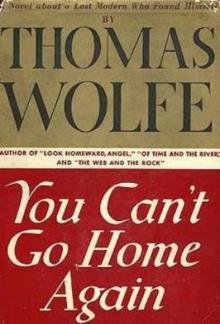
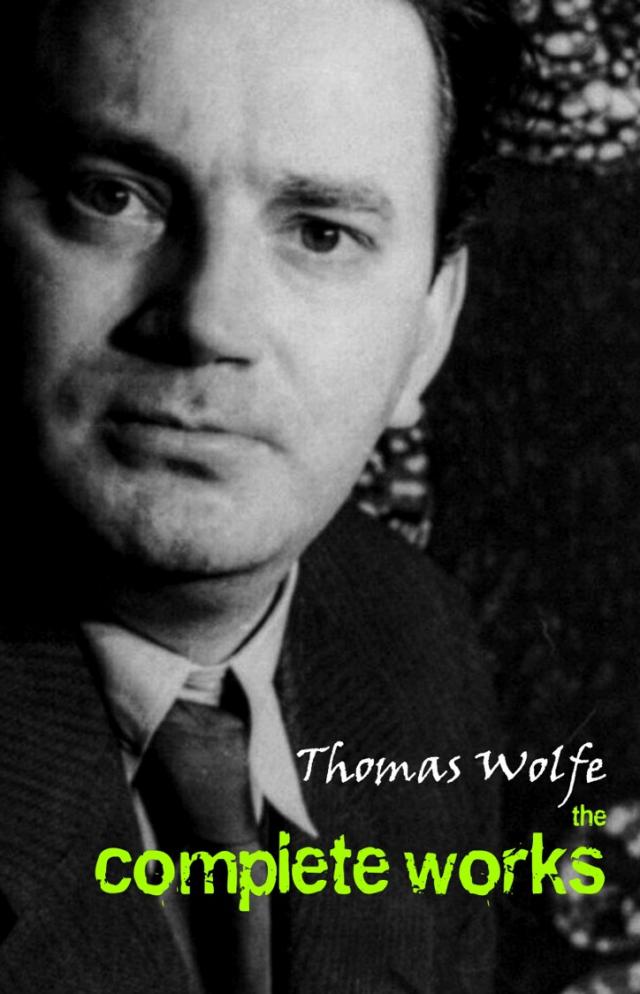
Thomas Wolfe, page 393


“That’s the only reason they hang around this place,” the old man said. “They know they can work on the kind of people we got here and get it out of ’em. Only the other day I saw one of ’em panhandle Mrs. Lewis for a dollar. A big fellow, as well and strong as you are! I’d a good notion to tell her not to give him anything! If he wanted work, he could go and get him a job the same as you and I! But of course they know how to play on the sympathy of the kind of people we got here. It’s got so it’s not safe for a woman in the house to take the dog around the block. Some greasy bum will be after her before she gets back. If I was the management I’d put a stop to it. A house of this kind can’t afford it. The kind of people we got here don’t have to stand for it!”
And having made these pronouncements, so redolent of convention, outraged propriety, and his desire to protect “the kind of people we got here” from further invasions of their trusting sanctity by these cadging frauds, old John, somewhat appeased, went on around the colonnade, went in at the service entrance of the south wing, and in a few moments was at his post, ready for the night’s work.
[¬]
THE ELEVATOR MEN
John Enborg was an American of first-generation stock. He had been born in Brooklyn more than sixty years before, the son of a Norwegian seaman and an Irish serving-girl. In spite of this mixed parentage, it would have been hard to find anyone whose appearance was more decisively “old stock” American than the old man’s. One would have said without hesitation that he was sparely, dryly, American—New England Yankee. Even his physical structure had in one brief generation taken on those national characteristics which are perhaps partly the result of weather and of time, partly the result of tempo, speech, and local custom, a kind of special pattern of the nerves and vital energies wrought out and engraved upon the features, upon the whole framework of flesh and bone, so that, whatever they may be or from whatever complex source they are derived, they are still instantly and unmistakably “American”—so to be recognized, so unmistakably defined wherever they are found, at whatever place on earth.
Old John was “American” in all these ways. He had the dry neck of the American—the lean, sinewy, furrowed neck that is engraved so lankily and so harshly, with so much weather. He had the dry face, too, also seamed and lank and squeezed dry of its moisture, the dry mouth, not brutal certainly but a little harsh and stiff and woodenly inflexible, the lower jaw out-cropping slightly, the whole mouth a little sunken in above this bleak prognathousness as if the very tension of the nerves, some harsh and jarring conflict in the life around him had hardened the very formations of the jaw into this sinewy tenacity. In stature, he was not very tall, somewhat above the average height, but suggesting tallness by this same stringy, nervous and hard-sinewed leanness which was apparent in his neck and face. The old man’s hands were large and bony, corded with heavy veins, as if he had done much work with them. Even in speech he was distinctively “American.” His speech was spare, dry, nasal, and semi-articulate. It could have passed with most people for New England Yankee speech, though it did not have pronounceably the New England twang. What one noticed about it especially was its Yankee spareness, a kind of tartness, a dry humor, that was really not at all truculent, but that at times seemed so. He was very far from being a sour-tempered or ill-natured old man, but at times he may have seemed to be. It was just his way. He really loved the exchange of banter, the rough and ready interplay of wit that went on among the younger elevator men around him. But his humor concealed itself dryly, tartly, behind a mask of almost truculent denial. This was apparent now as Herbert Anderson came in. Herbert was the night elevator man for the south entrance. He was a young, chunky, good-natured fellow of twenty-eight or thirty years, with two pink, modelled, absurdly fresh spots in his plump cheeks, lively and good-humored eyes, and a mask of crinkly, curly brownish hair of which one somehow felt he was rather proud. He was really John’s especial favorite of the whole building, although one might not have instantly gathered this from the exchange that now took place between them.
“Well, what do you say, Pop?” cried Herbert as he entered the service elevator. “You haven’t seen anything of two blondes yet, have you?”
The faint, dry grin about John Enborg’s mouth deepened a little, almost to a stubborn line, as he swung the door to and pulled the lever.
“Ah-h,” he said sourly, almost in a disgusted tone, “I don’t know what you’re talkin’ about!”
He said nothing more, but stopped the machine and pulled the door open at the basement floor.
“Sure you do!” Herbert said vigorously as he walked over to the line of lockers, peeled off his coat, and began to take off his collar and tie. “You know those two blondes I been talkin’ to you about, doncha Pop?”
By this time he was peeling his shirt off his plump, muscular-looking shoulders, and supporting himself with one hand against the locker he had stopped to take off his shoe.
“Ah-h,” said the old man, sour as before. “You’re always tellin’ me about something. I don’t even pay no attention to it. It goes in one ear and comes out the other.”
“Oh yeah?” said Herbert with a rising, ironical inflection on the last word. He bent to unlace his other shoe.
“Yeah,” said John in the same tone.
The old man’s tone had from the beginning been touched with this dry and even sour note of disgusted and disinterested unbelief. And yet, somehow indefinably, there was the unmistakable suggestion that he was enjoying himself. For one thing, he had made no move to depart. Instead he had propped himself against the side of the open elevator door, and, his old arms folded loosely into the sleeves of the worn grey alpaca coat which was his “uniform,” he was waiting there with the dry, fixed stubborn little grin around his mouth as if against his own admission he was enjoying the debate and was willing to prolong it indefinitely.
“So that’s the kind of a guy you are?” said Herbert, taking his neat coat and disposing it carefully on one of the hangers which he had taken from the open locker door. “Here I go and get you all fixed up and you run out on me. O.K., Pop,”—his voice now shaded with resignation, Herbert was stepping out of his neatly pressed trousers and arranging them also with crease-like precision on a hanger. “I thought you was a real guy, but if you’re goin’ to walk out on a party after I’ve gone to all the trouble, I’ll have to look for someone else.”
“Oh yeah?” said old John dryly as before.
“Yeah,” said Herbert in the accent proper to this type of repartee. “I had you all doped out for a live number, but I see I’ve picked a dead one.”
Herbert said nothing for a moment, and grunted a little as he bent to unlace his other shoe.
“Where’s old Organizin’ Pete?” he said presently. “Seen him tonight?”
“Who?” said John, looking at him with a somewhat bewildered expression.
“Henry.”
“Oh!” The word was small but the accent of disgust was sufficient. “Say!” the old man waved a gnarled hand stiffly in a downward gesture of dismissal. “That guy’s a pain in the neck!”—He spoke the words with the kind of dry precision old men have when they speak slang and when they are trying to “keep up with” a younger man, a little stiffly and awkwardly and not quite accustomed. “A pain in the neck!” he repeated. “No, I ain’t seen him to-night.”
“Oh, Hank’s all right when you get to know him,” said Herbert cheerfully. “You know how a guy gets when he gets all burned up about somethin’ he gets too serious about it—he thinks everybody else in the world ought to be like he is. But he’s O.K. He’s not a bad guy when you get him to talkin’ about somethin’ else.”
"Yeah!” cried John suddenly and excitedly, not by way of agreement, but as if he was suddenly remembering something—“And you know what he says to me the other day? ‘I wonder what all the rich mugs in this house would do if they had to get down and do a hard day’s work for a livin’ once in a while—And these old bitches’—Yeah!” cried John in a dry excited voice, as he nodded his head in angry affirmation—“‘that I got to help in and out of cars all night long, and couldn’t walk up a flight of stairs by themselves—what if they had to get down on their hands and knees and scrub floors like your mother and my mother did?’—That’s the way he goes on all the time!” cried John indignantly—“and him a-gettin’ his livin’ from the people in this house, and takin’ tips from them—and talkin’ about them like he does!—Hah-h!” John muttered to himself and rapped his fingers on the walls—“I don’t like that way of talkin’! If he feels that way, let him get out! I don’t like that fellow.”
“Oh,” said Herbert easily and indifferently, “Hank’s not a bad guy, Pop. He don’t mean half of it—He’s just a grouch.” By this time, with the speed and deftness born of long experience, he was putting on the stiff, starched shirt-front which was a part of his uniform on duty, and buttoning the studs.
“Ah-h,” said old John surlily, “you don’t know what you’re talkin’ about. I had more girls in my day than you ever thought about.”
“Yeah?” said Herbert.
“Yeah,” said John, “I had blondes and brunettes and every other kind.”
“Never had any red-heads, did you, Pop?” said Herbert grinning.
“Yeah, I had red-heads too,” said John sourly. “More than you had, anyway.”
“Just a rounder, hunh?” said Herbert, “Just an old petticoat-chaser.”
“Nah-h, I ain’t no rounder or no petticoat-chaser,” said John sourly. “Hm!” he grunted contemptuously, “I’ve been a married man for forty years. I got grown-up children, oldr’n you are!”
“Why, you old—!” Herbert exclaimed and turned on him indignantly. “Braggin’ to me about your blondes and red-heads, and then boastin’ that you’re a family man! Why, you—”
“Nah-h,” said John, “I never did no such thing. Wasn’t talkin’ about now—but then! That’s when I had ’em—forty years ago.”
“Who?” said Herbert innocently, “Your wife and children?”
“Ah-h,” said John disgustedly, “get along with you. You ain’t goin’ to get my goat. I’ve forgotten more about life than you ever heard about, so don’t think you’re goin’ to make a monkey out of me with your cute talk.”
“Well, you’re makin’ a big mistake this time, Pop,” said Herbert with an accent of regret. He had drawn on the neat grey trousers of his uniform, adjusted his broad white stock, and now, facing the small mirror on the wall, he was engaged in carefully adjusting the coat about his well-set shoulders.
“Wait till you see ’em—these two blondes. I picked one of ’em out just for you.”
“Well, you needn’t pick any out for me,” said John sourly. “I’ve got no time for no such foolishness.”
A moment later, stooping and squinting in the mirror, he said half-absently: “So you’re goin’ to run out on me and the two blondes. You can’t take it, hunh? O.K. O.K.,” said Herbert with resigned regret as he buttoned up his coat. “If that’s the way you feel about it—only, you may change your mind when you get a look at them.”
“What do you say, pal?” he cried boisterously to Henry, the night doorman, who had just come in, and was rattling his key in the locker door. “Here I get Pop all dated up with a couple of hot blondes and he runs out on me. Is that treatin’ a guy right or not?”
Henry did not answer. His face was hard and white and narrow, his eyes had the look and color of blue agate, and he never smiled. He took off his coat and hung it in the locker.
“Where were you?” he said.
Herbert looked at him startled.
“Where was I when?” he said.
“Last night.”
“That was my night off,” said Herbert.
“It wasn’t our night off,” said Henry. “We had a meetin’. They was askin’ about you.” He turned and directed his hard look toward the old man, “And you too,” he said in a hard tone, “You didn’t show up either.”
Old John’s face had hardened too. He had shifted his position, and began to drum nervously and impatiently with his old fingers upon the side of the elevator, a quick, annoyed tapping that was characteristic of him in moments of annoyance or exacerbated tension. Now his own eyes were hard and flinty as he returned the other’s look, and there was no mistaking the dislike of his glance, the hostility instinctive and inherent to two types of personality that must always clash.
“Oh yeah?” he said again in a hard voice.
And Henry answered briefly: “Yeah. You’ll come to the meetin’s like everyone else, see? Or you’ll get bounced out. You may be an old man but that goes for you like it does for everyone.”
“Yeah?” said John.
“Yeah.”
“Jesus!” Herbert’s face was red with crestfallen embarrassment and he stammered out an excuse. “I forgot all about it—honest I did! I was just goin’—”
“Well, you’re not supposed to forget,” said Henry harshly, and for a moment he looked at Herbert with a hard accusing eye. “Where the hell do you suppose we’ll be if everybody forgets?"
“I—I’m all up on my dues,” said Herbert feebly.
“That ain’t the question. We ain’t talkin’ about dues.” For the first time a tone of indignant passion was evident in the hard voice as he went on earnestly. “Where the hell do you suppose we’d be if everyone ran out on us every time we hold a meetin’? What’s the use of anything if we ain’t goin’ to stick together? No, you’re supposed to be there like anyone else. And that goes for you too,” he said harshly looking briefly at the old man.
He was silent for a moment, looking almost sullenly at Herbert whose red face really now did suggest the hang-dog appearance of a guilty schoolboy. But when Henry spoke again, his tone was gentler and more casual, and somehow suggestive that there was buried underneath the hard exterior in the secret sources of the man’s life, a genuine affection for his errant comrade. “I guess it’s OK this time,” he said quietly. “I spoke to O’Neil. I told him you’d been out with a cold and I’d get you there next time.”
He said nothing more, and began swiftly to take off his clothes.
Herbert looked flustered but relieved. For a moment he seemed about to speak, but changed his mind. He stooped swiftly, took a final appraising look at his appearance in the small mirror, and then, turning toward the elevator with a simulation of fine regret, he said: “Well, O.K. O.K. If that’s the way you feel, Pop, about the blondes—only you may change your mind when you get a look at them.”
“No, I won’t change my mind, neither,” said John with sour implacability. “About them, or about you.”
“Oh yeah?” he looked at the old man for the first time now, laughing, the pink spots in his fresh cheeks flushed with good-humor, his lively eyes dancing as he slammed the locker door shut and came back, fully uniformed now for the evening’s work, and took his place upon the elevator. “So that’s the kind of guy you think I am?” he said menacingly, and gently poked the old fellow in the ribs with closed fist. “So you don’t believe me, huh?”
“Ah-h,” said John, grouchily, as he slammed the door, “I wouldn’t believe you on a stack of bibles.” He pulled the lever and the elevator started up. “You’re a lot of talk—that’s what you are. I don’t listen to anything you say.” He pulled the lever back and stopped the elevator and opened the heavy green-sheet door of the service car.
“So that’s the kind of a friend you are?” said Herbert, stepping out into the corridor. Full of himself, full of delight with his own humor, he winked swiftly at two pretty, rosey Irish maids who were waiting to go up, and jerking his thumb toward the old man, he said, “What are you goin’ to do with a guy like this anyway? I go and get him all dated up with a blonde and he won’t believe me when I tell him so. He calls me a big wind.”
“Yeah, that’s what he is,” said the old man grimly to the smiling girls. “He’s a lot of wind. He’s always talkin’ about his girls and I bet he never had a girl in his life. If he saw a blonde he’d run like a rabbit.”
“Oh yeah?” said Herbert.
“Yeah,” said John. His manner had not changed an atom in its tone of unyielding belligerence, but it was somehow evident that the old man was enjoying himself hugely.
“Just a pal!” said Herbert with mock bitterness, appealing to the smiling maids. “O.K., then. When they get here, keep ’em here till I get back?”
“Well, you’d better not be bringin’ any of ’em around here,” said John pugnaciously. He shook his white head shortly with a movement of dogged inflexibility. “I don’t want any of ’em comin’ around here—blondes or brunettes or red-heads or any of ’em,” he muttered. “If they do, you won’t find ’em when you come back.”
“My friend,” said Herbert bitterly, to the two girls and jerked his thumb toward the old man again. “A pal of mine!” he said and started to depart. “Yeah, pals!” the old man muttered. “And I don’t believe you anyway—” he called out as a happy after-thought after Herbert’s plump retreating figure. “You ain’t got no blondes. You never did have—You’re a momma’s boy!” John cried almost triumphantly, as if he had now had the happiest inspiration of the evening. “That’s what you are!”
Herbert paused at the door and looked back menacingly at the old man, a look that was belied by the exuberant sparkle of his eyes. “Oh yeah?” he said, dangerously.