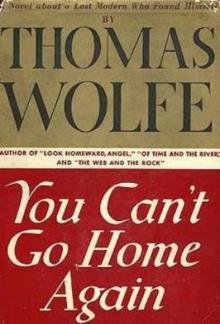
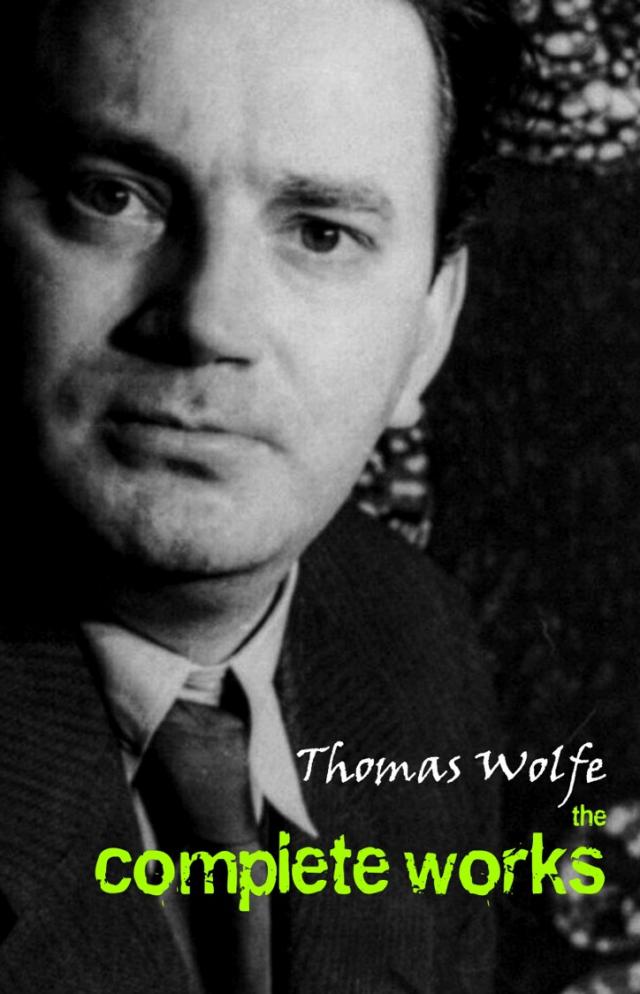
Thomas Wolfe, page 197


For their midday meal they would eat fiercely, hungrily, with wolfish gusto, mightily with knit brows and convulsive movements of their corded throats. They would eat great roasts of beef with crackled hides, browned in their juices, rare and tender; hot chunks of delicate pork with hems of fragrant fat; delicate young broiled chickens; twelve-pound pot roasts, cooked for hours in an iron pot with new carrots, onions, sprouts, and young potatoes; together with every vegetable that the season yielded—huge roasting ears of corn, smoking hot, piled like cordwood on two-foot platters, tomatoes cut in slabs with wedges of okra and succotash, and raw onions, mashed potatoes whipped to a creamy batter, turnips, fresh peas cooked in butter, and fat, strong beans seasoned with the flavor of big chunks of pork. In addition they had every fruit that the place and time afforded: hot crusty apple, peach, and cherry pies, encrusted with cinnamon; puddings and cakes of every sort; and blobbering cobblers inches deep.
Thus the circus moved across America, from town to town, from state to state, eating its way from Maine into the great plains of the West, eating its way along the Hudson and the Mississippi Rivers, eating its way across the prairies and from the North into the South.
Abroad in this ocean of earth and vision, the boy thought of his father’s land, of its great red barns, its clear familiarity and its haunting strangeness, and its lovely and tragic beauty. He thought of its smell of harbors and its rumors of the sea, the city, and the ships, its wine-ripe apples and its brown-red soil, its snug, weathered houses, its lyric, unutterable ecstasy.
A wonderful thing happened. One morning he awoke suddenly to find himself staring straight up at the pulsing splendor of the stars. At first he did not know where he was. The circus train had stopped in the heart of the country, for what reason he did not know. He could hear the languid and intermittent breathing of the engine, the strangeness of men’s voices in the dark, the casual stamp of the horses in their cars, and all around him the attentive and vital silence of the earth.
Suddenly he raised himself from the pile of canvas on which he slept. It was the moment just before dawn: against the east the sky had already begun to whiten with the first faint luminosity of day, the invading tides of light crept up the sky, drowning the stars out as they went. The train had halted by a little river, which ran swift and deep close to the tracks, and now he knew that what at first he thought had been the sound of silence was the swift and ceaseless music of the river.
There had been rain the night before, and now the river was filled with the sweet, clean smell of earthy deposits. He could see the delicate white glimmer of young birch trees leaning from the banks, and on the other side he saw the winding whiteness of a road. Beyond the road, and bordering it, there was an orchard with a wall of lichened stone. As the wan light grew, the earth and all its contours emerged sharply. He saw the worn and ancient design of lichened rocks, the fertile soil of the ploughed fields; he saw the kept order, the frugal cleanliness, with its mild tang of opulent greenery. Here was an earth with fences as big as a man’s heart, but not so great as his desire, and this earth was like a room he once had lived in. He returned to it as a sailor to a small, closed harbor, as a man, spent with the hunger of his wandering, comes home.
Instantly he recognized the scene. He knew he had come at last into his father’s land. Here was his home, brought back to him while he slept, like a forgotten dream. Here was his heart’s desire, his father’s country, the earth his spirit dwelt in. He knew every inch of the landscape, and he knew past reason, doubt, or argument that home was not three miles away.
He got up at once and leaped down to the earth: he knew where he would go. Along the track there was the slow swing and dance of the brakemen’s lamps. Already the train was in motion, its bell tolled, and the heavy trucks rumbled away from him. He began to walk back along the tracks, for less than a mile away, he knew, where the stream boiled over the lip of a dam, there was a bridge. When he reached the bridge a deeper light had come: the old red brick of the mill emerged sharply and fell sheer into bright, shining waters.
He crossed the bridge and turned left along the road. Here it moved away from the river, among fields and through dark woods—dark woods bordered with stark poignancy of fir and pine, with the noble spread of maples, shot with the naked whiteness of birch. Sharp thrummings, woodland flitters, broke the silence. The tongue-trilling chirrs arose now, and little brainless cries, liquefied lutings. Smooth drops and nuggets of bright gold they were.
He went along that road where, he knew, the house of his father’s blood and kin lay hidden. At length, he came around a bending of the road, he left the wooded land, he passed by hedges, and saw the old white house, set in the shoulder of the hill, clean and cool below the dark shelter of its trees. A twist of morning smoke coiled through its chimney.
Then he turned into the road that led up to the house, and at this moment the enormous figure of a powerful old man appeared around the corner, prophetically bearing a smoked ham in one huge hand. And when the boy saw the old man, a cry of greeting burst from his throat, and the old man answered with a roar of welcome that shook the earth. The old man dropped his ham, and waddled forward to meet the boy: they met half down the road, and the old man crushed him in his hug. They tried to speak but could not, they embraced again and in an instant all the pain of loneliness and the fierce hungers of desire were scoured away like a scum of frost from a bright glass
At this moment also, two young men burst from the house and came running down the road to greet him. They were powerful and heavy youths, and, like their father, they recognized the boy instantly, and in a moment he was engulfed in their mighty energies, borne up among them to the house. As they ate breakfast, he told them of his circus wanderings and they told him what had befallen them. And they understood all that he wanted to say but could not speak, and they surrounded him with love and lavish heapings of his plate.
Such were the twin images of the circus and his father’s land which now, as he stood there looking at the circus, fused instantly to a living whole and came to him in a blaze of light. And in this way, before he had ever seen or set his foot upon it, he came for the first time to his father’s earth.
Thus, day by day, in the taut and tangled web of this boy’s life, the two hemispheres that touched but never joined, contended, separated, recombined, and wove again. First came the old dark memory of time-haunted man and the lost voices in the hills a hundred years ago, the world-lost and hill-haunted sorrow of the time-triumphant Joyners. Then his spirit flamed beyond the hills, beyond lost time and sorrow, to his father and his father’s earth; and when he thought of him his heart grew warm, the hot blood thudded in his veins, he leapt all barriers of the here and now, and northward, gleaming brightly there beyond the hills, he saw a vision of the golden future in new lands.
[¬]
4
THE GOLDEN CITY
Always and forever when the boy thought of his father, and of the proud, the cold, the secret North, he thought, too, of the city. His father had not come from there, yet strangely, through some subtle chemistry of his imagination, some magic of his boy’s mind and heart, he connected his father’s life and figure with the bright and shining city of the North.
In his child’s picture of the world, there were no waste or barren places: there was only the rich tapestry of an immense and limitlessly fertile domain forever lyrical as April, and forever ready for the harvest, touched with the sorcery of a magic green, bathed forever in a full-hued golden light. And at the end, forever at the end of all the fabled earth, there hung the golden vision of the city, itself more fertile, richer, more full of joy and bounty than the earth it rested on. Far-off and shining, it rose upward in his vision from an opalescent mist, upborne and sustained as lightly as a cloud, yet firm and soaring with full golden light. It was a vision simple, unperplexed, carved from deep substances of light and shade, and exultant with its prophecy of glory, love, and triumph.
He heard, far off, the deep and beelike murmur of its million-footed life, and all the mystery of the earth and time was in that sound. He saw its thousand streets peopled with a flashing, beautiful, infinitely varied life. The city flashed before him like a glorious jewel, blazing with countless rich and brilliant facets of a life so good, so bountiful, so strangely and constantly beautiful and interesting, that it seemed intolerable that he should miss a moment of it. He saw the streets swarming with the figures of great men and glorious women, and he walked among them like a conqueror, winning fiercely and exultantly by his talent, courage, and merit the greatest tributes that the city had to offer, the highest prize of power, wealth, and fame, and the great emolument of love. There would be villainy and knavery as black and sinister as hell, but he would smash it with a blow, and drive it cringing to its hole. There would be heroic men and lovely women, and he would win and take a place among the highest and most fortunate people on the earth.
Thus, in a vision hued with all the strange and magic colors of his adolescence, the boy walked the streets of his great legendary city. Sometimes he sat among the masters of the earth in rooms of manlike opulence: dark wood, heavy leathers of solid, lavish brown, were all around him. Again he walked in great chambers of the night, rich with the warmth of marble and the majesty of great stairs, sustained on swelling columns of a rich-toned onyx, soft and deep with crimson carpets in which the foot sank down with noiseless tread. And through this room, filled with a warm and undulant music, the deep and mellow thrum of violins, there walked a hundred beautiful women, and all were his, if he would have them. And the loveliest of them all was his. Long of limb and slender, yet lavish and deep of figure, they walked with proud, straight looks on their fragile and empty faces, holding their gleaming shoulders superbly, and their clear, depthless eyes alive with love and tenderness. A firm and golden light fell over them, and over all his love.
He also walked in steep and canyoned streets, blue and cool with a frontal steepness of money and great business, brown and rich somehow with the sultry and exultant smell of coffee, the good green smell of money, and the fresh, half-rotten odor of the harbor with its tide of ships.
Such was his vision of the city—adolescent, fleshly, and erotic, but drunk with innocence and joy, and made strange and wonderful by the magic lights of gold and green and lavish brown in which he saw it. For, more than anything, it was the light. The light was golden with the flesh of women, lavish as their limbs, true, depthless, tender as their glorious eyes, fine-spun and maddening as their hair, as unutterable with desire as their fragrant nests of spicery, their deep melon-heavy breasts. The light was golden like a morning light that shines through ancient glass into a room of old dark brown. The light was rich brown shot with gold, lavish brown like old stone houses gulched in morning on a city street. The light was also blue, like morning underneath the frontal cliff of buildings, vertical, cool blue, hazed with thin morning mist, cold-flowing harbor blue of clean, cool waters, rimed brightly with a dancing morning gold.
The light was amber-brown in vast, dark chambers shuttered from young light, where, in great walnut beds, the glorious women stirred in sensual warmth their lavish limbs. The light was brown-gold like ground coffee, merchants, and the walnut houses where they lived; brown-gold like old brick buildings grimed with money and the smell of trade; brown-gold like morning in great gleaming bars of swart mahogany, the fresh wet beer-wash, lemon rind, and the smell of Angostura bitters. Then it was full-golden in the evening in the theatres, shining with full-golden warmth and body on full-golden figures of the women, on fat red plush, and on the rich, faded, slightly stale smell, and on the gilt sheaves and cupids and the cornucopias, on the fleshly, potent, softly-golden smell of all the people. And in great restaurants the light was brighter gold, but full and round like warm onyx columns, smooth, warmly-tinted marble, old wine in dark, rounded, age-encrusted bottles, and the great blonde figures of naked women on rose-clouded ceilings. Then the light was full and rich, brown-golden like great fields in Autumn; it was full-swelling golden light like mown fields, bronze-red picked out with fat, rusty-golden sheaves of corn, and governed by huge barns of red and the mellow, winy fragrance of the apples.
That vision of the city was gathered from a thousand isolated sources, from the pages of books, the words of a traveler, a picture of Brooklyn Bridge with its great, winglike sweep, the song and music of its cables, even the little figures of the men with derby hats as they advanced across it. These and a thousand other things all built the picture of the city in his mind, until now it possessed him and had got somehow, powerfully, exultantly, ineradicably, into everything he did or thought or felt.
That vision of the city blazed outward not only from those images and objects which would evoke it literally, as the picture of the Bridge had done: it was now mixed obscurely and powerfully into his whole vision of the earth, into the chemistry and rhythm of his blood, into a million things with which it had no visible relation. It came in a woman’s laughter in the street at night, in sounds of music and the faint thrumming of a waltz, in the guttural rise and fall of the bass violin; and it was in the odor of new grass in April, in cries half-heard and broken by the wind, and in the hot daze and torpid drone of Sunday afternoon.
It came in all the sounds and noises of a carnival, in the smell of confetti, gasoline, the high, excited clamors of the people, the wheeling music of the carousel, the sharp cries and strident voices of the barkers. And it was in the circus smells and sounds as well—in the ramp and reek of lions, tigers, elephants, and in the tawny camel smell. It came somehow in frosty Autumn nights, in clear, sharp, frosty sounds of Hallowe’en. And it came to him intolerably at night in the receding whistle-wail of a distant and departing train, the faint and mournful tolling of its bell, and the pounding of great wheels upon the rail. It came also in the sight of great strings of rusty freight cars on the tracks, and in the sight of a rail, shining with the music of space and flight as it swept away into the distance and was lost from sight.
In things like these, and countless others, the vision of the city would come alive and stab him like a knife.
[¬]
BOOK II
THE HOUND OF DARKNESS
Until his sixteenth year, George Webber, whom the boys called “Monk”—a name that was to stick to him throughout his life and come to seem more natural than the one his parents gave him—grew up among his Joyner kin. And he was one of them, knit closely in the web and fabric of their narrow, mountain-rimmed, and self-sufficient world. And yet he was a Webber, too, a fact of family shame and secret pride to him, and something from beyond the mountains was at work within his spirit.
Thus the strong, conflicting pulls of Joyner and of Webber blood which met but never fused in his own veins produced a ceaseless ebb and flow within his mind and heart, and from these motions of his spirit came a strangely sentient vision of the world, a richly varied tapestry of life, woven in contrasting tones of light and dark, of sunshine and deep shadow.
[¬]
5
AUNT MAG AND UNCLE MARK
For Mark Joyner’s wife, Aunt Mag, the boy George had little love. She was of a family of mountain peasants, and she had done everything she could to advance her position in life by a liberal use of Mark’s purse.
“She needn’t give herself airs,” said Aunt Maw. “When Mark first saw her, she was hoein’ corn in a field.”
Childless at forty-five, Mag was a tall, rather gaunt, white-faced woman, with cold eyes, a thin nose, and a bitter, sneering mouth. She had been handsome, but for twenty years she had been under the spell of a neurosis which had held her in the unshakable conviction that she was suffering from consumption, cancer, heart disease, and pernicious anæmia. She was under constant medical attention. She spent half her waking hours extended in white terror on her bed, in a room chemical with shelves and tables full of bottles, and sealed against a draft of air.
She was, as a matter of fact, a strong, healthy, and well-nourished woman.
George sometimes went along with Aunt Maw when she crossed the intervening strip of lawn to visit Mag in her new and ugly house of bright red brick. They would find her in her sealed room in a sickening enervation of red-hot stove heat.
“Come here!” Aunt Mag would say in her harsh, sneering voice, drawing the boy’s unwilling figure beside her bed. “Lord a’ mercy!” she would add, staring up into his face with her bitter laugh. “He smells like a Webber! Do your feet stink, boy?”
These pleasantries, delivered to the accompaniment of sneering laughter, and a bending down of her thin, pious mouth as she pretended to sniff the air with disgust, did not increase George’s love for his aunt.
“You don’t know how lucky you are, boy!” she would scream at him. “You ought to get down on your knees every night and thank the Lord for having a good Christian home like this! Where would you be if it wasn’t for me? I made your Uncle Mark take you in! If it wasn’t for me, you’d have been sent to an orphan asylum—that’s where you’d be!”