

The Sanskrit Epics, page 1


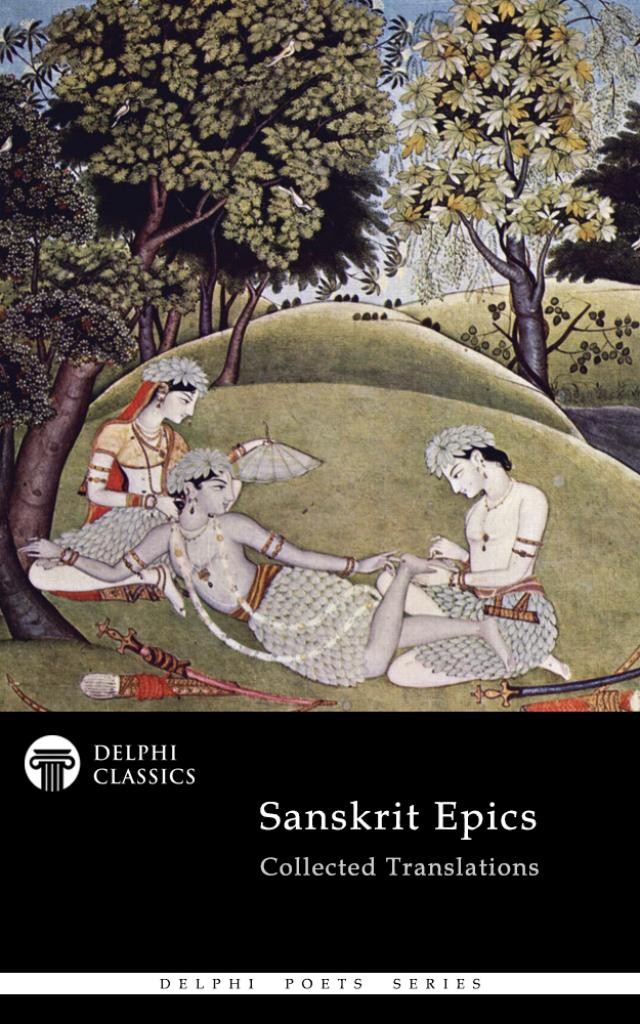
The Sanskrit Epics
(c. 1500 BC-AD 1000)
Contents
The Hindu Itihasa
Ramayana by Valmiki
Mahabharata by Vyasa
Other Sanskrit Epics
Buddhacharita by Asvaghosa
Saundarananda by Asvaghosa
Selections from ‘Raghuvamsha’ by Kalidasa
Selections from ‘Kumarasambhava’ by Kalidasa
Shishupala Vadha by Magha (Cantos I-IV)
Kiratarjuniya by Bharavi
Bhattikavya by Bhatti (Canto I)
The Biographies
A History of Sanskrit Literature by Arthur Anthony Macdonell
Kalidasa: His Life and Writings by Arthur W. Ryder
The Delphi Classics Catalogue
© Delphi Classics 2018
Version 1
The Sanskrit Epics
By Delphi Classics, 2018
COPYRIGHT
The Sanskrit Epics - Delphi Poets Series
First published in the United Kingdom in 2018 by Delphi Classics.
© Delphi Classics, 2018.
All rights reserved. No part of this publication may be reproduced, stored in a retrieval system, or transmitted, in any form or by any means, without the prior permission in writing of the publisher, nor be otherwise circulated in any form other than that in which it is published.
ISBN: 978 1 78656 128 2
Delphi Classics
is an imprint of
Delphi Publishing Ltd
Hastings, East Sussex
United Kingdom
Contact: sales@delphiclassics.com
www.delphiclassics.com
NOTE
When reading poetry on an eReader, it is advisable to use a small font size and landscape mode, which will allow the lines of poetry to display correctly.
The Hindu Itihasa
Yamuna River , near Kalpi, a town and a municipal board in Jalaun district in the Indian state of Uttar Pradesh — according to Vishnu Purana, Vyasa , the composer of ‘Mahabharata’ was born on an island by Kalpi.
Ramayana by Valmiki
Translated by Ralph Thomas Hotchkin
Sanskrit literature is a large body of works produced by the Aryan peoples that entered the Indian subcontinent from the northwest, probably during the second millennium BC. It developed as the vehicle of expression for the Brahmanical society, gradually establishing itself as the main cultural force throughout the region in the period before the Muslim conquest. Throughout this period of 2,500 years the dating of most literary works is difficult due to the tendency to ascribe authorship to well-known or legendary names. The two main periods in the development of Sanskrit literature are the Vedic period, approximately 1500–200 BC and the classical period, approximately 500 BC–AD 1000.
The epic poem Ramayana narrates the struggle of the divine prince Rama to rescue his wife Sita from the demon king Ravana. Along with the Mahabharata, it forms the Hindu Itihasa, the most revered series of Hindu scriptures and texts in Sanskrit literature. The classical Indian poets usually derived the story of their poetry and drama from the Itihasas. Traditionally ascribed to the Hindu sage Valmiki, Ramayana is one of the largest ancient epics in world literature, consisting of nearly 24,000 verses (mostly set in the Shloka meter), divided into seven Kandas (books) and about 500 sargas (chapters). In Hindu tradition, it is considered to be the adi-kavya (first poem). It depicts the duties of relationships, portraying model characters, such as the ideal father, the ideal servant, the ideal brother, the ideal wife and the ideal king. The epic was an important influence on later Sanskrit poetry and Hindu life and culture. Like Mahabharata, it is not just a story, but presents the teachings of ancient Hindu sages in narrative allegory, interspersing philosophical and ethical elements.
The epic narrates the birth of the god Rama in the kingdom of Ayodhya, his tutelage under the sage Vishvamitra and his success in bending Shiva’s mighty bow at the bridegroom tournament of Sita, the daughter of King Janaka, therefore winning her for his wife. When Rama is banished from his position as heir to the kingdom, he retreats to the forest with his wife and his favourite half brother, Lakshmana, to spend fourteen years in exile.
Ravana, the demon-king of Lanka, captures Sita, taking her to his capital, while her two protectors are pursuing a golden deer sent to mislead them. Sita resolutely rejects Ravana’s attentions and Rama and his brother set out to rescue her. After numerous adventures, they forge an alliance with Sugriva, king of the monkeys, and, with the assistance of the monkey-general Hanuman and Ravana’s own brother, Vibhishana, they attack Lanka. Rama slays Ravana and rescues Sita, who undergoes an ordeal by fire in order to clear herself of infidelity. When they return to Ayodhya, however, Rama learns that the people still question the queen’s chastity and he banishes her to the forest. There she meets the sage Valmiki (the poem’s author) and at his hermitage gives birth to Rama’s two sons. The family is reunited when the sons come of age, but Sita, after again protesting her innocence, plunges into the earth, her mother, who receives her and swallows her up.
By tradition, the text belongs to the Treta Yuga, second of the four eons of Hindu chronology. Rama is said to have been born in the Treta yuga to king Dasharatha in the Ikshvaku dynasty. There is no consensus regarding the date the epic poem was first composed, though it is generally held to be no later than 300 BC. It enjoys enormous popularity in India, where its recitation is considered an act of great merit. Little is known of the poet Valmiki as a historical figure, though he is described as having been a thief named Ratnakara, before becoming a sage. The Ramayana was popular during the Mughal period (sixteenth century) and it was a favourite subject of Rajasthani and Pahari painters of the seventeenth and eighteenth centuries. The epic also spread in various forms throughout Southeast Asia in Cambodia, Indonesia and Thailand. The heroes, together with the Pandava brothers of the Mahabharata, were also the heroes of traditional Javanese-Balinese theatre, dance and shadow plays.
Eighteenth century manuscript of the epic poem
Rama (left third from top) depicted in the Dashavatara, the ten avatars of Vishnu. Painting from Jaipur, now at the Victoria and Albert Museum
CONTENTS
BOOK I.
BOOK II.
BOOK III.
BOOK IV.
BOOK V.
BOOK VI.
APPENDIX.
ENDNOTES
RAMAYANA: DETAILED TABLE OF CONTENTS
Rama with his wife Sita and brother Lakshmana during exile in forest, manuscript, c. 1780
An artist’s impression of Valmiki Muni composing the Ramayana
Ancient Sanskrit on Hemp based Paper. Hemp Fiber was commonly used in the production of paper from 200 BC to the late 1800's.
Invocation.1
Praise to Válmíki,2bird of charming song,3
Who mounts on Poesy’s sublimest spray,
And sweetly sings with accent clear and strong
Ráma, aye Ráma, in his deathless lay.
Where breathes the man can listen to the strain
That flows in music from Válmíki’s tongue,
Nor feel his feet the path of bliss attain
When Ráma’s glory by the saint is sung!
The stream Rámáyan leaves its sacred fount
The whole wide world from sin and stain to free.4
The Prince of Hermits is the parent mount,
The lordly Ráma is the darling sea.
Glory to him whose fame is ever bright!
Glory to him, Prachetas’5holy son!
Whose pure lips quaff with ever new delight
The nectar-sea of deeds by Ráma done.
Hail, arch-ascetic, pious, good, and kind!
Hail, Saint Válmíki, lord of every lore!
Hail, holy Hermit, calm and pure of mind!
Hail, First of Bards, Válmíki, hail once more!
BOOK I.6
Canto I. Nárad.7
OM.8
To sainted Nárad, prince of those
Whose lore in words of wisdom flows.
Whose constant care and chief delight
Were Scripture and ascetic rite,
The good Válmíki, first and best
Of hermit saints, these words addressed:9
“In all this world, I pray thee, who
Is virtuous, heroic, true?
Firm in his vows, of grateful mind,
To every creature good and kind?
Bounteous, and holy, just, and wise,
Alone most fair to all men’s eyes?
Devoid of envy, firm, and sage,
Whose tranquil soul ne’er yields to rage?
Whom, when his warrior wrath is high,
Do Gods embattled fear and fly?
Whose noble might and gentle skill
The triple world can guard from ill?
Who is the best of princes, he
Who loves his people’s good to see?
The store of bliss, the living mine
Where brightest joys and virtues shine?
Queen Fortune’s10 best and dearest friend,
Whose steps her choicest gifts attend?
Who may with Sun and Moon compare,
With Indra,11 Vishṇu,12 Fire, and Air?
Grant, Saint divine,13 the boon I ask,
For thee, I ween, an easy task,
To whom the power is given to know
If such a man breathe here below.”
Then Nárad, clear before whose eye
Made ready answer: “Hermit, where
Are graces found so high and rare?
Yet listen, and my tongue shall tell
In whom alone these virtues dwell.
From old Ikshváku’s15 line he came,
Known to the world by Ráma’s name:
With soul subdued, a chief of might,
In Scripture versed, in glory bright,
His steps in virtue’s paths are bent,
Obedient, pure, and eloquent.
In each emprise he wins success,
And dying foes his power confess.
Tall and broad-shouldered, strong of limb,
Fortune has set her mark on him.
Graced with a conch-shell’s triple line,
His throat displays the auspicious sign.16
High destiny is clear impressed
On massive jaw and ample chest,
His mighty shafts he truly aims,
And foemen in the battle tames.
Deep in the muscle, scarcely shown,
Embedded lies his collar-bone.
His lordly steps are firm and free,
His strong arms reach below his knee;17
All fairest graces join to deck
His head, his brow, his stately neck,
And limbs in fair proportion set:
The manliest form e’er fashioned yet.
Graced with each high imperial mark,
His skin is soft and lustrous dark.
Large are his eyes that sweetly shine
With majesty almost divine.
His plighted word he ne’er forgets;
On erring sense a watch he sets.
By nature wise, his teacher’s skill
Has trained him to subdue his will.
Good, resolute and pure, and strong,
He guards mankind from scathe and wrong,
And lends his aid, and ne’er in vain,
The cause of justice to maintain.
Well has he studied o’er and o’er
The Vedas18and their kindred lore.
Well skilled is he the bow to draw,19
Well trained in arts and versed in law;
High-souled and meet for happy fate,
Most tender and compassionate;
The noblest of all lordly givers,
Whom good men follow, as the rivers
Follow the King of Floods, the sea:
So liberal, so just is he.
The joy of Queen Kauśalyá’s20heart,
In every virtue he has part:
Firm as Himálaya’s21 snowy steep,
Unfathomed like the mighty deep:
The peer of Vishṇu’s power and might,
And lovely as the Lord of Night;22
Patient as Earth, but, roused to ire,
Fierce as the world-destroying fire;
In bounty like the Lord of Gold,23
And Justice self in human mould.
With him, his best and eldest son,
By all his princely virtues won
King Daśaratha24 willed to share
His kingdom as the Regent Heir.
But when Kaikeyí, youngest queen,
With eyes of envious hate had seen
The solemn pomp and regal state
Prepared the prince to consecrate,
She bade the hapless king bestow
Two gifts he promised long ago,
That Ráma to the woods should flee,
And that her child the heir should be.
By chains of duty firmly tied,
The wretched king perforce complied.
Ráma, to please Kaikeyí went
Obedient forth to banishment.
Then Lakshmaṇ’s truth was nobly shown,
Then were his love and courage known,
When for his brother’s sake he dared
All perils, and his exile shared.
And Sítá, Ráma’s darling wife,
Loved even as he loved his life,
Whom happy marks combined to bless,
A miracle of loveliness,
Of Janak’s royal lineage sprung,
Most excellent of women, clung
To her dear lord, like Rohiṇí
Rejoicing with the Moon to be.25
The King and people, sad of mood,
The hero’s car awhile pursued.
But when Prince Ráma lighted down
At Śringavera’s pleasant town,
Where Gangá’s holy waters flow,
He bade his driver turn and go.
Guha, Nishádas’ king, he met,
And on the farther bank was set.
Then on from wood to wood they strayed,
O’er many a stream, through constant shade,
As Bharadvája bade them, till
They came to Chitrakúṭa’s hill.
And Ráma there, with Lakshmaṇ’s aid,
A pleasant little cottage made,
And spent his days with Sítá, dressed
In coat of bark and deerskin vest.26
And Chitrakúṭa grew to be
As bright with those illustrious three
As Meru’s27 sacred peaks that shine
With glory, when the Gods recline
Beneath them: Śiva’s28 self between
The Lord of Gold and Beauty’s Queen.
The aged king for Ráma pined,
And for the skies the earth resigned.
Bharat, his son, refused to reign,
Though urged by all the twice-born29 train.
Forth to the woods he fared to meet
His brother, fell before his feet,
And cried, “Thy claim all men allow:
O come, our lord and king be thou.”
But Ráma nobly chose to be
Observant of his sire’s decree.
He placed his sandals30 in his hand
A pledge that he would rule the land:
And bade his brother turn again.
Then Bharat, finding prayer was vain,
The sandals took and went away;
Nor in Ayodhyá would he stay.
But turned to Nandigráma, where
He ruled the realm with watchful care,
Still longing eagerly to learn
Tidings of Ráma’s safe return.
Then lest the people should repeat
Their visit to his calm retreat,
Away from Chitrakúṭa’s hill
Fared Ráma ever onward till
Beneath the shady trees he stood
Of Daṇḍaká’s primeval wood,
Virádha, giant fiend, he slew,
And then Agastya’s friendship knew.
Counselled by him he gained the sword
And bow of Indra, heavenly lord:
A pair of quivers too, that bore
Of arrows an exhaustless store.
While there he dwelt in greenwood shade
The trembling hermits sought his aid,
And bade him with his sword and bow
Destroy the fiends who worked them woe:
To come like Indra strong and brave,
A guardian God to help and save.
And Ráma’s falchion left its trace
Deep cut on Śúrpaṇakhá’s face:
A hideous giantess who came
Burning for him with lawless flame.
Their sister’s cries the giants heard.
And vengeance in each bosom stirred:
The monster of the triple head.
And Dúshaṇ to the contest sped.
But they and myriad fiends beside
Beneath the might of Ráma died.
When Rávaṇ, dreaded warrior, knew
The slaughter of his giant crew:
Rávaṇ, the king, whose name of fear
Earth, hell, and heaven all shook to hear:
He bade the fiend Márícha aid
The vengeful plot his fury laid.
In vain the wise Márícha tried
To turn him from his course aside:
Not Rávaṇ’s self, he said, might hope
With Ráma and his strength to cope.
Impelled by fate and blind with rage
He came to Ráma’s hermitage.
There, by Márícha’s magic art,
He wiled the princely youths apart,
The vulture31 slew, and bore away





