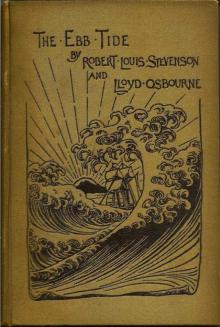
Complete Works of Robert Louis Stevenson, page 858


To deal with Stevenson’s intellectual qualities alone is to approach his less fascinating side, and to miss far more than half the influence of his charm. I have referred to his chivalry, only to find that in reality I was thinking of every one of the whole group of attributes which are associated with that name. Loyalty, honesty, generosity, courage; courtesy, tenderness, and self-devotion; to impute no unworthy motives and to bear no grudge; to bear misfortune with cheerfulness and without a murmur; to strike hard for the right and take no mean advantage; to be gentle to women and kind to all that are weak; to be very rigorous with oneself and very lenient to others — these, and any other virtues ever implied in “chivalry,” were the traits that distinguished Stevenson. They do not make life easy, as he frequently found. One day, his stepson tells me, they were sitting on the deck of a schooner in the Pacific, and Stevenson was reading a copy of Don Quixote. Suddenly he looked up, and, with an air of realisation, said sadly, as if to himself, “That’s me.”
In spite of his knowledge of the world and his humour, and a vein of cynicism most difficult to define, many were his quixotries and many the windmills at which he tilted, less often wholly in vain than we thought who watched his errantry. The example remains; and “ Would to-day, when Courtesy grows chill, And life’s fine loyalties are turned to jest, Some fire of thine might bum within us still! Ah, would but one might lay his lance in rest, And charge in earnest — were it but a mill!”1
Of some of the virtues I have cited it would be superfluous to say more. There is no need to repeat how he faced death in the Riviera or bore the weariness of exile. But I may be pardoned if I dwell upon a few of the more striking instances in which he displayed his open-mindedness, his generosity of temper, his hatred of cruelty, and his readiness to forgive offences.
Generosity is a word in sore danger of being limited to the giving of money, but to Stevenson the quality must be attributed not only in this, but also in the widest possible application. It is a virtue that from its nature is easily abused: this did but make Stevenson think the more highly of it, and it can have no more splendid motto than his own aphorism, of which one version 1 At the Sign of the Lyre, by Austin Dobson, . runs: “The mean man doubted, Greatheart was deceived. ‘Very well,’ said Greatheart.”
Of Stevenson’s own generous temper there is no better illustration than a letter written in early days when he had been called to task for some words of depreciation.
“I think the crier-up has a good trade; but I like less and less every year the berth of runner-down; and I
hate to see my friends in it. What is ‘s fault?
That he runs down. What is the easiest thing to do? To run down. What is it that a strong man should scorn to do? To run down. And all this comes steeply home to me; for I am horrified to gather that I begin myself to fall into this same business which I abhor in others.”
No one ever more eagerly welcomed the success of younger writers, entirely unknown to himself; but of this point the published letters are quite sufficient proof.
Any offence against himself he forgave readily, nor did he find it difficult to make excuses for almost any degree of misconduct on the part of others. There was only one action which I heard him say he could never pardon, and the exception was characteristic. The father of an acquaintance came to Edinburgh one day many years ago to render his son material assistance which he could ill afford. The pair met Stevenson, and the son, introducing his father, did not scruple to sneer at him behind his back. Stevenson’s experience of life and of character was very wide; but he looked back on that gesture as the one really unpardonable offence he had ever known.
He could be angry enough and stern enough upon 213
occasion, but never was there any one so ready to melt at the least appeal to his compassion or mercy. In his political quarrels he found the greatest difficulty in keeping up an open breach with persons whom he liked in themselves, and for whom his sympathy was engaged, although he was convinced that they were ruining Samoa.1 Truly he might say: “There was no man born with so little animosity as I.”
But in fact the two kinds of generosity went frequently together. It is impossible for me to give the instances I know, but it is the fact that over and over again, no sooner had any one quarrelled with him, than Stevenson at once began to cast about for some means of doing his adversary a service, if only it could be done without divulging the source from whence it came.
In the narrower sense he was generous to a fault, but was ready to take any amount of personal trouble, and exercised judgment in his giving. When there was occasion he set no limit to his assistance. “ Pray remember that if ever X should be in want of help, you are to strain my credit to breaking, and to mortgage all I possess or can expect, to help him.” But in another case: “I hereby authorise you to pay when necessary £ to Z ; if I gave him more, it would only lead to his starting a gig and a Pomeranian dog. I hope you won’t think me hard about this. If you think the sum insufficient, you can communicate with me by return on the subject.” Of course he received applications from all sorts of people on all manner of pretexts. There was one man who embarrassed him greatly by frequent letters. As far as could be 1 Vailima Letters, . gathered this person desired to abandon entirely the use of clothing, and coming to Samoa with “ a woman I love,” was there to gain his livelihood by whitewashing Stevenson’s fences, which, by the way, consisted almost entirely of barbed wire. This, individual even presented himself (but in the garb of civilisation) at Stevenson’s hotel in Sydney; there, however, the line was drawn, and he was refused an interview.
But Stevenson’s best service was often in the words with which he accompanied his gift. To his funeral only close personal friends were invited, but there appeared a tall gaunt stranger, whom nobody remembered to have seen before. He came up and apologised for his presence, and said he could not keep away, for Stevenson had saved him one day when he was at his lowest ebb. “I was wandering despondently along the road, and I met Mr. Stevenson, and I don’t know whether it was my story, or that he saw I was a Scotchman, but he gave me twenty dollars and some good advice and encouragement. I took heart again, and I’m getting on all right now, but if I had n’t met Mr. Stevenson, and he had n’t helped me, I should have killed myself that day.” And the tears ran down his face.
Of Stevenson’s open mind there could perhaps be no better proof than the passage in his last letter to R. A. M. Stevenson, written only two months before his death. If there was a class of men on this earth whom Louis loathed and placed beyond the pale of humanity, it was the dynamiters and anarchists; yet he could write of them in the following strain:— “There is a new something or other in the wind, which exercises me hugely: anarchy. — I mean, anarchism. People who (for pity’s sake) commit dastardly murders very basely, die like saints, and leave beautiful letters behind ’em (did you see Vaillant to his daughter? it was the New Testament over again); people whose conduct is inexplicable to me, and yet their spiritual life higher than that of most. This is just what the early Christians must have seemed to the Romans. ... If they go on being martyred a few years more, the gross, dull, not unkindly bourgeois may get tired or ashamed or afraid of going on martyring; and the anarchists come out at the top just like the early Christians.”
I have never met any one who hated cruelty of any kind with so lively a horror — I had almost said with so fanatical a detestation — from his earliest years.
“Do you remember telling me one day when I came in,” wrote the Rev. Peter Rutherford, his tutor, to Mrs. Thomas Stevenson after her son’s death, “ how it was his eyes were so swollen: tear-swollen? You had found him in the study sobbing bitterly over a tale of cruelty he had been reading all alone.” At the other end of his life I can remember his own impassioned account, given late one Sunday evening on his return from Apia, of how he had found a crowd of natives watching a dog-fight. He had plunged into their midst and stopped it, and turned to rebuke them. “But I found all my Samoan had clean gone out of my head, and all I could say to them was’ Pala’ai, Pala’ai! ‘ (‘ Cowards, cowards!’).” But the most characteristic of all his utterances was at Pitlochry in 1881, when he saw a dog being ill-treated. He at once interposed, and when the owner resented his interference and told him: “ It’s not your dog,” he cried out: “ It’s God’s dog, and I’m here to protect it.”
At the same time it must be laid to the credit of his reason and the firm balance of his judgment that although vivisection was a subject he could not endure even to hear mentioned, yet, with all his imagination and sensibility, he never ranged himself among the opponents of this method of inquiry, provided, of course, it was limited, as in England, with the utmost rigour possible.
It is curious now to remember that an early critic of the Travels with a Donkey censured him severely for the treatment of Modestine as described by Stevenson himself. Yet woe betide either friend or stranger who appeared at Vailima on a horse with the sore back too common in the tropics: it was well for him if he did not have to return home on foot.
Irksome as ill-health was to Stevenson, it was yet the possible effect on his own character that he most dreaded, for he suspected that “ being an invalid was a fatal objection to a human being,” and his horror of valetudinarianism was due to its being “the worst training upon earth.” He felt it hard that he should be judged by the same standard as men to whom the world was still “ full of sea-bathing, and horse exercise, and bracing, manly virtues.” Moreover, although he always reckoned his life “ as a thing to be dashingly used and cheerfully hazarded,” he could not be altogether unconscious of the insecurity of his tenure. On one of those fragments of paper preserved by chance, on which he used to write down his remarks during the many periods when he was forbidden to speak, these words occur: “You know the remarks of no doctor mean anything in my case. My case is a sport. I may die to-night or live till sixty.” I can remember his saying to me in Samoa, “ I have n’t had a fair chance, 1 ‘ve had to spend nearly all my life in expectation of death.” The chief result with him perhaps was that he sat looser to life, and had grown altogether familiar with the idea of leaving it; i for in the words of Sir Thomas Browne: “He that so often surviveth his expectation lives many lives, and will hardly complain of the shortness of his days.”
The question of Stevenson’s ill-health brings one to the consideration which troubled him now and again in his later days: whether he had not after all made a mistake in adopting literature as his profession. With him, as with Scott, “ to have done things worthy to be written was a dignity to which no man made any approach who had only written things worthy to be read.” At times he thought with a passing regret of the life of action he had forsaken, and was struck by the irony that his father, who had opposed his choice of the profession of literature, had come to approve of it before he died, while he, whom nothing but that change of life would satisfy, had himself lived to doubt its wisdom.2 But in these comparisons it was an ideal life that he contemplated, where he should be always well and always strong, doing his work in the open air. With such health and such conditions, his character and his powers might have attained to other heights; we should then have known a different man, less human and less endeared to us by the frailties of 1 Letters, ii. 353. 2 Ibid., 321. our common nature. But the field on which he fought with sickness and depression was one in which most of us are at times engaged, and where many sufferers carry on a lifelong struggle. Anywhere his example would have been splendid; it could hardly have been more widely seen, or have better helped his fellow- men.
There v/as this about him, that he was the only man I have ever known who possessed charm in a high degree, whose character did not suffer from the possession. The gift comes naturally to women, and they are at their best in its exercise. But a man requires to be of a very sound fibre before he can be entirely himself and keep his heart single, if he carries about with him a talisman to obtain from all men and all women the object of his heart’s desire. Both gifts Stevenson possessed, not only the magic but also the strength of character to which it was safely intrusted.
But who shall bring back that charm? Who shall unfold its secret? He was all that I have said: he was inexhaustible, he was brilliant, he was romantic, he was fiery, he was tender, he was brave, he was kind. With all this there went something more. He always liked the people he was with, and found the best and brightest that was in them; he entered into all the thoughts and moods of his companions, and led them along pleasant ways, or raised them to a courage and a gaiety like his own. If criticism or reminiscence has yielded any further elucidation of his spell, I do not know: it defies my analysis, nor have I ever heard it explained.
There linger on the lips of men a few names that bring to us, as it were, a breeze blowing off the shores of youth. Most of those who have borne them were taken from the world before early promise could be fulfilled, and so they rank in our regard by virtue of their possibilities alone. Stevenson is among the fewer still who bear the award both of promise and of achievement, and is happier yet in this: besides admiration and hope, he has raised within the hearts of his readers a personal feeling towards himself which is nothing less deep than love.
THE END
ROBERT LOUIS STEVENSON by Alexander H. Japp
A RECORD, AN ESTIMATE, AND A MEMORIAL
CONTENTS
PREFACE
CHAPTER I — INTRODUCTION AND FIRST IMPRESSIONS
CHAPTER II — TREASURE ISLAND AND SOME REMINISCENCES
CHAPTER III — THE CHILD FATHER OF THE MAN
CHAPTER IV — HEREDITY ILLUSTRATED
CHAPTER V — TRAVELS
CHAPTER VI — SOME EARLIER LETTERS
CHAPTER VII — THE VAILIMA LETTERS
CHAPTER VIII — WORK OF LATER YEARS
CHAPTER IX — SOME CHARACTERISTICS
CHAPTER X — A SAMOAN MEMORIAL OF R. L. STEVENSON
CHAPTER XI — MISS STUBBS’ RECORD OF A PILGRIMAGE
CHAPTER XII — HIS GENIUS AND METHODS
CHAPTER XIII — PREACHER AND MYSTIC FABULIST
CHAPTER XIV — STEVENSON AS DRAMATIST
CHAPTER XV — THEORY OF GOOD AND EVIL
CHAPTER XVI — STEVENSON’S GLOOM
CHAPTER XVII — PROOFS OF GROWTH
CHAPTER XVIII — EARLIER DETERMINATIONS AND RESULTS
CHAPTER XIX — EDMUND CLARENCE STEDMAN’S ESTIMATE
CHAPTER XX — EGOTISTIC ELEMENT AND ITS EFFECTS
CHAPTER XXI — UNITY IN STEVENSON’S STORIES
CHAPTER XXII — PERSONAL CHEERFULNESS AND INVENTED GLOOM
CHAPTER XXIII — EDINBURGH REVIEWERS’ DICTA INAPPLICABLE TO LATER WORK
CHAPTER XXIV — MR HENLEY’S SPITEFUL PERVERSIONS
CHAPTER XXV — MR CHRISTIE MURRAY’S IMPRESSIONS
CHAPTER XXVI — HERO-VILLAINS
CHAPTER XXVII — MR G. MOORE, MR MARRIOTT WATSON AND OTHERS
CHAPTER XXVIII — UNEXPECTED COMBINATIONS
CHAPTER XXIX — LOVE OF VAGABONDS
CHAPTER XXX — LORD ROSEBERY’S CASE
CHAPTER XXXI — MR GOSSE AND MS. OF TREASURE ISLAND
CHAPTER XXXII — STEVENSON PORTRAITS
CHAPTER XXXIII — LAPSES AND ERRORS IN CRITICISM
CHAPTER XXXIV — LETTERS AND POEMS IN TESTIMONY
APPENDIX
PREFACE
A few words may here be allowed me to explain one or two points. First, about the facsimile of last page of Preface to Familiar Studies of Men and Books. Stevenson was in Davos when the greater portion of that work went through the press. He felt so much the disadvantage of being there in the circumstances (both himself and his wife ill) that he begged me to read the proofs of the Preface for him. This illness has record in the letter from him (p-29). The printers, of course, had directions to send the copy and proofs of the Preface to me. Hence I am able now to give this facsimile.
With regard to the letter at , of which facsimile is also given, what Stevenson there meant is not the “three last” of that batch, but the three last sent to me before — though that was an error on his part — he only then sent two chapters, making the “eleven chapters now” — sent to me by post.
Another point on which I might have dwelt and illustrated by many instances is this, that though Stevenson was fond of hob-nobbing with all sorts and conditions of men, this desire of wide contact and intercourse has little show in his novels — the ordinary fibre of commonplace human beings not receiving much celebration from him there; another case in which his private bent and sympathies received little illustration in his novels. But the fact lies implicit in much I have written.
I have to thank many authors for permission to quote extracts I have used.
ALEXANDER H. JAPP.
CHAPTER I — INTRODUCTION AND FIRST IMPRESSIONS
My little effort to make Thoreau better known in England had one result that I am pleased to think of. It brought me into personal association with R. L. Stevenson, who had written and published in The Cornhill Magazine an essay on Thoreau, in whom he had for some time taken an interest. He found in Thoreau not only a rare character for originality, courage, and indefatigable independence, but also a master of style, to whom, on this account, as much as any, he was inclined to play the part of the “sedulous ape,” as he had acknowledged doing to many others — a later exercise, perhaps in some ways as fruitful as any that had gone before. A recent poet, having had some seeds of plants sent to him from Northern Scotland to the South, celebrated his setting of them beside those native to the Surrey slope on which he dwelt, with the lines —
“And when the Northern seeds are growing,
Another beauty then bestowing,
We shall be fine, and North to South
Be giving kisses, mouth to mouth.”