

Complete Works of Ford Madox Ford, page 339


“Web, what’s this all about?” Mr Bransdon said.
“Oh, it’s all about me,” Hamnet answered. “I’m talking about myself just as you’d talk about yourself if I’d let you get a word in. What I mean is, that I wouldn’t live with old Stobby and earn money by being a distasteful Socialist, and I wouldn’t earn money by analysing drinking water for communities, and I won’t take money from my father for being his son, because that’s the most distasteful thing of all, except that it makes me Ophelia’s half brother, which is rather pleasant.”
He broke off to ask, “Ophelia and Everard didn’t have any trouble about the divorce, did they? A starved sort of chap came down here and stuck a paper into my hand and mumbled something about the High Court.”
“Oh, no, they didn’t have any trouble,” Bransdon answered. “The case was taken in camera, of course.”
“Well, then,” Hamnet laughed, “there’s some decency even in human institutions. But as I was saying, I won’t gain money by work, but I’m perfectly ready to let it shower down on me from the skies because I’ve a certain attractiveness. That’s what you do because you’re an artist in words. I’m an artist in Life, which is deucedly more difficult.”
Mr Bransdon had not moved during the whole of this conversation. His ebony cane remained planted in the same hole in the turf that it had made a quarter of an hour before.
“Look here!” he exclaimed, “I’m not taking half the share in this conversation that is due to my dignity and years.”
“Of course, you aren’t,” Hamnet said cheerfully. “You’re listening to me. You’re going to put me into a book. When you’ve got into another romantic phase you’ll write about me as the young faun, as something that has faded into, has identified itself with, Nature. You’ll describe how I stand in a black wood at night. Oh, I know you, you unscrupulous old artist. You’re standing there pursuing your avocation. You’ll describe how I shall stand there, invisible to myself, in the liquid darkness, and overhead, in a pale sky, there will be the great white stars seen through the branches. And I shall see nothing of myself and I shall feel my body in no way at all. I shall know only that the great earth is swinging through the darkness. I shall be conscious only of the motion and I shall feel my heart beat with the heart beat of Nature. That’s the sort of thing, isn’t it, old boy?” He continued cheerfully, “Only you’d turn me into a nigger in primordial South Africa.”
“At present,” Mr Bransdon said, “I am writing a play about the London Stock Exchange.”
“Of course you are,” Hamnet answered. “But you’ll get through that phase, too, if you live to be old enough. And people always return just before they die to the sort of stuff they started out with. What I’ve just been saying is very like a passage from Clotted Vapours, your first book. You go through your phases just as I go through mine. Of course every now and then I feel at one with Nature, but it wouldn’t be fair to render me as only that, because I’ve got a sense of humour. One of these days, in God’s good time, you’ll find me up in London dashing about in motor-cars and indulging in the sort of sordid dissipation that my father has put into my blood. It’s all right, don’t you worry. You give me time.”
Mr Bransdon raised the handle of his stick to his lips.
“You knew all the time,” he said, “that Ophelia Everard was your half sister.”
“Of course, I knew it,” Hamnet answered. “How could I escape it, with my mother grizzling about it half the time and Miss Egmont tearing my father’s hair out for the rest of it!”
“And yet you married her?” Mr Bransdon said.
“Of course I did,” Hamnet answered. “I just wanted to get her away from those sickening, slack conditions. It seemed about the best way to do it, and so it would have been if she hadn’t been such a disgusting little prig at that time.”
“Well, she’s got out of that,” Mr Bransdon said.
“Oh, yes, old boy,” Hamnet answered. “She’s got, and you’ve got, and we’ve all got, thank God! out of that.”
THE END
LADIES WHOSE BRIGHT EYES
This historical novel was one of Ford’s most popular works during his lifetime, winning him fame and critical praise in 1911, causing the author to reissue it several times. In his dedication Ford admits that the novel was the hardest work he had accomplished till that time. Serving as a reply to Mark Twain’s A Connecticut Yankee in King Arthur’s Court, the novel offers a social commentary on the differences between fourteenth and twentieth century England, featuring action from both time periods.
The narrative concerns the practical Edwardian businessman Mr Sorrell, who has gained control of the publishing house Sorrell and Sons, transforming it into a money-making success. As the novel opens, Sorrell is aboard a boat train from Southampton to London. He studies an ancient relic that has come into his keeping, said to have been brought to England from Palestine after the Battle of Bannockburn by a Greek slave. Suddenly the train overturns and Sorrel is left unconscious, only to awaken dressed as a Greek slave in England in 1326.
At first Sorrell relishes the opportunity of being in the past, believing he could invent anything he might wish. However, he is sadly disillusioned when he realises his own ignorance to achieve any of his plans. Instead, Sorrell develops a humbling respect for the people of the Middle Ages and the hardships they faced, lauding their long-dead rules of chivalry and feeling deep satisfaction when he eventually becomes a Knight. The modern change of viewpoint of the medieval period clearly differs from Twain’s own interpretation of the time, encouraging the modern reader to consider history from a modern standpoint. Ladies Whose Bright Eyes is a delightful read, with vivacious depictions of medieval life, complemented with researched depth and humorous insight.
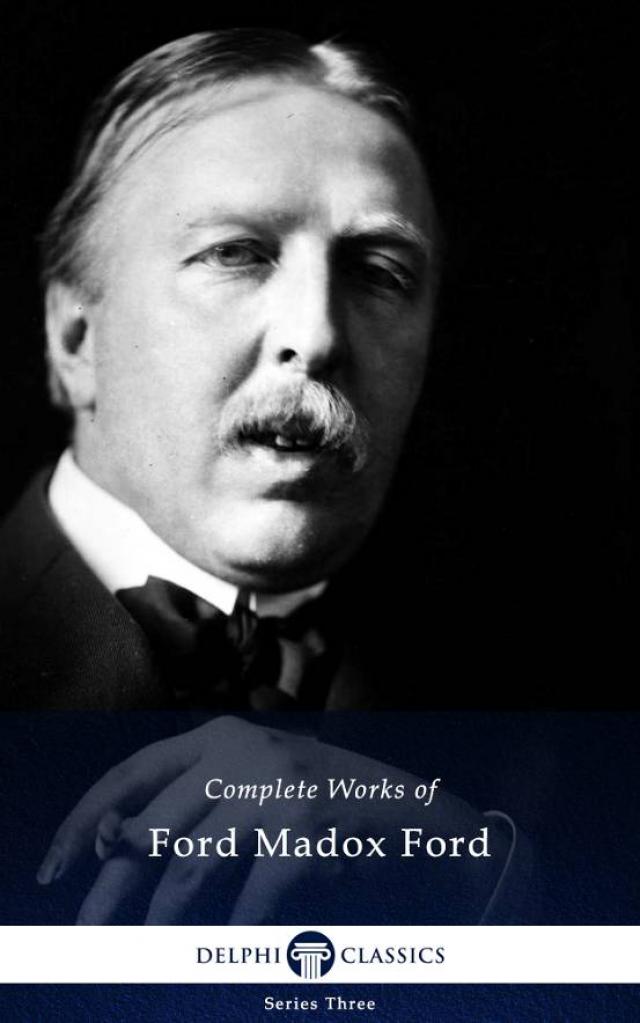
Ford, close to the time of publication
CONTENTS
PART I.
CHAPTER I.
CHAPTER II.
CHAPTER III.
CHAPTER IV.
CHAPTER V.
CHAPTER VI.
CHAPTER VII.
CHAPTER VIII.
CHAPTER IX.
PART II.
CHAPTER I.
CHAPTER II.
CHAPTER III.
CHAPTER IV.
PART III.
CHAPTER I.
CHAPTER II.
CHAPTER III.
PART IV.
CHAPTER I.
CHAPTER II.
CHAPTER III.
CHAPTER IV.
CHAPTER V.
CHAPTER VI.
CHAPTER VII.
L’ENVOI
CHAPTER I.
CHAPTER II.
CHAPTER III.
The first edition
“Towered cities please us then
And the busy haunts of men,
Where throngs of knights and barons bold
In weeds of peace high triumphs hold,
With store of ladies whose bright eyes
Rain influence and judge the prize.”
L Allegro.
TO V. H.
My dear: such as it is, take this story — for it is yours. I have worked at it harder, I think, than at any story I ever wrote, because it was to please you. And in proportion to the hardness of the work so I have the sense of its failure. But this I can say — and this you know to be true — that where it is yours by suggestion, it might scrape past, where it is mine, in the two-stranded idea of it, it is a futility. But if it goes out with the letters of your name upon its forehead it will give me at least as ‘much pleasure as, in these days and years, I can get from the writing of books.
— F. M. H.
PART I.
CHAPTER I.
MR. SORRELL stepped out into the swaying corridor from the carriage into which he had gallantly accompanied Mrs. Lee-Egerton. He wanted to smoke a cigar and, now that he was off the boat, he wanted in cold blood to reflect as to whether he had not made a fool of himself. The carriage was swaying tremendously, the train travelling at an unheard-of speed, and this speed pleased Mr. Sorrell. He felt, if he were not responsible for it, he was at least a friend of its author, Mr. Makover, of Pittsburgh, Pennsylvania. Indeed, he himself had gone with the Pennsylvanian to interview the driver. The millionaire had promised the mechanic a ten-pound note if he would get them up to town in time to dress, dine, and go to the Empire before the ballet began. And in the speed at which they travelled Mr. Sorrell took a personal pride. You cannot, as a rule, do much with trains, but he himself had had a hand in this acceleration.
His left shoulder struck with violence the outer window; his right pained him considerably when it hit a brass hand-rail of the inner one.
“Oh, steady!” Mr. Sorrell exclaimed.
‘He was bending down to peer into the carriages in order to discover one in which he could smoke, when his eyes hit upon the broad expanse of spotless white of a nun’s large head-dress, and at the same moment he was once more thrown so violently against the glass of the outer window that, for a moment, he experienced a feeling of panic at the thought that he had just missed breaking it and going clean through.
“Oh, I say!” he exclaimed. “This won’t do.”
He set his feet hard against the outer wall of the corridor and his shoulders against the inner. Decidedly he was going to smoke, and equally decidedly he was not going any farther. He got out a cigar, pierced the end of it with a patent American stiletto, set it in his clean-shaven mouth, lit it, and began to smoke. Then he took another peep at the nun.
She excited in him an almost unholy curiosity. He could not remember ever to have seen a nun before; at any rate he had never before been so near to one. He had not, indeed, really been certain that nuns any more existed. And it seemed to him absolutely odd that one should be seated in a railway train. It was still more odd that she should be coming back from America. He supposed that there might be nuns in England still — survivals, perhaps, of monasteries that had been forgotten at the Reformation — but he was quite certain that the up-to-date United States, with its salutary laws against undesirable emigrants, would not permit one of them to enter its territories. But on second thoughts Mr. Sorrell considered that his first must have been too rash. There must, after all, be some Roman Catholics left somewhere in the world! And, of course, when he came to think of it, he remembered that in his youth there had been a Home Rule Agitation in Ireland and that one of the main objections to giving Parnell what he wanted had been that Home Rule would have spelt Rome Rule. Then Mr. Sorrell remembered that there was still a Pope. Indeed, when Mr. Sorrell had still been the proprietor of The Fourpenny Magazine, he remembered that they had published an article with illustrations on a day’s work in the life of the Vatican. And he remembered, even, that he had commissioned the editor to try to get for the magazine an article written by the Pope, even if it cost him a hundred pounds.
“How extraordinary of me!” Mr. Sorrell said to himself. And he meant that it was just as extraordinary for him to have forgotten that Roman Catholics existed as it was that he should ever have wanted such truck as an article by the Pope, and been ready to pay a hundred pounds for it. Of course, it was the extraordinary rush of modern life. To-day a subject seemed of enormous importance. In a month you would not touch it as any kind of publishing matter. And Mr. Sorrell had a moment of misgiving when he remembered the sum he had paid to the Theat Publishing Company of New York for the account of the travels of Mr. Car K. Claflin, the intrepid explorer. It was perfectly true that Mr. Claflin had gone completely round the earth, never deviating by as much as half a mile from the equatorial line. But on the other hand he was paying Mr. Theat as much as £10,000 for the English publishing rights of the intrepid explorations. Mr. Sorrell repeated these words rather frequently in his mind, because all the way over from New York he had been occupied with writing a sixteen-page pamphlet about Mr. Claflin’s book. In this production the word intrepid occurred thirty-four times and the words explorer and exploration twenty and fourteen times respectively. These lapses from literary style would afterwards be corrected by Mr. Sorrell’s typewriter. The main thing was to get the pamphlet, the book, the illustrations, the preliminary puffs, and the advertisements out as quickly as possible. Mr. Sorrell reckoned that he could do it in a fortnight. The American printed sheets of the book were in the hold of the S.S. Eurytonka. They would be in London that night and delivered at the binders’ next morning, giving the press seven preliminary days in which to write their reviews, and his travellers the same seven days in which to get orders from the libraries and booksellers, and devoting himself and the whole of his staff with a furious energy to the task of obtaining publicity from the halfpenny papers, which are easy to manage as long as you give them plenty of advertisements. With that pulling together of the whole crew, with that devotion to the team of his whole staff which is the cricket of publishing, Mr. Sorrell imagined that he would score another immense success. And it would have been done in record time. It was only eleven days at that moment since the day when, in London, he had received from Theat and Company, of New York, the cable announcing that they had secured the full rights of Mr. Claflin’s book, Mr. Claflin having arrived the day before in New York with his memoirs in his hand-grip. Yes, it was a pretty smart piece of work.
And, bending down to peep again at the nun, Mr. Sorrell felt a rush of satisfaction at the fact that he lived in the present day. For it was the day of rushes. There was no saying how many deals you could not get through in all sorts of fragments of time. He was even proud that he felt exceedingly tired. Except for the few hours that he had spent in the society of Mrs. Lee-Egerton, he did not think that he had really had any leisure whatever in the five days that the journey from New York to Southampton had cost him. He was proud too of his profession, which was that of a publisher. There were not any effeminate frills about the business any more. In the old days a publisher had to consider what was Literature. It was something impracticable, it was something fanciful, and you went through it in a kid-glove sort of way, trying to establish friendly relations with authors and nonsense of that sort. Now it was just a business. You found out what the public had to have. For what Mr. Sorrell supplied was just that. He gave them encyclopaedias that every clerk in the Fulham Road and every commuter from Brooklyn to Manhattan Beach could not hold up his head without having. Commuter is the American for season-ticket holder, and Mr. Sorrell held up his head with pride at the thought that it was he, more than anybody else, who supplied the sort of printed stuff that the suburban season-ticket holder must indispensably have. In his day Mr. Sorrell had done to this end many extraordinary things. Yet he had started out in life as a mining engineer. He had not begun with the least idea of publishing. He had rather remarkable mechanical talents and a still more singular gift of tongues. He used to say that he could pick up any South American dialect in ten minutes and drop it completely twenty minutes after he had no more use for it. In his career as mining engineer this had been to him of extraordinary use, because he could be sent off at any minute to inspect any mine, whether in South Africa, in Galicia, or on the Klondyke. And without having to rely on the representations of the Anglo-Saxons or Semites who might be trying to sell a mine, he had been able to pick up nearly always quite tidy little bits of information from native miners and the hangers-on at bars. So that, of course, he had not limited himself to his mechanical and mineralogical efforts. He had had a finger in a pie or two of his own.
Thus he had been regarded already as a remarkably warm business man, when his cousin, William Sorrell, had died. His uncle, William Sorrell, senior, of the firm of Sorrell and Sons, the publishers, established in 1814 — his venerable uncle, William, had then offered him a share in the business direction of the ancient and august house. The literary side Old William had intended to maintain in his own hands. And having gone into the matter carefully, considering that his uncle, by methods as antiquated as those of the builders of the Ark of Noah, contrived to extract from the business an income of between six and seven thousand a year, and considering also that, as his uncle’s sole heir, now that his cousin was dead, the business would ultimately fall to him, Mr. Sorrell had accepted his uncle’s offer. It had, indeed, only taken him five minutes to consider it. He had remembered that the business was old and not much supervised. There must be innumerable screws that could be tightened; there must be innumerable economies that could be effected. Half the staff could probably be kicked out. The site of the snuffy old Georgian house that the firm owned could be converted into a veritable goldmine by building modern offices upon it. And “William Sorrell, Son and Nephew” could be floated as a public company. At first, indeed, Mr. Sorrell had imagined that he would practically limit his energies to the floating of this company. Publishing had then struck him still as something connected with Literature and in consequence as something effeminate. But before very long Mr. Sorrell had averaged it out that books, if you got hold of the right sort of book, were something that the city clerk must have. The right sort of book was as indispensable as a season ticket, a clean collar, or a ten-and-sixpenny top-hat. At the same time Mr. Sorrell had been not so obtuse as not to see that it would be difficult to square the old-fashioned publishing traditions of William Sorrell and Sons — they were worth between six and seven thousand a year — to make them square with publishing what the city clerk would want. The long-standing reputation of the house was an asset that Mr. Sorrell did not at all want to depreciate. It had cost him a great deal of thought, but at last he had achieved the happy medium. He had begun with encyclopaedias. He had gone on to cheap editions of the classics originally published by Sorrell and Sons. After all, had not they published works of explorers like Speke, Burton, Grant, and Livingstone in solid quarto volumes? So that what, as a development, was there against their publishing gentlemen like Mr. Car K. Claflin? It was all in the very tradition itself. It was the tradition. It was perfectly true that you had to print Mr. Claflin upon heavy glazed paper so that his reproductions from photographs should come out well, and you had to publish him in sevenpenny-halfpenny fortnightly parts, so as to appeal to the pockets of season ticket-holders and commuters. But the old flag flew where it used to fly. The Firm was still the Firm, though just every now and then Mr. Sorrell chafed at his traditions and wished that he had been born an American citizen. His old uncle was still actually alive at Reading, where he insisted on perusing all the manuscripts that were sent into the firm and discussing them with his two maiden cousins of incredible ages who kept house for him. But at any rate Mr. Sorrell at the moment was able to think that he had accomplished the smartest bit of publishing that had ever been known since the makers of books began to move their offices from Paternoster Row.


