

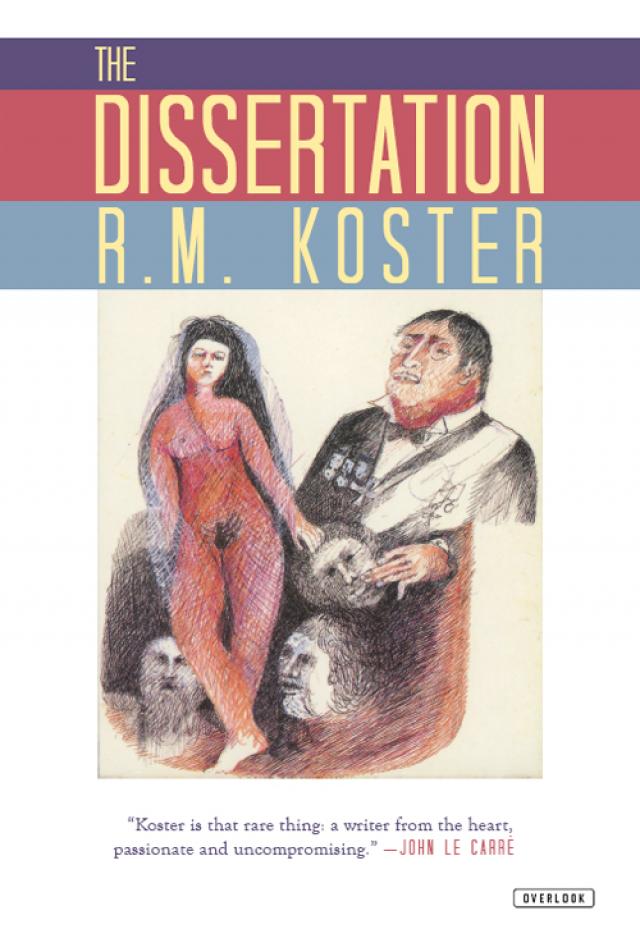
The Dissertation, page 54
part #2 of Tinieblas Series


Liz believes I acted out of love, and she is welcome to that theory, but I hardly think love was involved. It seems to me I was entirely innocent of that impulse at the time, and even now know it but slenderly.
Pride, envy, wrath, sloth, or some combination of these were, then, as far as I could ascertain, my motives.
I think it, though, a great mistake to delve too deeply into human motivation. Things get more and more unpleasant as one descends. My action was correct and timely. Leave it at that.
84. With heart aflutter
Don’t think, however, simplicistic examiners, that I’d become a hero—in other words, that I’d lost the faculty of imagination. I wouldn’t have wrapped my manuscript up, would I? and taken it along if I hadn’t imagined some potential trouble. At that point I imagined the Civil Guard might search my place and seize my papers, but the closer Sig and I got to Civil Guard Headquarters, the more uneasy my imaginings became. I began to imagine defects in my plan, which (I blush to confess) had seemed quite sound at first devising. I began to imagine consequences of those defects which went beyond mere search and seizure. As we rolled briskly along Avenida de la Bahia, I began imagining myself as passive participant in a Civil Guard World Series, and I imagined my body—which had served me well for nearly a quarter of a century and for which during that time I had developed some affection—bashed and broken, tumbling from the side port of a helicopter down to the same dark and silent bay across which I could now glimpse the running lights of distant vessels. These imaginings brought me a great unease, and with it the novel urge to leap from Sig’s car at the first stoplight and mingle with other humans—the young toughs in undershirts who lounged against parked cars in the street that led up to Plaza Bolívar, the laborers who sat swigging beer in the glow of storefronts. I might even have yielded to this urge, the urge to be with other people and be safe, but that as we entered the plaza, Sig began attempting to apologize for having horned me.
“Some women fuck dogs,” I interrupted. “Others, they say, fuck donkeys. The Arabian Nights, with which, as you know, my wife is familiar, has several stories about women who fuck apes or chimpanzees. Kinsey and Pomeroy devote a portion of their report on Sexual Behavior in the Human Female to what they call ‘animal contacts.’ I find the subject tiresome.”
“Camilo …”
“When you have let me out, go to the main gate of Fort Shafter. Wait there till someone comes. If no one comes by morning, try to get some action out of your embassy. I’m leaving this manuscript with you. Give it to Liz if she comes and I don’t.”
“Camilo …”
“Please shut up.”
I herewith acknowledge a debt of gratitude to Mr. Sigmund Heilanstalt for providing me sufficient fresh rage to dispel my fearful imaginings temporarily. Thank you, Sig. You may now exit this dissertation and my life.
I soon began imagining again, however. When I got out onto the pavement in front of Guard Headquarters, opposite La Bondadosa Prison, my imagination was steaming at flank speed into murky waters. It was, then, with heart aflutter that I climbed the steps, entered the building, identified myself to the Officer of the Day as León Fuertes’ son, and told him in tones of authority that I knew who was behind the bus pictures and would be happy to relate that information to Colonel Atila Guadaña.
85. A gallant officer
Stick a title before a fellow’s name and you cannot avoid prejudicing people toward him, one way or another. When an English-speaking person hears the phrase “The Honorable,” for example, he is immediately, invariably, and virtually convinced that the name which follows it belongs to a swindling poltroon. The title “Licenciado “ (taken by lawyers) works about the same on Spanish-speakers. On the other hand, in most areas of the world a man before whose name the title “Colonel” marches has a lot going for him.
The word itself has a good forthright pedigree: by colonnello out of colonna, the strong and steady column, the unwavering pillar, to which weighty matters may be trusted, on which one can depend. When the word entered military service, it was assigned to the officer who led the first company of an infantry column, and it retains the notion of front-line responsibility: a colonel is the highest-ranking officer who may be expected to go into battle with his troops.
And what a wealth of noble associations the word evokes! Colonel T. E. Lawrence, a scholar and a historian, as well as a consummate guerrilla leader, a man gifted with both pen and sword, and one of the few authentic heroes of this century of anonymous mass slaughter. Faulkner’s Colonel Bayard Sartoris, an epitome of aristocratic valor. García Marquez’s Colonel Aureliano Buendía, a paragon of integrity in peace and war. The “Colonel Bogey March,” the most stirring of all military airs. The Battle of Colonel, one of the most brilliant of modern naval actions. Such associations exalt the title “Colonel” above most others, and if Colonels Blimp and Sanders appear to drag it down—well, the first conveys bluff heartiness as well as stupidity, the second good cheer as well as commercialism. People tend, therefore, to be favorably prejudiced toward colonels.
Most everywhere, that is, except Tinieblas. Our colonels are so base and venal; so utterly without the merest shred of martial virtue; so completely given over to arrogance, that all the honor men of other countries have conferred upon the title “Colonel” is, for Tinieblans, totally befouled, to the point where Major Dorindo Azote, a brave and decent officer, refused repeatedly to take promotion even to lieutenant colonel. In Atila Guadaña all the qualities of a Tinieblan colonel achieved their full development.
He is about forty years old, short, stocky, but not fat. His eyes resemble the stagnant pools that form in shell holes on a bombarded no man’s land. He had evidently been at some party or another when the Officer of the Day contacted him and had not bothered to change into uniform, and in his electric blue mod-style suit, his garish necktie, and his elevator shoes he looked the gangster he is—not an important gangster; an auxiliary goon destined to be rubbed out early in reel two when the boss goes semilegit and disposes of his now superfluous muscle. He greeted me with a reptilian attempt at affability, professing admiration for my father and complimenting me on my civic spirit for volunteering information vital to the state, but when I advised him that my declaration was contingent on the release of my estranged wife, unjustly arrested and more unjustly held, he straightaway displayed his bully’s nature.
“We can beat it out of you! We can squeeze it out of your nuts!”
With this last, Colonel Guadaña crushed an imaginary pair of testicles in each fist and flung them in my face, but I was not particularly intimidated. In the first place, he had dashed directly to headquarters, indicating extreme eagerness to hear what I had to say and confirming the strength of my hand. Then, too, during the twenty minutes I had been waiting for him in the Deputy Commandant’s office, “protected” by an armed sergeant but in no way abused, I had composed myself. I had, I told myself, already survived imprisonment and torture at the Fasholt Clinic, imprisonment on an openended term and torture by people who were restrained by no morality at all, since they thought they were helping me. I had walked four hundred kilometers across the Sahara Desert. I had been under artillery, mortar, and small arms fire at the Battle of Cassino. I was a veteran of the Bottom (see note 64). A certain tingle of fear was, perhaps, proper under the circumstances, but it was ridiculous for a man who had been through what I had to lose his self-control. In this manner I brainwashed myself into an aplomb worthy of the most unimaginative dolt conceivable, but the main ingredient of my marvelous sang-froid was supplied by Guadaña himself. He was so contemptibly clownish that I could not truly believe he actually held power among men and thus was-able to translate his threats to action. I knew it intellectually, but not in my flesh.
Sheltered examiners, intellect is not to be disprized, but it is a poor guide indeed to the dark places of the human spirit. You can read or hear all you want about the oafs who direct most nations, but you will be hard put to believe in them until they have their fingers round your throat, or other parts. Even then you are liable to think them only figments from a nightmare, and that is how they make it to the top. Few take them seriously until they’ve mashed the nuts off of entire populations, and then, as soon as they’ve left this world and the shrieking subsides, people start giggling at them and their kind again. The sergeant had saluted him and clomped his heels and barked, “Mi Colonel!” The Officer of the Day had addressed him as “Ministro.” But it was beyond me to believe an excretion like Guadaña might actually possess authority, even in the military establishment of a Tinieblas, even in an encampment of baboons. That is the chief reason why I was able to confront him calmly and, once he’d stopped shouting, to instruct him (via the Socratic method) in the deficiencies of torture as an information-gathering technique.
Didn’t torture make some victims angry and thus retard responses?
Didn’t torture inadvertently silence others permanently before they had contributed everything they might?
Didn’t torture move most people to an altogether unreliable volubility? Wouldn’t people say anything if tortured long enough? Wasn’t it common practice for the torturer to continue, just to be on the safe side or simply out of zeal, after the victim had screamed “That’s all I know!”—with the resulting production of a mass of fantasy that actually obscured the truth?
Didn’t his duty as a minister of state require him to pass up personal pleasure once in a while? Wasn’t this just such an occasion—an overriding problem and an informant who was willing to solve it for a very minor consideration?
Wouldn’t it be irresponsible of him to waste time torturing me—for I would make every effort to resist—when the state could have my information in ten minutes?
Wouldn’t he probably decide to let my estranged wife go anyway, when the U.S. Consul showed up tomorrow morning?
Mightn’t it be inconvenient for the government to torture the son of a popular ex-president, who had told several hundred people where he was going and why?
It was, I think, much less the substance of these rhetorical questions than the tone in which I delivered them that impressed Guadaña. He was accustomed to having people quake before him, and I, for the reasons given above, did not. I spoke as one might to a clever twelve-year-old who one is sure will get the point sooner or later. And, then, I gave him some very tasty bait at the end.
“If you are bluffing …”
“Of course, of course. If I’m bluffing, I’ll still be here, and you can torture me to your heart’s content. You can play baseball with me the way you did with Padre Celso.”
He snapped it up greedily. What did I know about Padre Celso? How did I know it? Who had told me? Where was the leak?
“I know everything. The pitcher was Sergeant Evaristo Tranca. The batting order was … But why don’t you give the order for my wife’s release? Have her driven to the gate at Fort Shafter. Give her the number of this office so she can let me know when she’s arrived. While we’re waiting for her to get there, I’ll tell you all about Padre Celso. Then when she’s safe in the Reservation, I’ll tell you about the buses. The two go together, as you have probably suspected.”
It took quite a bit longer than ten minutes. Close to an hour passed between the time Guadaña wrote out an order and sent it over to the prison and the time Liz’s call came, but for Guadaña it passed quickly. I gave him the whole story of Padre Celso’s abduction and murder, in greater detail, I believe, than he’d had from Major Empulgueras’s report, and he was astonished with the scope of my knowledge. He was also entertained. He clapped his hands when I describes Private Calimba’s circuit swat (see note 50) and shook his head mournfully at the final out (note 52). And he was on pins and needles to discover who my source was. I had come to the matter of the carton filled with rocks when the phone rang. Guadaña took it, then, after a moment, passed it to me.
“Camilo?”
“Are you in the Reservation?”
“Yes, but what about you?”
“Put Sig on so I can be certain.” She might, of course, be just across the street with a pistol at her head.
As soon as I heard Sig’s voice, I passed the phone back to Guadaña. “Thank you, Colonel. Now let me tell you about the buses.”
86. The truth lacks realism
I was not to meet my father for another two weeks or so, but when I did meet him and when, in the course of our conversations, he related me the incident of the Agudo suit and repeated the phrase he had originally made to Carlos Gavilán, I was prepared to accept it without question, The plain, unvarnished truth rarely convinces. Quite often it sounds preposterous.
I ought to have known as much without having to observe the truth’s effect on Colonel Atila Guadaña. I ought to have composed a careful fake. But I am by nature honest, and I had lived too long out of the company of living people to know that while honesty is surely the best policy for preserving the spirit, it is often disastrous when it comes to saving one’s poor skin.
I need not reproduce my declaration to Colonel Guadaña. The pertinent information regarding psychokinetic astral intervention in this world is set forth at length in note 75. My statement was a paraphrase of that. Guadaña interrupted me early on in the mistaken inference that both Justice and the Committee for the Dissemination of Terror and Despair are terrestrial organizations. I set him straight, and he kept silent from then on, regarding me steadily, his mouth open, his tongue lolling on his lower lip, his head nodding slowly. I finished by assuring him that the Revolutionary Government had little cause for concern over the bus incidents, as they would cease shortly as a result of an agreement between Justice and the Committee. Those being held in relation to the incidents might be released. The incidents were of entirely astral origin.
“You heard all this from General Epifanio Mojón?”
“Exactly.”
“President Mojón? The one who died a hundred years ago?”
“One hundred fourteen years, to be precise.”
“And the business about the priest?”
“From Padre Celso himself.”
“And he’s dead too?”
“He is no longer a resident of this world.”
“And this is what you came down here to tell me? This is what I traded a prisoner for?”
“It is exactly what I promised. You and the government now know who is behind the bus pictures. You also know, and can take heart from it, that they will cease quite soon.”
Colonel Atila Guadaña nodded his head slowly. Then he leaned forward, seized the telephone receiver, which was the nearest blunt instrument to hand, and brought it down with great force on the thin casing of my invaluable brain.
87. Apolonio Varón
My patron’s father and, like him, one of the rare specimens of decency in the Costaguanan political zoo.
Varón senior distinguished himself in opposition. As a professor at the University of Chuchaganga, he offered philosophical opposition to the idea of Latin American unity, arguing that so long as there were twenty-odd presidents, the oil and mining companies would be unable to buy them all and exploitation might remain bearable. As head of the Liberal Democratic Party, he gave political opposition to the dictator General Dionisio Huevas Pandilla, by whom he was imprisoned, tortured into signing a false confession, and arraigned at a show trial. When no Costaguanan lawyer dared defend him, León Fuertes took his case and won him an acquittal, saving his life. His son Esclepio has now returned the favor by saving mine.
After Huevas fell from power, Apolonio Varón was elected President of Costaguana. He was assassinated by nitro bomb some twelve or fourteen minutes after taking the oath of office. Then rioting broke out, and General Huevas seized power and reimposed his tyranny, and the Costaguanans suffered through ten years of violence and repression.
I know, I know, weary examiners. This part of the world is a mess. But are things really that much better in Gringoland? Don’t your good guys get bumped off pretty regularly? Aren’t your bad guys pretty repulsive too? Turn up your noses at Greaseballia if you feel like it, but have you had a whiff of your own politics lately?
88. Walls
Two floors below ground in La Bondadosa Prison, the corridor between the stairs and the interrogation chamber is set with six iron doors. Behind each door is a cavity two feet wide and fifteen inches high that reaches back six feet into the foundation of the prison. Tiny louvered slits allow a little dank air to seep into the cavities while keeping out the light, which is too feeble and browbeaten down there anyway to make much of a try at getting in. The cavities abound with insect life of both the scuttling-scavenging and creeping-bloodsucking varieties.


