

The Dissertation, page 22
part #2 of Tinieblas Series
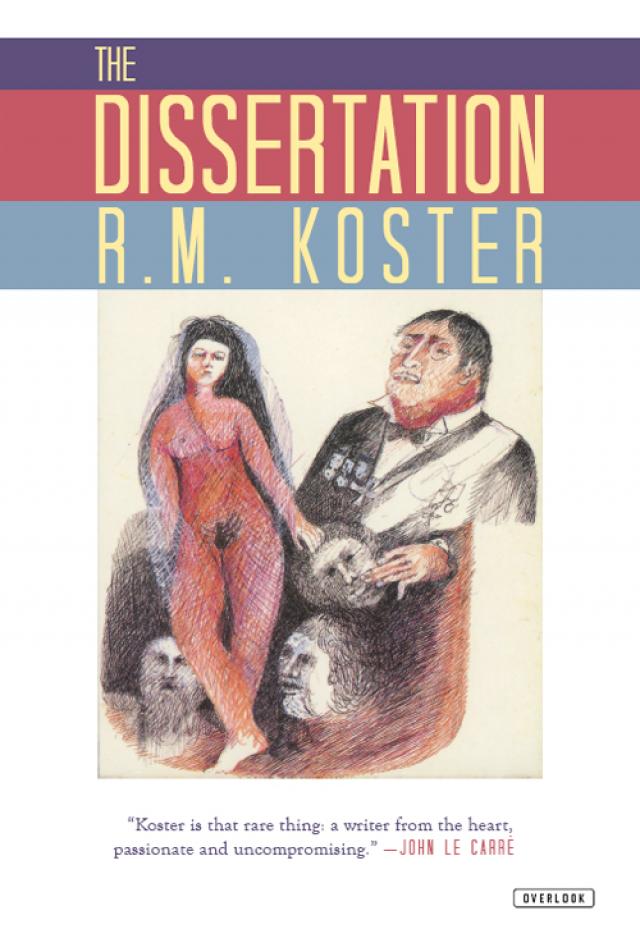


“Aren’t you going-to copy this?” my father asked, stabbing a finger at some blots and cross-outs on the paper.
“It doesn’t matter. It’s not for grade.”
My father pursed his lips and nodded. “You know your brother’s godfather.” Gavilán was Minister of Justice at that time, but my father chose to identify him that way. “He wasn’t nearly as good at playing ball as you are at your studies. He couldn’t hit, and he caught more pitches on his chest than in his mitt. But when we were playing in Maracaibo on the last day of the Central American Games, when it was hot as hell and we were losing twelve to one and no one was in the stands, Carlitos still went down the line, full speed in all his gear, to back up infielders’ throws to first. There’s only two ways to look at the world, Camilo. Either everything matters, or nothing does.”
Besides the first of these two views—which in Spanish is called being a “serious man”—Gavilán possessed the virtue of loyalty. In 1960, when León was speaker of the Chamber, Humberto Ladilla asked for a seat on the Rules Committee. Ladilla wasn’t a Progresista. He had his own party, the Partido Oportunista Personal, of which he was the only officeholder, but he pledged to support León whenever he was right.
“That’s not much of an offer,” León told him. “What I need on that committee are men like Carlitos. He supports me when I’m wrong.”
And Gavilán’s stolidity, his utter lack of glamour and flamboyance, his iron refusal to be brilliant (though he had a first-rate brain), commended him to León as the perfect foil for León Fuertes, lawyer.
This figure incorporated diverse components of several other Leóns. The urchin’s wiliness, the scholar’s faculty for taking pains, the athlete’s delight in competition, the artist’s arrogance and longing for the center of the stage, the warrior’s killer instinct—all found accommodation. But these “borrowed” traits were reimagined and reshaped, then recombined with attitudes not in the psychic baggage of the prior Leóns, so that León, lawyer, was in no kind an imitation or a repetition of known and familiar features. To confront new circumstances, León arrayed himself in a new form, a form which was, by virtue of its novelty, complete. Such transformations were his normal mode of living. My father was not natural; that is, he had no nature. He was not tombed in any static actuality; he swam freely in a sea of possibilities.
León Fuertes, lawyer, was a pushy man, a man in a hurry, a man who took himself seriously, which is not quite the same as being a “serious man.” Observe, for example, his attitude toward his war service. A sedentary, contemplative son may well take pleasure that his father bore himself with courage on harsh battlefields. It is less pleasant to see him finagle honors for himself, but that is what León did, along with stage-managing his homecoming and, from that moment, never letting anyone forget he had exposed his life for freedom, for democracy, for Western culture, for the brotherhood of man, for an embarrassment of such abstractions, which, emptied by mention, give off a soothing sound when beaten. At no time or place that smacked at all of business was he ever seen without his Légion d’honneur rosette. He had a box of them, in fact, one for each suit. He wore only white suits, by the way. These were, admittedly, the fashion for men of means, but León wore his very much like consecrated armor, and on formal occasions he wore his decorations: three rows of miniature medals and the sash of the Order of Palmiro Inchado with both Grand Crosses slinging from it. He missed no chance to make the war work for him. On one famous occasion, for example—and this is but one instance out of many—while seeking to sustain a plea of self-defense on behalf of a homicide, León kept judge, jury, even prosecuting counsel gripped in terror for some forty minutes as he told how, during the fight for Strasbourg, he’d found himself in peril of his life, staring into the barrel of an SS trooper’s Luger. This memoir, which linked the victim of the case to Hitler’s hordes and cast both León and his client as the good guys, was in no wise less effective for being totally imaginary.
León the lawyer danced to rhythms altogether out of synchrony with the saurian tempo largo of tropical life. He was always either just come from the courtroom or on his way to a negotiation, and he carried with him an ambience of tension and energy such as one feels near an electric turbine or in the communications center of a state at war. He was a member of the Club Mercantil, but no one ever saw him lounging by the pool or chatting over cocktails with some cronies. He played tennis, but strictly for the exercise: two furious sets each dawn with the club pro. He played bridge, sometimes straight through the night, but he made money playing, as much as he made at law some weeks, and widened his contacts among businessmen and bankers. And if he sometimes stopped briefly by the bar or locker room to joke—he was a famous raconteur of vulgar stories—it was because the men whom he amused were clients or, more likely, might become clients if he amused them well.
There was no relaxation to the man; he was all business.
His mere presence often goaded others to surprising prodigies of effort. Juan Tábano, for instance, was born rich beyond all need of labor and, besides, shared amply in our climate’s patrimony of sloth. More, he nurtured his laziness like a prize orchid and could quite fairly claim to have no sense of time or obligation whatsoever. Yet when he hired León to try an action for one of his clients, Tábano found himself, to his unspeakable amazement, showing up on time for meetings; producing all the necessary documents signed, sealed, stamped, franked, and witnessed; pledging on his own initiative to search out others that might come in handy—in short, acting with such terrifying vigor and efficiency that although his client won a generous judgment and paid a generous fee, he never dared to deal with León after. Those who, on the other hand, resisted the pull of León’s field of energy or could not respond to it or, having responded to their limits, still did not work up to his satisfaction, found him, according to which tactic be thought apt, a fearful bully or a cajoling suitor or the both. Hardly a day passed when he did not by a frown reduce his secretaries to uncontrolled weeping, yet he was just as able, at the dispensing of a smile, to put them in orgasm. They and the messengers and, later on, the young associate lawyers received the going wage, no more, worked easily three times as hard as anyone else in the country, yet never dreamed of quitting, even when tempted by more generous and less exigent employers.
Still more impressive was León’s effect on our public functionaries, who set a standard of incompetence and torpor that their counterparts in other lands may yearn toward but never reach. On entering a public office in my country, one invariably finds a number of petitioners waiting in tomblike patience while, at the desks, bored, somnolent young women lacquer their nails. These girls are hired in consideration of nocturnal services rendered the minister or the vice-minister or the chief of some department; they are not expected to work by day. Behind them and discreetly shielded by partitions, minor officials pass the hours sleeping or in the contemplation of indecent photos. These hold their posts through the ascendancy of relatives, and to continue holding them they need but show their patrons proper deference when the family gathers. Still farther back are the sancta of the bureaucrats. They are not in, and it will do one’s case no good to query why. The sane man, the man who wishes to preserve his sanity, does not exhort this system to activity. He imitates the yogi and trances till his bribe has taken bold. Licentiate León Fuertes, for his part, romanced the girls, railed at the clerks, and badgered the chiefs of section without pity, and though this was not the Tinieblan way, though the premier advocates of Zurich and New York had tried it only to have their papers irretrievably misplaced and themselves consigned to rest homes, León succeeded with it. He managed to get more or less instant action whenever he sought a document or a determination.
He managed, likewise, to conscript a legion of enemies, who hindered León, statesman, later on, and no doubt silently rejoiced at his assassination. If it was un-Tinieblan to expect hard work from others, it was inhuman to demand it from oneself. León took an immense number of cases; in fact, he never turned a case away—unless he was bribed to do so. He prepared each case with painstaking diligence and gave each the full measure of his energy. He never gave up, no matter how desperate his client’s situation; he never eased up, no matter how certain victory appeared. Furthermore, in seeming paradox, he found the easy cases the most difficult, for they denied him the full exercise of his aggression and tenacity. No item in a negotiation was too insignificant, no sum too picayune to escape León’s hawk eye and bulldog obstinacy. It is said that he never yielded up a point without getting three in return, that he never ceased to threaten endless litigation until his adversary had submitted, that he never tossed a defeated opponent even the merest sop to let him save face or mollify his client. This may be exaggeration, but one cannot disregard a remark by that feared advocate Dr. Inocencio Listín, who after nine hours of behind-doors argument over Aquilino Piojo’s divorce declared that he would rather be cystoscoped than bargain with León Fuertes.
Along with this drive and diligence, León, lawyer, had the temerity and guile to cut his corners. We have seen how he lied and thereby risked disgrace and failure to save himself a year or so of study. In his law practice he not only was at all times able to rise above scruple but took a pride and relish in his frauds, and much less than worry over risk, he reveled in it. In 1947, when he agreed to represent the journalist Lazarillo Agudo in an obscure suit for damages that went back seven years and involved a number of people since exiled from the country, Carlitos Gavilán asked him how he meant to get his evidence.
“I’m not going to get it,” León answered. “I’m going to fake it.”
“Fake it all!”
“Exactly. Agudo has some stuff. I could dig through the records and get more. I could go down to Paraguay and take depositions. No doubt I’d win that way, but faking’s better. Saves time and money. Makes for a stronger case. The temptation is to take the good stuff that I have, find more, and fake only what I really need to fake, but I’m going to fake everything. Fake events, fake records, fake depositions, and fake witnesses. That way it’ll hold together. The truth happens to be on my side in this case,” he added earnestly, “but I’d sooner it weren’t. A careful fake is better than the truth. The truth lacks realism.”86
On another occasion he actually sought sympathy from his partner after one of his more outrageous bits of trumpery had sluiced through trial and appeal without a shrug from judge or justices.
“I had a brilliant counterargument all ready,” he complained. “You know, Carlitos, an artist like me is wasted on the judicial system of this country. A great artist deserves sharp critics.”
In public León, lawyer, presented himself as the soul of truth and breath of honesty, packaging his lies in a solemnity that impressed clients and infuriated adversaries. Years later, when he had constructed and assumed a different figure, he could look back in irony at his career before the bar. During his presidency, for example, he entertained the Costaguanan novelist Gameliel Garza and toasted him as “the most ingenious confector of fictions to work in Spanish since I retired from law practice.” The lawyer was, however, incapable of such salutary humor. He took himself eternally in earnest.
The recipe was completed by a synthetically-sweetened yet high-caloric charm the main steps in whose fabrication were the collection and retention of a volume of seemingly useless data. León Fuertes, lawyer, could, while filing an incorporation document at the Registro Nacional, pick up and store a clerk’s remark that Pito Latino, the subassistant chief, was in bad humor over having missed the lottery prize by one slim digit. He was, thus, able, on returning some days later, to give Pito touching condolence in the form of a full sheet of lottery for the next drawing, hence to pluck from Pito’s ego the stings of countless browbeatings. He heard and noted that Captain Franco Punzón of the Tinieblan Civil Guard had acquired yet a third young concubine and founded yet a fourth family, and when he next went down to see a client awaiting trial in Bondadosa Prison, he complimented the captain on his virility, citing the distinguished aphorist G. S. Patton on the correlation between martial valor and hyperactive gonads. He had on file the distribution of a bridge hand, dealt in 1947, that Don Anselmo Chinche, who was always Minister of Something, no matter who was in power, had played brilliantly, and, to Don Anselmo’s infinite joy and gratitude, he replayed the hand for all the card room of the Club Mercantil, laying out the cards and annotating subtleties, after Don Anselmo had just bungled three cold contracts. When Judge Armando Desgracia’s obese, myopic daughter was at last proposed to, León learned first and was the first to offer his congratulations. When Doña Fecunda de Obario, who was always suing someone, dragged her decrepit frame into his office one day without notice, León remembered—the Lord knows how!—that she had been Carnival Queen in 1926 and professed (with the sincerity attained only by expert counterfeiting) that he had seen her ride in state along Bahia Avenue and been, then and forever, captivated. He knew when the receptionist had lost a cherished boyfriend and when the President of the Republic had found a girlfriend who could make him potent, and he was ready with fit comment, gesture, glance. And so the country was persuaded that although he fought his cases tooth and nail, trod heavily at times on people’s feelings, and let nothing stand between himself and money, León Fuertes was at heart deeply concerned about his fellow man.
The full beam of León’s charm fell on his partner, but he bounced it adroitly off Gavilán’s twins, Bolivar and Dolores, so that Carlitos got the glow by reflection and, though disarmed by it, was spared all mawkishness. León treated Lilo and Loli like adults whose society he valued—and did so without affectation. When he played catch with Lilo, he gave no hint that he was babying his throws, and he and Lilo argued the relative merits of José DiMaggio and Teodoro Williams with the intensity of bleacher-seaters. He taught Loli canasta and gave himself as fully to their games as to thousand inchado rubbers at the club. If there was any side of León, lawyer’s character that in another man might be called “natural,” it was his affection for these and most other children. Both kids adored him, which would have been enough, but León was, besides, uncannily adept at showing up chez Gavilán when they were raising hell and at the point of pitching both their parents to hysterics. A twitch of his eyebrows would bring them hurtling gleefully into his arms and salvage his partner’s weekend. For this—more, certainly, than for the money León earned their firm—Carlitos loved him and bore his bullyings, his demands, his presumption of Carlitos’s total loyalty to his person, and his utter disregard for ethics. Carlitos Gavilán was as near as one finds in life to an honest lawyer, a creature which, like the winged bull and the plumed serpent, exists only in fancy. But he put up even with León’s trickiness because of León’s charm.
Armed in this figure, weaponed with these traits, my father, León Fuertes, became the most successful lawyer ever to practice on our continent. He performed feats of jury-rigging which were instant legends, as when, defending Pura del Busto for the murder of her husband, he inveigled into the box three of her cousins, her chief lover, and her favorite aunt. The juries that he didn’t rig he hypnotized, and veniremen were wont, the morning following a trial, to smack their foreheads in amazement when they read of their participation in some crook’s acquittal. His mere presence in the courtroom seemed to exert an occult influence over opposing counsel and hostile witnesses. His summings-up drew such crowds that it was reckoned that were the courts permitted to sell tickets for them, the whole budget of the Ministry of Justice might thereby be deferred. And in these perorations León could, as it suited him, draw limpid truths out of a swamp of error or so confuse a hitherto clear issue that all the rabbis of Jerusalem would be unable to unravel it. In court—in the old Cortes on Plaza Inchado, where four-bladed ceiling fans turned lazily and flies droned with the monotony of prosecutors, where judges yawned cavernously in the heat and the rococo moldings were sodden with falsehood—all eyes were constantly on León, no matter who was speaking. There was no telling when he might leap from his dignified repose and draw gasps of admiration even from his adversaries with a linked series of juristic handsprings. At his jaunty entrances and exits he was trailed by a retinue of journalists, petitioners, and fans such as are drawn by bullfighters or movie stars. Yet he was not all flash. Well could he rant and rave, pound witnesses to splinters with his shouting, seethe an opponent’s soul in sarcasm, or by repeated volleys of objections and citations drive a stern judge back from a point of law, yet there were cases which he argued in apparent meekness, planting three or four timid questions which, like the “quiet” moves at chess that commentators later on discover and score with exclamation points, turned the whole contest.
In his entire career, a career of great activity, my father lost but six cases. These are among his masterpieces, for he took princely bribes to lose them yet appeared to fight with such determination and to lose with such bitterness that his duped clients begged him not to take the thing so hard. When he represented plaintiffs in suits for damages, he worked by contingency, agreeing to take in fee everything above a stipulated figure. He won unheard-of judgments, and often ended up with much more than his client. Real wealth for a Tinieblan lawyer comes, however, in representing the great U.S. corporations—Hirudo Oil, Galactic Fruit, Yankee and Celestial Energy—with interests here, and though at León’s advent to the bar all the guzzling places at this trough had long been taken by established firms, he managed nonetheless to gorge from it. He began by taking cases against these corporations and flogged terrible awards from them. Soon it was enough for him merely to give out that he was thinking of proceeding on behalf of Tal-y-Tal, S.A., against So-and-So, Inc., and he would receive an embassy from Mosca, Luciérnaga or Avispa y Abeja and be offered a fat bribe to pass the case on to another lawyer. This variant of the protection racket earned him cash and saved him time. Each year he made money on ten or twenty cases that he never accepted, much less prepared and argued. To preserve the flow, he took to ferreting out abuses that had not yet been perceived and then advising the offended parties. Thus he battened on the gringo interests while making a valuable reputation as a patriot.


