

The Dissertation, page 30
part #2 of Tinieblas Series
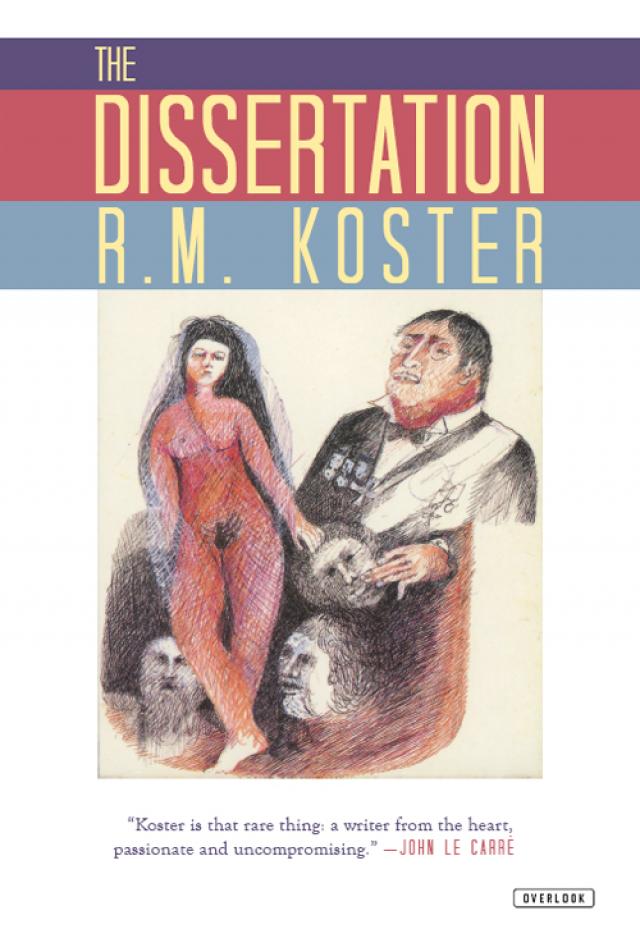


Our next view is of León Fuertes dismissing his Presidential guard. The unit, a special company of Guardia outfitted in chrome casques and marine blue uniforms and armed with Uzi machine pistols, is drawn up under the nine A.M. June sun in the little park opposite the porte-cochere of the Presidential Palace. León has trooped their line, followed by their commanding officer, Captain Dmitri Látigo, his military aide-de-camp, Major Dorindo Azote (who wears his right sleeve doubled in souvenir of his Korean service with Batallón Tinieblas), and the Guardia Commandant, Colonel Aiax Tolete. He has taken a position in front of Tolete and Azote near the statue of Simón Mocoso, has asked Captain “Látigo to give his men parade rest, and has assumed that attitude himself. He has told the company in his best drill field bellow that they are as soldierly a unit as he has ever been privileged to see and that he would be honored to lead them in battle. His expression is stern, but a twinkle in his eyes suggests that he is enjoying the event immensely and yet can view it with ironical perspective. (Ten minutes later he will remark to César Enrique Sancudo, who is about to take leave for his embassy in Madrid and who watches the scene from a Palace window, that with garrison troops, as with female jurors, it’s best to lay it on with a trowel, but that hyperbole comes easily at military reviews since few men—and León is no exception—ever mature to the point where they lose their taste for playing with toy soldiers.) Now, however, he takes his right hand from behind his back and sweeps it, fingers spread, across the line of troops: he is telling them he is dispensing with their services.
“This act involves no lack of respect for you as men and soldiers. My concept of government simply does not provide for leaders to be shielded with the instruments of violence; or set off from other citizens by the flattery of uniformed salutes; or insulated from the people in any fashion. I assure you, however, that I have too high a regard for the profession of arms, which once was my own calling, to break up so excellent a unit. Your commandant, Colonel Tolete, with whom I have consulted in this decision, will find an honorable place for you where you can put your discipline and valor to the protection of the people, whose servants we all are. For the duration of my period in office, the Presidential Guard will stand dismissed!”
He like wise dismissed the plain-clothes bodyguards who had been automatically assigned to him the morning of his inauguration and the leash of motorcycle cops whose job was to escort presidential limousines. The limousines themselves he ordered sold at auction. He retained a driver on the payroll to chauffeur my mother about in the family Cranston, a current-model four-door sedan, sea green In color and perfectly presentable, but without so much as an official license plate, much less fender flags or a presidential seal, to distinguish it from the cars of other well-to-do Tinieblans. For personal use he kept has blue Wildebeest hardtop, which he drove himself, unless he was traveling to the interior. More, since the Club Mercantil was only a few blocks from the Palace, citizens became accustomed to seeing the President of the Republic strolling unattended along the street below the sea wall, dressed in shorts and tennis shoes, carrying his racket. People took to greeting him informally as he passed, while some walked along with him to pass the time of day and offer comments on the business of the country, and León would answer in an easygoing, fraternal tone.
Thus León expressed his theory of government in his own person to three distinct audiences. The people were informed that while the President might be the first citizen of the country, the stress was on “citizen,” not “first.” Public servants were set a good example. Most cabinet ministers gave up their own limousines, and other members of León’s Administration dispensed with similar amenities, but the point was not that state funds were thereby saved. León’s example tended to restrain officials from grandiose feelings of their own importance. Finally, León himself was furnished some protection against the toxic effects of power.
“Power is both the drug and the hallucination,” he told my mother the night before he accepted the sash of office. “People in what are called positions of power often develop the illusion that they control events and human beings. The people who reach such positions are usually hooked on power to begin with and put their faith in it. But the sanest man can have his perceptions terribly distorted by being whisked around in a limousine, with armed men sweeping ordinary mortals from his path. The worst part is he mightn’t even realize he’s stopped seeing things straight. When I was on morphine, I at least knew when I’d had a fix and when I hadn’t, but power’s a lot sneakier than morphine. I’m going to take what steps I can against addiction. If they don’t seem to be working, for God’s sake let me know.”
Next we see the rotunda vestibule of the Ministry of Finance. Here citizens pay their taxes and obtain the square blue forms that certify they are at peace with the treasury and without which no one can leave the country or do any business with the state. Long queues of patient folk twist back from the windows in the frosted-glass partition, behind which clerks enjoy the air conditioning and now and then deign to give a little surly service. The fellow standing halfway between the street and the Property Tax window, the one in sports slacks, guayabera shirt, and shades, who keeps has face stuck in his copy of Informe Trópico, is León Fuertes, President of the Republic, Head of State and Government. He has been waiting twenty minutes and will wait another twenty-five before he reaches the window, stands glaring over his newspaper while the clerk debates the sex appeal of certain film stars with a colleague, at length gains her indolent attention, drops his paper, removes his dark glasses, and, in passing her a few expressions of controlled fury along with a cashier’s check and the assessments on his home and beach house, performs what he will always consider his most significant act of public service.
By the time León was back in the Palace—and he delayed only a few moments, apologizing to other long-sufferers for the inefficiency of the service and promising to improve it even if he had to put His Excellency the Minister behind one of the windows—every state employee in the land knew how the president had spent the past hour and expected him to show up any minute at his own place of work. Nor did the fear and trembling cease until León Fuertes was assassinated, so that for the duration of his time in office the members of his administration, from ministers of state to charwomen, not only got to work on time and stayed through their appointed hours and made some attempt at coherent effort, but actually treated the public with respect and decency.
Despite its air of placidity, the fourth frame or panel is a Cleansing the Temple scene. We have a view of the Salón Amarillo, the most sumptuous room of the Presidential Palace, whose walls and furniture are covered in daffodil-hue silk with tiny fleurs-de-lis, the room where General Isidro Bodega (who appreciated ancien régime elegance) received Rosalba Fuertes.
A table, spread in damask and set with the best Palace service, stands near the window. President León Fuertes is lunching special guests, executives of a branch company of a subsidiary corporation of the most powerful commercial conglomerate in the United States (“Bigger than U.S. Steel,” in the words of its Board Chairman, Mr. Meyer Lansky): the General Manager, Security Chief, and Sales Officer of Felicidad, S.A., a locally incorporated firm which for some years has operated gambling casinos, slot machines, and other recreative facilities and implements in Tinieblas. The slight, grey-haired gentleman in tinted glasses who shares the center of our scene with León is Mr. Albert Malocchio. The gentleman whose bald dome, bulged neck, and hippo shoulders fill half the lower foreground is Mr. Carmine (“Dum-Dum Charlie”) Fessobabbuino. And on León’s left, preening pearl teeth and cinematic profile and keeping one hand on the attaché case beside his chair, is Mr. Joseph Sporcati. (I am tempted here to let my sketch traduce historical accuracy, to change the material of Mr. Sporcati’s case from leather to translucent plastic, and thus to display some of the large-denomination U.S, banknotes banded and stacked therein, but any knowledgeable Tinieblan would, on recognizing the President’s guests, realize that the occasion was the day in August, 1962, when the Chamber considered renewal of Felicidad’s contract with the Ministry of Tourism and, further, be aware that, by tradition, whenever a foreign businessman brought luggage into the Palace it was likely to contain currency, if not gold bars.) Dessert plates and coffee cups are on the table. Mr. Malocchio has extracted a large Havana from its aluminum tube and cedar swaddling and is about to load it into lips that have not yet quite ceased smiling. But León Fuertes has taken from his Legislative Aide Bernardo Zancado (who stands half bowing at Malocchio’s left shoulder, holding an open manila folder), not the renewed contract (which the Chamber has just voted down on the President’s recommendation and despite the impassioned oratory of Filiberto Alacrán, former Minister of Tourism), but a packet of airline tickets (First-Class, one-way, Tinieblas-Miami), which he offers to Malocchio, smiling gravely.
In short, it was not my father’s style to rage around overturning tables and ranting melodramatic pronouncements, though Mr. Malocchio and associates were more malign than moneychangers or parrot-sellers. He acted legally and with utmost civility. He gave Mr. Malocchio an excellent lunch and free transportation home for himself and his employees, croupiers and shills included. He ordered generous compensation to Malocchio’s firm for the real property it had acquired in Tinieblas, and had all its movables, from the huge roulette wheel at El Opulento down to the last pair of trained dice, packed and sent north by air freight at the government’s expense. He acted neither in prudishness nor xenophobia: he made it clear by presiding at the next drawing of the National Lottery that he had no wish to deny his countrymen exercise of their passion for risk, and his administration encouraged foreign investment of a healthy kind. The point was not that Mr. Malocchio and his principals in Miami were gamblers; it was not that they were foreigners. The point was that they were leeches, and León’s actions in their regard were an example to the Tinieblan people, to its government, and to firms like Hirudo Oil, which spend more on public relations than the Mafia but whose motives and methods are often much the same. Tinieblans ought not to put up with leeches. In dealing with leeches the Tinieblan Government ought to proceed calmly, to avoid noisy manifestoes, to show courtesy, to adhere scrupulously to the law, to make due compensation, but to pluck them from the country with dispatch. Present or potential leeches ought take note.
“You shouldn’t do this,” Mr. Malocchio protested when President Fuertes professed unconcern with the contents of Mr. Sporcati’s attaché case and suggested that the gentlemen make use of their tickets as soon as possible, “It isn’t right. We paid an honest bribe to come in here, and we’ll pay to stay.”
“I understand.” Since the conversation was proceeding in Italian, León pushed his palm against the invisible wall between him and Malocchio. “I understand and I sympathize. I’ve given and accepted honest bribes myself. But now I’m dealing for my country, and my country’s going to do things differently. I’d appreciate it if you’d spread that word around.”
A final picture might show the living room of the United States Embassy residence at San José, Costa Rica—a long view in from the dining room toward a couch flanked by two armchairs and above it a large, gilt-framed reproduction of M. M. Sanford’s Washington at Princeton. Sitting about a yard apart on the couch, their shoulders hunched, their forearms on their knees, are Carlos Gavilán and Richard N. Schwartztrauber, Jr. The former looks to his right. The latter stares fixedly at the loafer-shod feet of John Fitzgerald Kennedy, plunked up on the coffee table as their owner lounges back in the right-hand armchair, one set of knuckles pressed to his lips, his eyes crinkled in an uneasy smile-scowl. In the left-band chair, his trunk erect, his right hand poked forward in a Kennedyesque jab, is León Fuertes. He is quoting, verbatim and in Boston-baa’d English, from a speech made by Kennedy the day before.
No tick can bite nor stray dog hunch to scratch it in the independent, sovereign Republic of Tinieblas without being somehow affected by the state of our relations with the U.S.A. This homey fact is dramatized by the presence, tumored against our capital, of an entire Gringoland in Miniature. It had, of course, been voguish back in 1898 for world powers to plant excrescences like the Reservation upon their weaker neighbors. Time had, however, passed and fashions altered. Thus León Fuertes judged that no matter what success he might have with other matters, he would not be able to preserve the tranquility of Tinieblas without putting our relations with the U.S.A. in modern dress: to wit, without replacing the Day-Cornudo Treaty with a contemporary instrument.
The problem was that his aim was peace and quiet, while—as he put it to his Cabinet at one of their first meetings—“in foreign affairs as in domestic matters, the U.S. Government works on the principle that unless you howl you never get a hearing; you never get attention till you kick them in the nuts.” Had León put himself out in front of the student radicals; had he made himself a merchant of abuse and insult; had he bred hatred and incited violence; had he bared the foamed canines of such afflicted beasts as these days pass for leaders almost everywhere and sent a good searing squeal toward Washington, he would have got a hearing for Tinieblas straightaway. But such action, though it would surely have made him look a hero to the home fans, would have defeated the very purpose of his existence as a leader. It would have stung the resentments of the people into fury. It would have flogged their expectations to the point where nothing would content them. It would have racked the country to such torment as to make it unlivable for the generality of citizens and the other Leóns in particular.
He took a course, then, that was more difficult and dangerous for him personally. He used his popularity to sponge up the evil humors that the Reservation generated in Tinieblans. Then he put himself face to face with the head of the United States government and, unsupported by any gallery of cheering countrymen, without the least security that his countrymen would ever know of, much less reward his effort, found the wit and courage to land a swift one in the tenderest parts of his adversary’s ego.
Both during his campaign and while in office, León took the refreshingly original line of saying publicly, over and again, that the United States was a great power and Tinieblas poor and weak, that both were located in the same hemisphere, that realities of this order were denied only at grave peril, that under his administration Tinieblan relations with the United States would be correct and friendly, and that while he would seek relief from certain injustices, no one should expect very much. He insisted on observing the provisions of the Day-Cornudo Treaty down to the last comma, and in his contacts with the students, which continued while he was President, though in diminished frequency due to their disillusionment with him, he retold the parable of Cuba until both he and his listeners were heartily sick of it. Meanwhile, he spent his spirit lavishly preparing for a trial by single combat in which he hoped to secure a general restructuring of our relations with the United States. Yet since the success of any effort in this direction depended on keeping Tinieblan expectations low, he kept these preparations secret and comported himself outwardly as if he were resigned to things as they were. Accordingly, those who had hoped for miracles from the baseball hero of New Year’s, 1934, were cruelly disappointed. And as for León’s popularity with the students and the urban masses of the capital, it dwindled to the point where large elements of both these sectors took to calling him “Superbicho” and, more cuttingly, “Meestair Forts.”
On the day after his election, León began studying English with Soledad. He took a ninety-minute class with her each evening and, as soon as he was able, spoke only English with her when they were alone together. He devoted his midnight reading exclusively to English, immersing himself in grammar books and dictionaries and giving special attention to U.S. history and literature. With the best part of León, husband, and all of León, scholar, thus engaged, he soon became perfectly fluent and attuned to most nuances in the language. So secret did he keep this activity, however, that his own children—who were themselves wrestling with the irrationalities of English and would have given Papa sympathy—were unaware of it.
He also studied John F. Kennedy. Every Tinieblan President since 1948 had, upon taking office, informed the Government of the United States that Tinieblas wished the Day-Cornudo Treaty abrogated and a new agreement negotiated to replace it. The sum of these efforts remained zero. León resolved to take an indirect approach. He did not mention Day-Cornudo to the U.S. Ambassador in Tinieblas or have his ambassador in Washington contact the State Department. He did not request a meeting with the President of the United States. Rather he trusted that the flow of events would bring a more or less impromptu encounter between John Kennedy and him, and he prepared himself to exploit that opportunity. He read Kennedy’s own published works and all the articles about him. He studied Kennedy’s state messages and public speeches, and memorized the declarations on Latin America so that he could quote the text and give the date and place of each specific statement. Most particularly, he tried, as an actor might, to work out the pattern of Kennedy’s personal values, throwing his imagination into Kennedy’s mind and body. The aim of these preparations is subsumed in the military principle of superiority of force at the point of contact. León hoped to meet Kennedy a certain distance from their official identities, on personal ground.
It would take a riot, an armed attack upon the Reservation, and a respectably high body count to make a President of the United States give serious attention to anything said by a President of what is probably referred to in Washington as the Banana Republic of What’s-its-name. On the other hand, John Kennedy might listen to León Fuertes. Now, León realized that Kennedy would not forget that he was President of the United States, yet there was cause to hope that if a meeting came Kennedy would not keep himself entirely bandaged up in protocol and presidential seals. He was supposed to enjoy mental stimulation, and would not expect to find much in a formal meeting with the head of an insignificant state. Given the chance, he would surely prefer to be Jack Kennedy, and chat with León Fuertes. The two had come into the world in the same year. They bad fought on the same side in the same war, and had come out of it with more or less the same distinction. Both bad a preference for the active life, yet had intellectual attainments. Both practiced politics with zest and yet with skepticism. Yes, Kennedy had enough self-confidence to meet León man to man. If so, León knew how to capture his attention.


