

The Dissertation, page 53
part #2 of Tinieblas Series
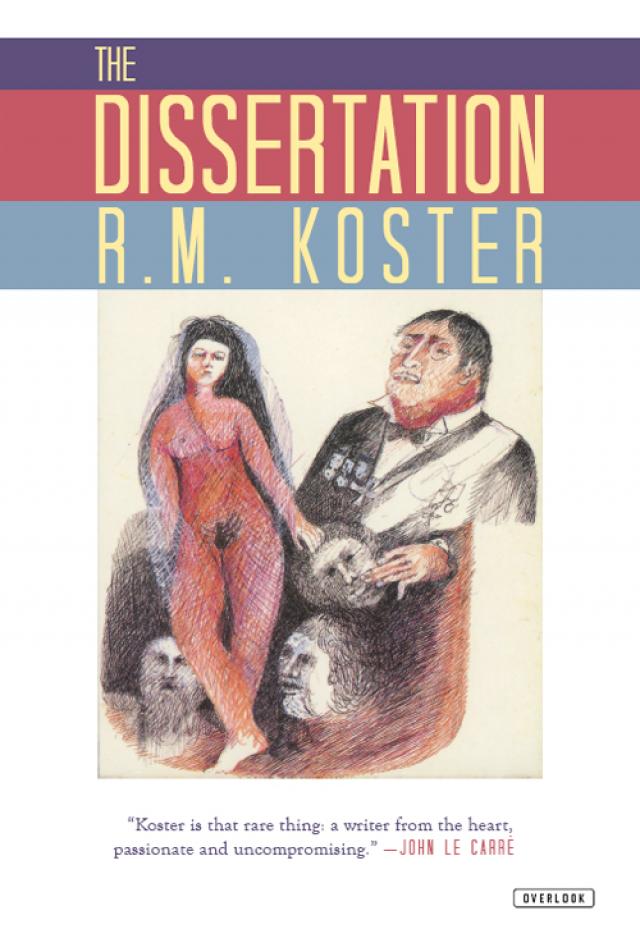


As followers of Islam, Boulala and El Haoui expected to be received in Mahomet’s “Paradise.” Warrior’s Repose/Houri did not disappoint them. At length, though, they tired of case and pleasure and asked to be recycled. It is an interesting irony that El Haoui’s spirit happened to be put back into an Arab body and that his new avatar fought in the late Mideast hostilities against a unit commanded by the reincarnation of his old messmate Djemal, an accountant from Tel Aviv named Kalish, who holds a reserve captaincy in the Israeli tank corps.
Barelli is in Contemplation. He does not care to recall his war experience, and I did not press to bring him here.
Joseph-Marie Reveil, the soldier who presciently gave León Fuertes his telephone jeton memento for safekeeping, “died” of wounds during the sixth day of 3rd Battalion’s ordeal on Belvedere. He was accepted in Learning and spent ten years there reading sociology, a branch of knowledge he had been studying at the Sorbonne when Hitler marched on France. He then entered Astral Administration and is now an official in Reception. Reveil was able to supplement General Mojón’s account of the bayonet charge led by Sublieutenant Bouakkaz and the chaotic fighting between Crests 718 and 862. He was instrumental in obtaining information on his former squadmates who have returned to this world, and background information on Warrior’s Repose/ Houri.
Reveil was on duty when León Fuertes arrived in the next world. My father recognized him at once and told him that he had preserved his telephone jeton religiously, that he had taken it back to France with him on his state visit and shown it to General de Gaulle, and that he had had it on his person when he was assassinated. I have no way of authenticating this story. I cannot recall ever having seen a jeton among the effects—gold penknife, keys, loose change—my father would empty from his pockets to his night table before taking siesta, but then I didn’t know jetons existed until I visited France in summer, 1968. I might have seen it a hundred times and thought it an odd coin. I am not about to bother the ghost of Charles de Gaulle over it.
I suspect my father made the whole tale up. He had no idea what the next world held in store, and lo! he came upon a former subordinate in a post of some authority. It would have been most like him to concoct an ingratiating fable, and get on Reveil’s good side straightaway.
79. Then the days and nights fell together
During the composition of Chapter 15 I began to have extremely vivid war dreams—not replays of perceptions picked up from my father’s memory but original variations on themes from films and books. I would kill or be killed time and again, and these dreams were interspersed with visits from men who perished round Cassino. None of them knew my father; none was even from a French unit. They had got wind of someone interested in the battle, and they flocked to my sleeping ear and poured it full of strife. A Scots sergeant major told me how his outfit was annihilated during a night attack across the crests, whole platoons careering over precipices in the dark. A trooper of the Liebstandarten Adolf Hitler Division (Waffen S.S.) described the aerial bombardinents he went through and then turned green with terror when I mentioned the French forces, for a Moroccan goumier had taken both his ears for keepsakes as he lay dying. There were Gurkhas and Poles, who knew no language I could understand and who tried to explain their “deaths” in gesture, and a gigantic Texan who returned regularly to complain of being blown in two by a short round from his own artillery. One cannot banish spirits from one’s dreams, and I was usually too fatigued to wake myself. My sleep was stewed in violence.
When awake I recalled my father’s experiences and listened to General Mojón, arid when ever I looked up from my typewriter, whenever I turned my face from my informant’s, I saw the massif of Belvedere looming before me and would huddle back instinctively into my sangar. I had no surcease from combat day or night.
Then the days and nights fell together and were confused in stress and anguish, and memories and dreams and visions merged, and thought and fancy spilled into each other, and present fused with past and here with there, and this world and the next mixed roughly, arid there was no more conscious order in my mind.
The demon war possessed me, pious examiners, and wrote most of these last two chapters.
80. Self-indulgence
My aunt Rosario, who is the source for the final portions of Chapter 16, described León Fuertes’ reflections during his mountaintop clarity in such a manner as to imply that I am a selfish person, thus prompting the following dialogue, which I reproduce for the sidelight it sheds on the problems of researching this dissertation:
“Is it self-indulgence to do what I am in this world to do, despite all obstacles?”
“No, Camilo. Everyone owes loyalty to his destiny, though if the obstacles are human, it’s nice to use some care when getting round them.”
“Is it self-indulgence to refuse to tell the high and mighty they are right when I know they’re wrong?”
“No. There’s room between self-indulgence and self-privation, and everyone owes himself his truth, though it isn’t always necessary to tell someone who’s wrong that he’s a moron.”
“Well, then; I stand acquitted.”
“Really. Isn’t it selfish to refuge in your mission and your truth, to use them as means to evade responsibility?”
“I am an order-bringer! I help make this world make sense! That’s what I do here, day and night, week in, week out! Do I take holidays? Do I cut corners on my research? Do I fake my data? Evade responsibility? Me? You must be joking!”
“I’m not talking about your work, Camilo. I’m talking about other people.”
“I have nothing to do with other people.”
My aunt Rosario smiled softly. “That’s what I mean, dear.”
“Mean what? I no longer conduct relations with living human beings. I have given that up—except for Arnulfa, of course, whom I pay well and treat decently. As I receive none of the benefits of contact with living humans, I incur no responsibilities toward them. Ergo, I evade none.”
“It doesn’t work like that, Camilo. Even someone who’s totally alone is responsible to others. He is obliged to give and ask pardon. Your father learned that alone on Belvedere.”
“Well. Give pardon. That I can do. Once and for all, since I have taken steps and will receive no more offenses. All right. Those who have offended me already, all but two, I pardon! I shall give pardon to Dr. Emil Vertilanz as soon as he begs me for it with suitable groveling to my scholarship in any recognized learned journal. As for the other, she I would gladly pardon here and now, except her offense is unpardonable. As for asking pardon, I have not offended anyone enough for that, and since I no longer am involved with living humans, cannot offend any in the future.”
“It doesn’t work like that, Camilo.”
“In my relationships with spirits I give rather more liberally of myself than wisdom would recommend. I heard the padre out, for example, though I was extremely busy. I gave him several footnotes in my dissertation, though it was by no means clear at the time that his material would be germane. Any fair accounting of my dealings with residents of this world and yours will show a credit balance on my side.”
“Accounting! Footnotes! Do you think your father would have given footnotes?”
“My father, dear Aunt Rosario, would have been unable to see the fellow in the first place. Or having by chance seen him, would have been unable to believe him real. This world is so organized—or ill organized—that the gift of action is distinct from the gift of insight, on all the deep important levels anyway. Besides, my father—whom I nonetheless respect and love—was himself self-indulgent, as he realized, as you report, and as I have learned independently.”
“You don’t know his whole story yet.”
“No. I do not. So suppose we get on with it.”
“I’m not going to go on, Camilo, if you refuse to learn. And I don’t mean learn what happened at such a place on such and such a date. Your father’s life means something! Oh, you’re probably capable of getting the meaning down on paper without its registering in your mind or making any impact on your life, but I won’t be a party to that kind of futility! Gift of insight, oof! You can’t see anything that counts!”
And so I had to beg her to forgive my defects, to bear with my deficiencies. I had to cajole. I had to promise I would try to see. I had to mean it too, because there’s no fooling spirits. At length she consented to continue—more out of family feeling, she said, than any hope that I’d “develop morally.”
Tenured crotalids—are you there, Emil?—and other serpents in the groves of academe will observe that my research method is no “easy way,” that I should scarcely use it were my motive comfort, that it can be a thousand times more trying than the conventional techniques of scholarly investigation. Documents do not bother people with personal criticisms. Published works do not threaten to disappear unless placated. Archives do not enjoin those who consult them to “moral development.” And records do not utter ominous predictions.
“lt’s the hard way for you, I fear, Camilo.” My aunt Rosario’s sad smile put lead into her words. “Your father had to learn by pain. It’s clear you’ll have to also. Or worse, you may never learn at all.”
PART FOUR
81. Back from the “dead”
I have been over to the next world and come back.
I have come back to this dissertation after an unexpected, bitter interruption. But since it and the journey it provoked both came to good, and since they touch upon the matter of this essay, I shall tell of them.
I have not come back to Tinieblas. As my text brings my father home to his country, my luck finds me in exile.
Good luck and salutary exile, let me say at once. My body, which was within a hair of going out of business, is recuperating in agreeable surroundings. My spirit is doing famously.
Dr. Esclepio Varón, President of the Republic of Costaguana, has villa’d me in the provincial capital of Cricamaña. Its site is high, its air is pure, its sun is brilliant. Its skies are cloudless, its days pleasant, its nights cool. And since its suburbs have spread back onto the hillside, the terrace where I sit now, with my typewriter set before me on a wrought-iron, glass-topped table, affords me an admirable vista of the pink-roofed town and the romantically chasm’d peaks beyond.
Costaguanans and their guests are, furthermore, presently enjoying one of the intervals of peace that come now and again to human societies like the entr’actes in Titus Androicus. That alone would be enough to soothe my spirit, but the circumstances that separated me from this dissertation enabled me to gather all the data I shall need to finish it, and brought other precious benefits besides. I am, then, in the most high and palmy state of spiritual well-being, a well-being whose overtones, I trust, will reverberate symphonically through this essay from here on.
I spent somewhat over three months in the next world, most of that time in the close company of my father, León Fuertes. The subject of this history is the main source for its concluding chapters.
82. Roaring
It began with a roaring at my door, roaring and pounding. These were necessary to attract my notice. I was in trance. I had decided that I was growing too dependent on my aunt Rosario for contacting spirit informants, and I was trying on my own to reach someone who knew my father during his postwar days in Paris. The roaring of my name, punctuated by heavy thumps, pierced my concentration and brought me to the door. I opened it and found Sig Heilanstalt.
“Liz is in jail!”
I shall not picture his disheveled aspect or his distracted stare. I shall not gloss on his anxiety, seven parts fear, I judge, and three embarrassment. Nor shall I try to reproduce his words, which tumbled forth in a most disordered and ill-dressed array for one who earns his bread by use of language. The gist of what he told me after I motioned him inside is as follows:
My wife, Elizabeth, had undertaken to retype an outline and draft portions of the book that Sig was writing. She was supposed to lunch with him that noon and bring the work along. She did not show up. After having waited for over an hour, Sig went to the pension where she had been living since ceasing to reside with me. Her car was there; she wasn’t. Her landlady, a full-time snoop like most of the profession, told Sig Liz had gone out a little after midday, had tried without success to start her car, and had then boarded a bus headed downtown. Sig at once feared the worst, for while he was waiting in the restaurant, a fellow had rushed in, ordered a double gin, swigged it at gulp, and then announced that round the corner, on the main thoroughfare, in front of the Pelf Bank and opposite El Opulento, a bus had bloomed with an exceedingly uncomplimentary caricature of General Manduco, and that the PUS had taken everyone on board.
It took Sig the rest of the afternoon to prove his fears well grounded. The Officer of the Day at Civil Guard Headquarters advised him that if he really wanted to know who was behind bars, he could quite easily be put there himself for an extended stay. The United States Ambassador to Tinieblas declined to see him. The First Secretary of the Embassy kept him waiting half an hour, then couldn’t fit him in. The Second Secretary kept him waiting, then referred him to the Political Officer; who kept him waiting, then referred him to the Consul General; who kept, him waiting, then referred him to the Deputy Sub-Assistant Junior Vice-Consul. This seersuckered pippin maintained all the traditions of sloth, pusillanimity, and unconcern for private citizens that the State Department has formed over the years: it did not appear that Mrs. Fuertes was on register with the Consulate; it could not be clearly established that she was a US citizen; it had not been proved that she was under arrest; it would not do to pester the Tinieblans without firm information; it was not certain there was cause for action at this time; it would get Mr. Heilanstalt nowhere to raise his voice or become violent. Sig had been calling Liz’s boardinghouse at fifteen-minute intervals, had been recalling his own treatment at Guard hands (see note l), had been imagining what might happen to her if she was in their power and if someone who knew English looked at the material she was carrying. His mind was not working clearly. Only after he was hustled to the street by two Marines did he think of the British Ambassador.
Forewarned examiners, if ever you are in trouble whilst abroad and unless you are employed by the United Rapine Company or International Piracy and Pillage, waste not your precious time appealing to your own foreign service: go to the British. Sir Henry received Sig cordially, remembered him and Liz from the tennis morning describes in note 13, got him a whisky, heard him out, picked up the telephone, called the Foreign Ministry, and asked in the polite yet iron voice we wogs know and respect if Mrs. Elizabeth Cleaver Fuertes was under arrest. The reply came in about ten minutes: a woman who called herself Miss Elizabeth Cleaver was being held strictly incommunicado on suspicion of counterrevolutionary terrorism and subversion. Sir Henry promised to do what he could. Sig decided I had best be told.
I listened without expression. It wasn’t up to me to put in little comments, to give out soothing smiles and understanding nods, or otherwise to make things easy for him. If he found it painful to face me, so much the better. He could send the bill to his greedy gonads, and maybe pass up someone else’s wife. On the other hand, I didn’t abuse him either. When he had finished, I asked him if he had his car downstairs. He said yes, and began asking what I had in mind. I motioned him to wait, went inside, undressed, bathed, shaved, and put en clean clothes. Then I wrapped the manuscript of this dissertation in the dust cover of my typewriter, stuffed it in my briefcase, and carried it out into the living room.
“What are you going to do?”
“Get her out, of course. Come on”
83. This may at first glance seem a strange design
Attentive examiners, you will have detected a certain bitterness en my part toward my wife, Elizabeth. You will have decided that this bitterness was not entirely unjustified. You will have determined that in Tinieblas, as it is ruled at present, concern for human rights is hazardous to health. You will have divined that I am not a man of action. And you will have deduced that no one could have blamed me—a solitary, private individual—had I left it to the embassies to get Liz—a faithless wife—out of jail. Why, then, you may demand, did I act?
I confess that when I came to ask myself that question, I was as baffled as you are. And observe that I acted first, considered only later, that I resolved to act when I heard Sig’s first phrase and that from then on I thought only of tactics, with the result that by the time he finished speaking I had formed my plan. Well, then, when I did come to consider—and I shall soon describe the cleverly wrought contemplatorium furnished me by the Tinieblan Revolutionary Government through its Ministry of Justice —I was baffled, and could do no more than ascribe myself a number of possible motives. One was pride: Liz bore the name Fuertes, after all, worthily or not, and while I could put up with General Manduco’s regime so long as it confined itself to theft and murder, locking a Fuertes up was going too far. Another was envy: there went Padre Celso and his colleagues from Justice producing open-air spectaculars, getting all kinds of attention, while I rotted away in isolation, without the merest notice for my labors. Or I may have acted out of anger. Not anger at the tyrants: anger at Liz and Sig for having compounded the offense of cuckoldry with the more heinous crime of interrupting me at work; anger at my father for having made a stupid bet and thus exacerbated all my problems; anger at my aunt Rosario for having helped me and, thereby, made me so dependent on her that I had to hear (if not to heed) her good advice; and great anger at myself for being Camilo Fuertes in the first place: Sig’s phrase may have worked as an escape valve, opening a low-resistance path on which my anger could flow out. Laziness was yet another possibility. I’ve nothing against action, and action in the cause of justice cannot be disparaged, but there’s no getting round the fact that action is a thousand times easier than the mind-wrenching toil of making this world mean something. Cervantes was more diligent than Don Quixote. Shakespeare worked harder than all his English monarchs rolled in one. I might have been too lazy to go on wrestling with the forces of disorder when circumstance brought an alternative my conscience could accept.


