

The Dissertation, page 50
part #2 of Tinieblas Series
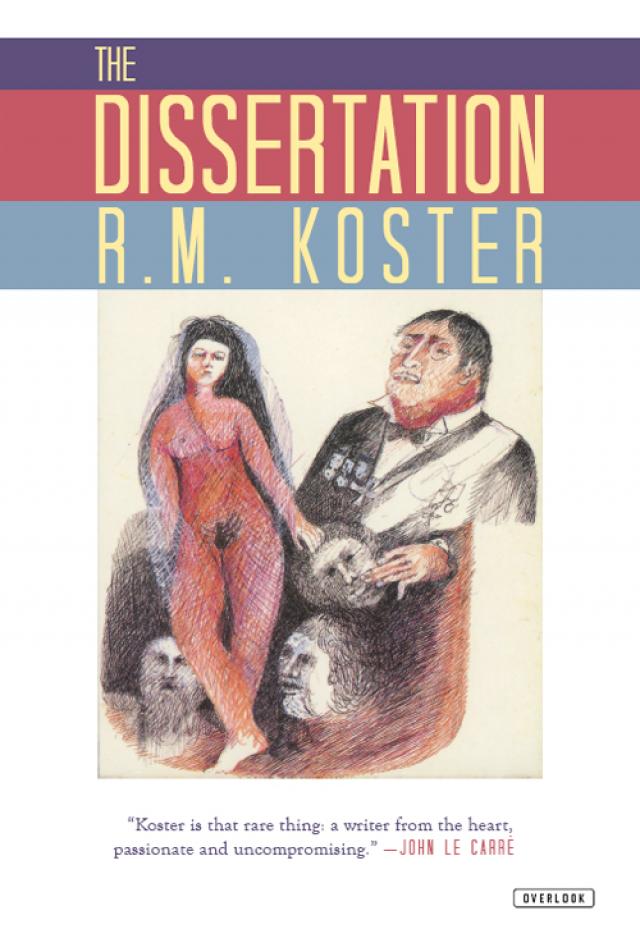


“Tu as compris maintenant, mon gars? Tu commences peut-être à comprendre maintenant?”
It may be that he hypnotized me, or that I hypnotized myself. It may be—and I tend toward this view—that my spirit moved onto the Astral Plane and telepathed sensations to my body. I leave the how and why to any specialists who are interested; the what is all I need for my history. For eight or so days more I traveled under similar conditions, and though a week has passed since I stopped walking, the skin of my face is still blistered and peeling.
At night my apartment recomposed itself around me. The tap was there for me to drink at and fill my water bottle. I could hear cars passing in the street below, and rain slapping in the courtyard. But by day, after I’d made a dozen or so circuits, the Afric sun would explode above me like a million flash bulbs, and the walls would disappear, etc. I was soon well enough acclimated to question and listen to informants, but like my father I struggled over sand and rock. Like him I reeled now and then with heatstroke. Like his my lips parched and cracked. For a few days only—I claim no great feat of endurance—but long enough to understand.
No one can understand what he has not lived in one way or another. No one can recount to others what he does not understand. Those who presume on other people’s patience to relate them histories must make their little journeys of exploration. Those who would rather sit at ease at home should choose another occupation.
Patient examiners, I hope you find Chapter 13 illuminating. I walked a portion of the Sahara Desert to gather data for it. In any case, regardless of your evaluation, I am happy to have had means to make the trip.
68. His solitude grew oppressive
Although he had great powers of concentration and took consequent pride in mastering his mind, in keeping it at all times at close rein and aimed in the direction of his choice’ he discovered himself one midnight slumped forward with his forehead pressed against his typewriter while his mind ambled loosely in a field it chose itself. His mind chose to imagine (or perhaps recall) nights which thickened like sheltering walls about him and a loved woman while he drank the nectar and the poison of her breath. Often they said imperishable things on nights which opened back onto infinite spaces while he breathed the perfume of her blood. The woman turned out to be a harlot, and yet his mind persisted in recalling (or perhaps imagining) such nights.
Then his solitude grew oppressive. He tried to call some spirit, any spirit, to converse with him, but his mind pranced and reared and refused to turn in that direction. He tried to think of going out. For months now he hadn’t cared to think of going out, but now his solitude grew fearfully oppressive, and he tried to think of rising from his desk, of walking to the door and opening it, of hurrying along dark, silent streets to someplace where there were other people. His mind refused to turn that way, however. His mind moved on through nights sultry with vows, with perfumes, with infinite kisses.
Therefore he raised his head and brought his forehead smartly down on the corner of the key guard of his typewriter. He repeated this procedure several times, first with the spasmodic urgency of despair, later deliberately, to make sure his mind learned its lesson. When, at length, he sat back in his chair, he found the plastic key guard cracked and a flange of it pushed down so that it impeded typing, but after he removed this piece and chucked it into a corner, the machine functioned serviceably. More important, his mind was now perfectly obedient and his solitude no longer in any way oppressive.
69. His face
Lo, where it comes again!
While en route here this morning, Arnulfa herself beheld the face of Padre Celso Labrador blazoned in living color below the rear window of a bus abandoned in Avenida Bolívar.
She at once got down from the bus she was riding in and went to inspect. The face was long-locked, auburn-bearded, sad-smiled, and delicately dripped with blood from forehead scratches—in short, exactly as I saw it in this room and have described it in these notes. The slogan “GET THEE BEHIND ME GENGHIS” floated beside it in a balloon arrowed to its mouth.
A member of the crowd that was collecting, a self-confessed former passenger on the iconized bus, announced with great unease to everyone in hearing that as the bus flowed slowly with the morning traffic, a newsboy had bicycled by the driver’s window and shouted in that he was “wearing the padre!”—whereupon the driver yanked the hand brake, switched the motor off, leaped to the street, dashed round, gaped at the face, and then, pausing only to unscrew the license plate with a coin, fled into an alley.
This tale was punctuated by a howl of sirens, and Arnulfa too made herself scarce, but one may assume the Civil Guard removed the offending and subversive vehicle, and probably a few citizens as well.
70. The French African Army
For a history of this formation during World War II, see Pierre Darcourt, Armée d’Afrique: La revanche des drapeaux (Éditions de la Table Ronde, Paris, 1972). The author is entirely sympathetic to his subject. He scrounges excuses for the deafness of most commanders to de Gaulle’s “call to honor.” As his subtitle suggests, he is not much interested in those units whose flags needed no revenge: e.g., the 13th Half Brigade of the Foreign Legion, which never paid a rnoment’s fealty to the Vichy regime and which won France her first laurels of the war at Bir Hakeim. And he waves the tricouleur in great swaths throughout, but all these are minor carpings. M. Darcourt provides detailed and reliable information on the campaigns germane to this history, and I gratefully acknowledge his assistance.
I acquired a copy of Armée d’Afrique in 1973. I was particularly pleased to find that it includes a preface by General Aimé de Goislard de Monsabert, León Fuertes’ divisional commander at Cassino, and enough references by name to soldiers, noncoms, and company-grade officers killed in action for me to develop many knowledgeable sources from it. I read it with great interest, making extensive notes of instruction to myself inside it. I valued it so highly that when I returned here at the end of last year I did not trust it to the freight company that shipped my trunk and crates of other books or the handlers who stowed my suitcase on the airplane, but carried it on my person. Imagine, then, my rage and anguish when, on having completed the text and notes of Chapter 13 and begun in-depth research for the period of León Fuertes’ military service, I discovered that my precious book had been carried off—inadvertently, no doubt, but what solace was that?—by a baggage to whom I furnished bed, board, and affection until recently!
There was no question of my ordering another copy out from Paris: that would take months. I might either proceed as best I could without the book, or approach the tramp and sue for its return.
I admit that I was tempted toward the latter course of action. You, my examiners, know well what sacrifices I am prepared to make for scholarship and for this history. I have proved myself ready to give my sanity; I would give my life itself if that were called for. If there be a more dedicated investigator on earth or in the next world, point him out to me, and I shall study his example. Till you do that, though, I rest content with the strength of my commitment to the advancement of knowledge. Yes, I was tempted; but I did not yield. Not even science is so valuable that one ought pawn his honor for it. I cursed the bitch at length, and then pressed on without the benefit of published sources.
Four years’ cohabitation with me must have put the shadow of an edge on her dull telepathic sense. At midmorning the next day, while I was sleeping, she stopped by and gave the book to Arnulfa, saying she had just discovered it among the belongings she removed from here some weeks ago. On opening it that night, I was unable to avoid noticing the following note of hers to me scrawled on the flyleaf:
Please let me see you. I’m sorry I hurt you, I love you and you need me.
I ripped the page from tile book and burned it, but her screed was already grafted to my memory. I reproduce it here on the odd chance that the reader may be interested in the presumptuousness of sluts. How can she conceive herself capable of having hurt me? With which foul words does she define the notion love so as to lower it enough for her to claim feeling it? And what delusion moves her to think I need her, her of all the millions on this earth and in the other world?
Surely the presumptuousness of sluts is an infinite commodity, whose stock exceeds all inventory.
71. General Isidro Bodega
Isidro Bodega was born in San Juan de Puerto Rico in 1780, the son of a Spanish officer and a Creole woman. He was commissioned an ensign in the Spanish Army in 1797. During twenty-four years of garrison service in New Spain he was at all times the perfect martinet, impeccably uniformed, preternaturally grave, steeped in the arcana of moribund traditions, and attentive to the last punctilio of military form. Woe to the soldier who found himself a centimeter out of dress with his formation when Isidro Bodega was inspecting! God’s mercy on the junior officer who traduced the least significant of regulations while serving under Bodega’s command. In all the history of standing armies there was never an officer who went more closely by the book.
In 1819 Bodega was posted to the colony of Tinieblas, breveted to colonel, and put in charge of the plaza at Otán. Two years later, when Tinieblans rose for independence and the Otán barracks were approached by a few dozen ill-armed ranchers and field hands, Isidro Bodega discovered he was a complete physical coward and experienced what Saint Paul called “conversion” and Dr. I. P. Pavlov the “ultra-paradoxical phase.” He surrendered at once, went over to the rebels, and henceforth until his “death” nearly three decades later adhered invariably to the path of least resistance.
Bodega epilogued his capitulation with some florid discourse on the rights of man; it was in the insurgents’ interest to exaggerate their strength. The news was therefore broadcast through the land that the royal colors had been struck in the face of overwhelming material and moral force. Thus presented, Bodega’s act set an example for the commanders of other garrisons, and he claimed and got credit for the painless character of our nation’s birth. Simón Mocoso made him Captain General of the Tinieblan Army (the ancestor of our present Civil Guard), a post he held until his “death.” Under Bodega’s command, this force maintained a level of indiscipline and slovenliness remarkable even in Central America.
In Chapter 1 I have classed Bodega with the “uniformed gorillocrats” who from time to time have occupied our Presidential Palace. I shall not revise this characterization, but now that I have met the man in person and heard his story from his own lips, I must qualify it. It is true that in 1830 Bodega deposed President Julio Canino in a bloodless coup and became President himself—but only because Canino had so bungled the state’s finances as to put in jeopardy the value of some considerable land holdings Bodega had accumulated. It is true Bodega continued to wear uniforms, but he did not make violence the basic principle of his administration. It is, further, true that during Bodega’s eighteen years in the Palace no legislature was called to session and no opposition tolerated, but Bodega was himself neither cruel nor crazed for power. He recruited a cabinet of energetic, avaricious foreigners and put the country in their hands, allowing them to steal freely so long as they ran their ministries efficiently. Among them was an East Prussian Junker, the Minister of justice, a man whose mere presence radiated such severity and terror that he was able to keep order and suppress dissent without killing hardly anyone. Bodega rarely intervened in the administration of government and comported himself more like a hereditary monarch than a usurping dictator.
After his “death” Bodega entered Gastronomy, an activity grossly defamed in the Divine Comedy (Inferno, Canto VI). The slimy filth with which the poet lines the third circle of his imaginary hell comes from his own mind, not from Gastronomy, which has always maintained the highest sanitary standards, while his harping on gluttony is exaggerated (though not entirely out of place), for Gastronomy caters more to the gourmet than to the gourmand. I gather from Bodega’s account that Gastronomy is organized along the lines of Drink: an infinity of restaurants offers every conceivable kind of fare and national dish, as well as astral specialities unknown in this world, save in superstitions such as Homer’s blather about nectar and ambrosia. Whereas no food is served in Drink, however, Gastronomes enjoy fine wines of this and other-worldly vintage, as well as a wide variety of digestive liqueurs.
When León Fuertes was assigned from L Force to the 3rd Algerian Infantry Division, General Bodega took leave of absence from Gastronomy and wangled a temporary appointment in Guardian Spirits, the better to watch over his now partially-reclaimed descendant. He was with León constantly from July, 1943, until January, 1944. No one knows more about this period of my father’s life, and no one could possibly be a more cooperative informant General Bodega was the chief source for Chapter 14.
As occultists have long known the spirit often takes French leave from the body during sleep. Actual visits to the Astral Plane by the spirits of those still resident in this world are rare, but not at all impossible to bring off with the active aid of Guardian Spirits. (Cf. Dante, who made dream visits to the next world in the company of Virgil and Beatrice Portinari. His mind was so warped by religious prejudice and overrigid toilet training that he saw nothing as it was, but for a poet’s vision to be thus distorted is no great calamity, as the beauty of his Comedy attests. As a scholar, I have no pretensions to “bel stilo,” much less to reverberating themal consonances, or architectonic symmetries, or cunningly interset Chinese boxes of metaphor, but I do achieve a little accuracy.) Nightly, General Bodega whisked León Fuertes to the Astral Plane, specifically to the drill grounds of War, which he had obtained permission to use; though since no military man ever tells a subordinate more than he needs to know for his immediate mission, my father never realized where he was and thought the whole business merely a series of dreams.
In midwifing the birth of León Fuertes, soldier, General Bodega reverted to his pre-Otán personality and drew effectively on his quarter century of experience as a regular officer in the army of a world power. The training facilities of War are, as the reader may imagine, extensive and excellent. War’s refusal to countenance firearms (see note 27) posed no insurmountable problems. For marksmanship practice General Bodega put León on the longbow range with a rifle borrowed from The Hunt, and a dagger was lashed to this for bayonet training.
72. The Battle of Cassino
There are dozens of books, dozens and dozens, that treat or touch upon the Battle of Cassino, and I, incredulous examiners, have read them all. I have consumed the self-serving memoirs of the opposing commanders, Kesselring and Clark, and shuddered at their tastelessness. (The one claims moral superiority over the Allies—imagine a German general capable of that!—because the latter bombed the monastery; the other attempts to justify his turn toward Rome, a maneuver which enabled him to get his picture in the newspapers as the “liberator” of the Holy City but which allowed his enemy to escape intact and thus vitiated the sacrifices of his soldiers.) I have choked down immense dry chunks of the official histories of this and that nation’s war participation (e.g., The Official History of New Zealand in the Second World War, Volume I) and gobbled up saucy unofficial paeans to national valor (e.g., L’épopée française en Italie). And I have devoured works on the Battle itself, munching with relish—on two of them: Dominick Graham, Cassino (New York, 1971) and Fred Majdalany, Cassino: Portrait of a Battle (London). The first has marvelous maps—the second (by a former company commander) gives the feel of the Battle. For the part played by French forces at Cassino, see Darcourt, op. cit. (pp. 117-191), on whom I have relied to supplement spirit sources. Merci mille fois, cher M. Darcourt!
73. Sangar
I built one in the living room ten days ago to specifications given me by General Bodega. I used books, of course, not rocks, and roofed it with a blanket, not a poncho, but it served excellently well to summon up the ambience of campaigning in the Abruzzi. I conducted my informant interviews inside it; inside it I consulted published works. I slept inside it also, fully clothed except for footwear. When I had retraced my father’s life up to the eve of his baptism of fire, I carried my typewriter in from my desk and, setting it on the floor, sat down before it, half inside and half outside my sangar. In this manner, evocative perhaps of Ernie Pyle, I composed Chapter 14.
Nothing untoward occurred until after I had brought León into Italy with his division. Then, as I was describing the physical aspect of the positions round Cassino, I looked up from the keyboard and saw not the wall of my apartment and the Judas-windowed door but the rubbled slopes of the Rapido Valley and the enemy-held massifs beyond. I have stayed here to do these notes and can regard the same vista when I care to. Now that I have begun my battle and am ready to commit León Fuertes’ unit, I think I shall keep my base here for the duration of the fight for Belvedere.
74. A force
“Some sinister force” erased eighteen minutes of signal from a magnetic recording of a conversation held on 20th June, 1972, in the office of the Honorable Richard M. Nixon, President of the United States. Such is the view put forward by General Alexander Haig (any relation, one wonders, to dunderhead Sir Douglas?), White House Chief of Staff, but despite the relatively high esteem in which General Haig is held, his theory had not gained a wide acceptance.
“No mystic force but a pack of counterrevolutionary jackals” is responsible for the appearance of images of Padre Celso Labrador on a number of Ciudad Tinieblas buses. That is the dogma delivered ex cathedra crudelitatis by Colonel Atila Guadaña, Security Chief of the Tinieblan Civil Guard and Minister of Justice, and despite the fear and loathing Guadaña’s name inspires, I am sure that his opinion is accepted by most educated people.


