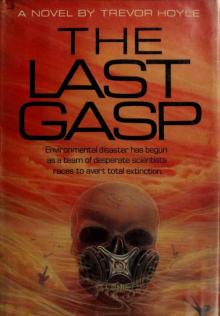
The Last Gasp, page 59


When Hanamura had finished, dusted the chalk from his hands, and resumed his seat, Chase broached the thorny question: how long before marine trials could commence? He didn’t add to the pressure by mentioning Prothero’s call; as director it was his duty to shield his people from external hassles and financial headaches. What he had to have was a positive commitment: if the money were to run out then the whole enterprise would be a complete and utter waste.
‘We’ve yet to decide on the most efficient cell voltage. At the moment we’re testing a range of power requirements.’ Hanamura stared into space, his high fine cheekbones catching the light. ‘I’d say a year to eighteen months, providing there are no unforeseen problems.’
‘But you already have a lab model operating successfully,’ Chase said, doing his best to sound reasonable. ‘How do you know that marine trials won’t actually help you select the optimum cell voltage? You can carry on the work here in any case while we test the process at sea.’
Hanamura glanced towards Carter Reid, his number two, who shook his head dubiously. Hanamura looked at Chase.
‘Does that mean you can’t or won’t?’ Chase said.
‘It means we’re not ready.’
‘Is there any technical obstacle to prevent us from building a pilot plant and installing it in an oceangoing vessel?’
‘No,’ Hanamura admitted slowly, his handsome face puckered in a frown. ‘I just don’t like the idea of running marine trials until we’ve ironed out all the bugs.’
‘I don’t like it either, Frank, but we don’t have the luxury of time. How soon?’ Chase asked bluntly.
‘Maybe six months, and that’s working double shifts.’ Hanamura swept a lock of glossy black hair from his forehead. He was being rushed and didn’t like it. ‘It would mean building one from scratch.’
‘What about the lab model you already have? Couldn’t you adapt that one for marine trials?’
‘Come on now, Gavin,’ Hanamura protested, ‘be reasonable. We need the lab model here. Anyway, it’s too small. The pilot plant would have to be at least four times the capacity.’
‘Okay, starting tomorrow, what’s the absolute minimum, given all the resources we can muster?’
‘Cutting it to the bone? I’d say three months.’
‘Right, that gives you till September fifteenth,’ Chase said briskly. He was satisfied, but he didn’t intend to show it. He’d succeeded in bringing Hanamura down from a year to six months to three months, but it would have been a tactical error to ease off now. ‘What about location? I can have one of the Scripps’ research fleet standing by – choose anywhere within a week’s cruising from San Diego.’
Hanamura looked at Carter Reid, then turned to Chase. ‘Providing it’s well clear of the algae blooms, anywhere in the Pacific will do.’ His dark eyes sparkled angrily for a moment, as if he’d suddenly realised he’d been backed into a corner. But it was too late. He jabbed a finger. ‘And I want to be there, Gavin, directing the operation personally. If we have to meet this September fifteenth deadline I’m going to make damn sure the trials are conducted properly. Any objections?’
Chase shook his head, smiling sweetly. ‘None whatsoever.’
6
Cheryl coughed up more of the evil-smelling black stuff and wiped her streaming eyes. She raised her head and caught sight of herself in the bathroom mirror. Her face was deathly pale and covered in beads of sweat, a faint bluish tinge to her lips. She knew the signs and symptoms, had seen them in others, so there was no point in fooling herself.
Dan hadn’t noticed anything, she was certain; he would have come straight out and said something. A lump came into her throat, whether at the thought of Dan or out of self-pity she didn’t know. But this wouldn’t do, she told herself sternly. He’d know in an instant something was wrong if he saw her like this. She doused her face in cold water and pinched her cheeks to bring the colour back.
Outside the cabin in the fresh air she felt better. The grandeur of the Oregon landscape with its thickly wooded slopes rising steeply to bare granite peaks had a healing effect, and the sky, a brilliant translucent blue, was unsullied by any trace of industrial fouling.
That was the odd and remarkable thing, Cheryl thought – that while some parts of the globe turned into uninhabitable wastelands, other areas benefitted, indeed, thrived under the new conditions. It was all due to the complex, unpredictable interfusion of gases in the biosphere which no one properly understood and never had. At these latitudes, for instance, the oxygen level was only a fraction below par and the ozone cover was still pretty much intact. Some fried while others thrived. Luck of the draw.
This was a good place to build a settlement. She had been right to bring Dan here, to start anew. They had been warmly welcomed by the locals, who had made them part of the small community in what had been the Willow Valley Reservation a few miles from the California border on the northern shore of Goose Lake. Yet in the last two years there had been changes, disturbing changes, mainly caused by the exodus from the south. First it had been a trickle of refugees, increasing to a steady stream, seeping northwards like an insidious stain. Now this part of Oregon was dotted with tiny isolated communities and what had once been the little townships of Beatty, Bly, Adel, Plush and Valley Falls were in danger of being swamped.
There had been other changes too, even more disturbing to Cheryl. She found it hard to define, to be precise about, but it was as if the attitude, the temper of the people was undergoing some kind of transformation: a kind of nervous, brooding suspicion where previously there had been tolerance and a feeling of fellowship. The change was more psychological than anything else, she felt, convinced that it wasn’t her imagination playing tricks. She likened it to a kind of subversive paranoia, slowly infiltrating the community and corrupting people’s minds.
And why, for God’s sake, was she sick? Surely this beautiful place, with its mountains and lakes and thousands of square miles of forests, was as healthy an environment as you could wish for? If you couldn’t survive here, then nowhere on the planet was safe.
Dan was with some of the other young people over at the community centre, discussing an extension to the school. By the time he returned Cheryl felt much better and had regained her colour and composure. To her relief Dan gave her a casual wave, apparently noticing nothing out of the ordinary.
Watching him, she felt the stab of a familiar poignancy. He was perhaps a fraction taller than his father and not quite as broad, but it might have been the young Gavin Chase: the same shock of black hair hanging over his forehead, the same intelligent blue-grey eyes and the firm, rather stubborn mouth. Though he never raised the matter, Cheryl often wondered if Dan harboured any resentment against his father for insisting that his son travel with Cheryl to the settlement in Oregon rather than move to the Desert Range site in Utah. While she understood his reasoning – a desire to place Dan in the most benign, most protective, environment – Cheryl still doubted that while the motive was right, the decision was wrong. There had been no great family rows at the time, three years ago, about where Dan should reside; the boy had seemed shell-shocked, Cheryl recalled, following the estrangement between her and Gavin. When Chase had set out his plans and explained his reasons, Dan had quietly gone along with them without demur. What deeper psychological distress it might have caused, Cheryl could only guess at.
‘What are you doing this afternoon?’ Cheryl asked him. ‘Like to row across the lake?’
Dan looked at her oddly, then shook his head. ‘Sorry, Cheryl, I’ve already promised to go riding with Jo, up by Drews Gap. We’re going to have a picnic and collect some herbs.’
‘Just the two of you, you mean?’
‘Sure,’ Dan said, flashing her a wide grin. ‘You don’t mind, do you?’
‘It isn’t up to me to mind. I take it her parents know?’
‘Yeah, they said okay.’ He’d lost the crisp correctness of his English accent and now spoke without the reserve that many Americans took to be standoffishness in the British character. ‘Anyway, I thought you had things to do this afternoon – didn’t you say Tom Brannigan had called a council confab?’
‘That’s not until four. Never mind, you go off and enjoy yourself.’ Cheryl patted his shoulder and went ahead of him on to the porch. It had been a mistake to suggest a change in the routine, she realised, but she was afraid that time was slipping by too fast and she needed his company to reassure her that all was well.
All wasn’t well though. She felt queasy again at the thought and had to make a wilful effort to control her panic.
They stood together looking across the little square around which were grouped the rough timber buildings of the community centre, the surgery and dispensary, and the three cooperative stores that served the needs of the three-hundred-strong settlement. Outwardly primitive, the sturdy pine-clad buildings were fitted out with all modern amenities, including electricity and non-freeze plumbing. It was a tenet of the community’s philosophy that technology was the friend and not the enemy; there was no reason not to take full advantage of man’s inventiveness and enterprise if used sensibly and with due consideration for the environment. No one here subscribed to the back-to-nature fallacy: that was simply a stupid and shortsighted return to the Stone Age. They were far from the masochists and martyrs who felt conscience-stricken at the thought of killing a rabbit or burning a log. The important thing was to live in harmony with their surroundings and not to plunder or despoil out of sheer greed, indifference or asinine thoughtlessness.
Above all, they determined to indoctrinate those same beliefs in the rising generation. Theirs was the earth to inherit – providing their forebears hadn’t already squandered the inheritance.
‘Are you serious about Jo?’ Cheryl asked, surprising herself with the question. She didn’t want to pry.
‘Do I have to be?’
‘I just wondered.’
‘What’s up, afraid she’ll get pregnant?’
‘Dan!’ Cheryl said, disapproving more of his directness than scandalised by the sentiment itself. ‘I didn’t think that for a moment. She’s only seventeen and I wondered how you felt about her.’
‘She’s okay. We have fun together.’ Dan folded his arms, his brown work-hardened biceps bunching and stretching the short sleeves of his T-shirt. He was full of the confidence of a healthy and good-looking young man, delighting in his own appeal. And why not? Cheryl thought. If you didn’t feel good about yourself at twenty, you’d never have a better opportunity.
She said, ‘I guess you’re old enough to know what you’re doing.’
‘I guess so,’ he agreed, the same grin lurking at the corners of his mouth.
Was he making fun of her? Maybe she was losing her sense of humour, which was hardly surprising under the circumstances.
7
The trail was steep and rocky leading up to Drews Gap, and the horses were jittery, sensing the danger of a slip or a stumble, their eyes white and rolling as they shied away from the drop. Thick vegetation and the spiky tops of pine trees dropped away steeply below.
Jo led the way, neat and trim in check shirt and jodhpurs, the set and balance of her slim body just right on the grey’s broad back. Dan got a lot of pleasure from just watching her. Her long blonde hair, pulled back and tied at the nape of the neck, gleamed like a silver scarf in the clear sunlight. When she’d arrived at Goose Lake with her parents two years ago she’d been an awkward, gangling kid with long skinny legs, pretty much as he remembered her from their last meeting. He’d teased her and unkindly nicknamed her ‘Stilts’.
The teasing had lasted about a year, until shortly after her sixteenth birthday when (almost overnight it seemed to Dan) the proverbial swan had appeared. From then on he’d started to take notice in an entirely different way.
The trail levelled out and Jo coaxed the grey towards a small clearing girdled by a circle of slender pines, the breeze whispering in their branches. Jo slid down and the horse immediately began cropping the luxuriant grass. Steam rose from its flanks and hung in the sunlight, which lanced like pencil beams through the overhead cover.
‘What was all that with Cheryl?’ Jo asked, unfastening the straps on her saddlebag and pulling out a small bundle swathed in white cloth.
‘She was worried that we might be sneaking away for a spot of afternoon delight. You know how they are.’
Jo looked at him sideways from under long fair lashes, her expression mildly scathing rather than coquettish.
‘Naturally I told her the thought had never entered our heads,’ Dan said with a perfectly sincere face that still managed to seem devilish.
‘I’m glad about that,’ Jo said, ‘because it never entered mine. From what I hear there’s no shortage of that on Saturday nights with Baz Brannigan and his cronies.’
Jo didn’t miss much, though Dan hadn’t realised it was common knowledge what Baz – Tom Brannigan’s son – and some of the others got up to on Saturday nights. In truth, he didn’t know how to take Baz – whether he liked him, despised him or even secretly feared him. Baz was a braggart, and cocky, a natural leader (or bully), and yet there was an intense, almost mesmerising quality to his character that made him popular. The way he’d suddenly switch from being lethargic to hyperactive for no apparent reason kept people on edge. Maybe the pill-popping caused that.
From the saddlebag, Dan took the food wrapped in silver foil, green salad in a plastic container and the Thermos of chilled white wine and laid everything on the sun-dappled cloth Jo had spread on the ground. The day couldn’t have been more perfect. Propped on one elbow, tearing off strips from a chicken leg, Jo gazed around at the dense proliferation of vegetation. From her expression, Dan could guess what was chafing her, because it was a topic they’d discussed before: if the flora world-wide was struggling to survive in the strange new atmosphere, how come the greenery hereabouts was flourishing like mad? He said, ‘Still can’t get your head around it, can you?’
‘I know!’ Jo said, sounding vexed. ‘Still bothers me. Explain it again.’
‘It’s Cheryl’s explanation, not mine. She’s the scientist. The super-growth is caused by the abundance of carbon dioxide, which means the plants are being hyperventilated, speeding up their metabolic rate. There’s a friend of Cheryl’s who lives north of here – Boris Stanovnik. He says the trend will continue, and it’ll accelerate the growth as the carbon dioxide builds up.’
Jo tossed the chicken leg aside and licked her fingers. She looked puzzled. ‘Still doesn’t add up to me. If the plants are growing faster and becoming more lush, they ought to be giving off more oxygen – it’s a two-way deal, isn’t it?’
‘That’s true, here, where we are. The problem is, according to Cheryl, that we wiped out most of the equatorial forests in the last century, which drastically reduced the oxygen supply. The stuff that’s left’ – Dan waved his hand at the encroaching greenery – ‘isn’t enough to make a whole lotta difference. What we’ve left ourselves with are huge tracts of desert and small areas with superabundant growth. The balance has been upset, so the whole thing’s out of kilter.’
‘So what’s going to happen next, do you think?’ Jo asked, nibbling on a slice of cucumber.
‘Do you mean world-wide?’ Dan said. ‘Or just here, to us?’
‘There’s no difference that I can see. If the global situation gets worse, which it is doing, I don’t see how we’re going to survive in our little Garden of Eden. Or are we somehow immune—’
She broke off and they both looked round at the pulsing growl of engines in the distance. The sound was coming from below the ridge, on the opposite side to the trail they’d ridden up. Their two grazing horses also looked round, swishing their tails.
Jo sat up. ‘Is that a helicopter?’
‘No.’ Dan went still. ‘They’re quad bikes.’ His eyes narrowed. ‘Only one family I know has them.’
‘The Brannigans?’
The noise had broken the spell of the peaceful summer day. Dan was hoping and praying that Baz Brannigan would give them a wide berth. This area of forest and lower meadows, crisscrossed by rocky spines, with Goose Lake its focal point, was big enough for everyone. They sat listening on the grass while the engines boomed and reverberated, trying to gauge if they were getting louder or growing fainter. A minute or so later they were left in no doubt when, with a sudden roar, two quad bikes crested the ridge and bounced on their fat tyres into the clearing, startling the horses. It was Brannigan sure enough, Dan saw, immediately recognisable with his shock of fair hair and thick white eyebrows standing out against his ruddy skin. Brannigan was riding with a companion, two more on the other bike, none of the four young men wearing helmets.
Dan was cursing them all under his breath as he tried to calm the animals. When he had time to look, the two bikes were coasting round in circles as they approached the picnic spread, Jo sitting on her haunches with her arms tightly folded. In a show of brazen provocation, Baz Brannigan had a kind of leering smirk on his face. His attitude seemed to say, What have we here, two little lambs, lost in the wood . . .
‘Found yourselves a nice quiet little spot, heh?’ Brannigan gunned the motor before turning it off. Scratching his chin, and with a studied thoughtful look, he glanced round at his companions. ‘Here’s a little lesson for you guys. Look-ee here now. Whoever said the Brits can’t get horny?’
They all cackled as if their leader had made a really funny remark.
Looking directly at Jo, Baz Brannigan then prissily folded his arms and pursed his lips, as if mocking her body posture and expression, which set the three others off into more cackles of hilarity.