

The Long Alliance, page 9
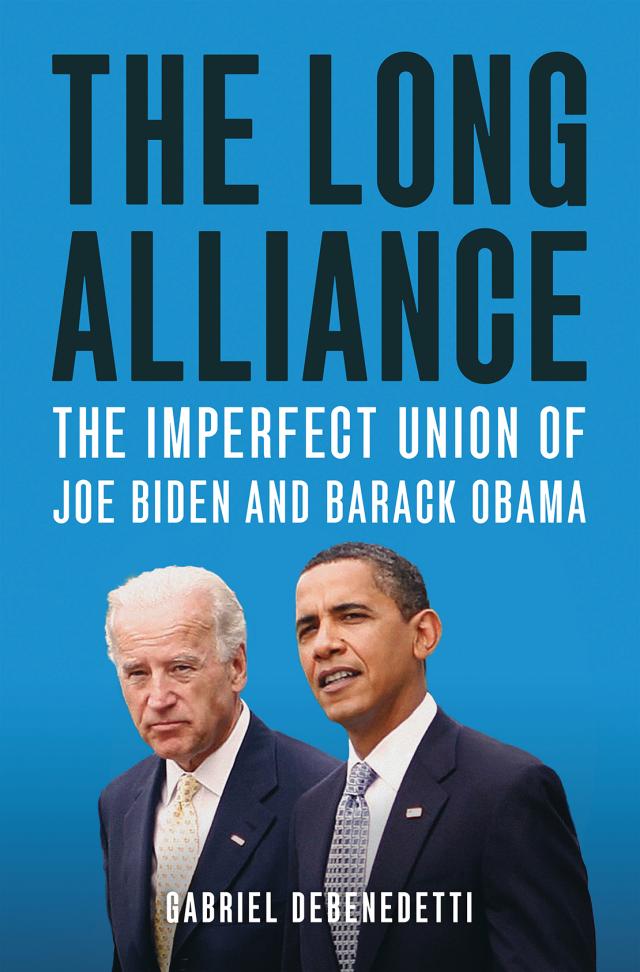


There was an impossibly grand sense of destiny involved. When Biden first arrived in DC, he’d temporarily been given a seat on the Senate floor between colleagues from the North and the South, and he somehow convinced himself he was sitting between John Calhoun’s old desk and Daniel Webster’s, a convenient “fact” that he insisted helped remind him to try bridging ideological divides. In 1976 he dipped his toe in national waters by backing a political ally, Pennsylvania governor Milton Shapp, for president before Shapp quickly flamed out. Unchastened, Biden turned to Jimmy Carter, another outsider, and became the first elected official outside Georgia to back him. Finding himself frustratingly outside the new president’s inner circle when he got to Washington, however, Biden entertained serious pitches from party operatives to challenge Carter in 1980, and then to try to oust Ronald Reagan in 1984. Their arguments never clicked, though, until Reagan was reelected, and by his third term, Biden could fully envision a 1987 campaign.
That year profoundly reshaped his view of the world and of Washington, and also of himself. The moment appeared to make sense for him. Newly elevated to the chairmanship of the Senate’s judiciary committee, Biden stormed into Iowa, the first state to caucus in the Democratic primary, to present himself as a charismatic, handsome, serious-minded changemaker here to usher in a new era of post-Reagan politics. His appeal was Kennedyesque, at least according to him: he could move people, and could pick up where Bobby left off.
His first problem, though, was that he was needed back in DC—Supreme Court Justice Lewis Powell’s retirement meant he had to run the hearings for a replacement, and thus had to split his attention, sometimes shirking debate and speech prep. His bigger issue was that one reason he sounded so much like a Kennedy was he was quoting one, and not always telling crowds that’s what he was doing. Late in the summer, as his private polling showed him climbing in Iowa, the campaign manager for Michael Dukakis, his rival, secretly shared evidence with reporters that Biden had plagiarized parts of an important speech from Neil Kinnock, a Welsh politician. Revelations that he’d also been using RFK’s lines soon followed.
The senator maintained that this was clearly a mistake. He’d quoted these lines with appropriate attributions in other speeches. But the firestorm derailed him just as Supreme Court nominee Robert Bork’s hearings intensified, and Biden dropped out, fuming to reporters, “I’m angry with myself for having been put in the position—put myself in the position—of having to make this choice. And I am no less frustrated at the environment of presidential politics that makes it so difficult to let the American people measure the whole Joe Biden and not just misstatements that I have made.”
Still furious back in Wilmington, he met with his family and closest advisors to figure out his next steps. Kaufman compared Biden’s position to Winston Churchill’s after he resigned following the disaster at the Dardanelles, only to return as prime minister—Biden still had the presidency in his future. Mike Donilon, too, had an optimistic spin. He’d surveyed Delaware voters and found that three-quarters of them thought he should run again. Still, Biden’s year kept spiraling even after he defeated Bork’s nomination. Early in 1988, he collapsed with the first of two brain aneurysms that nearly killed him—at one point, Jill walked in on a priest delivering last rites at her husband’s hospital bedside before shooing him away. His recovery represented his first long stretch away from the Senate since he was first elected, and it forced the middle-aged man in a hurry into a bout of uncharacteristic self-reflection.
One result was a retreat from the campaign lifestyle. He remained an important figure in official DC thanks to his seniority and committee roles, and he occasionally stepped into its central, controversial sagas. In 1991, while still running the Senate’s judiciary committee, he oversaw the Supreme Court confirmation process of judge Clarence Thomas, which included allegations from lawyer Anita Hill that Thomas had sexually harassed her, only for Biden’s committee members to harshly grill her on the matter. Three years later, he helped write and shepherd Bill Clinton’s crime bill to law, another move he would later both tout—for its tough-on-crime measures and inclusion of the Violence Against Women Act—and then eventually have to answer for politically, for a resulting regime of overincarceration, especially of Black Americans.
But he wouldn’t even hear arguments about running again until 2000, and even then he eventually dismissed the idea. Still, though, he stewed. It wasn’t until 2007, facing an entirely new and unflinching media environment two decades after the fact, that he owned up to 1987’s reality: “I made a mistake, and it was born out of my arrogance,” he said. “I didn’t deserve to be president.”
* * *
In What It Takes, the landmark book about the 1988 race that Biden considered to be something like an X-ray of his soul, Richard Ben Cramer wrote about the “connect,” or the “Biden Rush,” a nearly palpable thing that would happen when Biden was really grooving and his crowds were really locked in, and it was obvious to everyone that something special was happening between this charming pol saturated with emotion and an auditorium of Iowans or New Hampshirites. Two decades later, Biden still had access to this magic—that much was obvious to the aides and family members who’d stuck with him. He could rip out one-liners like nobody’s business when he was on his game—“Rudy Giuliani, there’s only three things he mentions in a sentence: a noun and a verb and 9/11,” he said of the Republican candidate at one debate in October 2007, after practicing the line with speech coach Michael Sheehan (the same sought-after coach who’d helped Obama hone his convention performance three years earlier). And when he was feeling it, Biden could bowl anyone over with his in-person knack for just totally enveloping you emotionally, internalizing your story, telling you his own. His own staffers held back tears when, in July, he stayed in Iowa City for hours to answer questions from gay voters about their rights and sat with his arm around one young man as the sky grew pitch-dark. He could have irresistible fun, too. When moderator Brian Williams took a few sentences to ask in a debate in South Carolina if he’d be able to control himself as president given his reputation for rambling and putting his foot in his mouth, Biden simply smiled, leaned into the microphone, and said, “Yes.”
What he couldn’t do was get the magic to stick with any consistency, or get anyone to care. Voters, not just in Iowa and New Hampshire but everywhere, were hungry for change, and not just the kind of partisan switch from Bush that Biden was promising. His pitch—experience, moderation, responsibility—was fine, but it paled in comparison to the hopeful message offered by the man who might be the first Black president and was promising a new dawn in DC or the strength-and-solutions-oriented line offered by the candidate who would be the first woman commander in chief. Biden had entered the race expecting a serious look from caucus-goers, donors, and the press, and he suspected Obama and Clinton would blow each other up and clear his path, in a repeat of 2004’s sequence, when Kerry rose after Howard Dean and Dick Gephardt effectively torpedoed each other’s candidacies. Instead, from Day One, Biden was taken aback to find that his junior colleagues weren’t being asked to answer to his proposals. Like any political also-ran, he was instead being mined for sound bites in response to their latest ideas and controversies.
This dynamic only grew more pronounced, especially after Obama and Clinton blew the rest of the field out of the water with their first blockbuster quarterly fundraising hauls. Biden, always a mediocre raiser because he hated sucking up to rich guys and simply hadn’t had to do it much to get reelected in a small blue state, struggled to keep his campaign afloat. When staffers blocked off an hour for him to call donors, he sometimes only spoke to two people instead of the dozen they’d scheduled because of his aversion to the task and because he preferred extending the few conversations he was comfortable with—asking random financiers for their thoughts on his strategy for half an hour at a time. He was plainly miserable doing even that. Once, when a young staffer handed him a list of names and numbers to call for dough, he replied, “Get the fuck out of the car,” another aide later recalled—the kind of prickly impatience he seldom displayed in public but flashed to advisors who asked him to do things he found distasteful or annoying, even if they were necessary.
Mostly, though, Biden’s mood swung as the year progressed. He’d kicked off the cycle by dismissing Obama even before the “articulate” mess, predicting to the New England Cable Network that he’d “be a little surprised if [Obama] actually does run,” suggesting that instead, the Illinoisan would make a dynamic running mate for someone. Obama was, Biden had said, on “everyone’s Number Two list.” Yet the younger man’s appeal was obvious and unavoidable. He and Clinton outdrew Biden at every multicandidate event, sometimes by thousands of voters. Approaching one early Iowa “cattle call,” a loyal Biden friend drove past miles of buses decorated to support the two front-runners, and asked the senator’s traveling aide where Biden’s supporters were. She shrugged, “We’re hoping for a snowball effect.” Biden couldn’t decide how he felt about one particular parallel that kept being drawn. “I was the Barack Obama!” he sighed to the Boston Globe, referring to his ’88-vintage buzz, suggesting that he understood the Obama appeal. But he also bristled when this idea was brought up by others, since Obama had been in the Senate for just three years. In 1987, Biden would point out, he was in his fifteenth year in the chamber, so the comparison was slightly insulting to that campaign’s memory.
One consolation, at least, was that he was far from alone. At times during debates when Obama was being treated by moderators like the front-runner, Biden caught Clinton’s eye, as if to say, What is happening? Where is this coming from? Then they’d pull one another aside in the wings to shake their heads, unable to wrap their minds around how Obama had risen, or why Americans were going in for his brand of inspiration when he had no experience.
One of Biden’s closest friends in DC, Chris Dodd, was there for the ride as a candidate, too. The Connecticut senator had even enrolled his kids at school in Iowa in a bid to win over undecided caucus-goers. The pair went back to the 1970s, hung out backstage at debates, and once split the cost of a private jet from Washington to New Hampshire. But the very fact that they needed to save like that hinted at a bigger, unspoken problem: they were canceling each other out with their similar but not very scintillating pitches and reputations as old-school East Coast Senate moderates. That fact sometimes left Biden stewing and pissed at his old buddy when he was searching for explanations for his own lack of traction as Obama crisscrossed the country in comfort and Clinton chartered a helicopter to take her around Iowa.
Mostly, though, Biden privately observed the unfairness of it all as if from afar, only occasionally breaking through his funk to put on a big grin in public or to step back and laugh to an aide while packing a prop plane with his luggage in the middle of the night that running for president is a hell of a thing, isn’t it? After events throughout the fall, Biden would return to his SUV and fume to his traveling retinue that he wasn’t catching on because the journalists covering him were too young to understand him, or how impressive his career had already been. The bigfoots were out chasing Obama or Clinton. Did these kids even know who Bork was? By the winter, this complaint had trailed off. He no longer had any reporters regularly trailing him at all, and he mused aloud about how to catch people’s attention. Maybe he should just announce a running mate now, or roll out a slate of cabinet picks?
He took to rambling about his résumé and his plans, waiting for something, anything, he said to light up an audience, or at least an audience member. When it wasn’t working, which was most of the time, he just kept going as crowds thinned. By the end of the year, his brother Jimmy was a regular presence, standing at the back of rooms and waving his hands at Joe to get him to stop talking when he’d gone on too long.
Still, deep into December, mired in the low single digits in polling, Biden still thought he had a shot. If he got third in Iowa, he figured, he’d have good reason to continue his campaign into New Hampshire, right? All he needed was for voters to be annoyed with how negative things were getting between Obama and Clinton and to stay away from the caucuses. Weird things could happen if there was a low turnout. Right?
* * *
Ever since the 1987 debacle, when he felt taken advantage of by Democratic strategists he didn’t know too well, Biden had kept his inner circle tight. In his distinctly open-armed style, he built layers upon layers of outer orbits of advisors. He listened to them on occasion, but he mostly just pinged those guys when he felt like it. At the toughest moments, he relied only on the core group, which by that January included stalwarts like Ted Kaufman, Mark Gitenstein, Ron Klain, Tony Blinken, and Mike and Tom Donilon, who had cumulatively spent over a century by his side. They were joined, as always, by family members like Jill, his sister Val, and his sons Hunter and Beau—the latter, at that point Delaware’s attorney general, was often the final voice in his dad’s ear before debates or big decision moments. A handful of other aides, including Larry Rasky, who’d helped guide his campaign communications, and longtime consultant John Marttila, were there, too. As the caucuses closed late on January 3, 2008, it was this group that had to talk him through reality.
There had been a surprise in Iowa, after all. Voters were far more energized by the campaign than the Wilmington brain trust had projected. Turnout was not low. Instead, it was the highest it had ever been, the race having captivated and energized the state. Obama had surged to first and Edwards to second, with Clinton coming in a shocking third. Biden, though, hadn’t even gotten close to Bill Richardson. He finished with less than 1 percent of the vote. It was over, his advisors told him. At least he’d beaten Dodd.
Back in Washington, Biden did his best to move on. A few days after returning from the trail, he ran into Bayh in the Senate gym and shook his head: “Boy, you had that thing figured out better than I did.” He grinned at his colleague, who’d chosen not to run after thinking about it. “Neither of us had a chance!” He dove back into his committee work, too. In February, he flew to India and then Pakistan with Kerry and Hagel.
Still, even across the world, he couldn’t fully shake Iowa and found himself fully wired, pacing the hallways of the top floor of the Islamabad Marriott before the three senators were due to fly to Afghanistan. By chance, he ran into a group of fellow Americans who were in town to monitor Pakistan’s parliamentary elections, and he recognized the former congressman Jim Moody among them. “Hey man, you wanna get a milkshake?” Biden asked. He proceeded to regale Moody, liberal foreign policy thinker Brian Katulis, and a third colleague with his thoughts on the possibilities for American foreign policy after the Bush years.
He would spend the rest of the year planning his party’s new vision for the new era as the committee’s chair, he explained. Biden’s companions already knew that he was an expert, but now he made clear just how well he personally knew a huge range of world leaders, and how thoroughly he’d planned to use his Senate perch to influence the new administration, whether it was Republican John McCain’s, Clinton’s, or Obama’s. As it got late, it also became clear that he wasn’t over what had just happened. The campaign between Obama and Clinton was still raging, and, sitting in the lobby restaurant eight thousand miles away, Biden returned to it. I knew more than anyone else in the race about foreign policy, he said.
CHAPTER 4
2008
The months after Iowa would go down in history for the sheer animosity of the showdown between Obama and Clinton. Clinton was guilty of old thinking, borderline corruption, and complicity in the devolving Iraq war, if you believed Obama fans. Clinton’s followers accused Obama, meanwhile, of unacceptable naivete, false promises, and even, in one case, continued drug use. Biden was determined to stay away from it all. He took semiregular calls from both candidates as they courted his endorsement and foreign policy advice, but he refused to take sides, watching from a distance as his Senate colleague Dianne Feinstein eventually hosted the pair to broker the final peace once Obama won.
So it would have been understandable if Biden were still far from Obama’s mind as the de facto nominee touched back down in the United States late that July. Obama had been on a whirlwind tour of Afghanistan, Iraq, Israel, Jordan, the United Kingdom, France, and Germany that was designed to highlight his comfort on the world stage but which—after he spoke to over two hundred thousand German fans in Berlin and drew full-court coverage of his trip’s Middle Eastern leg—also served to highlight his star power. He was greeted, upon landing, with an ad paid for by his Republican opponent John McCain that painted it all as a bit frivolous. “He’s the biggest celebrity in the world. But is he ready to lead?” asked the dramatic spot, which alternated shots of Obama with pictures of singer Britney Spears and socialite Paris Hilton. In public, Obama’s publicity team dismissed the effort, and in private his research aides quickly found that the clip backfired and offended the women voters they were targeting. But the candidate himself was disproportionately sensitive to the implication that he was all flash and little substance—a sore point that dated back to his earliest days in the Senate—and he told his top aides that he knew he needed to fix the impression before it settled in voters’ brains. The most effective way to do that was with a decision he’d been considering on and off since late January: his running-mate pick.
The topic had been vaguely on his mind ever since the aftermath of the South Carolina primary, which he’d won commandingly with overwhelming support from Black voters. John Edwards’s representatives had quietly approached Obama’s to gauge his interest in a deal. The North Carolinian would endorse him if he named Edwards as his Number Two, a move that might help hasten the end of the primary against Clinton. Obama, though, brushed the idea aside, since he considered the vice presidential pick the most important political and governing decision he’d have to make on the campaign trail, and he had no interest in being locked into Edwards already. This was just as well—it turned out Edwards, whose personal life would soon explode in sordid scandal, had made the same offer to Clinton, who also turned him down. Obama, however, thought occasionally of the matter as his chances of winning the primary improved throughout the winter and spring, by which point he was pretty sure he’d win the presidency, too, thanks to Bush’s plummeting ratings and Americans’ traditional hesitance to keep one party in presidential power for three straight terms. Obama confidentially asked his aide Chris Lu to start planning his presidential transition in May.


