

The Long Alliance, page 11
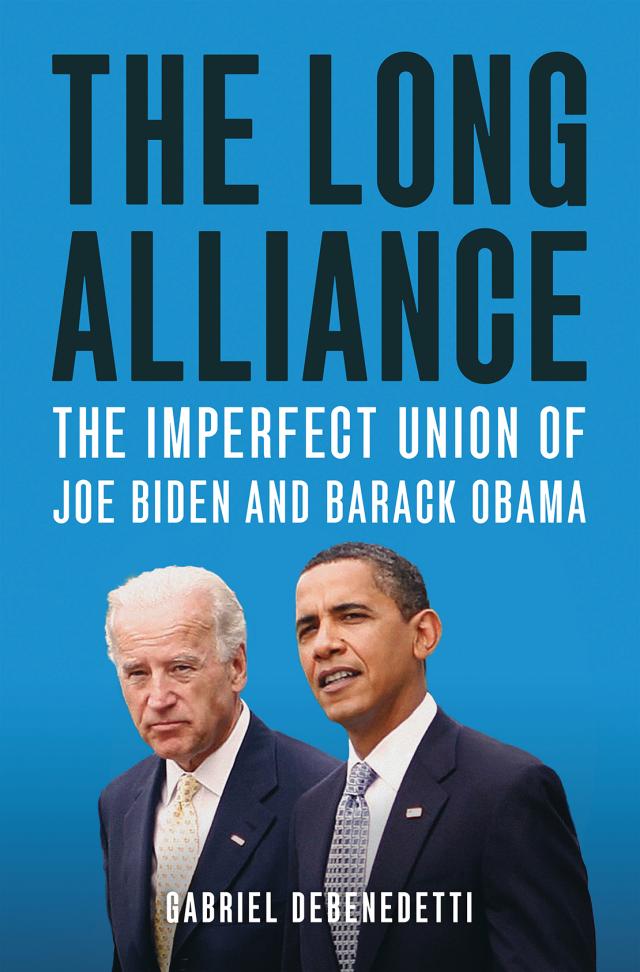


Bayh went first. The Hoosier first met Obama back in 2004, when a mutual friend in Chicago had set the pair up so Bayh and his wife, also a lawyer, could talk to Barack and Michelle about balancing family and Senate life. But plenty of people around Obama saw Bayh as, first and foremost, a Clinton person, since he’d been close with Bill when they were both young governors and he had endorsed Hillary in 2007, then rebuffed Obama’s advances late in the primary. He was, though, at fifty-three a relatively youthful, square-jawed legislator with unquestioned experience and a home address in competitive Indiana, and he’d been through the VP process before. In 2000, he was vetted by Gore, who told him—correctly—that even if he wasn’t selected, his profile would rise. In the eight intervening years, the process had gotten significantly more complicated, and Bayh expressed surprise to Obama’s team when he got the forty-page document to fill out, considering that 2000’s version was one-fifth the length. He called the lawyer assigned to his candidacy when he read the final question, which appeared to be asking if there was anything out there, true or false, that could damage him or Obama. “What?” Bayh asked the vetter. “You want to know scurrilous rumors?” Yes, came the response, we want to know those, too. “I don’t keep track of those!” Bayh replied.
In person, hidden away from the press in St. Louis, Obama was more relaxed, and it was obvious he wanted to suss out their personal chemistry. When Bayh walked in for his interview, Obama gestured to a stack of papers about three feet high on the table—the senator’s completed vetting documents—then, for three and a half hours over cheeseburgers, they spoke about other things: how they would interact in the White House, and about their personal styles of governing and legislating under stress. Bayh left the meeting under the impression that he had a real shot at the job, and he canceled his family’s planned vacation to the Grand Canyon so he could meet with Plouffe and Axelrod in West Virginia instead for a follow-up about more specifics. What he didn’t know, though, was that Reid was lobbying against him. The Senate leader hadn’t been impressed with him in the chamber, suspecting him of just wanting to be president. More importantly still, he recognized that Bayh represented a state with a Republican governor, and so would likely be replaced by a GOP senator if Obama picked him.
Obama was more interested in Kaine, a warm but serious figure with whom he’d felt a personal connection ever since they’d met in 2005 and realized their mothers had grown up in the same small town in Kansas. Kaine encouraged Obama to run a few years later, arguing that people liked him and he shouldn’t wait until people found reason to dislike him. He kept in touch with Plouffe and Axelrod, and even invited Obama to Richmond, the old capital of the Confederacy, for one of the first symbolically potent events of his campaign after he launched it in Lincoln’s Springfield. Kaine, fifty, had been skeptical that Obama was serious about picking him, but he agreed to be vetted for Obama’s initial long list after the candidate called him while Kaine was on the way to his oldest son’s high school graduation. As the process progressed, Obama insisted that Kaine stay on the list even when advisors questioned the wisdom of his inclusion. Sure, you could argue that he’d be a pick like Gore was for Clinton, reinforcing the nominee’s political strengths, but more realistically they were too similar: they were a pair of young, hopeful, relatively inexperienced and fairly liberal Harvard Law grads, no matter how practical and effective either was as a politician.
Still, when they met surreptitiously in Indiana, Obama took the prospect of their partnership seriously, as did Kaine, to the point where they got to talking about legislative priorities and political trade-offs. When Kaine asked about Obama’s appetite to pursue difficult choices like health-care reform even if his standing suffered, Obama replied that there was no point in being president if you don’t do the hard things, and he admitted that if he passed real health legislation his first midterm elections would likely be especially tough thanks to GOP backlash. As the meeting continued, Obama admitted to Kaine that he was the choice of his heart, and Biden the choice of his head. But he was torn. Sometimes, he said, he went with his heart, and sometimes with his head.
Biden, meanwhile, had been making calls. Once it was clear he was a serious contender, he reconnected with Walter Mondale, Jimmy Carter’s vice president and his former Senate colleague. It was little known, but the two had actually first discussed the vice presidency in 1976, when Mondale was auditioning for the role and he wanted advice from Biden, the only person in Washington without a Georgia connection who actually knew Carter. Now Biden had given some thought to different models of the vice presidency—he couldn’t stand what Dick Cheney had done, wasn’t sure Gore had been as effective as he could have been with his discrete assigned projects, and wondered about Lyndon B. Johnson until he read Robert A. Caro’s The Passage of Power and understood that Johnson had been miserable in his role as JFK’s Senate liaison. Mondale’s version of the job, Biden concluded, was the best, and he now studied the memo that Mondale and his advisor Dick Moe had written for Carter proposing a then-unusual general-advisor arrangement rather than a more circumscribed but vague second-fiddle understanding.
Biden and Ted Kaufman, perhaps his closest confidant, met with Mondale and Moe to ask for specifics, and for guidance on what to ask of Obama. Mondale had gotten Carter to understand that the vice president was the only one who could give him unfettered advice, and had told him he could be an effective advisor only if he saw every piece of material, no matter how classified, that crossed the president’s desk. He could play an important role for Carter on Capitol Hill and in selling his agenda around the country, he said, and in Washington’s corridors of power, given the new president’s relative lack of familiarity with them and his own considerable experience. That had all worked—Mondale succeeded in turning the job into a good one, and he wasn’t a glorified assistant or has-been, as he’d feared. The potential parallels to Obama and Biden were clear. But, Mondale told Biden, the most important thing was that he secured a firm agreement to be the last person in the room whenever the president was making a decision.
By the time Obama and Biden were scheduled to meet surreptitiously at the Graves 601 Hotel in Minneapolis in early August, speculation over the pick had reached new, untenable heights. Obama had asked Mastromonaco—who’d helped run Kerry’s selection procedure—to keep the process as quiet as possible. She gave the three finalists internal code names—C1, C2, and C3—and flew them to their meeting destinations on chartered jets from nonobvious private airports. When his turn came, Biden arrived wearing a bomber jacket, aviator sunglasses, and a baseball hat to disguise himself, but he immediately waved to a neighboring plane upon disembarking in Minnesota. The aide traveling with him called Mastromonaco, concerned: he was way too recognizable.
Still, Biden got to the hotel undetected and kicked off the meeting by counterintuitively explaining why the vice presidency might actually be a step down from his current perch, but why Obama should choose him anyway. The pair went back and forth about the results of Biden’s vetting—he really didn’t have any money, Obama joked, unwittingly calling back to their uncomfortable first meeting in the Senate—and asked whether Biden actually wanted this job versus the secretary of state role. Biden replied that this one made more sense if he could truly be the final person in the room with Obama for his decisions, if he could attend his intelligence briefings, if he could maintain a serious, wide-ranging portfolio as opposed to accepting specific small tasks, and if Obama would commit to having a weekly, agenda-free lunch with him whenever they were both in Washington. To Biden’s surprise, Obama was comfortable with each condition and replied that he’d need to be candid right back to Biden in order for it all to work. Biden agreed with that, too, and promised to stay completely loyal to Obama’s decisions, even when he disagreed with them.
This all sounded good, Obama said, but he wanted to make sure of one more thing. It wouldn’t work unless Biden viewed the vice presidency as the capstone of his career. Biden joked back: “Not the tombstone?” He got the hint, he assured Obama: he was sixty-five, and Obama wouldn’t have to worry about him jockeying for a future presidential run.
They spoke for around two hours. Pretty businesslike, by their standards.
* * *
A few days later, Axelrod and Plouffe set off to meet with each candidate one last time. Biden was their first stop, and they arranged to meet with him at his sister Val’s house across the border in Pennsylvania to avoid the reporters who were starting to watch for movements outside Biden’s family home in Delaware. Jill and Beau picked the Davids up at the airport in an effort to demonstrate that all things Biden were a family affair and drove them to Val’s, where they met Joe next to the pool. Biden was acutely aware that the main thing standing between him and the job was his inability to stop himself from talking at length, and he nevertheless amazingly kicked off the meeting with a twenty-minute monologue about not only that fact but also about how even though he’d thought he would’ve been the best president, and even though he didn’t particularly want to be the vice president, he would do everything he could to help Obama. The rambling was a sight to behold—he still wouldn’t consider subsuming himself into the Obama orbit or style—but Axelrod and Plouffe later agreed that over their two hours at Val’s Biden had convinced them of his authenticity, and they were reassured by his promise to take Obama’s position on matters where they disagreed. He also reminded them that he knew the Republican nominee McCain extremely well, and that his insights on their opponent would be useful.
The performance was particularly interesting to Plouffe, one of the rare professional Democrats from Delaware who’d never worked for Biden, and who’d had an unpleasant first real experience with him in 1994, when Plouffe coordinated campaign events between Biden and a Senate candidate. Biden wasn’t terribly useful for Plouffe’s candidate, Delaware Democrat Charles Oberly, since he figured (correctly) that Oberly would lose and Biden didn’t want to alienate his colleague, incumbent Republican Bill Roth.
Now, though, Plouffe thought Biden could do well in the vice presidential debate—the running mate’s major test—and he could see the broader political argument for choosing him. It helped Biden that he had a handful of important surrogates in his corner: on the campaign side, ad maker Larry Grisolano advocated for picking Biden because of his skill with middle-class messaging, and Chicago-area congressman Rahm Emanuel, a profane and strategic knife fighter who was now advising Obama, sensed the nominee’s interest in Biden and told him they’d worked well together on the assault weapons ban when Emanuel was a White House advisor to Bill Clinton. Reid, meanwhile, agreed that Biden made sense—it would help to have someone in the White House who understood Capitol Hill and wouldn’t cost him a Senate seat, since Delaware’s governor, who’d appoint his replacement, was a fellow Democrat.
This still wasn’t consensus, though. While Bayh’s meeting with the Davids was uneventful, he had quiet supporters, too. Anita Dunn, for one, was a senior advisor to Obama who’d formerly worked for Bayh, but while she wanted to see him in the role, she didn’t push hard for him. The same went for Dan Pfeiffer, another Delaware Democrat who’d never worked for Biden but had spent time on Bayh’s payroll before joining Obama’s comms organization.
All the while, public attention to the search was reaching levels that Obama’s brain trust considered absurd, with reporters camping outside contenders’ homes and pinging them with constant questions despite everyone in the know being sworn to secrecy. To throw the press pack off the scent in the final days, Obama’s aides leaked that Chet Edwards, a Texas congressman, had been vetted, but they omitted the fact that he’d been ruled out long before then. It gave them a few days to breathe while media attention briefly shifted to Waco.
Back in Chicago, Obama’s team pulled video clips of the three final contenders to slot into ads featuring the eventual ticket, while Plouffe ordered up bumper stickers and buttons featuring three different logos. The speechwriting team set out to write acceptance addresses.
From Pennsylvania, Axelrod and Plouffe flew to West Virginia to see Bayh, and then to Virginia to meet with Kaine, who had a better chance. But Kaine disarmed them from the start: If I were Barack, I wouldn’t choose me, he told the Davids. We’re too much alike.
Flying home from their visit with Kaine, Axelrod and Plouffe agreed to reaffirm to Obama that the choice was obviously up to him, but that in their estimation Biden was, barely, ahead of the others. Bayh was probably the safest pick, they agreed, and Kaine felt like family, but the politics favored Biden. Obama agreed. He was embarking on a quick vacation to Hawaii, during which he’d make a final decision. He watched, satisfied, as Biden then left for Georgia on a Senate mission after Russia invaded South Ossetia, a perfectly public illustration of the experience and competence on the world stage he’d get with Biden. Obama called to offer the job when he returned from Hawaii, and Biden picked up while in a dentist’s waiting room as Jill underwent a root canal. He agreed to take the job and to follow Obama’s wishes as long as it didn’t tarnish his beloved brand (he wouldn’t, for example, wear any funny hats—a solid rule of campaigning ever since an unfortunate photo of a helmeted Michael Dukakis and a tank had backfired three decades earlier). He was, of course, excited, but still reminded himself to remain responsibly wary. When he returned home and told his family, his daughter Ashley cited one of the Irish poems he was always quoting, Seamus Heaney’s “The Cure at Troy.” (The relevant lines: “History says, Don’t hope / On this side of the grave. / But then, once in a lifetime / The longed-for tidal wave / Of justice can rise up / And hope and history rhyme.”)
“Dad, this is hope and history,” she said. “Oh great,” Biden replied, at least according to his own later recollection. “He’s hope, and I’m history.”
CHAPTER 5
2008
“Who’da fuckin’ thunk it?!”
Biden was ebullient when he first met Solis Doyle, his newly assigned campaign chief of staff, ahead of his unveiling in Springfield as Obama’s running mate. She’d also gotten beaten by Obama as Hillary Clinton’s first campaign manager, and he figured she’d share his slightly bashful awe of the Obama political operation. Viewed from an operational angle, the new partnership appeared to have the makings of a promising marriage from its first week. The day after Obama offered Biden the job, his transition chief John Podesta summoned Kaufman and Gitenstein to a law office in Washington, where he unveiled a team of roughly three dozen Democratic pros working secretly to set up the prospective Obama administration, and introduced them to the transition’s head of personnel. Obama wanted Biden’s longtime DC fixtures plugged into the planning.
Biden himself, meanwhile, hardly had time to breathe before the Democrats’ convention in Denver, which began three days after he joined the ticket. So when, in Colorado, Obama’s senior team asked to meet to bring him up to speed on the campaign, he sought to send a message of cooperation. The Obama team was surprised, however, when Biden showed up to their small room with not just his core aides but also his entire family. The space quickly became too crowded for comfort, and the Chicago team, stymied, delayed its plan to walk Biden through the strategy and policy books. Biden, though, didn’t see the problem. Once he and the relevant political staffers were finally settled around the table, he laid out the situation from his perspective: this is what the Obama folks had signed up for. But he was the new guy, he said, and he recognized that they’d been working on the campaign for a year, so he’d do what they asked as long as they were direct with him.
It was all a planned shtick, but, for the moment, it worked, and his sense of glee intensified as he watched Obama’s nomination acceptance speech later that week—he turned to Solis Doyle and, genuinely inspired, whispered, “Oh my God, no wonder he won.” It helped that his family and Obama’s got off to a good start, too. Jill and Michelle had already found common cause in their wish to help military families, and Biden’s boisterous swarm of grandkids took the Obama daughters into their adventurous fold as they explored the convention grounds and held a sleepover.
This was the rosy view of Week One—the one both sides were eager to talk and leak about. As would quickly become a pattern, the truth was more complicated. It would take Biden some time to realize it, but he was suddenly facing a test of just how much his older, Senate-centric style of politics made sense in the Obama-era party. As he came to see it, not only did he make sense, but his legislative chops and realism were also downright necessary for a hope merchant to succeed. It’s not clear that the considerably busier Obama ever stopped to consider the question once he picked Biden. It would arguably be one of the enduring ones of the entire Obama-Biden era.
The complications started shortly before Biden was unveiled as Obama’s running mate. Biden leveled with Solis Doyle. Yes, he said, he was in awe of what these guys had done. He hadn’t seen it coming, and he’d do what they wanted him to do. However, he said, when they won in November, he really did expect to be a fully empowered partner with a seat at the table and an understanding that he’d be the last guy in the room with Obama every day. This, he reminded her, was the promise.
Biden’s maiden speech proved an eye-opening first challenge: It had been written in Chicago to the Obama campaign’s specifications, but the running mate insisted on making it sound more like himself. What exactly this meant was, by and large, inscrutable to his new minders. Axelrod and Plouffe had wanted him to just read the text, but when he first got the copy he stared at it, took out a red pen, and, for several hours, rearranged paragraphs. He reminded the unsettled Obama team that he needed to be comfortable with the speech if they wanted him to read it. They had no choice but to agree, even though they thought he was just trying to prove his independence.


