

The Long Alliance, page 10
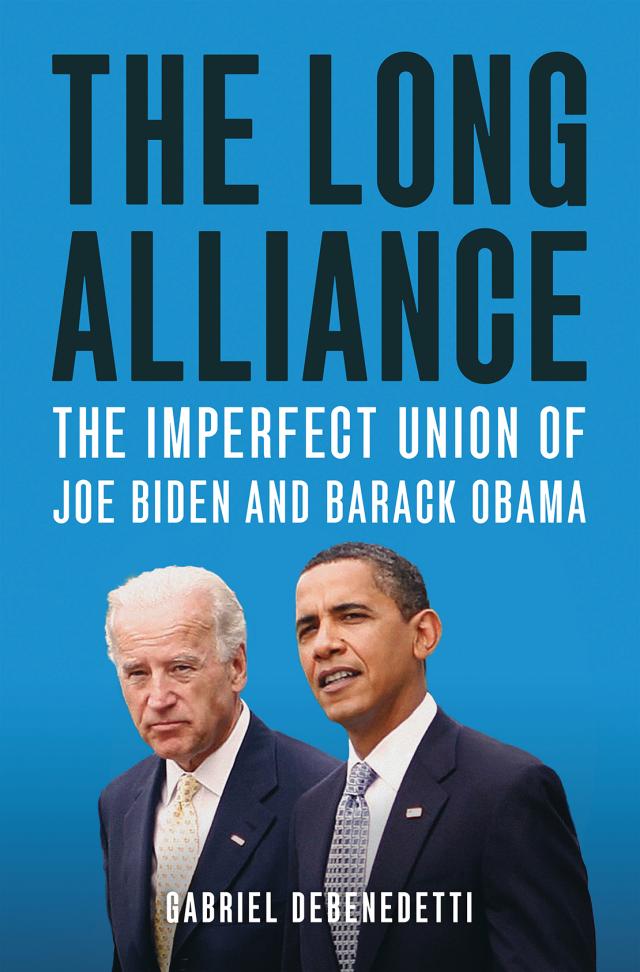


This had all happened fairly quickly, considering that about half a year earlier he appeared to be souring on the whole process, if not the presidency itself. Obama never wavered from his campaign, but in quiet moments his aides found him grousing about the bitterness, repetition, and warped priorities of the stump. This disappointment was a product of the idealism that inspired crowds and volunteers, though it was sometimes a bit much for the people closest to him. (They nonetheless recognized the power of this idealism with voters.)
The flip side was an unbudging self-assuredness that Obama insisted was realism. In private, this could express itself as impatience or dismissiveness of the realities of the job, especially the day-to-day aspects of it that Obama regarded as grimy. At times, he mused that the presidency wasn’t the best job in the world, but the ex-presidency was. This was a grim joke for some of his confidants who still darkly remembered him saying, late at night during one of their first January 2007 strategy sessions at a law firm conference room in Washington, that even if he did win, he knew a president could only control about 15 percent of his agenda. As late as that December, when he sat privately with New York City mayor Michael Bloomberg, he spent part of the meeting asking Bloomberg about the mayoralty, confiding that if he didn’t win the presidency he might still return to Chicago to run for governor or maybe even mayor.
Now, though, he’d clearly given thought to what kind of sidekick he’d want in the Oval Office. In separate private chats with Jarrett and Axelrod, one name kept surfacing. On the flight back to Chicago from early May’s North Carolina primary, a victory that had finally convinced even the cynics in Obama’s orbits that he would really beat Clinton to the nomination, he listened as Axelrod said they should be thinking seriously about how to tackle the running-mate question. I think Joe Biden might be the right guy, Obama replied, and rattled off his reasoning. He’d been pragmatic, not emotional, when thinking it all through: Obama and Biden may not have been close at all, but he didn’t know many of the possible picks all that well. Biden had been good and disciplined—if not a headline grabber—in the primary debates, but he also had decades of Washington experience that Obama lacked and could use at his side as he dealt with Capitol Hill, in particular. Plus he seemed to appeal to white ethnic voters who’d so far been wary of Obama. This was all why purveyors of conventional wisdom thought he’d make a good Number Two, and for once Obama agreed with the DC chattering class. “I think he could be the one,” Obama said—a much more considered answer than Axelrod had been expecting before they’d started any formal process.
But Obama also insisted that he hadn’t made up his mind, that the Delawarean was simply high on his mental list, and that he wanted a real, rigorous procedure to make the decision. Plus, he started grumbling half-jokingly, he wasn’t even all that enamored with the idea of having a running mate in the first place, since he was pretty sure he was on track to win and didn’t much like the idea of being bogged down with someone else’s baggage. Why would he want his legacy intertwined with someone else’s for all of history? “Did you find our magic bullet candidate yet?” he sometimes said with a smirk to Plouffe, as the campaign manager later remembered. “Can we get a constitutional exception, and not pick anyone?”
The core campaign team met in Chicago in June to seriously consider their options for the first time. There, they discussed pros and cons of every Democratic governor and senator, a handful of House members, business and military leaders, and some mayors, identifying an initial list of twenty possibilities that soon ballooned to thirty. Yet few of these were realistic options, since the criteria for selection were already clear: first, they must do no harm to a ticket that looked well positioned to win. Axelrod also reminded the group of his maxim that a politician’s greatest strength was his greatest weakness, as well, and that Obama’s youth and promise of change meant he would be wise to choose someone who could balance those qualities, which meant someone with literal gray hair and experience in both Washington and abroad. These suppositions were backed up by findings from hush-hush focus groups of high-value voters in top-tier battleground states like Ohio, and even-more-secret polls that ran potential VP pick names by swing voters.
The early stages of the process were made especially fraught by the question of how to handle Clinton, some of whose more upset voters were still threatening to withhold their vote in November. When the candidates met at Feinstein’s, Obama had told Clinton he wouldn’t make her go through the unpleasant vetting process unless he decided she had a serious chance at the job. Back in Chicago the idea of including her on the ticket as a unity gesture was a nonstarter to many aides who would take years to get over the primary. The Obama team settled on keeping Clinton’s name in the mix as they leaked and floated options, but she wasn’t taken seriously as a possibility, a fact that political insiders decoded when Chicago announced that Patti Solis Doyle, whom Clinton had acrimoniously fired as her campaign manager a few months earlier, would run the eventual running mate’s operation, no matter whom Obama chose.
It didn’t take long for the campaign team to settle on a shortish-list of six after ignoring some suggestions—Harry Reid floated Bush defense secretary Robert Gates and Ted Kennedy urged Obama to consider Kerry—and ruling out Dodd when he started facing uncomfortable questions about whether he’d received preferential treatment on personal loans from mortgage lender Countrywide Financial. (He denied it, but Obama didn’t want to take the risk and also removed longtime DC insider James Johnson from his VP selection committee for his more serious ties to the scandal.) Clinton remained, at least in theory, alongside Biden, Bayh, Richardson, Virginia governor Tim Kaine, and Kansas governor Kathleen Sebelius.
Still, even early in the summer, this group was really much smaller. This was clear even to its members. When Obama called Richardson to ask if he’d agree to be vetted for further consideration, the New Mexican replied, “Come on, you’re going to pick Biden. Why are you going through this?”
* * *
Biden, though, was also skeptical. He was in an Amtrak car on his way from Washington to Wilmington in June the first time Obama called to ask if he wanted to be considered. Biden wasn’t surprised by the call, and he turned Obama down. No, he said, he was sure he could do more good by running the foreign relations committee. He believed it, but he was also—understandably—tired of the national political circus after two failed campaigns that had ended in embarrassment. Plus, he’d been around DC long enough to know the vice presidency could be a thankless job unless its holder was careful and the president cooperated. He didn’t know Obama well enough to have a sense of how it would go, and he at least knew what he would be getting back in the Senate. Obama, though, countered that he was serious about Biden, and that he needed an answer. He urged him to think about it. When Biden again refused, Obama asked him to at least talk to his family first, knowing nothing big happened in BidenWorld without Jill’s and Beau’s input anyway.
To the people who’d spent the most time with Obama in recent years, his persistence with Biden was perplexing. Obama still sometimes worried aloud about Biden’s loquaciousness and ego. Was this guy really the right person to consistently represent me and my winning brand of smart, cool change? And to the aides who’d spent two years with Obama in the Senate, it was as if he’d forgotten all the condescension and dismissiveness he’d once detected from Biden, too.
As DC embraced the guessing and tea leaf reading about the VP selection, its favorite quadrennial parlor game, Rouse asked Obama outright about his apparent about-face on Biden. Obama replied that they’d gotten to know one another on the campaign trail, mostly on the sidelines of multicandidate events, and that he’d enjoyed talking to Biden casually behind the scenes. Mostly, though, he was impressed by Biden’s performance in the debates, in which his seriousness and lack of interest in flash stuck out from his unremarkable presence in the rest of the campaign. Obama thought Biden had been winning the debates repeatedly, even if few people noticed, because he obviously only defended positions he felt strongly about and, unlike Obama himself, didn’t feel the need to clear his throat with context and caveats for a minute before launching into his answers. Biden was also clearly genuine in his affection for real people like the Scrantonians he’d grown up with, Obama thought, after witnessing him talk about economic policy. This meshed well with his preexisting conviction that Biden’s insistence on going home every evening out of dedication to his family was a redeeming quality no matter how long he droned on in committee meetings.
Obama was banking on the family to turn Biden around. A few hours after his call with Obama, Biden gathered them to discuss whether he should reconsider and agree to be vetted. To his surprise, Jill and his children thought he should take it seriously—he might be able to help Obama in important swing states, and as VP he could do a lot abroad while still traveling less than if he were secretary of state, a possibility that had been worrying Jill in particular. But it wasn’t until he spoke with his ninety-year-old mother, Jean, that he was jarred out of his ambivalence. Let me get this straight, she said. This man has the chance to become the first African American president, he wants your help, and you’re going to turn him down? she asked, incredulously. Jill chimed in, urging him to grow up. Still, he couldn’t decide, and he kept calling individual family members to talk it all through. They back-channeled on a strategy to convince him, carefully sequencing their arguments and their conversations with him. They were relieved when he finally consented to be vetted. Still, some family members harbored suspicions that he was being overly emotional and sabotaging his own chances.
* * *
Biden did have real doubts, but not about himself. Self-assurance had never been a problem for him, though it came from a different place than Obama’s own prodigious confidence. They hadn’t discussed this, but the pair had in common a set of semiembarrassing stories in which they both, as young men, told their would-be in-laws about their presidential ambitions only to be greeted with disbelief. Yet if Obama’s self-belief came from his vague sense of destiny and hope in the American people, Biden’s bluster was borne of repeated insistence in his childhood and early adulthood that he was good enough, and smart enough, despite his blue-collar background, his somewhat debilitating stutter, and, especially, his lack of an Ivy League education. He often told the story of when he told his mother he was going to meet the Queen of England and Jean replied, “Don’t you bow down to her,” just like she told him, “Don’t you kiss his ring,” when he was set to meet the pope. “You’re a Biden. Nobody is better than you. You’re not better than anybody else, but nobody is better than you.”
And even though he’d entered 2007 musing about how attractive Obama would be as a vice presidential possibility, he knew it was a realistic option for himself, too. The thing was, he’d seen seven presidents and eight veeps come and go since he got to DC, and he knew how hard it was to be an effective or memorable VP given that the role’s power relies entirely on the president’s conception of it. Does anyone even remember who Lincoln’s vice president was? Biden liked to ask, rhetorically. So as he’d made the rounds talking to allies and friends about his 2008 campaign before announcing it, he shut the line of conversation down quickly when Bill Bradley, the former senator and presidential candidate, predicted Biden would end up as the next Number Two.
Instead, some members of Biden’s staff came to believe he was really running to be the next secretary of state after getting close to the job in 2004. That gig was more autonomous, he would remind aides during their interminable internal debates over which position was more powerful. This posture peeked out in public, too, sometimes in eyebrow-raising ways: just before the caucuses in Iowa, he urged voters to consider whether their preferred candidate would be “smarter than their secretary of state,” which seemed to imply that he thought he’d be that top diplomat, since he probably wasn’t going to win the presidency. But mostly, he wavered—in part out of a calculation that he would be wise not to be seen openly angling for the job, and in part out of his remaining thought that he would, in fact, be better off back in the Senate. “Absolutely, positively, inequitably, Shermanesquely, no,” he told a Wilmington reporter. “I will not be anybody’s secretary of state in any circumstance I can think of. And I absolutely can say with certainty I would not be anybody’s vice president, period. End of story. I guarantee I will not do it.” After dropping out, he insisted yet again that he’d have more influence on his committee than as VP.
Yet in private, he couldn’t stop himself from holding out some hope. At one Washington fundraiser to pay off remaining debt from his campaign in March 2008, a donor asked if he’d be willing to be considered as secretary of state for either Obama or Clinton. “I don’t want to be considered,” he replied, “I want to be called.” His pride wouldn’t allow him to grovel for the job, but he was pretty sure he was in position for it anyway. In one sense, he was lucky, and never found out: Clinton’s campaign, which was notorious for measuring drapes it had no business even thinking about, had secretly put together short lists for both the vice presidency and Foggy Bottom, and Biden wasn’t on either.
Still, the VP question lingered, and as he kept getting mentioned in the loose speculation, his major concern with the job became more relevant. He hadn’t worked for anyone since just after he left Syracuse’s law school. It seemed crazy to start now, after four decades as his own boss, especially since he’d have to answer not only to a candidate nineteen years younger than him, but also to a coterie of strategists and number crunchers who fancied themselves brilliant world-changers after beating Clinton. His suspicions of the people around Obama only increased when, deep into the vetting process, the lawyers in charge started asking about his son Hunter’s business entanglements, which Biden found invasive and overly personal, and also a sign that he wouldn’t be fully trusted.
But the process continued, and Biden’s competitive interest increased. At his final meeting with the vetting lawyer in his Senate office, Biden paused at the final question: Why did he want to be the vice president? Biden, half-truthfully and half-strategically, replied that he didn’t. Greeted with surprised silence, he continued, with a verbal shrug. He didn’t, he said, but if it was what Obama thought was needed, he’d do what was best.
Obama had, in recent months, been growing on him, too. Biden had been impressed by the way Obama’s campaign had inspired and marshaled an army of young volunteers and then swamped Clinton and the party machinery. But he was especially taken with Obama’s dexterity as a campaigner. Still, it was only in March 2008—more than three years after they’d met—that he fully bought in.
Biden watched from afar as Obama delivered a speech in Philadelphia about race in America within the context of his candidacy after news outlets revealed inflammatory statements made by his Chicago pastor, the Reverend Jeremiah Wright. (Most infamously, Wright had said “God damn America” for “killing innocent people” and argued “America’s chickens are coming home to roost” after the 9/11 attacks.) The address was universally treated as a major moment in the campaign, grappling as it did with the legacy of slavery, racism, faith, and systemic inequality in thirty-eight gripping and aspirational minutes. “Race is an issue that I believe this nation cannot afford to ignore right now. We would be making the same mistake that Reverend Wright made in his offending sermons about America—to simplify and stereotype and amplify the negative to the point that it distorts reality,” Obama said. “Contrary to the claims of some of my critics, Black and white, I have never been so naive as to believe that we can get beyond our racial divisions in a single election cycle, or with a single candidacy—particularly a candidacy as imperfect as my own. But I have asserted a firm conviction—a conviction rooted in my faith in God and my faith in the American people—that, working together, we can move beyond some of our old racial wounds, and that in fact we have no choice if we are to continue on the path of a more perfect union.”
Once it was over and he got his hands on a transcript, Biden sent it to his closest aides, remarking that the content was beautiful, that it was obvious Obama had written it himself—high praise coming from Biden, who’d grown extra-attuned to the authenticity of campaign speeches since 1987—and that his delivery had been “incredibly” impressive. On the phone with one longtime advisor, he tried describing it, but words failed him. “Boy, this guy is…” he started, but his voice—saturated with admiration—trailed off.
* * *
By early August, Obama had narrowed down his list to Biden, Bayh, and Kaine, with Sebelius’s name still floating on the outskirts of the conversation, and he scheduled secret one-on-one interviews with the trio of finalists.


