

Under a Wild Sky, page 42


168After repeatedly promising him his pay Ford, John James Audubon, page 111.
168Lucy, who’d anticipated this Ibid.
168Audubon thought he was Ibid., page 112.
169He was in command of a large flatboat Corning (ed.), Journal of John James Audubon, 1820–1821, page 16. Audubon’s opinion of Captain Aumack varied, and not long after the date of this entry he had a falling-out with Aumack. Except as indicated below, the balance of the account of Audubon and Mason’s journey downriver and their first year in New Orleans—comprising the bulk of this chapter—is taken from Audubon’s journal. Quotations and significant events are individually cited by page number in the Corning edition.
169Late in the afternoon of October 12, 1820 Ibid., page 3.
170Audubon persuaded Mason Ibid., page 12.
172The meeting of the Two Streams reminds me Ibid., page 30.
172One morning when it was too rainy to hunt Ibid., pages 42–49.
173Ever since a Boy Ibid.
176The sleekest and most deadly Bull and Farrand, The Audubon Society Field Guide to North American Birds, Eastern Region, page 470.
179New Orleans was the fifth-largest city Richard, Louisiana, page 49.
179The city was also a principal immigration point Ibid.
179Almost incomprehensibly, a few of these free blacks Ibid.
179Quadroon balls were popular events Ibid., page 48.
180The Mississippi River between New Orleans and Natchez Ibid., page 49.
180One bit of gossip hinted Arthur, Audubon, pages 300–304.
181He seemed a steadying and cheerful influence Audubon to Lucy Audubon, May 24–May 31, 1821 (American Philosophical Society). This is the long letter that also included Audubon’s journal excerpt regarding the mysterious Ms. Andre.
181But sour feelings were never Corning (ed.), Journal of John James Audubon, 1820–1821, page 116.
181One day as he walked down a back alley Audubon to Lucy Audubon, May 24–May 31, 1821 (American Philosophical Society).
183In a long letter to Lucy Ibid.
183Weary and losing weight Ibid. Audubon was, among other things, attempting to respond to a series of complaining letters he’d received from Lucy that spring.
183Her father had recently died Lucy to Euphemia Gifford, April 1, 1821 (Princeton University Library).
184“[F]or the last year” Ibid.
184That same spring, Lucy was writing Audubon to Lucy Audubon, May 24–May 31, 1821 (American Philosophical Society).
184Her letters, he wrote in his journal Corning (ed.), Journal of John James Audubon, 1820–1821, page 120.
185“Wert thou not to give me hints” Audubon to Lucy Audubon, May 24–May 31, 1821 (American Philosophical Society).
185In June of 1821 Corning (ed.), Journal of John James Audubon, 1820–1821, page 159.
187Audubon and Mason went back downriver Ibid., pages 197, 200.
188After weeks of meeting one boat, then another Ibid., page 223.
188Lucy got work as a governess Ford, John James Audubon, page 134.
188Lucy and the boys joined him at Natchez Ibid., page 135.
189Audubon gave Mason some paper and chalks Herrick, Audubon the Naturalist, vol. I, page 321.
189The woman, Jane Percy, lived on a plantation Ford, John James Audubon, pages 136–38.
189In better days, when business was good Personal communication, Don Boarman, museum curator at John James Audubon State Park, Henderson, Kentucky. The museum holds all eight volumes of American Ornithology owned by Audubon. The first six were evidently purchased on a trading trip in the south, and bear the inscription “1816 Louisiana.”
189Audubon attributed this unwillingness Corning (ed.), Journal of John James Audubon, 1820–1821, page 122.
189When George Ord was elected to Rhoads, “George Ord.” Cassinia: Proceedings of the Delaware Valley Ornithological Club, No. XII, 1908.
190In New York, to which he’d fled Ford, John James Audubon, page 148.
191After a slow bird-watching detour Ibid., pages 149–52.
191A skiff delivered him ashore Herrick, Audubon the Naturalist, vol. I, pages 345–46. Herrick, along with virtually all of Audubon’s subsequent biographers, accepts this early journal account of Audubon losing his way in the woods as a description of his return to Lucy in 1825, after his long visit to Philadelphia. Alice Ford, however, believes this is instead the story of his return to Lucy after his nearly three-year absence in England and Scotland several years later. Ford cites Maria Audubon’s bowdlerized version of the journals as the main authority on this point, and I will grant that she may be right in doing so. However, Lucy changed employers during Audubon’s British sojourn, and when he returned she had moved to a new house, the location of which would have been vague to Audubon if he knew it at all. The fact that he struck out at night, thinking he would find his way home in the rain and darkness, I think, argues that this was his earlier return from Pennsylvania, when he was going back to Beech Woods. Suffice it to say that, in both homecomings, Audubon’s long absence made him eager to complete his journey and that husband and wife greeted one another each time with profound emotion.
191Audubon was astonished to learn Ford, John James Audubon, page 154.
191One evening, he instructed a class Buchanan, The Life and Adventures of John James Audubon, pages 98–99.
192On hot afternoons, the Audubons would ride together Streshinsky, Audubon, page 155. Audubon discreetly recalled his happiness at watching Lucy bathe her “gentle form.”
192Some field notes that Audubon had mailed Audubon to Charles-Lucien Bonaparte, January 12, 1825 (American Philosophical Society). (The society has a collection of microfilm copies of Bonaparte’s correspondence. The originals are in the Bibliothèque, Museum Nationale d’Histoire Naturelle in Paris.)
192Thinking he was speaking confidentially Ford, John James Audubon, page 158.
192Haines—rather stupidly, the prince said Ibid.
192Visiting a nearby pond Audubon, “Observations on the Natural History of the Alligator.”
192Audubon had an equally dicey experience Ford, John James Audubon, page 155.
193In the spring of 1826 Ibid., page 159.
193Lucy, supportive but perhaps irked Ibid.
193Having some time before the ship was ready Ford (ed.), The 1826 Journal of John James Audubon, page 16.
193He got in to see the governor Ibid., page 17.
193Audubon had seen Nolte on the street Corning (ed.), Journal of John James Audubon, 1820–1821, page 158.
193By far the more valuable of the two Ford (ed.), The 1826 Journal of John James Audubon, page 18.
193On May 17, 1826 Ibid., page 20.
194Once clear of land Ibid.
194While he stayed up on deck Ibid., page 21.
13. EDINBURGH
195It was raining when Audubon stepped onto the wharf Ford (ed.), The 1826 Journal of John James Audubon, page 81. As in the preceding chapter, a surviving Audubon journal is the principle source for much of the material in this chapter. Except where indicated otherwise, the story related here is from the 1826 journal, but I have provided selective individual citations to it for significant quotations and important episodes. Rightly skeptical readers will note many instances in which I have characterized Audubon’s thoughts and feelings. This is possible because the 1826 journal—a remarkable document—is highly revealing as to Audubon’s state of mind. Depressed and alone in a strange country, Audubon confided his innermost emotions to his journal, a record that, if anything, is more dramatic and subjective than any representation I have made of its content.
197Several times as he walked through town Ibid., page 85.
198The Rathbones, both Richard and William Ibid., page 82. This information is not, strictly speaking, part of Audubon’s journal. Rather it comes from one of the many invaluable biographical notes supplied by Alice Ford throughout the text of the journal.
199One of these was William Roscoe Ibid., page 96.
199On Monday, July 31 Ibid., page 111. Among the throngs in attendance at the exhibition were some critics, a title Audubon said possessed a “savage” aspect.
200Edward Stanley—Lord Stanley—was in a few years Fisher (ed.), A Passsion for Natural History, pages 45–51.
200As a young man he had studied Buffon’s work Ibid.
200When Stanley was introduced and led into the room Ford (ed.), The 1826 Journal of John James Audubon, page 121. Audubon said that, given the quantity of hair he possessed, this effect was truly startling.
203As he walked along the banks Ibid., pages 157–58.
204Suddenly Audubon put down his pen Ibid., page 147.
205Still, he was disappointed Ibid., page 169.
205He wrote to Victor, who was still in Louisville Audubon to Victor Audubon, September 1, 1826 (Beinecke). Two large collections of the letters Audubon wrote from 1826 onward are in the archives of the Houghton Library at Harvard University and the Beinecke Rare Book and Manuscript Library at Yale University. A substantial selection—but not all—of these same letters was published in a limited, two-volume set edited by Howard Corning for the Club of Odd Volumes in 1930.
205In a letter to Lucy Audubon to Lucy Audubon, September 1, 1826 (Beinecke)
206Manchester was much more crowded Ford, The 1826 Journal of John James Audubon, pages 192–93.
206Now he was much relieved Ibid., page 199. Audubon, elated at finally getting mail from home, said that however “dull” Manchester was, it now contained “at least one happy individual.”
206The actual plan, which had taken some time to coalesce Ibid., pages 205–8. This portion of the journal was actually a copy of a letter to Lucy, dated September 17, 1826, which Audubon presumably sent. According to Alice Ford, letters such as this, which she has interspersed in chronological order throughout the text, were copied into Audubon’s journal by a scrivener he hired for that purpose.
206Recognizing that this last undertaking implied Ibid.
207If, for some reason, she could not come Ibid. This odd suggestion that Lucy might not join him in England—and that he was prepared to support her wherever she wanted to live—seems to have come out of the blue. Perhaps they had discussed the possibility of separation previously, but the subject had never come up in Audubon’s journal entries or letters until now. It would remain an often unstated subtext of their communication for the next couple of years.
208A book made from his life-sized paintings Ibid., pages 232–34. Audubon wrote in his journal that he planned to follow Bohn’s advice. As Alice Ford notes, parenthetically, Audubon in the end pretty much ignored Bohn’s advice. Bohn was certainly correct that Audubon’s drawings, if bound into volumes at full size, would be enormous books. A standard, leather-bound volume of the original double-elephant folio stands nearly four feet tall, is over two and a half feet wide, a couple of inches thick, and weighs in at around fifty pounds. Bohn’s worry that such volumes would, as he put it, “encumber the table” proved groundless, as many owners had special cabinets build to house The Birds of America.
210Edinburgh, Audubon declared, was Ibid., pages 301–5.
210The city was arranged on two parallel hilltops Personal observation. In March 2003, I visited Edinburgh to conduct research on Audubon’s time there, and to explore the city itself, which is not very much altered in its general appearance from the 1820s. At the special collections department of Edinburgh University Library, I photocopied an 1831 map of the city—produced for the Post Office and engraved on steel by William Home Lizars—which proved perfectly serviceable for navigating the streets of Edinburgh today.
210Home to artists and architects Cosh, Edinburgh, pages 56–57.
210The origins of the modern age Ford (ed.), The 1826 Journal of John James Audubon, page 301. Audubon said that as his coach passed near Scott’s home, he strained for a glimpse of it.
210He had breakfast at ten Ibid., pages 303–4. The boardinghouse on George Street, operated by Mrs. Dickie, was a four-story stone building that stood on the corner of the square. This location is now occupied by a modern building housing the Bank of Scotland.
211He hinted darkly that he now and then worried Ibid., pages 305–6.
211Named for Jameson’s mentor From Minutes of the Wernerian Society, vol. I
212Audubon got a brusque reception Ford (ed.), The 1826 Journal of John James Audubon, page 304.
212The “Sir” was William Jardine “Note.” Dover Pictorial Series: 286 Full-Color Animal Illustrations from Jardine’s “Naturalist’s Library,” page iii.
212He wrote to Victor at Louisville, telling him how fine Ford (ed.), The 1826 Journal of John James Audubon, pages 319–23. Another letter, this one dated October 29, 1826, was recorded in the journal by Audubon and presumably copied and sent. In it, Audubon reasserts his contention that Edinburgh is the most beautiful city in the world.
213He’d even had two of his paintings exhibited Bryan, Bryan’s Dictionary of Painters and Engravers, vol. II.
213But his father’s death a year later Ibid.
213Lizars had a thriving business Mr. [?] Greville to William Jardine, January 6, 1829 (Edinburgh University Library, Special Collections).
215One of the people who called that day Ford (ed.), The 1826 Journal of John James Audubon, pages 335–36.
216There was again discussion as to how big Ibid., page 347. Another journal letter, this one to William Rathbone in Liverpool, dated November 24, 1826.
216Set in the middle of the enormous sheets Audubon to Lucy Audubon, December 21, 1826 (Beinecke).
216The Birds of America, it stated Herrick, Audubon the Naturalist, vol. II, pages 386–88. Audubon issued several versions of the prospectus as the project moved forward over the years. But these essential elements were featured in each one. Herrick here reproduces the 1828 prospectus.
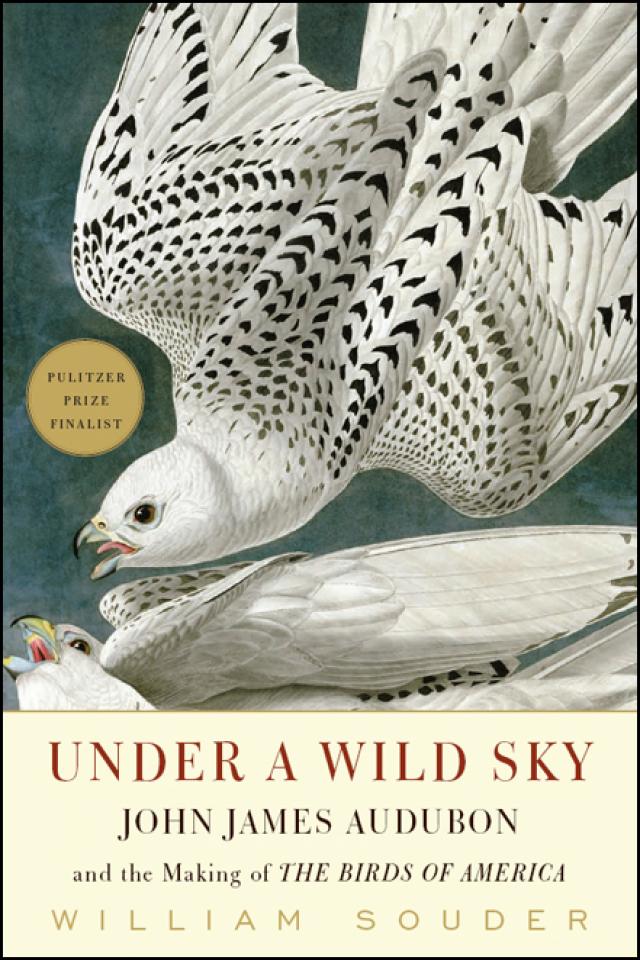
217The way his luxurious hair was pulled back A portion of Syme’s portrait appears on the cover of this book.
217One who was then popular was “Charles Waterton: Naturalist,” pages 1–40. This pamphlet, from 1880, was written by James Simson, and is at the Edinburgh University Library Special Collections department.
218Instead, he wrote about the turkey buzzard “Minutes of the Wernerian Society,” December 16, 1826 (Edinburgh University Library Special Collections department).
218It faced the street Personal observation. It was still called “Edinburgh College” when Audubon visited. Today, Edinburgh University sprawls well south of the original building, now commonly referred to as “The Old College.”
219The Wernerians met in a long room Ford (ed.), The 1826 Journal of John James Audubon, page 396.
219When Audubon walked in Ibid.
219It was substantial, occupying thirteen typeset pages Audubon, “Account of the Habits of the Turkey Buzzard.”
219While it is the case that most bird species Sibley, The Sibley Guide to Bird Life and Behavior, page 36.
220The minutes from the meeting instead “Minutes of the Wernerian Society,” December 16, 1826 (Edinburgh University Library Special Collections department).
220At the conclusion of the session Ibid.
220Just before Christmas of 1826 Audubon to Lucy Audubon, December 21, 1826 (Beinecke).
221Audubon thought the boys would benefit Ibid.
221Instead, he asked her to tell him Ibid. Who can read between these lines? Audubon suggested to Lucy that she talk the matter over with friends or even with Victor, and to then assess her own feelings and convey them to him. Whatever Lucy was saying in her letters at this time—they are long lost—Audubon clearly got the idea that she was reluctant to join him.
221In late November she’d written her cousin Lucy to Euphemia Gifford, November 29, 1826 (Beinecke).
222Audubon continued to attend meetings “Minutes of the Wernerian Society,” January 13, 27, 1827; and February 10, 24, 1827 (Edinburgh University Library Special Collections department).
222The discussions at these sessions Ibid.
222On January 13, “John James Audubon Esquire of Louisiana” “Minutes of the Wernerian Society,” January 13, 1827 (Edinburgh University Library Special Collections department).
222At the same meeting, Audubon delivered Ibid.
222The group found the paper Ibid.
222But two weeks later “Minutes of the Wernerian Society,” January 27, 1827 (Edinburgh University Library Special Collections department).
222Two more weeks after that “Minutes of the Wernerian Society,” February 10, 1827 (Edinburgh University Library Special Collections department).
222He started off by suggesting Audubon, “Notes on the Rattlesnake.”
224Almost everything in Audubon’s account Klauber, Rattlesnakes: Their Habits, Life Histories, and Influence on Mankind, vol. 1, pages 454–63. Although nearly forty years old, Klauber’s book is regarded as an authoritative classic.
224Rattlesnakes can climb trees Ibid. Additionally, I am indebted to Dr. Harry W. Greene, professor of ecology and evolutionary biology, Cornell University, who confirmed the numerous errors in Audubon’s account.
224The Wernerians were oblivious Ibid.
224It was suggested then Ibid. Klauber reports this conjecture and also tacitly endorses it. But, for the reasons given in the text, I simply cannot believe that this was a case of mixed-up field notes. With or without notes, no one having spent as much time in close field observations of wildlife as Audubon had would have misremembered this episode. Whatever the case, it is ironic that so much enmity toward Audubon was focused on the very animal that engendered so much fear and so many fanciful notions.
224For one thing, Audubon also reported Audubon, “Notes on the Rattlesnake.”
225Audubon had gotten word that Charles-Lucien Bonaparte Ford (ed.), The 1826 Journal of John James Audubon, page 376.
225In late December, he’d finally received a letter Audubon to Lucy Audubon, December 22, 1826 (Beinecke). This letter was actually appended to the one dated just one day earlier.
225Audubon, always concerned that he remain Ibid.
225He’d written to Bonaparte as soon as Audubon to Charles-Lucien Bonaparte, August 31, 1826 (American Philosophical Society [Bibliothèque Nationale de Museum d’Histoire Naturelle]).


