

Operation Ivy Bells, page 4
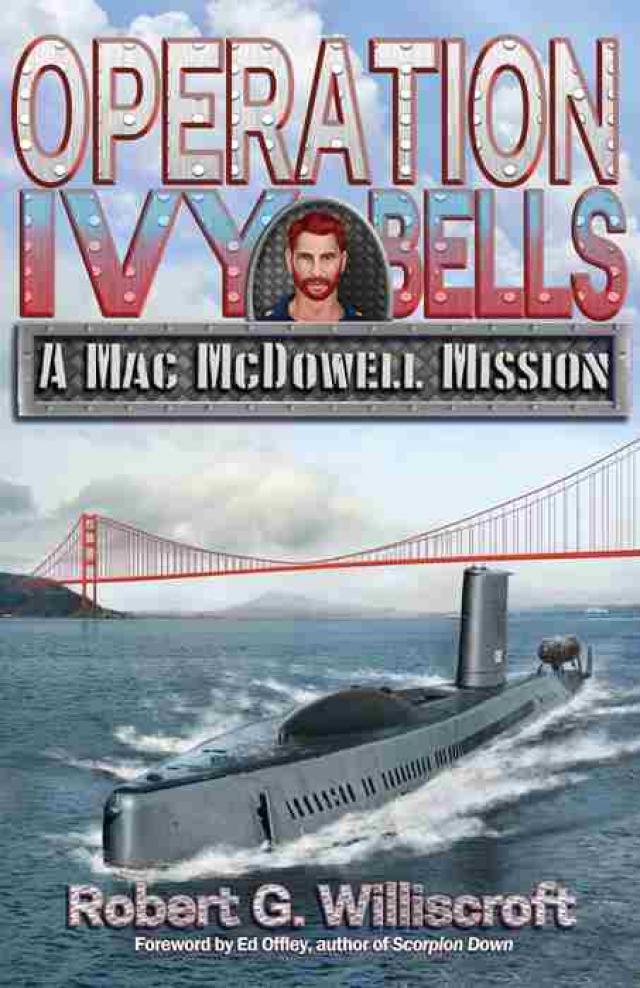


Chief Struthers want back to whatever he did before he nearly killed us. I felt a bit sorry for the guy, but diving to a thousand feet leaves no room for error. You don’t get second chances, at least not very often.
Oh yeah. They gave me a medal for my “heroism” in the DDC. Heroism, my ass. I should have figured things out in twenty seconds, not three fucking minutes. The Master Chief should have gotten the medal, but he insisted I was the guy. Turned out they almost fired him for not supervising Struthers closely enough, but I threatened to resign if they did anything to him.
I was the hero, so they did what I asked.
CHAPTER THREE
COMSUBDEVGRUONE, Point Loma
My orders read: “TO: LT J.R. MCDOWELL FM: COM- SUBPAC. REPORT TO COMSUBDEVGRUONE FOR DUTY AS OIC TOG.”
I knew COMSUBPAC stood for Commander, Submarine Force Pacific Fleet, and COMSUBDEVGRUONE meant Commander, Submarine Development Group One (where I had trained as a saturation diver), and OIC was Officer in Charge. But TOG – what the hell was that?
I had just completed the better part of a year aboard the USS Pigeon, the Navy’s newest ASR, a catamaran monstrosity of a submarine rescue ship with two saturation diving systems, and mothership to one or both Deep Submergence Rescue Vehicles (DSRVs) – mini-subs used in underwater rescue and other tasks. When I had completed my saturation diving training I was transferred to the Pigeon to put into practice what I had learned in school – and to give the Navy sufficient time to vet my background thoroughly. My new orders signaled that the vetting task was complete.
I strolled up the same hill, past the same flower bed, and into the same carefully maintained, nondescript building I had entered a year-and-a-half earlier when I commenced my saturation diving training. This time, however, the Yeoman at the front desk grinned at me and said, “We just got your final security clearance a few days ago, you know,” he added. “Looks like you’re finally in the system.”
I handed him an envelope containing my records. He then pulled out a file folder from the envelope and stamped the outside and the top page on the left-hand side.
I looked at my watch: Nine thirty.
Out the window a large sailboat moved majestically past the submarine tender USS Hunley on its way to a day of waterborne pleasure off the San Diego coastline. Maybe whale watching, I thought. I could just make out a golden-maned girl in a bright red bikini. I grinned; deck sailors stopped work on the sub tender to pay her homage.
The Yeoman handed my papers back and gestured toward the Marine guarding the door in the opposite wall that I had only glanced through on my last visit. “They’ll take care of you inside.”
I showed my orders to the Marine. He wanted to see my ID. I gave it to him, and he actually looked at it and then at me, and then back at the card, and then at me again. I noticed that his sidearm, a standard service .45 semi-auto, was in an open holster. It and the holster were well used. When the Marine asked me to step back, I didn’t argue with him. I did, and he checked me up and down.
“You’re heavier than it says on the card,” he said.
“Yeah, I know. I’ve been working out.” I was pretty proud of the fifteen pounds of muscle bulk I had added during the past two years.
The Marine grudgingly punched in the code and saluted me as I passed through the door. The room was cool and quiet. Its utilitarian gray walls were broken with opaque windows covered with sound absorbing blinds. I suspected they were barred outside as well.
I handed my package to the Personnelman First Class occupying the front desk.
“TOG,” he said, pronouncing it like “Dog.” “We been expecting you, Lieutenant. Welcome aboard the Test Operations Group!” He stretched out his hand. “I’m Peterson. Everybody calls me Pete.”
I shook his hand, and he grinned at me. “I keep you out of trouble,” he said, and pointed to a gunmetal gray desk in the corner. “That’s yours when you’re in town.”
Pete punched a number on his desk phone.
“Richardson.”
“Lieutenant McDowell’s here, Sir.”
“Send him in!”
Pete pointed down the hall.
“Door at the end,” he said.
As I approached the door, it opened. I recognized the officer holding out his hand. Commander Dan Richardson had been skipper of the Pigeon before my tour. He was one hell of a sub-rescue guy. He had worked himself up through the ranks as a diesel submarine Auxiliaryman. Made E-8 and then Limited Duty Officer, or LDO; one of the best. Too old for nukes, they told him, so they surfaced him to the Navy’s ASR fleet as the Engineer on the USS Sparrowhawk, an aging submarine rescue and salvage ship out of Charleston, South Carolina. He graduated to Executive Officer of the USS Ortolan, the Navy’s newest catamaran monstrosity – East Coast sister ship to the Pigeon. Two years later he assumed command of Pigeon.
“Dan!” I shook his hand.
“Mac! Welcome aboard!” He gestured to a thermos on his desk. “Coffee?”
I nodded. “The way I like my women.”
“That covers the waterfront,” he laughed as he added cream and sugar.
The crusty Commander made himself comfortable in a big well-worn leather chair behind his ancient mahogany desk and gestured to an armchair facing his desk. I sat, sipping my coffee.
“What do you know about Operation Ivy Bells?” he asked, without fanfare.
I shrugged. “Nothing, really, except the married guys tend to get divorced.” I sipped my coffee. “And it’s Mare Island,” I added.
Dan nodded and slid a form across his desk. “Sign your life away,” he said.
I looked the form over. He wasn’t kidding. It seems that if I didn’t destroy the paper I used to wipe my ass, I would face a firing squad, after they hanged and electrocuted me. I signed and shoved it back across his desk. What the hell. I was cleared for Top Secret-SIOP before I got here; how much more secret can you get?
A lot, it turned out.
CHAPTER FOUR
Mare Island Shipyard – Vallejo, California
Two weeks later I found myself standing at the sub-marine pier at Mare Island Shipyard. I could spend all day telling you about this place – not just all day, the whole damn week. It’s incredible.
Mare Island lies across the harbor from Vallejo (you pronounce this va-lay-ho), a few miles north of San Francisco. Most of the piers are parallel to the shore, and when the fleet is in, the sight is magnificent – especially at night. From the piers, the waterfront extends flat for about a quarter mile. Then emerald green hills climb several hundred feet, bejeweled with buildings – some new, and some going all the way back to before World War II. And on the hills, trees everywhere, beautiful, lush, green.
I keep making an issue of green, because except for a couple of months during the winter, the country surrounding Vallejo takes on a golden color, and trees are few and far between. But Mare Island is Green, with a capital G.
All around me I could hear the sound of an active shipyard. The buzz of high-speed saws, drills, and other rotating machinery filled the air. Occasional flashes of high intensity light from welders’ arcs momentarily drew my attention away from the view before me.
Anyway, as I said, I was standing on the pier. I had my seabag parked by my feet, and was carrying my orders in a manila envelope. I had picked up the local newspaper from a vending machine at the station gate. I was resting a bit – no sense stepping aboard in a sweat. I braced my foot on the seabag and flipped the paper open to the headline on page two: HALIBUT – MOTHERSHIP FOR NAVY’S FIRST DEEP SUBMERGENCE RESCUE VEHICLE.
I grinned as I glanced through the story. I had to hand it to the Sub Dev Group PR guys. They had really done a job on this one. Mothership for the DSRV…I loved it!
Since I had just come from an assignment on the USS Pigeon. I knew the DSRV and her support systems, every friggin’ bolt, valve, switch, and rigging. After the nuclear attack sub USS Thresher disaster in 1963, there was a lot of public pressure to make submarines safer. The Navy’s old submarine rescue ships got a lot of press, and their aging McCann Rescue Bells were featured in papers across the nation. Of course, they were useless below about 300 feet, and the submarine had to be intact to use them at all, but they got press anyway.
The Navy came up with something called SubSafe, which was supposed to limit the number of openings to sea pressure in a submarine, and to make it safer in many different ways. While this was going on, a guy named John Craven, Doctor John Craven, came up with a fantastic idea. John had been intimately involved in the search for the Thresher and Scorpion. In fact, he was personally responsible for finding the Scorpion. He was The Man. He had the attention of the Powers-that-Be in D.C. He knew that the Soviets had laid underwater communications cables between their Siberian missile testing facilities through the Sea of Okhotsk due west of the Aleutian Islands to their big naval base at Petropavlovsk Kamchatskiy, and south to Vladivostok. The cables lay in water between 400 and 1,000 feet deep.
Craven’s idea was audacious, to say the least. Since Congress and the public had developed such a keen interest in rescuing downed submariners (pronounced submarine-ers for all you non-bubbleheads), he proposed to create a modern submarine rescue program, replete with a couple of new state-of-the-art catamaran motherships that would carry the little DSRVs that could latch onto a downed submarine and rescue the personnel trapped inside. Furthermore, he proposed to modify several nuclear submarines to act as alternative motherships for these little subs. Never mind that most nuclear submarines operated in waters that were deeper than their crush depth. If a sub went down, it would be like Scorpion, with the Engine Room imploding right through the sub to the Reactor Compartment amidships. Never mind that the DSRVs could not actually operate to the depths of the waters in which the nukes normally operated.
Here is the brilliance of Craven’s idea. All this was an elaborate front. And I do mean elaborate. The guys running the Pigeon and Ortolan, and the submarine motherships, had no idea what was really happening. They bought into the cover hook, line, and sinker. In fact, so had I until my fateful meeting with Dan.
Anyway, the real purpose for the entire operation was to create a genuine excuse for a submarine to put to sea with a DSRV attached to its rear deck. And this really happened regularly, to the tune of carefully orchestrated PR fanfare. What also happened, however, was that another DSRV-equipped submarine put to sea occasionally, except that this DSRV really was a saturation diving chamber designed to look like a DSRV.
The job of these guys was no more and no less than to retrieve pieces of Soviet missile warheads from the ocean bottom at the splash zone of their test site in the Sea of Okhotsk, and to tap into the Soviet underwater communications cables snaking along the bottom through that area.
It was super secret. Nobody knew about it except for a very select few, including the President, SecDef, SecNav, one admiral, Craven, the very small contingent at SUBDEVGRUONE, part of the submarine crew, and the divers. Let me tell you, that’s secret like nothing I had ever experienced.
No wonder I had to wait a year on the Pigeon while they checked every day of my life before I joined the program. No wonder Dan made me sign my life away before telling me about it. Hot dang, I thought, this was some scam!
I looked up from the paper. Nestled against the pier, two subs, the USS Halibut and a modern fast attack nuke, were just visible as the tide peaked.
The fast attack was moored against the pier just ahead of Halibut. It lay low in the water, its bulbous bow dipping below the surface just a few yards forward of its sail structure. Bow planes protruded from the sail, creating two temporary platforms replete with lifelines. Its featureless after-deck disappeared below the water a couple of dozen yards behind the sail, and the rudder and tail structure protruded from the mirrored water surface several yards further back. Nothing on its deck distinguished it in any fashion. It obviously was designed to move sleekly through the ocean realm. It looked like the deadly killer it was.
As submarines go, Halibut was nothing to look at. Her forward deck was flat, in contrast to the sleek curved deck of the fast attack moored ahead of her. Her bow was sharply outlined, like that of a destroyer, but a little more soft and rounded – more like World War II subs. Her prow was designed to cut the water instead of push it aside. A line of louvers just above the waterline ran down both sides from the bow two thirds of the way back to where the after deck dipped abruptly into the water. Bow planes were folded against the bow just ahead of the louvers. The sail protruded from the deck amidships as a narrow, featureless slab. About one-third of the way back from the bow, a hump rose from the deck, like a huge shark’s mouth, a clam-shell opening into the pressure hull below that could handle large objects like the obsolete air-breathing Regulus guided missiles for which it was designed as the launch platform.
A sailor in dress whites, armed with a regulation .45 cal. semi-automatic pistol stood guard where a brow stretched across the gap between sub and pier. He stood at a small podium that held a logbook. A second armed sailor patrolled the length of the deck. They had noted my presence on the pier, but both paid significantly more attention to the waters on the outboard side of the sub.
Far back on the deck, just ahead of where it dropped into the water, what appeared to be a DSRV, but was actually a double-lock saturation diving chamber, was mounted to the deck, so that it looked to be held in place with clamps. In fact, it was firmly welded to the Halibut’s deck. Prominently painted on its side were the letters: DSRV-1. This saturation diving chamber, called the Can by everybody, was forty-nine feet long and eight feet wide. The forward thirty feet, the inner lock, contained two stacked bunks with a total of four beds, a table for eating and recreational activities like cards or chess, and a pressure hatch into the six-and-a-half foot transfer trunk leading to the sub. The transfer trunk had another pressure hatch on the submarine end. It was used to lock into and out of the inner lock from the sub. The inner lock was separated from the outer lock by a bulkhead penetrated by a pressure hatch. The outer lock contained a toilet, sink, and a pressure hatch in the deck to the outside. It also contained the divers’ hot-water suits and other equipment, and their coiled umbilicals suspended on hooks.
I folded the paper and tucked it under my arm, swung my seabag over my shoulder, and walked toward Halibut. As I approached the brow the guard saluted and challenged me.
“May I help you, Sir?”
“Request permission to come aboard. I’m Lieutenant McDowell.” I returned the salute.
I stepped onto the brow and turned right to salute the flag flying on the stern.
“Your papers, Sir.”
He made an entry in his log and then stepped back to a comm box temporarily mounted on the side of the sail.
“Control…topside.”
“Control…aye.”
“I got El-Tee McDowell here, Senior Chief.”
“Roger that. COB’ll be right up.” Meaning Chief of the Boat – the senior enlisted man on the sub – he pronounced the word like corn on the cob.
A head wearing a fore-n-aft cap and sporting a well-groomed red handlebar mustache popped above the forward part of the sail followed by a khakis clad master chief petty officer who stepped over the edge of the sail and climbed down the ladder to the deck. His weathered, craggy face broke into a friendly grin. He saluted and then held out his hand.
“G’mornin’ Lieutenant. Joe Thornton.”
I saluted back, and we shook hands.
“Morning, COB.”
“Follow me, Sir. The Cap’ns waiting.” He took my seabag.
He stood aside while I climbed up the ladder to the top of the sail. I dropped down to the hatch level where I stepped through the horizontal hatch onto the ladder, grabbed the smooth handrails and allowed gravity to pull me down the ladder into the submarine control room. I stepped aside, and my seabag followed, landing with a thud. Then the COB, landing with the finesse of long practice.
The Chief of the Watch was standing by the ladder. He saluted.
“Welcome aboard, Sir. Sam Gunty. Been looking forward to meeting you.”
I returned his salute and we shook hands. I removed my hat.
“How’s that, Senior Chief?”
“We heard about your exploit on the Elk River, Sir. That was some kind of shit!”
“All lies, Senior Chief.” I grinned at him, and followed the COB down the ladder, really a narrow staircase, and forward to the Captain’s cabin. We passed the Wardroom to our right, a comfortable room paneled with simulated wood Formica, built-in maroon Naugahyde benches around a permanent coffee table, and a dining table that could be converted into an operating slab should one be needed while on patrol. The Captain’s cabin was just ahead on the left. The small sign on the door read Commander George Jackson, bracketed by two small gold submarine dolphins.
The COB entered and announced in a clear voice, “Cap’n, Sir, El-Tee McDowell.”
I entered the crowded cabin and came to attention. In the Navy we don’t salute when uncovered.
“Lieutenant J.R. McDowell, Skipper. They call me Mac.”
The Skipper stood and approached me with outstretched hand. He was medium tall, a bit stocky, with a full head of copper red hair and a matching full beard, trimmed to regulation length.
“Welcome aboard, Mac.”
We shook hands.
“Take a load off.” He indicated a leather-like Naugahyde couch across the cabin.
I handed him my papers and lowered myself to the couch. He nodded to the COB who left, closing the door behind him.
“So...you’re the hero of the hour.”
He looked me up and down, and I probably blushed a bit.
“We don’t want any heroics on board Halibut.”
I opened my mouth to speak, but he cut me off.
“No explanations needed. I received a full briefing from Dan…I know what you did…and I’m duly impressed.” His face broke into a warm smile.


