

Operation Ivy Bells, page 33
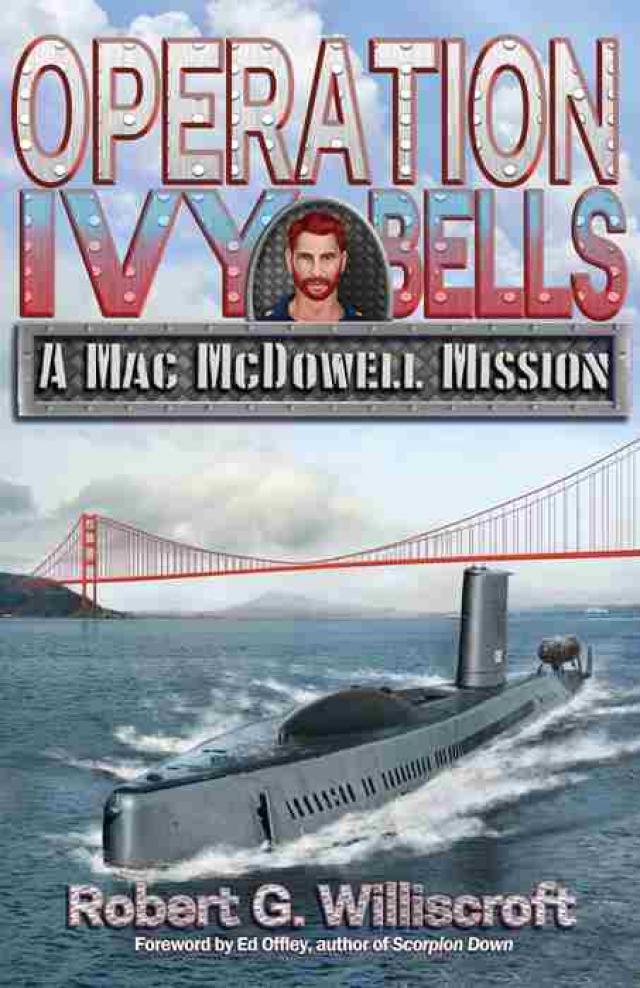


“I know what it is, Ron.” Gorbachev scanned the photos silently for a minute. “How did you possibly obtain these photographs?”
“You know that I cannot tell you that, my friend.” Then Reagan handed Gorbachev the marked charts.
“But…but…even I do not know this information. Not even Sidoro knows this.” Gorbachev sat quietly in his easy chair, obviously contemplating what he had just learned.
“You should understand, my friend, that I have a fast-attack sub within short-range shooting distance of every one of your boomers.”
“Boomers?” Gorbachev’s voice betrayed some stress.
“It’s what we call ballistic missile submarines.”
Gorbachev nodded.
“Open a missile launch door,” Reagan added, “and…”
“But that means we have only our land-based missiles…”
“But we will never launch first,” Reagan told him quietly, leaning forward. “We do not threaten you, Mikhail. Let’s eliminate our mutual land-based threats, and then we both can significantly decrease our submarine launch capability.” Reagan leaned back, placing his arms on the wide chair back. “We will continue to develop SDI, and invite you to every test. When it works, and it will, we will share the technology with you.” Reagan smiled broadly. “I give you my word!”
Following the Summit, General Secretary Mikhail Gorbachev was not assassinated. The world began to see him in a new light. The Soviet Union began to change. Eight months later at the 750th anniversary of Berlin, at the Brandenburg Gate demarking the symbolic division between the free West and the enslaved Soviet Union, President Reagan challenged Gorbachev to “Tear down this wall!”
Winnie & Moo – Vallejo
Halfway around the world, the Horse & Cow was crowded with noisy submariners. It was late, near closing time; many sailors had been there for hours. Nine men crowded around a table near a perpetually vacant World War II submarine-stern-planes-seat at one end of the polished oak bar. The men watched an overhead television with rapt attention as President Reagan issued his historic challenge.
Master Chief Comstock, unmistakable even in his civvies, glanced at the red-bearded Lieutenant McDowell.
“Whadya think, Mac?” He raised his mug.
McDowell stood, and the remaining seven raised their mugs in silent toast, while the roomful of raucous submariners cheered.
“Ivy Bells!” McDowell said with a grin.
Nine mugs clinked together.
Please post a review for Operation Ivy Bells on Amazon.com and Goodreads.com
I really appreciate you posting a review on Amazon and Goodreads. Posting to Amazon.com is intuitive. To post a review on Goodreads.com, go to their website, and become a member if you are not already one. Search for Operation Ivy Bells, and click on the Want to read button under the image of Operation Ivy Bells. Indicate that you have read Operation Ivy Bells, and then you will be able to post a review. Thank you very much for going through this effort!
Excerpt from the First Chapter of
THE STARCHILD COMPACT
by
Robert G. Williscroft
Cassini II in the Asteroid Belt
Saeed Esmail prostrated himself toward Earth, nearly 400 million kilometers back in the direction of the Sun. He felt his stomach heave, and vomited blood on his prayer mat, and wondered aloud why Allah had abandoned him. At that moment he was hit with massive weight, several gees at least, and a twisting, wrenching, totally disorienting surge that made no mental or physical sense. In his weakened state, all Saeed could do was let his body be tossed from wall to wall inside his tent, and hope that he would not tear the airtight fabric. He heard somebody screaming, and then his stomach heaved again, and bloody vomit filled the space around him, flying this way and that, finally collecting on the tent walls. The lights went out, and someone still was screaming, but as the wild gyrations began to settle into a repeating pattern, Saeed realized that he was the one screaming...and he couldn’t stop. He reached for his head, pulling out fistfuls of hair...and he screamed again. He retched, but his stomach was empty, and only a little bit of blood mixed with spittle left his mouth, flying at an odd angle to the tent wall...and he screamed, but quieter now, and screamed some more, but quieter still, until his screams morphed into a frightened whimper as he curled into a tight ball on his prayer mat.
L-4 – MIRS Complex, Four Weeks Earlier
A subdued bong captured Saeed’s attention. A comforting female voice announced, “In five minutes we will pitch over and commence our arrival burn at El-four. Please make sure you are securely strapped into your seat, and that you have stowed any loose items you might have been using during the transit. Remain securely fastened in your seat until the arrival announcement tells you it is safe to unbuckle and move about.”
Saeed checked his harness, and curiously looked out the port. He saw nothing but stars, more stars than he had ever seen, and off to the rear, the beautiful blue marble that the earth had become – praise be to Allah. Then the star field began to rotate, accompanied by a slightly higher pitch from the gyros that penetrated Saeed’s conscious perception. The blue marble moved with the star-studded sky until it was positioned above the capsule’s port bow. While this happened, Saeed felt no movement. His only sense was that the sky had rotated, as if Allah had reached out and rotated the heavenly backdrop with His mighty hand. Weight returned with a popping hiss as the kick thruster ignited for a few seconds burn. As his weight vanished again, the gyros whined, and the sky began to move from right to left. In short order Saeed could see the Moon through the ports on the other side of the capsule. It appeared no larger than it did from the Earth, but the left side was one that Saeed had only seen before in holographs. He could not see the Mirs Complex, although he knew it had to lie off the starboard quarter. Weight returned again for about a minute as the restartable kick thruster slowed their velocity to match the orbital velocity of the Russian Federation-built Mirs Complex as it circled the Earth in the Moon’s orbit, 385,000 kilometers ahead of the Moon.
Several clanks and surges later, Saeed felt his normal weight gradually return as the capsule nestled into its berth in the capsule arrival bay of Ring Kiev, and picked up its rotational speed.
Bong. “Welcome to Ring Kiev,” a bright female voice announced. “It is now safe for you to unstrap and move about. You may disembark to the left side of the capsule. Lavatory facilities are located immediately to the left of the passageway. Your personal belongings will be available in fifteen minutes at the baggage handling dock down the passageway to the right. We know you have choices when traveling off-planet. We thank you for using Slingshot, and hope you had a pleasant trip, and that you will think of us the next time you leave Planet Earth.”
Saeed stepped out of the capsule and hurried to the men’s room. Although the passengers had been warned about not drinking before the flight, and all the passengers had been issued absorbent diapers an hour before leaving Baker just in case, Saeed, as a faithful Muslim, abhorred fouling himself, and had held off, by the grace of Allah, until arrival.
While awaiting the baggage, Saeed checked the construction schedule for Cassini II, and then perused the poster-size diagram of the spaceship. Cassini II was a sixty-six-meter-long twelve-meter-wide cylinder, divided into three modules – a twenty-meter-long crew module, called the Pullman, a twenty-three-meter-long equipment module, called the Box, and the twenty-three-meter-long power module and engine cluster, called the Caboose. The large Iapetus-bound spaceship had been constructed entirely at Mirs, about a hundred kilometers away on the opposite side of the main L-4 complex. All three modules had been built in place.
Over the next several days, Saeed mingled with the Cassini II provisioning crew that verified the final loadout of the Box and the provisions stored in the Pullman. Another, more technical crew completed the final installation and testing of the gas core reactor and the advanced VASIMR engines that would drive Cassini II to Saturn in record time.
On the final day, prior to the flight crew arrival, the transport tug that ferried the provisioning crew to and from the massive spaceship experienced a catastrophic seal failure where the tug attached to the Box. The entire crew was suited up except, apparently, one Saeed Esmail, the newest provisioning crew member. Searchers found bloody pieces of his suit and a few helmet shards on a trajectory that would ultimately have taken them to the Moon. They never could quite figure out what had actually happened to Saeed, but it was obvious that he had somehow managed to shatter his nearly unbreakable helmet, and rip himself and his tough suit to shreds as he depressurized. The conclusion was that an untracked small meteor, two or three millimeters in size, had gotten him, and somehow maybe even caused the catastrophic depressurization of the tug. Saeed Esmail was not the first casualty on the project, although the consensus was that he might have been the last.
After ejecting the bloody suit pieces and helmet shards from a trash lock in the outer bulkhead of the Box, Saeed worked his way into the hiding place that he had created during the loadout wedged against the outer wall at right angles to both lower level accesses. It was an airtight polymer tent of just over five cubic meters, with its own oxygen supply and scrubber. It would keep him alive during the transit to Iapetus. He had the freeze-dried food, water from the emergency supply, and he could dump waste out the waste lock. His Link with its collection of holofilms, books, and the Qur’an would keep his mind occupied for the projected four-month trip. He examined the four burst transmitters that had been included in his life pack. About the size of a softball, each was designed to be ejected through the waste lock, orient itself with the ship to its rear, extend a gossamer parabolic antenna, and do a circular search for Earth, using a very limited supply of compressed gas. Then, using a high-density charge, the device would transmit a series of encrypted bursts until the charge was consumed. Saeed was to deploy the first at the tether extension, the second following the Jupiter boost, the third when they arrived near Saturn. The fourth was for whatever circumstance warranted a special transmission.
In his hideaway, Saeed prostrated himself facing Earth, he hoped, and recited his prayers, adding a personal thanks to Allah for keeping him safe thus far, and on line to accomplish His holy mission.
L-4 – Ring Kiev
Jon Stock stepped out of the launch loop capsule at Ring Kiev and made a beeline for the men’s room. “Those capsules need a latrine,” he muttered to himself as he splashed water on his face. Steely blue eyes stared out at him from the mirror. His hair was gray and cropped short above a craggy, clean shaven face that testified to his fifty years. A lean, muscled 183-centimeter frame belied those same years. He wore the uniform of a U.S. Navy Captain, his left chest bedecked with ribbons. One stood out top center, jet black, framed in silver, with a golden image of Mars attached to the center – the Mars Expeditionary Medal. Jon was the second in command on that first expedition to the Red Planet. When Commander Evans was killed in a freak accident on the surface, he assumed command, saved the mission, and brought the crew back. Now he commanded the international crew of Cassini II on an expedition to Iapetus. They would travel five times further than any human had ever gone before. And what awaited them at their destination might very well change human history forever.
Iapetus... Jon reviewed what he knew about Saturn’s iconic moon. In 2004, the Cassini-Huygens spacecraft flew by Iapetus. Iapetus proved to be unlike any other moon. The surface seemed to display an intersecting grid of geodesic sections, something not normally found in nature. A narrow mountainous wall extended around Iapetus at the equator, so that the moon looked something like a walnut. Iapetus’ density was far too low for a moon that appeared solid, but if Iapetus were substantially hollow, then the numbers worked out just about right. Several of the “geodesic sections” appeared to have collapsed inward, revealing what could be interpreted as complex structures underneath the surface layer. A tall, very narrow structure extended from the surface at one point, like a towering spike a kilometer high. Like the “geodesic structure,” this spike had no “natural” explanation.
In September 2007, the Cassini-Huygens spacecraft made another relatively close transit of Iapetus following the equatorial wall, revealing that the wall consisted of a series of mountains up to twenty kilometers high, following each other in series, none side-by-side. It also supplied further details on a series of equally spaced craters on a line parallel to the equatorial wall and halfway between the wall and the North Pole.
Iapetus had remained a mystery. It was very difficult to imagine that all the things discovered by Cassini-Huygens were natural. The implications of the discoveries being artificial were staggering. As more and more information was gathered by space telescopes in orbit around Earth, on the Moon, and at the Mirs Complex at L-4, the possibility that Iapetus could have an artificial origin became quite real. The initial concept for a human investigation of Iapetus had been put forward by Launch Loop International (LLI), the consortium that had built Slingshot as an entirely civilian operation, followed by several other launch loops around the world. While there was lots of pushing and shoving by the governments of the territories where the launch loops were located, in the final analysis, most people considered a launch loop as something akin to an airline company, and in the end, most of the loops were left in civilian hands, although governments exercised whatever control they wished.
Iapetus, however, was seen by the world’s major players as a potential prize like none other. If Iapetus turned out to be an artifact, eloquent spokespersons from various governments argued, then it belonged to all the people, not just to the greedy corporations that found it. This argument fell on sympathetic ears of a world population that had grown used to being told what to do by benevolent governments. When LLI partnered with their former rival, Galaxy Ventures, to form Iapetus Quest, they found themselves faced with an unusually consolidated array of governments united in their opposition to a privately funded and operated Iapetus operation. The United States, in its still dominant position on the world stage, muscled itself into the leadership slot in the newly recast government owned and operated Iapetus Quest. The international debate had raged on how to structure the crew of Cassini II. Many had argued for a civilian crew, structured however they wanted. Eventually, by negotiated treaty, arm twisting, back-room dealing, and even outright bribery and coercion, an international crew was assembled that represented the interests of the participating nations.
You have just been reading from Chapter One of Robert Williscroft’s exciting Science Fiction novel, The Starchild Compact.
Words of praise for The Starchild Compact
In the not-too-distant future, a spacecraft heads toward Saturn’s moon Iapetus to investigate whether it is an artifact, while a terrorist stows away on board hoping to destroy the science that contravenes the tenets of his religion. All this builds up the tension and suspense in this fascinating science fiction novel. Each part of this book solves and unfolds another mystery, making the book incredibly hard to put down. The research and science are impeccable. I marveled at Williscroft’s imagination in conjuring up this story. I highly recommend this book!
– Marc Weitz, Past President
The Adventurers’ Club of Los Angeles
Hard sci-fi reminiscent of Arthur C. Clarke or James P. Hogan, with a geopolitical twist worthy of Tom Clancy or Clive Cussler.
– Alastair Mayer
Author of the T-Space Series
The Starchild Compact is a compelling read from the first page. Robert has written a fantastically engrossing space mystery that takes place in our own backyard. This book brought me moments of wonder that I had experienced when I originally read Clarke’s Rendezvous with Rama. This does what science fiction is supposed to do: capture our attention, speculate about the wild possibilities, and take us just beyond our previous imaginings. But this book is not all spectacle. Robert tackles some of the more personal issues of space travel that often go overlooked, with a particular eye toward the role of religion in that exploration. It is a masterful hand that can manage the personal and cultural response to the wonders of space and still present those wonders as pure delight. Robert has done that in The Starchild Compact. From the beginning to the end, this is a must read.
— Jason D. Batt
100 Year Starship
Author of The Tales of Dreamside series
In The Starchild Compact Robert Williscroft has said in print what a lot of people (myself included) would like to do about present day threats to our democracy and way of life, but don’t have the means or cojones to do it. He also courageously extrapolates tomorrow’s mores and the religious direction our society is taking. Williscroft tackles these germane and “heavy” issues while crafting a fascinating novel that is hard to put down. I have to admit that I was moved to tears, because I could not be with the space travelers to come back and see Earth’s future. I’m looking forward to both the prequel and sequel.
— Myron R. Lewis, Co-author with
Ben Bova of several SF
stories including parts of
The Dueling Machine
Intrigue and danger blended with today’s societal problems carry the reader on an unexpected journey. An internationally diverse spaceship crew comes together to face their differences and potential dangers on a voyage to Saturn’s moon Iapetus, which they suspect may be an artifact. Their individual quirks and cultural traditions come face-to-face with the reality of a new paradigm with global repercussions when the crew discovers irrefutable evidence that the builders of Iapetus still have a presence in the Solar System. Highly recommended!
– Matthew Severe
Author of The Lariat Thief
Robert Williscroft once again delivers. Readers unfamiliar with Williscroft will be amazed at the depth of his characters and his meticulous science and engineering. The Starchild Compact is a remarkable story of politics, intrigue, science, engineering, and daring-do, driven by imaginative speculation. Nine exceptional men and women from divergent backgrounds undertake a voyage of discovery. Against a backdrop extrapolated from today’s headlines, they struggle to accommodate their differences, while meeting the challenges a hostile universe throws at them as they journey to Saturn’s moon Iapetus, all-the-while dealing with a Jihadist stowaway from the Persian Caliphate, a nuclear-armed world-power in this near future. They determine that Iapetus is an artifact, and discover its origins. They meet the Founders – direct descendants of the Iapetus architects. Who and what the Founders are profoundly affect not just the voyagers and the Jihadist, but all the peoples of Earth.





