

Exposition, page 3
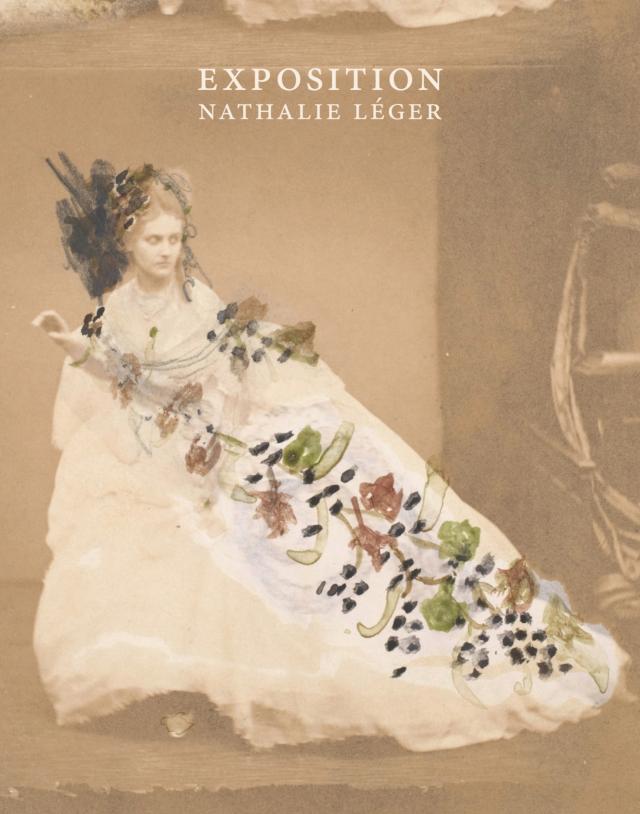


No one knows whether anyone ever saw in this woman’s eyes what Ovid described in The Art of Love: a flickering, “her eyes shooting tremulous gleams, as the sun often glitters in clear water.”
Everything begins with a pitiful remnant, the ruins of an armoire and a little black sitting room packed with objects. The apartment, a courtyard, she said, a filthy old nook in a block of buildings on Rue Cambon, upstairs from the restaurant Voisin. The apartment where she ended her days in November 1899 is engulfed in a murky shadow. Robert de Montesquiou nimbly ascends its little flight of stairs. He doesn’t waste any time in the hovel where the divine Castiglione finished her life; instead he approaches the coffin where she rests, calm at last, white, so pale. “You were right,” a friend said to him. “You were right to keep your distance from her physical deterioration; but you can, you must, see her today, when death has lent her traits, with their bygone serenity, the beauty of marble.” He had long desired to be introduced to her, but that was in the eighties and for some time she had withheld herself from view, so he occasionally loitered nearby, when she lived at Place Vendôme, already reclusive, nearly dead. “It is too late to begin living again when one has already begun to die,” she said. He loitered under her windows, on the lookout, seeking signs of a presence, he spoke of a certain corner, a troubling corner where he was driven by his obsession. “I will never forget the emotion that seized me the day I learned that a woman lived behind those closed-up shutters, on that corner of Place Vendôme, the same woman whose name had become synonymous with beauty.” Now that she is dead, he advances through a hum of lowered voices, the introductions are about to take place, he’s come here without memories, they make room for him, he will finally come to know the principle of all beauty, minus her presence, minus her breath and her gaze. He leans over the coffin.
What did he see? What could he have seen? In women, he admired “the chiseling of cartilage, the lines of the eyebrows, the curvature of the mouth.” What can be seen in a deceased face, a face you can’t even take between your hands? “Careful!” my mother said softly when I leaned over to kiss the brow of the man she had loved. “Careful! He’s cold.” Despite this maternal warning, I pressed my lips down without any sense of what this cold might be, the cold of death, the hardness of a frozen face, lips colliding with the face of a father caught fast in his features, absent, fallen deep down within his own mask, tender as never before (I would never have dared place my lips on him with such devotion), and withdrawn forever, not fleeting, like a presence that you would like to hold on to but that escapes you—the sudden memory of a verse by Rilke lamenting a woman who refused him: “Once I took your face into / my hands. Moonlight fell on it. / Most incomprehensible object / under overflowing tears. / Like something docile, that quietly endures, / it felt almost the way a thing feels. / And yet there was no being in that chill / night, which endlessly eludes me.” No, not this frantic rush toward something that turns away, toward something painfully alive, and which slips away precisely because it is alive, but a face, this face, which is offered completely and yet remains inaccessible, flatly withdrawn, simply placed apart, over there, in death.
There are all of the photographs, five hundred maybe, no one knows for sure, we only know that none of her contemporaries were more photographed than she. In 1913, Montesquiou owned 434 of them. This number is practically inconceivable for the era (many more photos than Mapplethorpe took of Lisa Lyon, and maybe even more than Cindy Sherman took of herself). Montesquiou must have tried to conserve what Nadar for his part wanted to capture, this “impalpable specter, which vanishes as soon as it is noticed, without leaving a shadow on the mirror’s crystal nor a tremor in the basin’s water,” what Proust was also in search of, what literature obstinately gropes for.
The most lifelike portrait is without doubt this clumsy graph, these staggering phrases, a dozen indecipherable lines scrawled on a white sheet during a photo shoot. A caption at the bottom of the page says: “The photographer told me: ‘I’m going to take your photo at your desk. Can you scribble something.’ May 9, 1979.” No doubt a somewhat contrite expression, bleak eyes and labored smile, as is often seen in photographs, Roland Barthes himself, taking the author’s pose: seated at his desk, pen in hand, he pretended to write, randomly tracing a series of characters formed under the gaze of another, lines, a simulated writing, a true portrait of the author condemned to his caricature—a portrait of photography itself, perhaps. No one knows if he kept the photos from this sitting, but he kept the scribblings, a secret and coerced projection of himself left on a blank page in forgotten files and conserved as you would conserve an image, set apart. He who said that photographs had always “failed to capture his spirit,” and that only his identity remained but not his merit, maybe he entrusted this handful of enigmatic lines with preserving a little of what he thought to be his essence. The dates confirm it, he was right in the middle of writing the first draft of Camera Lucida, his book on photography. That day, he set aside his work for a moment to receive the photographer. Perhaps he had just finished the page of the manuscript at the middle of the book that begins with these words: “Now, one November evening shortly after my mother’s death …” He recounts that he wandered through the apartment, empty from that day forth, opened a drawer, and looked at some forgotten photos. He recounts the vain search for a beloved face forever departed. He wanted to overcome his grief, to exhaust it in the flash of recognition, he wanted, he says, to find ecstasy—but what is ecstasy? A blank, a release, a word? (Is it in his body or outside of it? We don’t know.) But suddenly, there she is. It’s a photo of his mother as a baby, a very old photograph, cardboard, the corners were tattered, the sepia print had faded, it was taken in the winter garden of her childhood home, that’s her at the end of a little wooden bridge in a glassed-in conservatory, she was holding one finger in the other hand, as children often do, in an awkward gesture, that’s her, there she is. Radiantly materializing, the image is as tangible as the memory, an instant of complete harmony, everything coinciding with itself in the dazzling summary of the reunion—shock intaglio, the imprint of a sob.
She left a few pages of scrupulous instructions with a lawyer, an old friend, titled “Religion, clothing, burial,” and which were certainly not respected. She left heaps of finery and jewels of great value, she left desires upon desires. For example they were to put the two taxidermied dogs, Sandouya and Kasino, in the coffin with her, one under each foot like cushions, as one sees in the recumbent statues in the Basilica of Saint Denis, “my darlings wearing beautiful black, white, and purple winter coats with my monogram and their names and wearing their collars of roses and cypress,” she writes; they must include the little pillow “already designed and prepared by me,” and so on. As for the desires, they may as well bury them along with her, good riddance, but the valuable personal effects and jewelry, or the last set of finery she chose for herself: “nightgown from Château de Compiègne, 1857, batiste, lace and long striped robe, black velvet, white plush; at my neck, my girlhood pearl necklace, nine strands, six white and three black, the usual necklace I’ve always worn, with the pierced coin and crystal clasp, monogram and crown familiar to any wardrobe mistress; with my arms bare and at my sides, my two bracelets, one onyx with a pearl, one black enamel, star and diamonds, which are elsewhere.” As for all that, her executors had better ideas, no one even considered burying this small fortune with the lady and everything turned up for sale at Drouot in June 1901.
Robert de Montesquiou bought the most important items and images there. He categorized them, displaying some of them in his Pavillon des Muses residence and pasting others into his large notebooks; he named them; for example this photo from 1856, one of the most beautiful, Le Regard: she is seated somewhat low, leaning toward us, attentive, nearly meditative, she seems to be affectionately interrogating whomever she is looking at. Beneath her sweetness, I see the same ferocious, imploring gaze as in a photo of a friend of mine taken by her lover; she was a model, he a professional photographer, and when I was over at her house she took out her photos and talked about them, always returning to that last shot: “I’m looking at him, I’m thinking that I’m going to leave him but he doesn’t know it yet, it’s clear in my eyes that I’m going to leave him, isn’t it? It’s the most beautiful photo of me ever taken.” Years later, as I was leaving the man I had been living with, I suggested that he take a photograph of me. Before the lens, in my mind I tried to look like the image of my friend: imploring eyes, a flash of ferocity, one last ruse to reveal the truth. Look at my face, my name is Might Have Been, I’m also called No More, Too Late, Farewell—lines by Dante Gabriel Rossetti that a handsome young man, Edgar Auber, copied onto the back of the portrait that Marcel Proust insistently asked of him. This will be the most beautiful photo I’ve taken of you, said the man I would leave but who didn’t know it yet.
One evening at a hotel in Pont-Audemer, I found a book forgotten in a drawer of the nightstand, which I read in a single sitting, Mrs. McGinty’s Dead by Agatha Christie: “Why do people keep photographs? Not vanity, not sentiment, not love—perhaps hate—what do you say?”
Now and again, we looked at our family album, and if after closing the album we weren’t too tired of them, these wordless tales that exhausted you like a story that goes on too long, then we would open the big envelopes of loose photos as well. We never lost interest in the unknown faces we came across, places we didn’t recognize, scenes whose banality rendered them indecipherable. But it was the torn photos that always managed to astonish us: a single figure, my grandmother, or perhaps my mother as a child, was all that was left of the image, and we scrutinized the blanched paper along the tear with the same irritation we felt at a story interrupted mid-sentence. The missing person, torn out in a moment of rage or caution, was always a man.
My mother often spoke of her mother’s severity, her indifference to her child’s fears, her vanity, her tyranny. She told me about long evenings spent alone at eight or ten years old, crying into her little handkerchief over a woman who left without looking back, how she kept her handkerchief to give to her mother the next day, folded, moist. In a box covered in old leather, my mother had kept the little notes left for her on the pedestal table in the hallway or on her pillow, just as she’d kept the handkerchief folded around her dried tears. She recounted memories of suffering or humiliation, threats and betrayals. Nothing more, you might say, than the ordinary cruelty of a discontented mother. (The rest of the family, those who didn’t have to suffer her, generally the men, said that my grandmother was “mischievous.”) Nothing more.
Having breakfast with C., described in her circle as “domineering and seductive,” I should stay on guard and keep my distance, but after the deviled eggs, she gives me an amiable look, why I don’t know, the tone of her voice is nearly friendly, she smiles at me. Then suddenly, a painful emotion grabs me by the throat, and I am flooded with a nearly insane joy, my entire body gripped for an instant by this brutal embrace, an instant of devastating happiness. What? What happiness? The happiness of seeing hatred pacified, of escaping destruction, of managing not to do so badly? Of being manipulated by some bitch? Of being accepted by a woman?
Let’s try again. Start over. Is it so difficult to tell a story, to begin with a beginning, to finish with a beginning, to not get bogged down in details, in minor incidents, to skim over the events, pointing to them rapidly like Nadar in his balloon looking down over the city, taking in everything, all at once, but from a distance—and so the story might have gone like this:
in Turin, she’s seventeen, just married, people invite her over, offer her ice cream and candies, ask her to let down her hair; the queen combs her hair at length—or:
her mother exclaims while embracing her: “I’ve begotten a masterpiece!”—or even:
born Virginia Oldoïni on March 22, 1837, people called her Virginicchia, Nicchia, “Darling Beauty,” she became the Countess of Castiglione on January 9, 1854 at the age of sixteen, she kept a diary in French, using a code to record the kisses she gave, those she received, the embraces she never lost herself in,
her beginnings are the stuff of fantasy, the admiration of her breathtaking beauty, how was it possible? Invitations, attention from men, in Florence, it was said, from the age of thirteen she had her box at the Teatro della Pergola and her carriage at the Parco delle Cascine,
the perpetual work of beauty, all of this work for a glance, the afternoons of exhaustion, how many afternoons spent dreaming up an outfit for the evening, preparing her entrance—but also:
she is a distant cousin to Cavour, president of the Council since 1852, she is presented to the king of Piedmont—or better:
she, like all the others, falls within the purview of the papal bull of December 8, 1854, Ineffabilis Deus, which pronounced the immaculate conception of the Virgin Mary free of all stain of sin,
fashioned by the Holy Spirit and formed as a new creature, try getting over that one,
the jewels, the men, the power, everything that falls into her hands without even having time to desire it, she wants it,
as a child, she was obstinate, capricious—it is easy to imagine this insufferable doll in distress, for whom everything had to yield, her constant disappointment—but the trait that absolutely characterized her is no doubt her stubbornness in wanting to possess the tower—to develop that theme a bit:
this tower, a round building at the end of a pier on the coast on their estate, La Spezia, some said: a dream enclosure right on the sea, others: a place for maniacs, where you cast an emotion against the stone and it bounces back to hit you right in the heart, but harder; in short, she wanted it by any means, this tower, to possess the confines of perfection, but of course it’s all yours, but it’s yours, my dear, but no, it’s not enough, she needs a deed drawn up by a lawyer, she needs signatures and not just the saccharine, feigned assurance of words, they went before a lawyer and she owned the tower—she owned the beauty of the world, the domination and the torment of the heavens, its astonishment and the insane solitude that accompanied it,
later, she listed her wishes for beyond the grave on a sheet stained with ink: “So, 1. No Cross 2. No Priest 3. No Church 4. No Service 5. No Flowers 6. No Viewing 7. No Vigil 8. No Doctor 9. No Judge 10. No Master of Ceremony 11. No Consul 12. No Ambassador 13. No Special Envoy 14. No Official Seals 15. No Heirs 16. No Attendants 17. No Funeral Parlor 18. No Obituary 19. No Information Given 20. No Newspapers,”
meanwhile, I have to cover France in spring of 1856, the balls, the receptions, the dinners, the opening of the season at the Château de Compiègne, October and November balls, in January the grand ball at the Tuileries, then the masked opera ball, new fashions revealed at the races at the end of March, then there were the lakes, the seaside—none of this sounds like idleness, on the contrary, it’s a massive job,
her desire for a political role, to hear word about everything—which caused her to believe that she had secured the Italian unity with Napoleon III because she had slept with him,
she wanted things ferociously, not feverishly,
she had tricks and ordinary cruelties along the lines of “Calm yourself, just calm yourself,” while squeezing the hopeful against her breast,
in 1856, she arrived in a Paris described by Victor Hugo: “Bread, circuses, parties, race courses, fireworks, lights, the Te Deum, parades, the great spectacle given free of charge that is the imperial theater,”
she arrived there on the first day of spring, as Nadar was rising in a hot air balloon over the Arc de Triomphe, the first snapshot of the city from above, no doubt she found herself somewhere in that quagmire of roads, from the concatenated viewpoint of the blocks of buildings around Place Vendôme, we can imagine her within the haze of stone that occupies the edges of the image,
yes, there she is, shut in her boudoir, stretched out across the sofa, trying on a dress, then another, then another; the balloon soars up above the city while below she locks herself away in her beauty,
one year later, Madame Bovary on trial, the trial over The Flowers of Evil,
one night, she went on an outing onto the Louvre’s immense roof accompanied by the Director General of Museums Émilien de Nieuwerkerke: “Climb up, climb up, my dear, I’m following you,” she meandered along the cornices and strode across the pediments. “Keep climbing, all right?”
and even Dr. Blanche, the good alienist, delicate, slim, attentive, tried his hand: “On Saturday Gounod will come spend the evening in Passy. I promised him that he would have the pleasure of seeing you. Will you allow me to keep my promise? I would be very appreciative, on his behalf, on mine, and for all my friends who would have the good fortune to be able to admire you.” Here is an anecdote: Charcot invents the “ovary compressor” to calm women driven insane by their own sex,
later, a man writes to her: “You know I like it when you call me foolish, stupid, idiotic, but when we are apart, I would like it if you would add a tender word,”
and she wrote, to him or to somebody else: “I pray to God to preserve me in your amorous adoration. Believe in my good will toward you,”
she hated them because she was helpless but to love them, loved them for being helpless before her hatred, hated them for showing her as she was for an instant, an instant of abandon—don’t forget: make them pay for it forever,
even her little Georges, whom she dressed like a girl, the child she abandoned in the middle of herself, the ideal little extra in her photographs, silent and docile, holding her train, carrying her accessories, this slender body with long hair, with flowers and jewels, this existence buried under his mother’s enormous presence,
later all that remained was a little dry powder, porte-bouquets, trinket bowls, desk blotters, baluster vases, rosewood furniture, beveled mirrors, torches, Psalters, window boxes and pitchers, cruets,





