

In Scientia, page 20
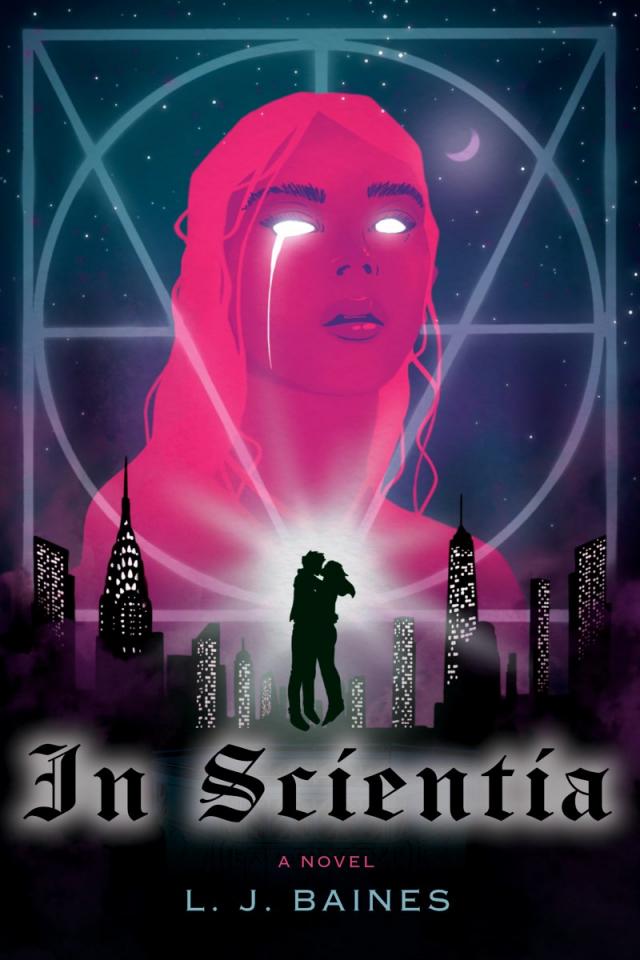


I felt the urge to scream again. To cry. To give up. The realization of where I was, threatening to permanently override my body.
Sapphire.
Navy.
Cerulean.
I tried to calm myself as tears free-flowed from my eyes.
Denim, turquoise, midnight.
I pushed up, this time with all the force I had.
Nothing. The wood moved slightly, but it was too heavy to lift and seemed to be anchored in place. My only solace was that nothing came in, even when I raised the surface higher. Not a fleck of dust or dirt, allowing me to convince myself at the very least that I hadn’t been buried.
I tried to go over the details I knew for certain. The last thing I remembered was Terence firing the gun. He was so close to me though, less than fifteen feet away. If he’d wanted to hit me, he could have.
This had to be part of their test. Their insane, cultish ritual.
Anger bubbled as I forced myself to stop crying. It was costing too much air.
Pull it together, Eva. If it’s a test, then there has to be a way out.
I exhaled slowly, reexamining my surroundings with my fingertips. There were no hinges or metal work on the inside. Nothing seemed to slide or move, and there weren’t any compartments or grooves that would indicate any kind of cutouts.
“Alida gave her a fighting chance, I see.”
Recalling Nicole’s words to Terence, I turned my attention toward my dress, feeling around for anything that might help me escape.
The crystals were attached by nylon, which I considered unpicking, but I couldn’t work out what use it could have. There was nothing in the material across my chest or inside the straps that looped over my shoulders either. It wasn’t until I ran my fingers over the zipper under my right arm that I found a potential tool: thick metal boning.
Pulling the zip down to its end, just above my hip, I dug into the material to push the metal out through the bottom seam. It slid out easily, barely tacked in place. Was it left by the seamstress at Alida’s request?
Holding it with the fingers of my left hand, I repositioned it with my right, careful not to let it drop. It was far less rigid than I’d expected, ruling out any hope I had of using it as a lever. Instead, I wondered if I could trace the lid’s opening to find what was holding it in place.
The air was thickening even more, signaling that my time was rapidly running out. With a trembling hand, I held the metal at the intersection of the top joint, using my other arm to push the lid up. The boning easily fit; allowing me to drag it around, alleviating any fears that I was nailed in. It sent a wave of optimism over me as I slid it down toward my waist, especially as I felt it collide with something metallic.
I pulled the boning back and forth on the barrier to see if it could be moved, but it was stuck in place. Retracting the wire, I doubled it up, hoping it would provide more leverage against the obstruction, but it still wasn’t strong enough, buckling uselessly.
I doubled it over again, but to no avail. Each attempt, the external force overpowered the one between my fingers.
The hope I’d felt moments ago was rapidly fading. I wasn’t sure how much longer I could hold myself together. I needed to get out; I needed to breathe.
Frustration surged through me as I repeatedly rammed the wire against the metal, foolishly hoping for a miracle when one occurred—the wire slipped through to the other side of the gap, accompanied by the unmistakable sound of a clasp being unlatched.
Excitedly, I pushed up in front of me, expecting the wood to have been released, but it didn’t move.
I pushed again, harder. Still nothing.
Moving my hands to where I had just been working, I pushed once more. This time, the wood raised slightly, enough to fit a finger through. There still wasn’t any light, but feeling air on the other side soothed my fear of running out of it. A realization then struck me: if there was one clasp, there might be more.
Quickly, I dug around the left side of the dress, finding the sister piece of boning. Extracting it, I inserted it into the gap in seconds, my fingers working automatically from muscle memory.
Sliding it up above my head, I managed to reach higher this time, maneuvering my left arm completely upwards. Sure enough, the wire encountered another lock. Bending the metal upward as before, I pushed it outward, the clasp opening on the first try. The ting of metal, the sweetest noise I’d ever heard.
I pushed up against the wood, which this time created enough space to fit my whole hand through. Cold wind rushed at my face as I lifted it up toward the opening, taking rabid inhales of air. The immediate rush of oxygen overloaded my body, sending my already woozy mind spinning even more.
Letting the euphoria wash over me, I felt the silky air settle on my skin and with it, the optimism that I might just get out alive. The box was still being held together by additional latches, but at least I knew how to unlock them.
Pushing up with my left hand, I squeezed my right arm through the opening, to see if I could reach the latch around my waist. Splinters of wood dug into the soft skin of my upper arm, but adrenaline masked the pain.
Feeling around the outside of the box, which was carved in ornate detail, I found a third latch that unclipped immediately with the flick of my fingers. I repeated the process on a latch above my head, until there was enough space to squeeze my torso through.
I’d almost pulled myself through when I discovered that the box was sitting atop a stone or marble ledge—the drop-off just six inches from the side of the box.
Swinging my legs out carefully, I let one dangle down to gauge the distance to the next level, but nothing was within reach. Hoping the sound could tell me something, I tapped my foot but all I heard was an echo.
Taking a chance, I lowered myself to whatever was waiting below and found the floor not even four feet down. Hesitantly I let my full weight onto it, stretching out my arms as far as they could go.
My hands met nothing but empty, unsettling space.
The floor was rough and damp, like sandstone or some kind of unpolished rock. Loose sediment scratched loudly as I slid across its surface, dragging my left foot to my right, and so on.
Moving cautiously, I swept my arms out in front of me, searching for something to hold onto. I knew I had to keep moving forward, to figure out how to escape, but the terror that something was lurking in the darkness almost paralyzed me in place.
I couldn’t bear knowing what, or who, was waiting next.
Don't go there, I thought, blocking it from my mind. That’s not going to help. I stepped forward again, this time more quietly, trying to minimize any noise that might give away my location.
Swiping my arms methodically, I navigated the dark space until I touched something that made me recoil.
Immobilized by dread, I braced myself for something to jump out at me. When nothing did, I swiped my arms again, this time with closed fists.
They grazed a coarse material that felt exactly like the floor.
Without thinking, I lunged out and found a solid wall. Leaning on it, I raised myself up on tiptoes, trying to reach the ceiling, but nothing was within reach.
I returned my heels to the ground, and moved my hands across the coarse stone, searching for clues. For a door, a window, anything… but it seemed like there was no way out.
Twenty
Skin
Within three or four feet, I found a corner. The discovery propelled me forward, and I continued around the room trying to find the next one. It was double the length, perhaps even fifteen feet, before I came upon it. Eventually I reached the third corner, and then finally the last.
What I still couldn't find was a door, or an exit.
Kneeling on the ground, I began to check the floor by methodically crawling across it. The cold stone numbed my knees, which were becoming scuffed and bloody from the crystals on my dress.
Finding nothing other than the base of the wooden box, I searched around it for compartments or latches, but there was nothing but smooth marble etched with a design.
The only place I hadn’t looked was above me.
Pulling myself up on the platform, I placed a foot on top of the box. My quads shook uncontrollably as I attempted to find balance in the dark.
I crouched down low to find my center of gravity, my fingers gripping the carved wood—reminding myself that, if I fell, it was unlikely anyone would find me.
I raised an arm in the air and then slowly tried to stand, my legs on the brink of succumbing to the exhaustion and fear that had been circulating through my body for what felt like hours. Just as I almost reached full height I slipped, my left foot sliding off the edge. Instinctively, my right hand shot up, fully extending and searching for something to grab onto. Relief washed over me when it found what it was looking for: the stone ceiling. My open palm pushed against it for support, allowing me to regain balance.
I let my hands run over the surface, walking as far as the length of the box would allow. Reaching the far end, a sense of hopelessness began to take hold as I discovered nothing there. Frustrated, I slapped my hand against the wall. The sudden movement caused the box to shift slightly from under me, revealing the tiniest fleck of light.
Managing to jump down before I fell, I grabbed onto the side of the box, then tried to push it farther off the platform, but it wouldn’t budge. I tried again, pushing it with my shoulder, but it still wouldn’t move.
I fell back against the wall panting, almost giving in to despair when I remembered what Alexander had told me. He’d done the test when he was thirteen. Thirteen. There was no way any thirteen-year-old could move a coffin. There had to be another way. I wasn't lacking strength; I was lacking logic.
I reached out to find the lid and ran my hands across it until I found the closest latch. Unclipping it, I worked my way around until all the hinges were open. Pushing the lid off, it slammed loudly to the floor, making me jump, even though I was anticipating it.
Wedging myself between the wall and the wood, I extended my legs out, easily pushing the box from its podium.
As soon as it crashed, light escaped from underneath. A slice of faded gold crept out from where the coffin-shaped box had sat. My eyes struggled to adjust, the sudden brightness burning my corneas.
I blinked hard, reopening my eyelids to take in a long set of stone stairs that led off farther than the light reached. Energized by the discovery, I pulled myself up onto the marble, then slid down into the crawl space. As I took one last look at the solid stone tomb that had entrapped me, I was enveloped by gratitude. Thankful I hadn’t been able to see the doorless or windowless room, or I might have spiraled beyond control.
The material of the walls was the same as the outside of the Sinclairs’ house. Pale sandstone, inlaid and mortared with intricate detail, which suggested I was either still in their house or somewhere close to it.
As I traveled farther the tunnel narrowed, the stairs became shorter and shorter until they transitioned into a completely smooth surface. I had no choice but to get down on my hands and knees and crawl the rest of the way. The candlelight from behind me flickered ominously, growing dimmer the farther I moved away from it.
Before long, I was plunged back into darkness. Too far in to see behind me, and no light ahead as the tunnel wove deeper and deeper. I stopped to catch my breath, my hands starting to match my bloody knees, as I tried to distract my mind from thinking about how easy it would be for the stone above me to cave in.
Driven by fear I pushed forward even faster, until a bend in the tunnel revealed a beam of shimmering light.
I hurried toward it, crawling as quickly as pain would allow, when a large opening came into view. I stopped abruptly, allowing my eyes to adjust, just in time to see that I was on a ledge with a forty-foot drop below.
I paused, allowing my mind to process what I was seeing. Blurs at first, turning into shapes. Outlines, followed by depth and detail.
Rich colors.
Large crystals.
An underground chamber, at least five stories deep.
It looked more like Krypton than a cave. Crystalline structures covering the ceiling, giving the sense I was inside an enormous geode.
Across from me were other platforms, each of which connected to their own tunnel. It was too dark to see into them, but it was clear from their orientation that they led well beyond the Sinclair’s property, perhaps even the street.
Black and white marble tiles on the floor depicted the same circle, cross, triangle and square symbol I’d been seeing all night. Two-story wood and glass shelves surrounded the ground floor of the space, filled with various items, most of which I couldn’t make out.
I needed to get closer, so I reached out for an iron ladder that extended down. My traumatized muscles shook violently as I gripped onto the metal, the unfinished surface digging into my raw hands.
Pulling myself off the platform to place my weight on the first rung, it felt as though my legs might collapse. I steadied my footing, trying to summon the courage to transfer myself entirely, when something caught my eye: a way out. In the far corner of the chamber was the glass elevator shaft that led directly to the main lobby of the house.
Closing my eyes, I carefully descended the ladder, nervous sweat making my bloody hands even more slippery. It didn't help that the dress, which not only weighed me down but kept getting tangled under my feet, was making each step more treacherous.
When I finally landed on the solid floor, so much relief washed over me that I almost started laughing. Worried it would be followed by more crying, I took a deep breath, the largest of the night, and let the exhale remove some of the fear residing in my body. I repeated the process, trying to calm the constant tremors that had been running through my aching muscles for hours.
Releasing my grip from the ladder, I took a few steps back and surveyed the glass-fronted cupboards in front of me. Clusters of various shades of purple caught my attention—at eye level was a compartment filled with differently shaped crystals labeled Amethystus. Above that, glass jars contained other purple preparations, such as powders, Amatistus De Pulvis, and liquids, pastes and gels.
I glanced around the chamber, taking in the contents of the walls. They were stocked high to low with jars and boxes, ampules and beakers, all containing a diverse array of items—from dried flowers and herbs to precious stones, liquids, and tinctures of varying consistencies. In between the different shelves stacks of leather-bound books could be seen: Some individually displayed behind temperature-controlled glass, others meticulously lined up and organized in rows.
In the room’s center, a raised platform held a large table that showcased various instruments. An oversized gold pan, a crystal mortar and pestle, and two glass flasks connected to one another by a tube, resembling a more elaborate version of the distillation kits I’d used in chemistry class.
On the table was a stand, which was home to a large antique book. The solid gold cover was embossed with the circle, cross, square and triangle symbol. Below it, two words: In Scientia.
I scanned the room, wondering if finding the book was part of the test. The full moon’s glow, visible through a skylight a hundred feet above my head, illuminated it as if under a spotlight.
Considering opening it, then deciding against it, I ran over to the glass elevator and examined the keypad, which required a four-digit code. I was contemplating whether the code could be in the book, when I recalled the passwords that Terence’s assistant had provided over the phone. One in particular, seemed worth trying: my mother’s birthdate, 0406.
I entered it electronically and was surprised when the keypad transformed into a menu that allowed me to call the elevator.
I extended my hand to press the button, but something held me back.
Hovering my hand over the button, I couldn’t help but reflect on how far I’d come, all the events that had brought me to this point. I’d been shot at and locked in a coffin, inside a freaking tomb, and yet I was no closer to finding answers about my parents. What had it all been for?
I looked back to the platform, and to the book titled In Scientia.
Knowing that most of the English language was derived from Latin, it seemed reasonable to assume that ‘Scientia’ had something to do with science, which I knew translated directly as knowledge. How could I so easily turn my back on the very thing that had lured me there in the first place, especially when I was so close?
I rushed back to the book and carefully peeled the cover open, revealing a weather-worn page adorned with at least a thousand characters and symbols, handwritten in ink. Some I recognized, like the letters P and A. But the context made no sense. In English at least.
I shifted my attention to some of the other symbols—a Q that curved upwards, an X with a dot hanging over its middle, and two sets of parallel lines intersecting one another, resembling an off-center hash sign. Some looked more like hieroglyphics, rather than letters, like a large O with a wave symbol tucked inside it, or a miniature pyramid alongside a sickle blade.
Intently studying the page, I tried to decipher meaning from the shapes, which seemed as if they belonged on rune stones or some other ancient artifact.
In search of clues, I turned to the next page, but it was blank.
The page after that was blank, too.
And the one after that.
As I flipped through the entire book, I realized that all the pages were blank except for the first one. Returning to it, I attempted to refocus.
Tilting my head, I attempted to view the symbols from a different perspective. If the tail of the Q were upside down, perhaps certain letters should be read that way too. After studying it from all sides until I felt myself growing dizzy, I searched the drawers of the workspace for something to write with, just in case it was as simple as a substitution cipher.
I tried every variation of a substitution I could think of—a simple shift where A becomes B, a reversal shift where Z becomes A, and even a Caesar cipher, where each letter is shifted by a fixed number of positions.


