

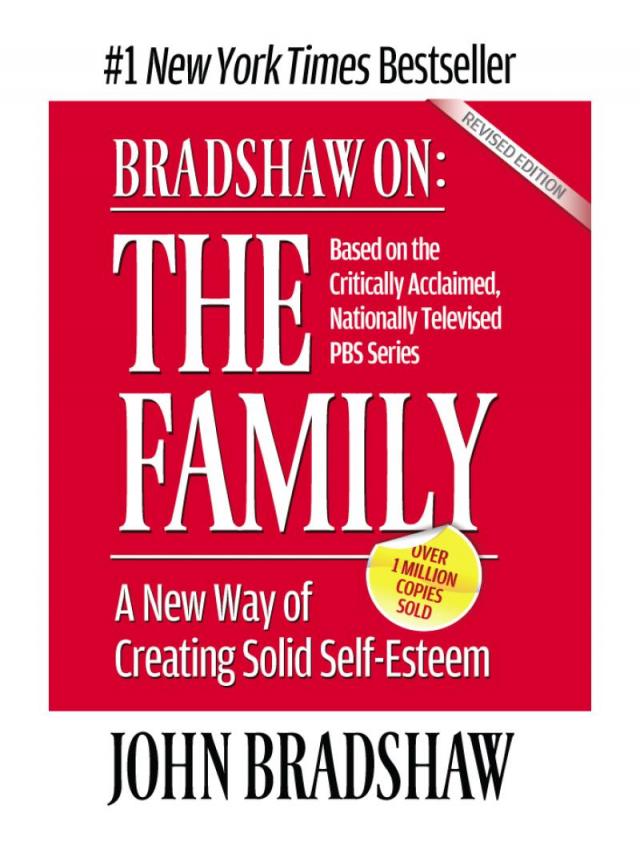
Bradshaw On, page 27


LOVE OF COUNTRY AND RESPECT FOR TRADITION
When we grow up in deeply democratic families, our need for sharing power and feeling a deep connection with other family members will extend to our cities and our state and overflow into love for our country. Our country is an extension of our family, and while many of us do not want our government to be too strong and interfere with our personal lives, we need to value our country’s government. Once the voice of our participatory democracy has spoken, we need to get on board and make it work.
The current political practice of ridiculing and shaming one’s political opponents is an alarming sign of degeneration. It is even more degenerative to continue to ridicule and shame our opponents after they have won the election. The radio host Rush Limbaugh’s daily attacks on the president of the United States evidence a marked disrespect for our country.
Deep democracy asks us to learn the meta skill of radical synthesis. This demands we step into our opponent’s shoes, experience their motivation, and for a while act as if their position is true. If political opponents were capable of doing this, a stronger position embodying the strengths of both sides would emerge. To some degree this already happens, but more by accident than by conscious design. I would like to see a day when the possession of this meta skill is the reason we elect leaders.
Another alarming trend is the emergence of the various armed militia groups. Their paranoid fears are rooted in the methods espoused by the poisonous pedagogy. Monarchial patriarchy calls for the repression of all human emotions except fear. Fear of authority is considered good. It enhances blind obedience. The militia takes the fear of authority to a rebellious extreme.
If we would use our anger (even rage) constructively, we could take positive action (not arms) and do something to change what we do not like about our government. If we truly experienced deep democracy in our families, we would move beyond a mere representative democracy and work to create a truly participatory process of government. Democracy is optimistic and wants everyone to have some voice in what is going on. Apathy and hopeless inactivity would never appear if we revised our traditional values in these ways.
Deep democracy also demands that we honor past forms of government, or past stages of our evolving democratic consciousness. These stages were valuable differentiations, and they allowed our deeply democratic conscious to evolve. Great Britain has maintained the monarchy in a symbolic way as an honoring of the past.
Our country’s traditions are not just archaic remnants from the past; they are living forms that have, in the process of differentiation, become the resources for the strengths that we now have as a country. Traditions are our living past. We must be sure to love our traditions, yet not succumb to a rigid traditionalism. I once heard a talk by the theologian Martin E. Marty. In it he said that, “Traditions are the living faith of dead people, whereas traditionalism is the dead faith of living people.” We could well use this as a slogan for revisioning our love and respect for our country and its traditions.
PIETY—CARE AND RESPECT FOR THE ELDERLY
The ancients spoke of the virtue of piety. It referred to the care and respect for the older members of the society. They honored their elderly in gratitude for all they had done. They also cared for, honored and respected them because of their wisdom. In chapter 11, I spoke of wisdom. I suggested that it most often comes in the evening of life because it is only then that our whole life comes into view. To the ancients, wisdom was vital because it comes from experience and cannot be learned in books. When a wise person dies, it is like losing the only copy of a book from a great library.
It is also a fact that all old people are not always wise. When an old person has failed to learn anything from life, we see him as foolish. But foolish or not, our parents deserve our gratitude because they participated in the miracle of our life. If we hold that life is precious, then no matter how we feel they may have failed us, they still gave us our life.
The manner in which we are personally involved in caring for our elderly parents may be quite different, depending on the level of friendship we have achieved with them. If they were abusive, we can still help them while keeping strong physical boundaries in relation to them. Piety is a virtue and should be part of our revised traditional values.
Our traditional values have made us the greatest nation the world has ever known. Each of us is responsible for revising and recreating these values in our lives. That is the task before us. Shakespeare’s words sum it up:
There is a tide in the affairs of men
Which, taken at the flood, leads to fortune;
Omitted, all the voyage of their life
Is bound in shallows and in miseries.
On such a full sea are we now afloat.
We must take the current when it serves,
Or lose our ventures.1
References
T
he author gratefully wishes to acknowledge the following books, articles and tapes as sources for this book. I heartily recommend them to the reader.
____________. Alcoholics Anonymous. 3d rev. ed. New York: Alcoholics Anonymous World Services, 1976.
Berger, Peter L., and Thomas Luckmann. The Social Construction of Reality: A Treatise in the Sociology of Knowledge. Garden City, N. Y.: Doubleday Anchor, 1966.
Bohr, Neils. Atomic Physics and the Description of Nature. New York: Cambridge University Press, 1964.
Bowen, Murray. “A Family Concept of Schizophrenia,” in The Etiology of Schizophrenia. Dan Jackson, ed. New York: Basic Books, 1960.
____________. Family Therapy in Clinical Practice. Northvale, N. J.: Jason Aronson, 1985.
Bradshaw, John. Healing the Shame That Binds You. Deerfield Beach, Fla.: Health Communications, Inc., 1988.
____________. Homecoming: Reclaiming and Championing Your Inner Child. New York: Bantam Books, 1990.
____________. Creating Love: The Next Stage of Growth. New York: Bantam Books, 1992.
____________. Family Secrets: What You Don’t Know Can Hurt You. New York: Bantam Books, 1995.
Carnes, Patrick. Out of the Shadows: Understanding Sexual Addiction. Minneapolis, Minn.: CompCare, 1992.
Cermak, Timmen. Diagnosing and Treating Co-dependence: A Guide for Professionals Who Work with Chemical Dependents, Their Spouses and Children. Minneapolis, Minn.: Johnson Institute Books, 1986.
Coudert, Jo. Advice from a Failure. Lanham, Md.: Scarborough House, 1987.
Dossey, Larry. Space, Time and Medicine. Boulder, Colo.: Shambhala Publications, Inc., 1982.
Erickson, Milton H., et al. Hypnotic Realities: The Induction of Clinical Hypnosis & Forms of Indirect Suggestions. New York: Irvington, 1976.
Erikson, Erik. Childhood and Society. New York: W. W. Norton & Co., 1963.
Farber, Leslie H. The Ways of the Will. Houston: Colophon House, 1987.
Firestone, Robert. The Fantasy Bond: Structure of Psychological Defenses. New York: Human Sciences Press, 1985.
Foley, Vincent. An Introduction to Family Therapy. Philadelphia: W.B. Saunders Co./Grune & Stratton Incorporated, 1974.
Forward, Susan. Betrayal of Innocence: Incest and Its Devastation. New York: Penguin Books, 1979.
Fossum, Merle A., and Marilyn J. Mason. Facing Shame: Families in Recovery. New York: W. W. Norton & Co., 1986.
Frederickson, Renee. Repressed Memories: A Journey to Recovery from Sexual Abuse. New York: Simon & Schuster, 1992.
____________. Tapes can be ordered from Frederickson & Associates, 821 Raymond Avenue, St. Paul, MN 55114.
Goleman, Daniel. Emotional Intelligence. New York: Bantam Books, 1995.
Harper, James, and Margaret Hoopes. Birth Order Roles and Sibling Patterns in Individual and Family Therapy. Gaithersburg, Md.: Aspen Publishers, Inc., 1987.
Hoffman. No One Is to Blame: Getting a Loving Divorce from Mom & Dad. Palo Alto, Calif.: Science & Behavior, 1979.
Jackins, Harvey. The Human Side of Human Beings: The Theory of Re-Evaluation Counseling. Seattle, Wash.: Rational Island Publications, 1978.
Kaufman, Gershen. Shame: The Power of Caring. 3d rev. ed. Rochester, Vt.: Schenkman Books, Inc., 1992.
Kellogg, Terry. Tapes can be ordered from 20300 Excelsior Boulevard, Minneapolis, MN. 5533l.
Kohlberg, Lawrence. Essays on Moral Development. 1st ed. San Francisco: Harper and Row, 1981.
Leonard, George Burr. The Silent Pulse: A Search for the Perfect Rhythm That Exists in Each of Us. New York: E. P. Dutton, 1978.
Levin, Pam. Cycle of Power: A User’s Guide to Seven Seasons of Life. Deerfield Beach, Fla.: Health Communications, Inc., 1988.
Lynch, William F. Images of Hope: Imagination as Healer of the Hopeless. Notre Dame, Ind.: University of Notre Dame Press, 1987.
McCall, Cheryl. “Special Report: The Cruelest Crime.” Life 7, no. 13 (December 1984): 35-62.
Mellody, Pia. Permission to Be Precious. Tape series can be obtained by writing P.O. Box 1739, Wickenburg, AZ 85358.
Midelfort, Cristian. The Family in Psychotherapy. New York: McGraw Hill, 1957.
Miller, Alice. The Drama of the Gifted Child. New York: Basic Books, 1981.
____________. For Your Own Good: Hidden Cruelties in Child Rearing and the Roots of Violence. New York: Farrar, Straus, Giroux, 1983.
Mindell, Arnold. The Leader as Martial Artist: An Introduction to Deep Democracy. San Francisco: HarperSanFrancisco, 1993.
Omar Khayyàm. The Rubaiyat of Omar Khayyàm. Translated by Edward FitzGerald. New York: Doubleday & Co., Inc., 1879.
Peck, M. Scott. The Road Less Traveled: A New Psychology of Love, Traditional Values & Spiritual Growth. New York: Simon and Schuster, 1978.
Peele, Stanton. Love and Addiction. New York: Taplinger Publishing Co., 1978.
Puthoff, Harold E., and Russel Targ. Mind Reach: Scientists Look at Psychic Ability. New York: Delacorte Press/E. Friede, 1977.
Putney, Snell, and Gail Putney. The Adjusted American. New York: HarperCollins Publishers, Inc., 1986.
Rilke, Rainer Maria. Letters of Rainer Maria Rilke, vol. 1: 1892-1910, vol. 2: 1910-1926. Translated by Jane Barnard Greene and M. D. Herter Norton. New York: W. W. Norton & Co., 1969.
Satir, Virginia. Conjoint Family Therapy. 3d ed. rev. and expanded. Palo Alto, Calif.: Science and Behavior, 1983.
____________. Making Contact. Millbrae, Calif.: Celestial Arts, 1976.
Schwarz, Jack. Voluntary Controls: Exercises for Creative Meditation & for Activating the Potential of the Chakras. New York: NAL-Dutton, 1978.
Small, Jacquelyn. Transformers: The Artists of Self-Creation. Marina Del Rey, Calif.: DeVorss & Co., 1994.
Targ, Russell, and Keith Harary. The Mind Race: Understanding and Using Psychic Abilities. New York: Ballantine, 1984.
Targ, Russell, and Harold E. Puthoff. Mind-Reach: Scientists Look at Psychic Ability. New York: Dell Publishing Co., 1977.
Toffler, Alvin. The Third Wave. New York: Bantam Books, 1980.
Trush, Howard. Close Encounters of the Intimate Kind; or How to Stay a Couple by Really Trying. New York: Vantage Press, 1985.
Verny, Thomas R. The Secret Life of the Unborn Child. New York: Summit Books, 1981.
Walker, Lenore E. The Battered Woman. New York: Harper & Row, 1979.
Whitfield, Charles L. Healing the Child Within. Deerfield Beach, Fla.: Health Communications, 1987.
Wilber, Ken, ed. The Holographic Paradigm and Other Paradoxes: Exploring the Leading Edge of Science. Boulder, Colo.: Shambhala Publications, Inc., 1982.
Wynne, Lyman C. Exploring the Base for Family Therapy. New York: Family Service, 1961.
John Bradshaw, Bradshaw On


