

Fiction Complete, page 5
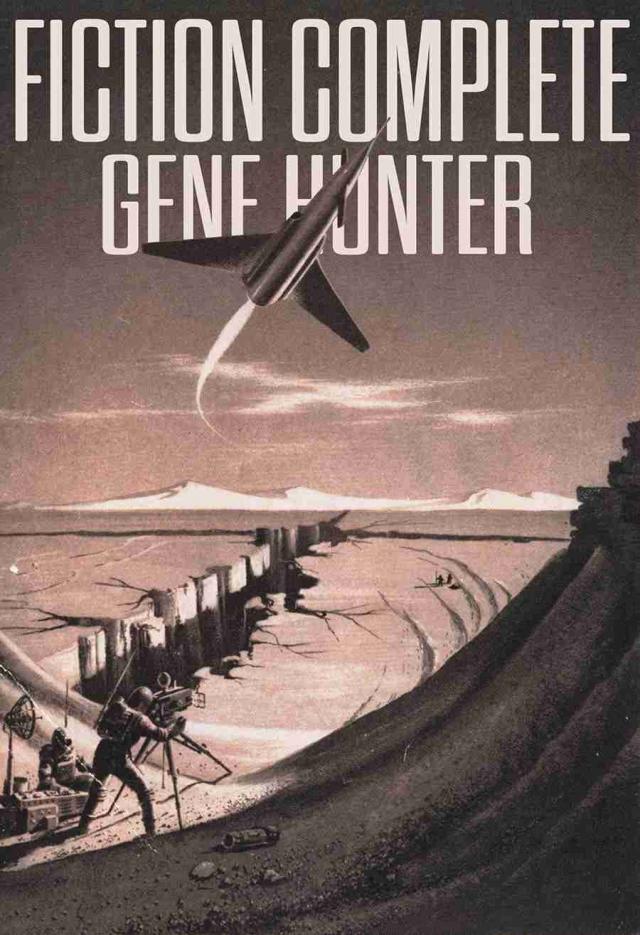


“All he can think about is ‘love’,” Tornan said, “and this girl, Fara. Can you imagine him feeling an attraction for one of these savages?”
Clerid, the Psychologist, spoke up for the first time. “He could,” he pointed out, “If he were a true atavist.”
“I thought you were keeping a little too quiet,” Keri commented.
“I’ve been listening,” Clerid explained, “and taking notes. There’s a lot more to this, psychologically, than we know. I can’t understand why none of these tendencies never showed up in Rorn’s psychotests.”
“He said it was something he ‘felt’ when he came to Raalkaar,” Hald asserted, “and when he first saw Fara. But his words mean nothing, really; he’s trying to justify his aberration with emotion, that’s all.”
Clerid nodded. “Although I’m not a semanticist, I agree. Still, there must be some reason for such feelings on Rorn’s part; didn’t he give you any other hints?”
“Outside of an attraction for this Fara person, I can’t recall anything,” Tornan said, frowning thoughtfully.
“I’ve studied the psychology of the Ancients—our own forebears,” Clerid went on. “Unfortunately, they always thought of ‘love’ and ‘happiness’ as being the same thing. Often, it wasn’t; the former sometimes cancelled out the latter. Eventually the human race had its choice. It could have returned to the animal stage in regard to love and sex, but that would have meant regression of the species. Hence we evolved to our present state, where sex has been sublimited almost to nonexistance.”
“ ‘Love’,” Hald said, “is a strictly primitive expression which has been bred out of our existance centuries ago; I’ve studied a little ancient history, myself. But we’ve seen other backward worlds where promiscuous sex was tolerated—often encouraged—for pleasure alone. Rorn has never shown previous tendencies . . .”
“Conditions weren’t right,” Clerid told him. “Here, they are. What those conditions may be, we don’t know. Perhaps that is what we’ll have to discover before we can understand Rorn; unfortunately, we haven’t the time to go into it thoroughly.”
“Right,” Keri said, standing up and stretching. “Vanda. I’ll allow another two days. If Rorn doesn’t return by then—and voluntarily—we blast off for our next destination.”
The informal meeting dissolved. The crew members drifted off in little groups, leaving the ship’s lounge deserted except for Clerid and Tornan.
“WE’VE ALWAYS been friends,” the doctor said, “but we don’t agree on this matter. Just what do you think about it all—privately, I mean.”
“Just about what I said; but I’m beginning to get a few ideas I didn’t mention, because they have no scientific basis as yet.”
“For instance?”
“In the week since Rorn deserted the expedition, I’ve done a lot of thinking, about us and the entire Dorjalan civilization. I wonder if it isn’t possible that all of us still retain some of the basic tendencies of our ancestors?”
“That fail to show up in the psychotests?. I doubt it.”
The Psychologist stood up. “We think we know all there is to know about the human mind, but even in our advanced culture there still remains a good portion of the brain that isn’t used. Who knows what stray corner the psychotests haven’t probed? As the race developed, perhaps a vestige of the ‘subconcious mind’ of the Ancients kept hiding away, scuttling first here, then there. We can breed brilliant scientists or unspirited slaves, depending on our requirements, but the whole of the brain is still beyond us; perhaps it always will be.”
“That might be reasonable,” Tornan agreed, “If you had any basis for such a belief.”
“Perhaps I have. Take Vanda, for instance. She wants Rorn’s return—obstensibly because the ship can’t proceed without him. Yet logical reasoning tells us that this is not the case; Keri can help her until we are assigned another Assistant Engineer. The expeditions are set up so that every member is expendable—we can operate at half-complement, if necessary. If something happens to the Engineer, the Assistant and the Captain can take over his job. Hald and I have enough training to replace you, the doctor. Conar, our Biologist, could replace Sortal, our Chemist . . . and so on.
“Vanda knows, all this, yet she still insists that Rorn return. Does she really want him back for the reasons she maintains? We say the ‘subconcious mind’ has been eliminated, but if it hasn’t . . .? She could be subconciously jealous of his attachment to Fara; emotion might enter into her reasoning, after all, even though we’re convinced such a thing is impossible.”
“All my life I’ve been taught that such things are impossible,” the Doctor said. “I’ve never had the reason or the opportunity to think otherwise.” He rose, clasping a hand on Clerid’s shoulder. “We’ve served on many an expedition together, and heretofore I’ve never had reason to doubt your ability; but this time I’m afraid you’re wrong. Even so, Rorn’s weakness frightens me a little. We have to get him over these ideas, to assure the sanity of all of us. By ‘all of us’, I mean the race. I’m going to do all I can to get him back in these next two days; if he doesn’t return, it will mean insanity is possible in a Dorjalan. I wouldn’t like that.”
2
THE BABY waves lapped casually up to the white sand, then retreated quickly back to the mother sea like cubs afraid of an unaccustomed world.
Vanda and Keri strode along the beach, the Captain lagging a few steps behind his Engineer, watching brownskinned children playing idly along the water’s edge. He wondered momentarily what it might be like to raise your own offspring rather than turn them over to a government nursery, and decided it would be too much bother and worry. At any moment he expected to see one of the little tykes tumble head-first into the water, but none of them did. The older ones were expert swimmers; he could see some of them playing now, far out in the water.
He looked up, to see Vanda several hundred yards ahead of him, and hastened his steps. Insane idea this, Keri decided. He would prefer to see Rorn himself, rather than talk to this Fara wench. However, he sighed, there was only one more day. After that they would leave Raalkaar and Rorn could be forgotten; privately, the Captain had given up hope of the Assistant Engineer’s return, but he had decided to do all he could to help Vanda in order to speed blast-off time as much as possible.
The house where Fara lived with her uncle—Nolo, chief of the Raalkaarians—was better than most of the thatch shacks which housed the natives. Keri decided he might almost like to spend a short holiday there himself, then shook his head as if to clear it of such a notion.
Vanda knocked purposefully on the door, It opened almost immediately, and the Dorjalans found themselves critically looking over the infamous Fara. Nearly nude, she wore a loose-fitting skin garment about her hips that rustled slightly in the sea breeze. She brushed her long, blue-black hair back in a gesture that they had learned, from explorations on other worlds, was a truly feminine one. She stared back at them for a moment, then a sly smile began to play on her child-like face.
“Our visitors from the faraway lights in the night sky,” she said in her liquid, flowing language, so rapidly that the foreigners could barely follow her. “In the name of my uncle, I welcome you.”
Her words were formal, but Keri suspected that she was laughing at them, secretly. The Captain had opened his mouth to reply, intending to engage her in the small-talk that always preceded a serious Raalkaarian discussion, but Vanda was already talking.
“I’m the wife of the Dorjalan who wants to remain here,” she told the girl: “I’m told you’re the person who could convince him “how foolish his attitude is.”
There was no expression on Fara’s face. “If it were wrong for Korn to remain on Raalkaar, I could convince him.”
“And you think that it isn’t?”
“Horn has told me something of your way of life. I think ours is better, and so does he. He will be happy here with me, and I will be happy; therefore it is best that he stays.”
Keri gave Vanda a warning glance. “Rorn,” he said to Fara, “is not—well.” He pointed a finger to his head. “If he were, he could have no desire to give up his own way of life for one so utterly alien to him. Rorn is my friend; I want to help him become well again.”
Fara smiled. “His is a charming illness.” She gestured to the interior of the hut. “I have neglected the way in which my uncle instructed me to receive you; please make yourselves comfortable.”
She led the way inside, pointing out the most comfortable seats—soft, skinbound cushions in the center of the hut’s largest room. Both Keri and Vanda declined the inevitable bowl of dida bark, with obvious distaste; members of expeditions were conditioned to immunity against the habits and vices of the worlds they visited—at least, so they had thought before Rorn decided to adopt Raalkaar.
AFTER THEY were seated Vanda tried to speak, but the girl interrupted her. “Tell me,” she said naively, “why do you crop your hair so close?”
Vanda was taken aback. “Why, because long hair on a female is—is barbarous; besides, it would interfere with my work.”
“Rorn was your mate for a long time,” Fara said. “Did he never tell you he preferred long hair?” She added innocently: “We had hardly met before he mentioned how much he liked mine.”
Vanda’s eyes narrowed. “If he hadn’t met you,” she said, “I’m certain he’d never have considered admiring long hair.”
“Thank you,” the Raalkaarian smiled.
“I didn’t intend . . .” Vanda began, but Keri stopped her.
“Look here, Fara. If you want Rorn to be happy—that is, if you . . .” He stumbled hopelessly.
“Wait,” Fara said. “Let me tell you how Rorn and I met. Perhaps then you will understand a little of how he feels—about both me and Raalkaar.
“It was near the end of the festival, after you had landed on Raalkaar and introduced yourselves and we had accepted you as friends. Someone had persuaded Rorn to sip ghrana with us, and although he was doubtful, he tried it and found it good. I was sitting beside Noko and had admired Rorn, but he paid me little attention. He looked about at the sea., and the forest, and our village and mentioned to my uncle that he thought he might come to love our world.
“Remember, up until the day you landed we did not suspect the lights in the night sky might be worlds like our own, with beings such as you or ourselves upon them. It has been a great shock to us; perhaps many do not fully realize what it means. It has never occured to us to like or dislike Raalkaar; we were here, we had always been here, we shall always be here. There is—or there was—no place else. If one was dissatisfied on this island, he moved to another and that was the end of it.
“But we listened to your stories of Dorjala, and your Empire, and we were frightened and awed. My uncle thought it a great honor when Rorn expressed a liking for our simple life; soon Rorn had drunk ghrana and soon he was talking to me.”
She looked at Vanda and shrugged her shoulders. “After all, I am a woman. Perhaps that means nothing to you, since in your civilization men and women are equals. There is no love, and you mate only for the creation of children. Here, it is not so; a woman must exert all her wiles, must make herself beautiful and desirable, in order to attract the man she wants. You say you have visited many other worlds. Is such a thing unheard-of on the other lights?”
“On backward, savage, out-of-the-way planets we have encountered such things,” Vanda admitted, “both among human and non-human life; but such paganism has never before affected a Dorjalan.”
“Then why it should here, I do not know,” Fara went on. “But soon Rorn and I had left the festival and were walking in the forest. I wanted him to tell me more of Dorjala, and the other wonderful places he had been, but he wanted to hear only of Raalkaar and our people. There was little to tell, but he was fascinated.” She looked away from them, letting her gaze rest on the floor of the hut. “I was glad.
“Soon we were walking hand-in-hand, and he did not seem surprised or shocked. Finally we stopped to rest and I held him and kissed him. I felt him close to me and he seemed no stranger to such things; he was a man.”
Suddenly, Vanda rose. “This is ridiculous,” she told Keri. “The man is mad—utterly insane.”
Keri shook his head, bewildered and confused. “He must be,” he agreed. “This—it’s unheard-of.”
“That’s what I’ve been trying to tell you,” Vanda insisted. She turned to Fara. “Rorn is coming back to the ship,” she said with finality. “If he will not agree, or if you Raalkaarians try to prevent it, we can use force.”
l
“AND SO WE wound up,” Keri told the rest of the Expedition, “threatening to take Rorn back by force.”
“Bad,” Clerid said. “Such talk could make the Raalkaarians afraid of us; they’ll take steps to protect Rorn, now. Any move we make might be suspicious to them.” A frown lingered on the Psychologist’s face.
“Feren, Dekla and I,” Tornan said, nodding toward his Archeologist wife and the Expedition’s Agriculturist,
“found Noko in the village this morning. He and a group of natives were mending fish nets.”
“What did he have to say?” Vanda asked.
The Doctor shrugged. “Noko doesn’t seem to mind the infusion of alien blood among his people. He pointed out the fact there are only slight physical differences between Dorjalans and Raalkaarians.”
“According to local custom,” his wife put in, “a woman cannot become chief of Raalkaar, but Tara’s son—if she were to have a son—would be next in line. Noko seems to think Rorn’s blood would be a welcome addition to his tribe’s—that Rorn’s son would make a superior chief.”
“The trouble is,” Tornan pointed out, “he’s right—rather, he would be if Rorn were not abnormal. No telling what quirks might show up in his progeny, though.”
Keri scratched his head thoughtfully. “Hmmmm. Did you try to convince Noko that Rorn is obviously—” he groped for a word—“demented?”
“We mentioned it, I think. Come to think of it, however, we didn’t particularly dwell on the point.”
“You should have,” the Captain said. He turned to Clerid. “You’re our psychologist for extra-Dorjalan species. Just how should a barbarian leader react if he thought there was danger of his tribe being led by an insane man? What would he do if he thought his own bloodline might become contaminated with insanity?”
Clerid smiled “He’d be violently against it, of course. That is, if he knew what insanity was.”
“By Center,” Keri swore, “that’s right; I haven’t heard of a case of insanity on Raalkaar.”
“Didn’t you read my report?” the Psychologist asked.
Keri was embarrassed. “Well, I had intended to. This all came up, and . . .”
Vanda helped him to save face by saying: “We mentioned to Fara that Rorn wasn’t ‘well’. She didn’t seem to mind; perhaps she didn’t understand.”
“Because there is no such thing as ‘insanity’ on this world,” Clerid told her. “Let’s review what we know about the inhabitants. They’re simple, perfectly adjusted primitives. There are few deaths—except those due to old age—since they are a peace-loving people, and the only carniverous animals on their planet. They’re naturally expert swimmers, so few of them ever drown. Food is plentiful, and there are no serious illnesses; no storms; no volcanoes or tidal waves—in short, no natural catastrophes to beset them. Because of that, they have no need for a deity. It is only among troubled, unhappy people that we have found religion, or even progress. True, we’re well-adjusted ourselves, but we certainly do represent progress, and our reverence of Center—our government—has taken the place of a faith. Most extra-Dorjalans of the Raalkaarian their type have at least a god or goddess of fertility, but the few islands that make up the land-mass would have become over-run long ago if too many children were born; evidently they’re not a very fertile people.”
“You’re right,” Tornan said. “A Raalkaarian female conceives only twice in a lifetime at most—often only once. Nature regulates the birth-rate.”
“Where is all this getting us?” Vanda asked impatiently.
“Don’t you see?” the Doctor said, rising to his feet. “Noko has no conception of the meaning of insanity. If we can make him understand what it is, and convince him that Rorn is demented, he’ll be afraid of Rorn’s tainting the race. He’ll force him to leave.” He turned to Hald. “You’re the Semanticist; this looks like a job for you.”
“Explaining to Noko just what ‘madness’ is, therefore causing him to reject Rorn,” Hald mused. “By Center, it’s a challenge—but worth a try.”
3
IT HAD been Noko’s great-greatgrandfather who had unified the several island tribes of Raalkaar into one happy, prosperous world-nation; since then there had been no war. The Raalkaarians had everything they needed. Their laws were few, and just; by now, the chief was merely one who led the others on hunting expeditions, and settled the petty differences that occasionally came up among his people.
The day of warrior-chiefs was over for Raalkaar, but it was proud, courageous blood that flowed in Noko’s veins. Like all good leaders, he bristled when he thought his people might be in danger; he bristled now, as he listened to Valk and Tornan.
“I know it is hard for you to understand, Noko,” the Semanticist was saying patiently. “Your gallant people cannot fathom the meaning of such things as we speak of, but Rorn has a sickness—a sickness that could affect the whole future of Raalkaar.”
“I have heard my grandfather speak of plagues that once visited our people,” the old chief said. “I know what you mean when you speak of ‘sickness’.” He frowned and spread his gnarled, brown hands. “But those plagues caused our ancestors to wither and grow ugly and die. Rorn seems a healthy youth—stronger and more handsome than the rest of your tribe.”


