

Fiction Complete, page 12
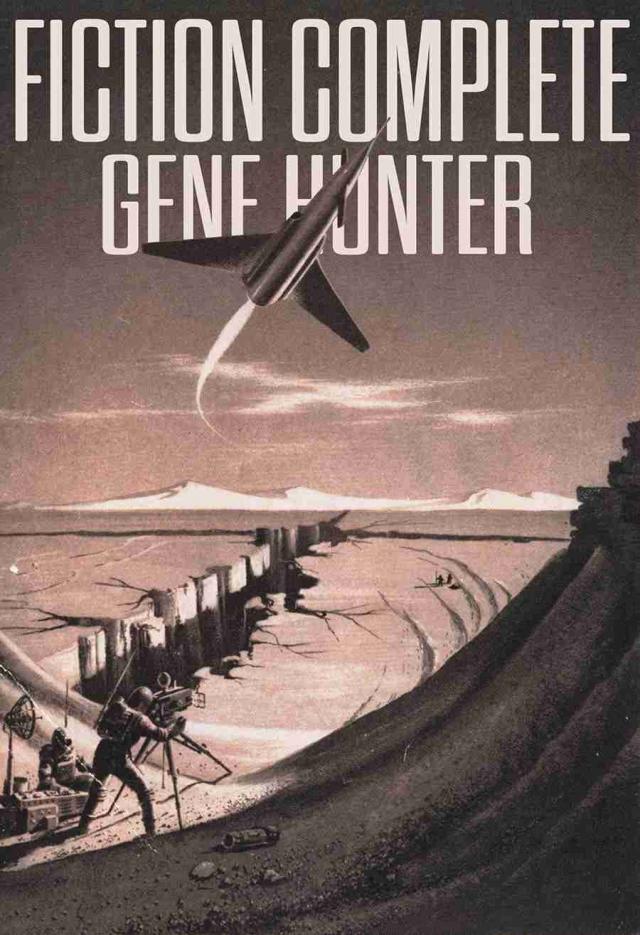


The boy lay, sleepless on a bed meant for the deepest, most scientific rest. His eyes—eyes that should have held only the delicate light of childhood—were filled with some vague anguish. His mouth—a mouth that should have been pursed in boyish firmness—was twisted into a mockery of cynicism and bewilderment.
The eyes and the mouth—and the rest of the features as well—were second-hand anyway, though he did not know it. A spaceman’s face, now at once boyish and adult and thus a mockery.
The boy reached out a hand and savagely flicked a stud and the curving one-hand of the room darkened and lost its transparency and the view of the green and fertile farm world was obliterated. Then, at the press of a second stud, the ceiling seemed to melt away and the restless figure was bathed by ten million billion lights.
Very quietly, the boy was watching the stars.
“He’s sick,” the woman told the old man. “It’s nothing. He’ll get over it.”
This was the mother. This, too was a young face, but a face of youth tempered with maturity. A face crowned by waves of blue-black hair, a face with a complexion like faded ivory, a face that, except for slight lines at each corner of the full mouth, was beauty and good nature incarnate.
“Aye, he’s sick,” the old man agreed. “We all got sick at Mike’s age.”
This was the grandfather. This was a face that, with all its years, still held a rare, masculine beauty. A face topped by waves of snow, a face with deep-grooved lines set in leather-like texture, the face of a man who had learned all there is to know about the mind and the flesh and the soul and had found all three wanting.
“He’s growing up,” the old man went on. “He’s found the threshhold of manhood, and it’s scaring him. And that’s a sickness, Lora.”
The woman snorted. “He’s only eight years old!”
“And this is Antares. Back in my day—back on Terra or Venus—he’d be a typical eight-year-old with skinny legs and buttocks and arms that were just beginning to make muscles. Out here, he’s an adolescent.” He shook his head, and the crest of snow waved gently. “You’ve got to pay the price for longevity by seeing, the young ones suffer too soon.”
“He’s sick,” the mother repeated.
“He’s sick,” the old man agreed again, nodding. “Sick because he’s dreaming, by God. He’s had a dream. Maybe he dreamed about a woman, for the first time. Maybe he’s dreamed about the stars. He’s his father’s son, Lora. With his heritage, he’s probably dreamed about both.”
Lora Calhoun’s face hardened. “Dirk was your son,” she reminded the oldster. “Don’t debase him.”
“Debase him? God A’mighty, Lora—it wasn’t Dirk who made himself what he was. It was the age he was born into and the looks he inherited from his mother and the things people did to him from the minute the doctor whacked him until the day he—went away. But he left a son. That’s him, over there in his room. That’s Dirk’s son. Don’t forget it.”
“Oh, Gramps—you’re an old barbarian! You know damned well that boy hasn’t inherited any racial or family memories or traits—that he isn’t carrying anybody else’s blood or habits except his own. You’re saying the child’s inherited a desire, and you know that isn’t possible.”
“Science and eugenics and Mendel be damned,” Gramps spat. “That boy’s Dirk—face, hair, body and brain. He’s got the same devil in him that Dirk had. They were taking the rockets away from Dirk, and he couldn’t stand it. That’s why he—he left.”
The woman was very, very solemn. “I wish I could believe that,” she said, and her face was plaintive. “You know what I’ve lived with all these years.”
“I know. Dirk’s blood in your veins, and all that. Dirk and the Custer woman, Dirk and Mari Kyle, Dirk and whatever woman he could find.”
“Dirk didn’t love me, Gramps. I never could get over that.”
“I know he didn’t,” the old man answered. “Just like his mother didn’t love me. He was looking for something. He thought he wanted to settle down, out of space, and he thought you and a farm and Antares could bring him the peace of mind he wanted so badly.” The old face was strained, but it held no bitterness. “Give him credit for trying to find a way, the same as I gave credit to his mother.”
“I let him suppose he was getting away with something all those years,” Lora said, only half-hearing. “Then I couldn’t take it any more and I faced him with it all at once and—and . . .”
“I’ll tell you again,” the old man said patiently. “It wasn’t you or the other women. All of a sudden there weren’t any more rockets—that’s what Dirk couldn’t face. It hit a whole generation of them, but what with Dirk being the way he was to begin with, he was one who just couldn’t take it.”
“Maybe,” Lora said. “Maybe. But science advances, Gramps. You can’t hold back science.”
“No,” the oldster admitted, “that you can’t. But who’s to say it’s advancement, Lora? Teleportation! Immediate Transition! It may be advancement that a man can work on Venus or Mars and go home to SoCal or Hawaii or Tahiti or Rio at night by pressing a button, but is it advancement when a whole complicated transportation system is scrapped overnight and they send the hulls that were once respected spaceships to the junk yards? When a whole generation of men—and women too, for that matter—find themselves without purpose?”
“It’s happened before.”
“And it’ll happen again—because science keeps metals and dials and tubes twenty-five years ahead of the human mind. It’s wrong, but nobody would think of doing anything about it. It leaves derelicts in its wake. Dirk was one—so’s his son.”
“No,” Lora said, shaking her head determinedly. Then, more softly: “Let’s go take a look at him, Gramps.”
With a sigh, the old man lay down his pipe.
Mike lay looking up at the stars. He was oblivious to the bed, the transloid walls, the furnishings of a boy’s room, the two adults watching from the doorway.
“He’s looking at the stars,” the old man whispered.
The woman said nothing.
“Like Dirk, when they took the rockets away. Only he doesn’t know why he feels like he does. Dirk did—or at least he had a glimmer of understanding. They were taking something away from him. . . .”
“Men can still go to the stars.”
“But not in ships. Not in the rockets.”
They watched. Finally the boy’s trembling hand reached out and the ten million billion lights looking down at him were gone. There was a sharp, clear sound of animal-like pain from his throat. He whirled over and buried his head in the pillow. Their eyes not yet accustomed to the darkness, the old man and the woman could not see him now, but they heard, his sobs.
“You see,” the mother insisted. “He’s sick.”
“Yes,” Gramps agreed softly. “He’s sick.”
Martian Interlude
On Mars life was simple and pleasant . . . or had been until that fateful night when the first flame appeared in the sky . . .
LAST NIGHT I dreamed I was a boy again, for a few brief moments. It was one of those strange, uncanny dreams where you find yourself only half asleep, and the dream is controlled partly by the subconscious mind, partly by the conscious.
For a while I was a boy again, and I stood by one of my people’s beloved canals, staring down into the deep blue water in the man-made stream. Before me, on the other side of the canal, stretched the endless, shifting desert that was my world. Behind me and to the right the scene was the same, while to my left lay the tiny oasis that was the present home of my people.
In those days the water was free, the gift of our god, L’Tor, who had spent his life in the building of the canals so the small cities and the roving nomads of our near-dead world could live. Those were the days of the Good Men, before political intrigue and the perversions of the New Civilization had stopped the flow of precious water, driving my people away from their deserts and into the hated cities.
I was twelve then, in the last year of my boyhood. During the next year my body and my mind would change and mature, and I would become a man. I would discard the rude gryph-skin I wore about my loins and don the colorful dress and toga of the adult.
For years I had looked forward to the day when I would leave my childhood behind me, but now, with manhood almost upon me, I was suddenly afraid. I wanted to remain a boy forever, to always know the joys and ecstasy of youth. But even as I stood there on the banks of the canal, my hands clenched, the tears streaming down my cheeks and my heart burning with a strange shame—even as I prayed to L’Tor to keep me a boy forever—I knew that it could not be.
Like the other desert children, I was doomed. I wondered if they ever realized the thing that was happening to them—if they ever cried and prayed as I did. I know now that they did not. They would accept manhood as inevitable—as a duty, as something to look forward to and enjoy. It was I who was different.
Like the others I would assume the cloak of manhood in a few more months. I would mate with the girl selected by my father, and I would beget children. And when my people again felt the urge to travel, I would mount my family on a great gryph and I would go with them to find a new home.
When we chanced to meet another roving tribe, I would go into battle with my people against them. If we were victorious, I would help to slaughter their remaining men; I would help capture their gryphs and their women, and richer and more powerful, we would go on our way. This would be my life for a few years, and then, if I chanced to survive the wounds of battle and the rigors of our nomadic life, I would begin to wither and die.
At thirty I would be a cold, naked corpse, and my mate and my mistresses and my children and my friends would stand over me and weep and pray for me. Then my mate would burrow a shallow grave with her bare hands and when my friends had lowered me into it, she, weeping with a religious and emotional hysteria, would cover my body with the sand. They would leave, then, and soon a new spirit would shine in the firmament above.
Thus it would be. Thus it had ever been.
Then I dreamed that night came, and I made my way back along the canal bank to my tribe’s oasis. After the evening meal, the men sat about the entrances of their tents and talked far into the night, while the women worked and the children slept. In the dream my sleep was fitful and disturbed. I was alternately hot and cold, and at last I awoke in a cold sweat.
It must have been very late, for the men had all retired and the camp was still except for the occasional bay of a logar or the low moan and stirring of a sleepless gryph. I stood outside my father’s tent and looked at the stars in the crisp air above.
But they weren’t stars to us in those days. Every light shining in the sky was the soul of a departed Martian warrior, and the two balls of fire that raced across the skies were not the prosaic moons of Deirnos and Phobus, as we know them today. The larger was the spirit of the great L’Tor, and the smaller that of his mate, V’Dra. I thought of praying again to my god, but in my heart I knew that to pray for foolish things was sacrilege.
Then I saw a hissing flame and heard a roar like that of a thousand gryphs, and I thought that the spirit of L’Tor had come down from His kingdom to carry me away. The strange noise awed me, and I dropped to my knees, praying fervently, with all my heart.
Then I awoke. . . .
As is the custom with old men, I tried to drift back to sleep in the hopes that I might recapture that dream of long ago, but all attempts at sleep were fruitless then. It was early morning, but instead of rising as usual, I lay there and thought of that long ago day when mat dream had been a reality.
The boy who had been myself a decade and a half ago rose from his prayer and turned to face the direction of the coming of his god, but it was not L’Tor come to translate me. For many days we wondered about the phenomena, then we heard of the coming of the Earthmen. The flash and the roar had been the exhaust from the first Terrestrial ship to land on our world.
Now the Earthmen have been here for fifteen years, and I know that basically they have done good things. But it is hard for a pre-Terrestrial Martian such as myself to grasp the new scientific marvels they have brought. For the children who do not remember the old days, this rejuvenated world is a good one, but I cannot help but yearn for the past.
Once I dreaded maturity, and prayed that something might happen to save me from it. Now I regret that the old order changed—that I was not allowed to live my life as one of my kind should.
So now I write this in my little room, and when I finish I shall make a pilgrimage few men make any more. I shall go down to the edge of the Great Canal, long dry now that the Earthmen have taught the city dwellers the secret of synthetics, and as night falls I shall watch the souls of L’Tor and V’Dra race across the star-studded sky, and soon perhaps another new light will shine forth, as one of the last of the old Martians departs his world. . . .
BECAUSE everyone who enters this world must eventually leave it, the incidence of graves, crypts and other burial places is high. In some of these lies interred the bones of famous men. This is the story of the king who lies in one obscure grave . . .
John Haggerty used to say, over a bottle of beer at Joe’s, that all of us had a problem or we wouldn’t be in the newspaper business to begin with.
I knew what Haggerty’s problem was. He feared the advancing years. Getting old worried him more than anything else.
He used to confide in me about it. “Someday,” he would say, “I’ll be too damned old for anything—especially women. Senile, and with nothing accomplished. No child to leave behind.”
From this point on, Haggerty was always good for a discourse on modern morality. The rest of us on the Morgan City Times staff considered him something of a Philip Wylie in the rough.
Along with his other talents, he had a knack of knowing people. Indirectly, that’s how he got to be an emperor. He knew Morgan City’s mayor, top bookmaker, best call girl, most dedicated minister, most corrupt policeman and cleanest city department head equally well. They all loved Haggerty and Haggerty loved no one.
He just happened to know a congressman. That was how he got his commission as a navy public information officer during the Korean war.
He spent two years at Pearl Harbor and another in Tokyo. Then he started home, thirty-seven years old. with a discharge and a lifetime of getting older ahead of him.
Haggerty looked at that which he had pulled aboard the life raft for a long time. At first he was animal-like and he gazed hungrily, wishing his strength would return.
Then it occurred to him that she might sunburn in the tropic heat. That part of her which held his gaze was obviously unaccustomed to the sun. Bronzed himself and in little danger of burning, he took off his shirt and laid it over her as gently as possible.
Despite the heat, the sea water was cool. He applied it to her face.
“Don’t try to stand up,” he advised her when the water finally took effect. “You’ll rock the boat. Besides—what you’re wearing on top is liable to fall off.”
She looked up at him, then down at her lightly covered body.
He smiled. “That’s the only shirt I’m going to have for some time. Try to take care of it.”
She smiled back. That was when he was sure she was all right.
She was careful not to change position. “What about the others?” she asked, looking at him gravely.
“The plane went under fast,” Haggerty told her. “There aren’t any others any more.”
She was too tired to shock easily. “How come we were so lucky?”
“I was close to the door.” Haggerty said. “I was waist deep in Pacific Ocean before I could open it. I don’t think we were afloat ten seconds.” He kept on looking at her. The shirt hadn’t dried out yet. “When I felt something bump against me, I grabbed. That happened to be you.”
“Thanks,” she said, “but—I was wearing more than this, wasn’t I?”
“You must have been before we crashed. Otherwise I’d have noticed. You weren’t when I grabbed you. Look, kid—how old are you?”
“Sixteen. And don’t call me ‘look.’ My name’s Sherry.”
“All right, Sherry. I’m thirty-seven. And the name is John.”
“Then,” she said, “you’re old enough to be my father, like they say.” Haggerty winced. He hated to be reminded of his age and he hated clichés. “He’s forty-two. I think.”
“See here.” Haggerty said, “I’ve never undressed a sixteen-year-old. At least not since I was seventeen. I’m afraid you were incidental. I didn’t pick anyone to save. It just happened this way.”
“Oh, good,” she said. “I was scared of you for a minute. Have you any idea where we are?”
“Only roughly. Somewhere east of Wake, west of Hawaii and south of both, I believe.”
“Desolate area?”
“Pretty bare, I’m afraid.”
As a matter of fact, they were drifting slowly, south of the equator, midway between 170 degrees east and the International Date Line.
The island lay not quite two thousand miles southwest of Honolulu, about three hundred miles northeast of Makin in the Gilberts and the same distance from the Marshalls. No one had ever bothered to chart it.
Haggerty and Sherry talked about the typhoon that had driven the Navy transport plane far off course after leaving Wake. When that subject was exhausted, Haggerty told her a little about himself and she started to talk about leaving her navy family in Tokyo to go back to school in California.
That was when she broke down. She cried ceaselessly for ten minutes.
Haggerty stifled several impulses to reach over and comfort her. You can put your arms around a woman near your own age or you can cuddle a little girl. Haggerty was puzzled over what a thirty-seven-year-old male did for a sobbing teen-ager. He was extremely uncomfortable and inadequate to the occasion.





