Call of the Raven, page 37


Mungo realized he had hardly drawn breath for the last ten minutes. He felt dizzy; his head swam with Solange’s perfume and the wine on her breath. He looked down into her face, and all he felt was desire. He should have felt ashamed of it, but—for the second time that day—he found that he could not feel guilt.
“You do not have to give it to me,” he told her. “All I need you to do is sign a piece of paper.”
Ezekiel McMurran liked to say that if he knew the Mississippi any better, he’d be a catfish. His earliest memories were splashing in its creeks and bywaters. At ten, he had run away from home to crew flatboats, the rough-hewn river barges that had brought goods and settlers down the Mississippi in those early frontier days. It was one-way traffic, powered only by the current. He would help navigate the boats down to New Orleans, avoiding shallows and fending off obstacles with poles. There, the vessels would be broken up for lumber, and McMurran would trudge the two hundred miles back upriver and wait for another boat to pass.
Then one day, near New Orleans, he had seen a preposterous ship without oars or sails, spouting smoke from her funnel and churning the water behind her as she made her way upstream—upstream!—at a stately three knots. From that moment, he had known his calling in life. He had talked his way aboard: first as a ship’s boy, then a rouster, a fireman, an engineer, and finally as captain of his own vessel. He had taken ships from Louisiana as far as Memphis; he had carried soldiers, opera singers and even a president.
But he had never carried a cargo as valuable as the one he did now. Half a million dollars’ worth of cotton—so much, he had not even been certain the boat could carry it all. It was packed solid on the Windemere’s lower deck, a wall of raw cotton more than twenty feet high extending right around the perimeter of the boat. Heavily loaded, she sat so low in the water that every ripple in the river splashed over her guards and wetted the cotton that bulged out from her sides.
And as if that was not enough, he also had the cotton’s owner to contend with. The day before the Windemere left Bannerfield, a letter had arrived from the Bank of New Orleans that threw Chester Marion into a black mood. Shortly afterward, he had announced that he would be accompanying the cotton downriver—and bringing his son with him. That had necessitated a rushed job emptying the stateroom of the cotton that had been stored within, and somehow finding somewhere else to stow it.
Now, from the pilot house above the Windemere’s hurricane deck, McMurran could console himself that his journey was nearly finished. On the left, the wharfs and spires of New Orleans moved past, while off the starboard side the city’s river traffic made its way up the main channel. The Windemere, her owner and her cargo were almost at their destination.
It had not been without difficulty. The previous day, when they tied up for the night, his engineer had gone ashore to find extra wood for the boilers. It was unclear exactly what had happened next. Some said he had been drinking, others that he had got in a fight with a negro, others again that he had been accidentally knocked out by a piece of firewood. In any event, the man had been carried back to the boat insensible, with his head stove in and no prospect of him resuming his duties.
Fortunately, luck had smiled on McMurran. There had been another steamboat tied up at the landing, the Nellie Mae. Her captain had heard of McMurran’s difficulty and offered him the loan of his own engineer. McMurran had blanched when he saw the man—a giant, probably mulatto, with an entirely hairless head. McMurran had been minded to refuse. But when he put the man in front of the boilers it had quickly become clear he possessed extraordinary skill. McMurran had gratefully accepted his help. Better, the rapid resolution meant there was no need to inform Chester of the incident. McMurran did not dare give his employer any reason to doubt him.
And now they were nearly there. Only a quarter of a mile, and he would have discharged his duty. McMurran could see the wharf ahead, and the brick warehouse behind it. The arrival of the Bannerfield steamer was always an event in New Orleans, and this year—for some reason—more people than usual had gathered to witness it.
McMurran gripped the wheel. He was almost there. He would not let anything happen to Chester Marion’s cargo.
The day was cloudy, and a brisk wind whipped the wharf. Among the crowd who had gathered were some of the most eminent businessmen in the city: François de Villiers, as was to be expected; but also Jonathan Jackson, the president of the Bank of New Orleans. Some men whispered that the banker had come because there were doubts whether Chester’s credit was still good. Those who did not have money in the Bank of New Orleans laughed at the gossip and laid bets; those who were the bank’s customers glanced anxiously over their shoulders. There were no secrets in New Orleans. Everyone knew how much the bank’s fortunes were tied to the Windemere’s cargo. Though if they had doubts, the two dozen guards in the uniforms of the Bannerfield Militia should have allayed them.
Amid the men in their sober suits, two women stood out. One was Chester’s mistress—some said a slave, though others insisted she was a free woman of color—in a pure white dress that dazzled the dreary dock. Another was the Marquise Solange de Noailles, dressed in shimmering red silks, the most eligible lady in the city. No one knew why she had come. A slave girl stood behind her holding a parasol, though it cast no shade on a sunless day, next to a man in a black suit and a frown. Behind them, a handsome black carriage was drawn up awaiting the arrival of Chester Marion. Six black horses were harnessed in front of it, while Granville Slaughter sat up on the driver’s box with a pistol in his hand.
Also present was Mr. Thomas Sinclair, though very few of the spectators noticed him. He lounged at the back against the warehouse wall, looking over the heads of those in front, smoking a cigar. Occasionally he checked his watch, and sometimes a woman would catch his eye and receive a polite tip of his hat; otherwise his gaze stayed locked on the approaching steamboat.
The captain was bringing her in quickly. She raced past the other ships in the river, rocking the smaller craft with her wake. One of these boats, a cutter, was sailing so close that she was almost swamped by the bow wave. The Windemere paid no notice. Her stern-wheel beat the water, while smoke poured from her twin funnels.
In fact, a keen observer might have noticed, there was rather a lot of smoke.
* * *
McMurran did not smell it at first. He was watching the little cutter that was sailing upriver toward them. In the brisk wind, the cutter was fairly flying along, heeling hard over as she came dangerously close to the wind. Her skipper did not seem to care about the Windemere steaming toward him, but held a course almost as if he meant to ram her.
The cutter’s crew, McMurran saw from the pilot house, were mostly black. That was not uncommon—the crews of Mississippi boats were filled with free blacks and slaves—but something about them made him look again. He lifted his binoculars and scanned the faces of the men in the cutter. The man at the bow was short and lithe, with tightly cropped hair and very dark skin, but it was the look on his face that caught McMurran’s eye in particular. There was a strength to it, a sense of possession that to McMurran did not look right on a black man. It seemed not just liberated, but as if it had never occurred to him he might be inferior.
“Sir!” Belatedly, McMurran realized the first mate was tugging his arm. Not only tugging, but shouting and gesturing frantically over the side. “Captain!”
McMurran looked. Black smoke was billowing up from the main deck, gathering in ominous clouds around the pilot house.
“Is something wrong with the boilers?”
“It’s not the boilers!” The mate was screaming at him, almost beside himself. “The cotton’s on fire!”
McMurran let go of the wheel and ran outside. He almost collided with Chester barging into the pilot house.
“What is happening?” Chester shouted. The boy was with him, clutching his father’s hand. “Put it out before we lose everything!”
The men had already run to the pumps. They worked the handles, while others trained the hoses on the lower deck. But as hard as they tried, no water came out.
“The stop-cocks must be closed.”
The pumps were fed by pipes that took in water from the river. The taps that opened them were on the lower deck, packed deep in cotton.
Cotton that was now on fire.
Flames started to lick over the hurricane deck. The crew began to panic. Shouting, cajoling and threatening, McMurran organized them into bucket chains, hauling water up over the side and throwing it onto the cotton. But it was too little, too late. As quickly as the water put out one patch of flame, the heat of the fire dried out the cotton and set it alight again.
With sickening certainty, McMurran realized he was about to lose his ship.
“Abandon ship!” he called. “Save yourselves!”
* * *
It was a sight that no one in New Orleans would ever forget. Decades later, those who witnessed it would still talk of it in awestruck voices to their grandchildren.
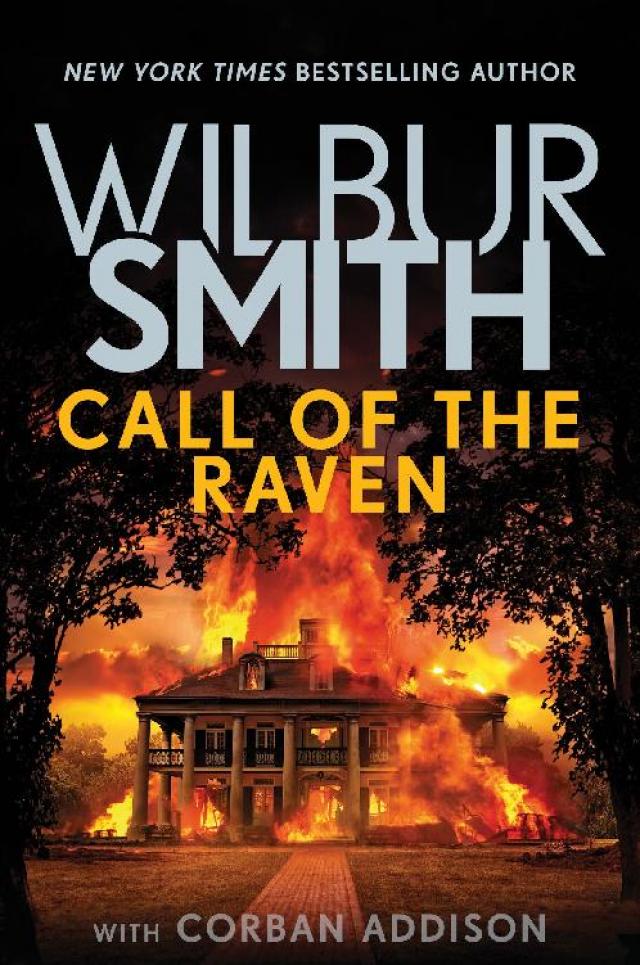
With the cotton packed solid all around her main deck and her boiler deck, the flames caught hold of the Windemere like a bale of straw. But it had not yet reached her stern wheel; indeed, the heat only seemed to make her go faster. She streaked along the river, streaming smoke and flames behind her, cutting a swathe of destruction through the river traffic. Small boats were smashed to pieces under her bow. The larger vessels at anchor tried to get out of her way, but there was no time. She barged them aside, smashing great holes in their hulls—and everything she touched was itself set alight and joined the conflagration, until the whole river seemed to be on fire. It was an utter panic. Many in the crowd tried to flee, while the horses waiting with the carriage reared up and lashed out with their hooves.
Only one man on the wharf remained entirely calm. Mungo did not move from his position by the warehouse, but surveyed the scene with an almost serene look on his face.
Camilla found him there.
“What have you done?” she screamed. Smoke blowing off the water had turned her white dress gray. Ash had landed on her face and been smudged black by her tears. “My son is on board.”
The letter had only arrived that morning from Chester confirming that he and Isaac were coming on the steamboat, but the news did not seem to surprise Mungo.
“Isaac is quite safe,” he said.
A crash rang out across the water. The fire had burned through the pillars that supported the Windemere’s hurricane deck; now it collapsed in an eruption of sparks that threatened to set the whole town alight. A gout of flame shot into the air as the deck planks were consumed in the inferno. Camilla screamed.
But one vessel had escaped the destruction unscathed. The little cutter sailed away from the burning steamer, blown on by the hot breath of the fire behind. Sparks and burning cinders rained down around her; it was a miracle she had not caught fire. One flaming coal touched her sail; a black hole began to open in the canvas. The spectators on the wharf gasped, but the crew were alert to the danger. They hurled buckets of water onto the sail to damp it down.
In the bow stood three bedraggled figures who had obviously been pulled from the water. One was an olive-skinned giant of a man, bare-chested and bare-headed. The second was a child. The third was Chester Marion.
The cutter nudged up against the wharf. The crowd surged down the steps, so eager to help they almost sank the boat. Hands reached out; it seemed there was no way through. But the giant found a way. Hoisting the boy on his shoulders, he moved forward; the crowd had to give way or risk being pushed aside into the river. Chester followed, dripping wet, and if anyone was tempted to console him for his loss, or congratulate him on his escape, one look at him made them shrink away in terror. His bare scalp was scalded red and blistered. His eyebrows had burned away, and there was a livid burn mark down his cheek where a burning fragment of wood had hit him. His face was black with soot, while his shirt hung off him in charred ribbons. It must have caught fire before he jumped in the water. Through the rents in the fabric, you could see more blisters covering his body like the scales of some hideous reptile.
Tippoo put Isaac down on the dock. Camilla ran to the boy and lifted him in her arms, stroking his face as she carried him away. She made her way around the edge of the crowd until she found Mungo.
“We are free.” Tears still streaked her face, but her eyes were bright with astonished delight. “We should go at once, before Chester sees you.”
Mungo’s jaw was set tight. “Not yet.”
“But you have achieved what you wanted.” She tugged on his arm like a child. Mungo did not move. “You have destroyed Chester, and I have my son back. If we wait, we risk everything.”
Mungo barely looked at her. He was still watching the stricken steamboat, a rapturous expression on his face.
“I have not finished with Chester yet.”
The flames on the Windemere had started to lick lower, for there was not much left to burn. They glowed a dull orange, silhouetting what remained of her charred skeleton. A curtain of steam rose from her waterline where the fire touched the river. The watchers on the shore began to breathe again.
Then her boilers exploded.
The noise hit New Orleans like a thunderclap, shivering windows and making the church bells moan in sympathy. Fragments of machinery, timbers, furniture and human bodies were shot up in a column of fire that reached a thousand feet in the air. As they reached their apex, they arced out like the jets of a fountain, raining down all over the city. One of the iron connecting rods was shot through the wall of a house like a cannonball. Mangled corpses, and parts of corpses, dropped into the square in front of the cathedral and caught in the branches of trees. A hail of burning embers fell on the city. Men going about their business, women taking a promenade and babies in their carriages suffered terrible burns. Wherever the coals landed, new fires sprang up. The city was in uproar.
Out on the water, the explosion had split the Windemere’s hull in two. It collapsed inward and sank in a whorl of steam, the two halves of the boat folding together like a monstrous jaw closing. Then she vanished. All that remained was flotsam, and the hiss as burning debris rained down on the water.
Like the eye of a storm, the wharf remained strangely detached from the carnage. The power of the explosion had thrown the debris far over the spectators’ heads. While blood and fire consumed other parts of the city, the dock and the levee remained untouched.
All eyes turned to Chester. The crowd had formed a semicircle around him, keeping a wary distance. But one man pushed his way through. François was weeping, his hair askew and his face gray with shock. He clutched Chester’s arm like a child.
“What will we do? What will we do?”
At the back of the crowd, a young clerk sidled up to the president of the Bank of New Orleans.
“I think you had best come back to the bank,” he murmured.
“Why?”
“Rumors are spreading.”
He pointed back down the levee, to the marble columns that fronted the bank. Even with the city on fire, people were not insensible of their savings. A crowd had already started to gather outside the doors. Their mood seemed nearly hysterical.
“What do they want?”
“People are saying that all our capital was invested in Chester Marion’s enterprise, and now he is bankrupt.”
Jackson went pale. “Keep your voice down.”
It was too late. One of the bystanders had overheard the clerk and was hurrying toward them. To Jackson’s dismay, he saw it was his client, Thomas Sinclair.
“Your bank has the bulk of its capital invested in Chester Marion,” said Mungo. The emotion of the moment seemed to have got to him. He spoke in a loud voice, apparently oblivious to the effect it was having. “You told me that there was no risk attached to it—now I see that is not the case. I shall require you to return the money I deposited with you.”
Jackson seemed to be struggling to breathe. “How much?”
“All two hundred thousand dollars.”
The people around them had begun to listen. Some were already hurrying away down the levee toward the bank. Panic threatened.
“We do not have two hundred thousand dollars left in the vault,” the clerk whispered in Jackson’s ear.
Down the levee, the crowds outside the bank were now hammering on its doors.
“Well?” Mungo pressed. “Can I have my money?”
Jackson stared at Mungo, and every fiber in his body seemed to rupture with the effort of what he had to say. The words every banker dreads.
“I do not have your money,” he croaked. “If you could wait a few days . . .”
“Perhaps I could be of assistance.”
A new voice—that of a beautiful woman in a striking crimson dress who had come up beside Mungo. A stern-faced man in a black coat trailed behind her.
“I am the Marquise Solange de Noailles,” the woman announced herself, though Jackson knew who she was. “And this gentlemen is my attorney. I am willing to buy all Chester Marion’s debts from you, for the sum of one million dollars.”
Jackson looked at the woman as if she had suddenly started speaking in Chinese.
The attorney produced a sheet of paper from his case.
“I have drawn up the contract. Everything is in order.”
Jackson seized it like a drowning man grabbing the rope. He read it quickly.
“Why are you doing this?”
“The Marquise does not want to see your bank collapse in a panic,” said Mungo. “She knows how vital it is to the commerce and prosperity of New Orleans.”
“The alternative does not bear thinking about,” murmured Solange.
So many extraordinary things had happened that morning, Jackson had lost all sense of reality. If he had paused to think, he might have started to wonder at the remarkable chain of events, each more sensational than the last, that had driven him toward this conclusion. He might have asked himself how Solange came to be there at that moment, so well prepared that the paperwork was already written. He might even have wondered at the role of Thomas Sinclair in all that had transpired. But at that moment, the only thing he knew was that the city was on fire, and he had a few minutes at most to save his bank. All his fortune was invested in its stock. If it went under, he would lose everything. His wife would be impoverished, his children destitute.