House of Two Pharaohs, page 13
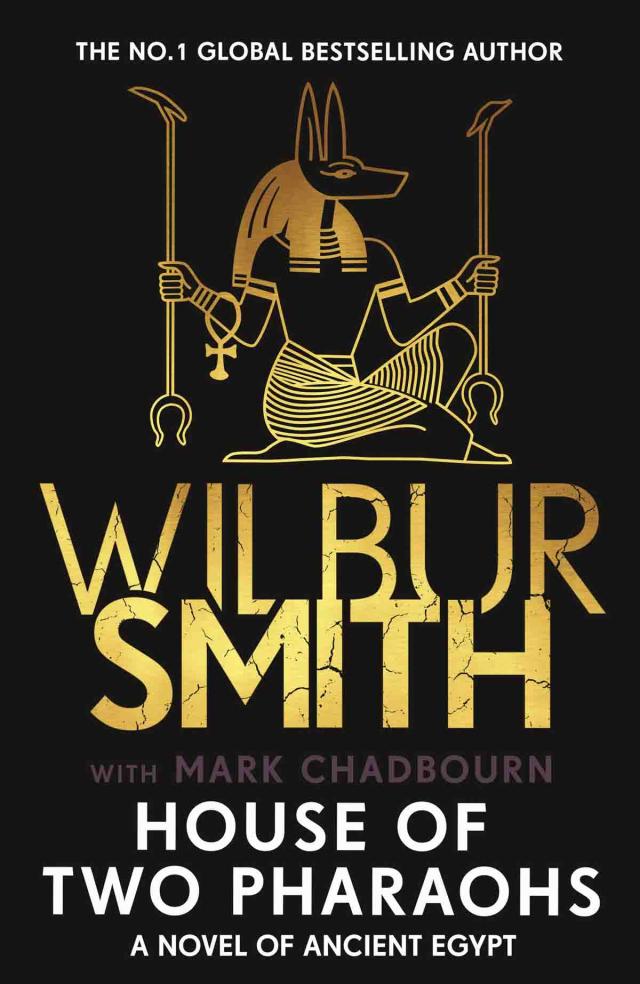


The cheriheb’s voice rang with a passion that seemed to send the spirits of the men in the hall soaring. Even Hannu felt his own soul stirring.
‘Yet now another comes to steal our land from us.’ The scribe looked out into the crowd, as if speaking to each man personally. ‘Pharaoh Rameses, a son of Mamose, has decided that he will seize control of our kingdom, now the Hyksos have been driven back to their homeland. His forces might have delivered the blow that finally broke the barbarians’ hold on us, but it was our resistance, our determination to make them pay in blood every day for their occupation, that weakened them. Now, this pretender has decided that we should be slaves once more.’
Hannu grimaced at this proclamation. Rameses had no desire to subdue anyone. Instead, he believed that by reuniting the two kingdoms, all Egypt would be raised up into a new golden age. Every man and woman in Memphis had already benefited from Pharaoh’s vision. But what did the men around him know of the world beyond the ruined walls of Avaris?
‘This will not happen again,’ the cheriheb boomed, looking to the figure of Anubis on the throne. ‘We will not let this happen again. With you, his army, at his back, the Shuyet will lead us to victory against the oppressor from Thebes. We will crush the forces arrayed against us, and we will take back what was once ours. The Lower Kingdom will know lasting peace once again, under the rule of the true god-king, the Shuyet.’
Hannu stiffened at this declaration.
So, this was the Shuyet’s plan.
He was building an army in secret, to seize control of the Lower Kingdom. Unlike Pharaoh Rameses, he aspired to preserve the separation between the two kingdoms, and to rule a sovereign, independent and restored Lower Egypt. And, Hannu realised with dismay, Memphis would have to fall for him to attain his dream.
‘Brave fighting men from every corner of the Lower Kingdom have joined the Shuyet’s army,’ the cheriheb continued. ‘You, who are joining now, do so just in time, for soon the moment for action will be upon us. The army of Anubis will march boldly against our enemies until they are crushed.’
As the scribe’s final words echoed out across the hall, Hannu felt his blood run cold. He wondered how long the Shuyet had been building his army. And where his men were garrisoned? Not even a whisper of such a force had reached the ears of Pharaoh’s advisors. His thoughts flew to Memphis – the nomarch and the Lord High Chancellor were completely unaware of the army that was preparing to destroy them.
His attention was drawn back to the dais as Anubis stood and held out the ankh and flail. ‘Make your vow,’ the Shuyet intoned deeply, speaking for the first time. ‘You will raise your right hand in the air,’ he commanded.
Across the hall, the men responded without hesitation, every one of them firmly in the Shuyet’s thrall. Slowly, with no other choice, Hannu raised his own hand.
‘Make your oath, as Anubis is your witness,’ the cheriheb shouted over the crowd. ‘I vow to commit my life to the Shuyet,’ he began, clearly enunciating each word of the vow so the men gathered before him could repeat it. ‘Only when he collects me for my journey through the afterlife will I be freed from this vow, and my debt paid.’
Then the scribe raised his arms, and the throng of men gathered in the underground hall chanted the oath in thundering unison.
Hannu only mouthed the words. Even a man as pragmatic as he was would not swear false allegiance before a god. Still, his mind was elsewhere as the men around him recited the forbidding vow. Somehow, he had to escape before the new recruits were transported to the Shuyet’s camp. He had to warn Taita and Piay.
• • •
T
he Shuyet’s soldiers herded the newly conscripted men out of the chamber. In the narrow annexe, they were compelled to proceed in single file. Dropping his head to his chest, Hannu muttered a silent prayer as he shuffled towards the staircase.
The men trudged back up the rough stone steps by which they had entered the inner sanctum of the Temple of Baal. After the suffocating heat of the underground hall, the night air was chill, and Hannu pulled his cloak closer around him as he stepped out into the temple compound. More soldiers stood on either side to guide the new recruits.
‘Move on . . . towards the river,’ barked one of the soldiers, who appeared to be a captain. ‘Follow the light.’
Hannu looked ahead. A single lamp burned by the temple gate, hoisted on a long pole by another of the Shuyet’s soldiers. Illuminated by the flame that hovered above him, the man seemed suspended like a spectre floating through the night. As the first of the new recruits reached him, the soldier turned into the cramped street beyond the compound, leading the men towards the harbour.
None of the men spoke. The only sound was the shuffle of their sandals across the broken flagstones. But when the line of conscripts reached the broad street that led to the harbour gate, moonlight shone down upon them, silvering their path, as if to welcome them to their destiny.
As they neared the harbour, Hannu’s eyes darted from side to side, assessing each of the side streets as they appeared out of the darkness. If there was to be an opportunity to slip away, he would seize it. But the Shuyet’s soldiers still hugged close to the column, their spears ready to strike anyone foolish enough to break their newly made vow.
Hannu was trapped. But if he followed the new recruits to their destination, he might be able to learn the true strength of the Shuyet’s army and its battle readiness, he told himself, and he could bring that vital intelligence back to Taita and Piay. But what were the chances of escaping from the Shuyet’s stronghold? What were the chances of making it back to Memphis at all?
On the wharf, braziers glowed, throwing up bright sparks, and the air was thick with smoke from the smouldering dung and straw bricks. Most of the sailors had retreated below decks to sleep, and those who were still awake looked half-drunk. They glanced at the line of conscripts without interest, clearly accustomed to regularly seeing these lines of men being marched by torchlight from the city.
The shriek of a hunting owl echoed through the stillness, and Hannu watched as a winged shadow flashed across the flagstones. Raising his eyes, he saw that beyond the scattered merchantmen was the mast of a large ship that hadn’t been present when he had pulled into the harbour in his waterlogged skiff. As the column approached, he could see that the ship had once been a Hyksos trading vessel, with its high aft tower and prow carved into the head of a rearing horse. It must had been salvaged by the Shuyet and his men when the barbarians had fled. The Hyksos had used ships like this one to transport blocks of limestone to the lands in the east, returning with holds full of cedar wood. It would be perfect for moving the new conscripts to wherever they were to be housed and trained.
At the base of the gangplank, a scribe waited for them, with his brush and ink and roll of papyrus parchment. Hannu watched as the men ahead of him gave the scribe their names, and details of the towns and villages that they had called home. Then, one by one, they climbed the gangplank to the deck, where they disappeared from view.
Hannu took a deep breath to steady himself and followed.
• • •
T
he vultures circled, riding the warm air billowing off the desert sand, spiralling upwards into the windswept sky, where they scanned the land below for carrion. Piay eyed the birds as their white plumage caught the morning sun, but he knew that he and his men were of no interest to the scavengers. Taita had spent all night tending to the three injured men whom the Blue Crocodiles now carried on makeshift stretchers, and although their wounds were serious, he had reassured Piay that they would all return alive to Memphis. The vultures’ far-seeing eyes were fixed on something else, something still ahead – where the lush green of the Nile valley began – but as Piay watched their measured circuits, he could not help but wonder if their presence was an omen.
Piay’s plan had cost them dearly. Twenty-two of the fifty Blue Crocodiles who had left the palace barracks remained where they had fallen, in the dead city. And no matter what Taita said, Piay’s guilt could not be assuaged.
Piay was distracted from his thoughts by the approach of a small caravan – a few carts that stopped when he hailed the lead driver. To his surprise, when the hood of the driver’s crimson robe was peeled back, a wealth of dark hair tumbled out in gleaming coils. The driver was a woman, and a beautiful one, too – her dark blue eyes holding his own captive. She wore a richly patterned silk scarf bound tightly around her forehead – from a land far to the east, Piay guessed, well beyond the borders of Egypt.
‘I’m coming from Memphis,’ she told them proudly, in the throaty accent of the Lower Kingdom, when Piay questioned her. ‘I had goods to trade at the Feast of Hathor.’
‘Why Memphis?’ Piay asked her.
‘People are flocking to the old capital from every corner of this land.’ She shrugged. ‘There is hope again in Memphis, and money to be made.’
Satisfied with her answer, Piay nodded. ‘Be on your way,’ he said, dismissing her.
As the merchant’s carts trundled away, Taita watched them go with a curious expression on his face. ‘She was quite memorable, for a merchant,’ he mused.
‘She was,’ Piay agreed.
‘There was a time when a woman like that would have captured your interest.’ Taita raised an eyebrow. ‘What once was, can be again.’
An hour later, as the sun began to approach its zenith, they spotted a second caravan. The increasing traffic indicated that they were closing on their destination, and the Blue Crocodiles picked up their step – it would not be long before they were back in Memphis, safely in the barracks alongside the rest of their company.
But as they approached the caravan, instead of the creaking of wheels and the flick of switches over the rumps of the mules, there was silence. Corpses lay strewn between the overturned carts, mutilated bodies already decomposing under the relentless desert sun. The Blue Crocodiles immediately recognised the dead – the Memphis Guard – and the remnants of the caravan that they had driven into the desert. It had not made it back to the city.
Piay surveyed the scene first with bewilderment, then with horror. The Memphis Guard, the fifty men who had comprised the caravan’s escort, had been slaughtered.
‘Our adversary must have swallowed at least a part of your ruse,’ Taita remarked grimly. ‘He has seized the treasure you tempted him with.’
‘There may be survivors,’ Piay said, waving the Blue Crocodile Guard forward. But as he watched the soldiers begin to work, moving diligently from body to body, his anger overwhelmed him. ‘Fifty men!’ he growled. ‘Fifty men!’
‘There is nothing you could have done, Piay,’ Taita replied. ‘Had we not gone after the raiders, we would have been overwhelmed by the Shuyet’s forces, just as these soldiers were. You and I would now be captives.’
‘The Blue Crocodiles would have fought!’ Piay retorted.
‘Yes, and the twenty-eight we still have would be dead, alongside the rest,’ Taita said as he surveyed the carnage. ‘At least you had the good sense to take my advice, and leave most of the treasure in the vault. Had you not, then that would have been lost as well.’
‘A senseless slaughter . . .’
‘But perhaps not without recompense. Look!’ Taita pointed to where the Blue Crocodiles were gathered around a lone Memphis Guard, whom they had propped up against the wheel of one of the emptied carts.
As he followed Taita over to the group, Piay could see that the young man’s torso was stained crimson – he was amazed that he had lasted as long as he had. ‘The gods have preserved him for a reason,’ Taita muttered as he crouched beside the injured soldier and began to examine his wounds.
Piay nodded, squatting beside him. ‘Who did this?’
‘Anubis,’ the guard croaked, his head lolling and his eyes struggling to focus. ‘It was Anubis himself.’
Piay sensed the Blue Crocodiles around him stiffen as a sudden breeze whispered across the caravan and a thin cloud moved in front of the sun. It was as if the god’s shadow had fallen upon them.
The wounded man’s eyelids fluttered shut as he slipped to one side, unconscious.
Piay stood. ‘Bind his wounds,’ he commanded. ‘Then put him in one of the carts with the other wounded.’
While the Blue Crocodiles carried out Piay’s order, the man who had been the first to reach the mortally wounded soldier lingered. ‘A word, my lord?’ he entreated.
Piay glanced quizzically at Taita, then nodded.
‘He had more words in him before you arrived,’ the guard revealed. ‘The force that attacked them was no rabble. A hundred at least, he said, and they fought like soldiers, not raiders. The Memphis Guard stood no chance.’
‘They were attacked by soldiers?’ Piay said, astonished.
The guard nodded. ‘The Shuyet has some kind of an army. The band of raiders we chased were a diversion. The real threat lurked somewhere out of sight, and once we had abandoned the caravan, they fell upon it like locusts.’
‘And consumed all they found,’ Taita said, finishing the soldier’s thought for him.
‘They also left this behind,’ the guard said, holding out a piece of basalt flecked with gold. ‘They made a special example of Captain Ahmose. Disembowelled him and cut off his head. We found this in his mouth.’
As the guardsman bowed and left to join his comrades, Taita held up the object that had been found in Ahmose’s mouth – it was a jackal-headed senet stone. ‘So, at last, we discover the endgame,’ he said, thoughtfully. ‘The Shuyet’s design, once he deduced your plot, was to turn it on its head. He was attracted to the gold you teased him with, but he was too perceptive to step into the ambush.’
Piay glared at his master. ‘You said that we were his target.’
Taita met his gaze evenly. ‘I still believe we are, more now even than before. Do you not see that in what he did here – he was hedging his bets?’
Piay looked at Taita in bewilderment.
‘If we chased after the raiders, he intended to drive off the Blue Crocodiles and capture us in the dead city,’ Taita explained. ‘If we remained with the caravan, he planned to take us here, along with the treasure we carried. Either way, his strategy was designed to catch us in his net. That we stand here is testament to our victory, and his defeat.’
Piay spat in the dust. ‘He is mocking us,’ he growled.
Taita shook his head. ‘He failed.’
Piay looked at his master with wide eyes. ‘Look around you. He slaughtered our men and took the gold.’
‘But he didn’t take us,’ Taita persisted.
Piay grunted an acknowledgement. ‘You may be right. But if this is victory, it is a bitter one.’
• • •
T
he Blue Crocodile Guard picked up their step when they finally glimpsed the white walls of Memphis, pushing back their shoulders. They might have been defeated in the dead city, and lost their comrades in the attack on the caravan, but by the time they reached the gates they were marching with pride ahead of the wagon that bore their wounded – they were still Egypt’s finest.
As they strode up to the city, the heralds blasted out a fanfare to signal the return of the nomarch and the Lord High Chancellor. Taita knew that the sound would create frantic activity at the palace – fires would be lit in the kitchen, rose petals scattered across the cool marble floor of the entrance hall, and hot coals carried to the incense braziers.
With the wearying journey coming to an end, Taita was looking forward to his bath and being dressed in a fresh robe, but he suspected that however much soothing oil was rubbed into his skin, he would not be able to find peace until the Shuyet had been brought to justice.
To the thunder of the Memphis Guard stamping their spears in welcome, Taita, Piay and the Blue Crocodiles marched through the gate and into the city.
• • •
T
aita and Piay let the slaves bathe them, and then ate and drank until they’d had their fill. But while their bodies were soothed, their minds remained restless.
When night approached, they walked out together into the palace gardens. The air was filled with the fruity aroma of the night-blooming white lotus.
‘I feel much refreshed,’ Taita said.
‘I’m glad.’
An owl hooted, an eerie sound rolling out from the high branches of the sycamore trees like a soul that had become lost on its way to the afterlife. The ancient name for the bird was ‘the one who laments’, and the superstitious associated its call with imminent death.
But as they passed Myssa’s monument, Taita was pleased to see that Piay did not pause. Perhaps he was beginning to transcend his grief, his mind now fully focused on the dangers facing them.
‘So, he failed to capture us. What, then, do you believe our adversary’s next move will be?’ Piay asked.
‘I don’t know. But I think the time has come to stop playing his games and to start to play our own.’ Taita rubbed his temple thoughtfully. ‘We know now that we are the prize. So, rather than trying to trap him in the desert, or keep his forces at bay, let us rather bring him a little closer, so we can see him in the light.’
‘What do you propose?’ Piay asked.
‘A contest.’
Piay cocked his head incredulously. ‘A contest?’
‘A contest, demanded by Pharaoh, to discover the greatest talents, the sharpest intellects, the wisest citizens from across Lower Egypt. These notables will compete for the honour of being named vizier – a new appointment, someone who can help Pharaoh integrate the nomes of the Lower Kingdom into the new, unified Egypt. The only thing more irresistible than gold is recognition for one’s superior intellect. I know this from personal experience.’
‘It will attract a great deal of riff-raff seeking to advance their station, from across a land long ravaged by the Hyksos.’ Piay snorted. ‘But let’s set that aside for a moment. How will this contest bring the Shuyet closer?’
Taita held out his hand to Piay. In his palm lay three jackal-headed senet stones, their gold inlay winking in the moonlight. ‘One was found next to the master mason and the second with Ahmose, the captain of the Memphis Guard.’