

El Mono, page 1
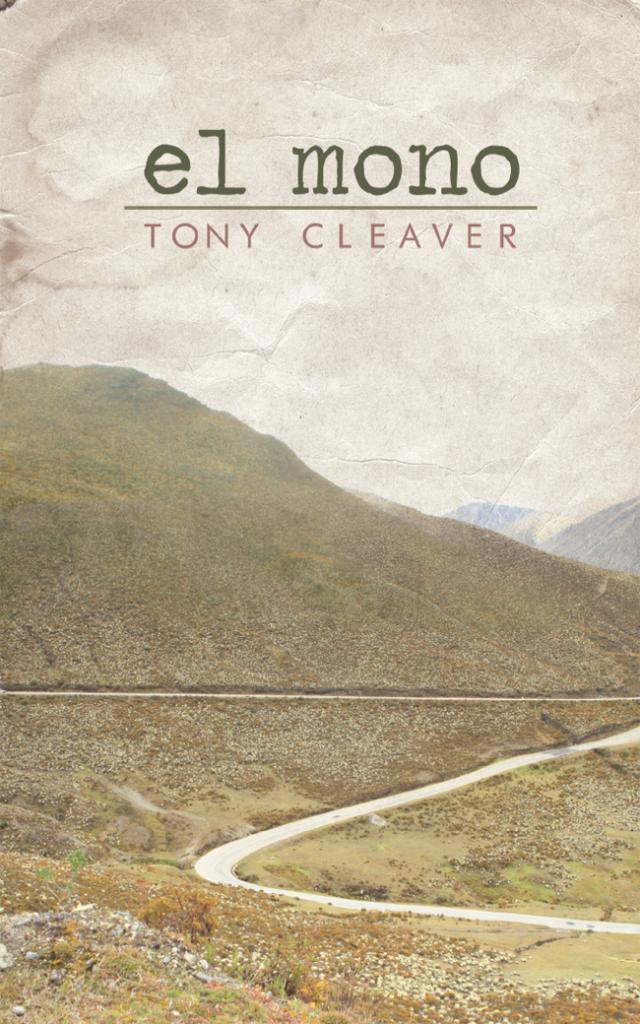


Originally from London, Tony Cleaver has been a journalist, hippy, teacher, road sweeper, mountain guide, university lecturer and writer. He has lived and worked in Colombia, Chile, Singapore and the Netherlands and is the author of two economics textbooks published by Routledge. After many years teaching economics at the University of Durham, he has recently moved back to Colombia, where he lectures part-time, writes and plays cricket.
EL MONO
Tony Cleaver
Book Guild Publishing
Sussex, England
First published in Great Britain in 2014 by
The Book Guild Ltd
The Werks
45 Church Road
Hove, BN3 2BE
Copyright © Tony Cleaver 2014
The right of Tony Cleaver to be identified as the author of this work has been asserted by him in accordance with the Copyright, Designs and Patents Act 1988.
All rights reserved. No part of this publication may be reproduced, transmitted, or stored in a retrieval system, in any form or by any means, without permission in writing from the publisher, nor be otherwise circulated in any form of binding or cover other than that in which it is published and without a similar condition being imposed on the subsequent purchaser.
All characters in this publication are fictitious and any resemblance to real people, alive or dead, is purely coincidental.
Typesetting in Sabon by
Norman Tilley Graphics Ltd, Northampton
Printed and bound in Great Britain by
CPI Group (UK) Ltd, Croydon, CR0 4YY
A catalogue record for this book is available from
The British Library
ISBN 978 1 909716 17 9
ePub ISBN 978 1 910298 00 8
Mobi ISBN 978 1 910298 01 5
For the women who have loved
and inspired me
Contents
Prologue
Part One
1
Juan Sebastián’s Story
2
The Exchange Student
3
The Corporate Executive
4
The Mountain Man
5
Multinationals at War
6
The Puracé Mines
7
Christmas
8
The Mining Companies
9
Turning the Page
10
Saying Goodbye
Part Two
1
Working for Triple F
2
Two Worlds
3
Intimate Liaisons
4
Baby Peter
5
Thelma Marshall
6
Confrontation
7
Reunion
8
Desolation
9
Broken Dreams
10
Pumas
11
Finale
An Explanatory Note
Nicknames are common in Latin American Spanish. To call a friend Gordo (fatty) or Negro (blackie) is no insult. Similarly, a slim, sun-tanned, elegant woman might be called Negrita or Flaca (skinny). To foreign ears this may seem strange but such sobriquets are actually terms of friendship and affection and cause no offence. There are countless numbers of Monos and Monas in Colombia who may have hair or complexions only fractionally lighter than others (if at all). There is even a shop in Popayan called El Mono, though I found it only after this novel was written.
Prologue
This year James Mayor planned to celebrate Christmas out of the city, just with his wife and child. A number of reasons came together to prompt this decision: firstly he needed a release from working in Bogotá. It is a frenetic and teeming metropolis of over seven million people with chaotic traffic and he wanted a rest. Secondly, thanks to his firm, Transnational Mining Group or TMG, which operated extensively in the south-west of Colombia, he had found his family’s favourite vacation hideaway in the Andes and they were delighted to be returning there once more. And, thirdly, his wife wanted to do some field research on indigenous languages for her university and there would be time over the Christmas vacation for her to interview a number of employees of TMG that were being recruited for the new mine in the region. All things taken together, a month on holiday away from the city and relaxing in the Andes seemed the ideal antidote to what had been a demanding year of work for all of them.
As soon as his son’s school had finished in December, therefore, the three of them flew out on a company jet to Popayán, the capital of the department of Cauca – a beautiful old town a couple of hours’ flight away. There they were picked up by jeep and ferried to their chalet in the mountains. Rest and peace at last!
James was deeply concerned by his twelve-year-old son, Daniel. He, most of all, needed a break from the city. Daniel had experienced all sorts of difficulties in school and his parents had been at their wits’ end as to what form of education was most appropriate for him. Then, after a recent session with psychologists, Daniel had been diagnosed with dyslexia and at last his parents knew what was the cause of all his troubles. The reason why he had been a slow learner, why he had hated being in class, why he had been bullied for being different – it all made sense now. His mother had always been convinced that Daniel was an intelligent boy; it just didn’t show in formal classwork. Of course it didn’t. In what way other than reading and writing do traditional schools measure progress? His oral abilities, his quickness to follow instructions or second-guess his superiors, his excellent hand–eye coordination, these were attributes that were never really measured nor valued – except in his language classes in English and Spanish, the only subjects he seemed to do well in. The fact that Daniel came alive when on holiday in the mountains; his natural empathy with all creatures great and small; seeing that he thrived in the company of indigenous village people – none of this was observed by his teachers and educators in his expensive school in Bogotá. In retrospect, James considered that this was perhaps the most important reason why they were holidaying in the Andes once more.
Of course, it was not a complete holiday for James. The fact that his son would not be a continuing cause of concern now they were away – together with the absence of the niggling but time-consuming demands of the office – provided James with an opportunity to reflect and take a longer view of his firm’s operations.
The rivalry between TMG and Triple F Corporation – two multinationals that were petitioning the Colombian government for licences to mine in the departments of Cauca and Nariño – had become increasingly intense of late. But TMG had been informally cultivating the government’s minister for mines for some time now, with the result that their bid to purchase unique access to the region’s mineral resources had been accepted. Such a success was real feather in the cap for James and his team, but he was sure that Triple F’s anger and frustration at being out-manoeuvred on this occasion did not mean they had given up and retreated. All sorts of funny goings-on had been happening since, up to the point where a local staff member had been kidnapped and TMG had had to pay out on a big ransom demand. Word was that Triple F might have been somehow involved in this. Even if this wasn’t true, James was sure they would be up to something – anything to make his life difficult. He would have to keep his eyes and ears open to see what developed in the New Year.
For now, it was time to enjoy a refreshing change. Well, almost a change. He had borrowed a company car and was going to drive his wife up to the new mine so she could meet some of the indigenous employees who had recently been taken on. Before operations started up big time and all labour became fully engaged, this provided a chance for his wife to quiz a number of them about their language and culture. Although James was regarded as one of the corporation’s superiors from Bogotá, his was not an official visit. He would do nothing but meet a few of the mine’s chief officers and say hello. He was not going to interfere.
That morning Daniel was left in the chalet with the maid, a local woman who doted on him, and his parents drove on up into the mountains on the new access road – a dirt track that wound round some precipitous curves in the Andes on the north-eastern slopes of Volcán Puracé. The drive required some concentration if you were to stay safe and away from the edge and its murderous drop below, but nonetheless James and his wife could afford to relax and enjoy the scenery and indulge in the precious time that they now had together on holiday. Until they hit a landmine. BOOM! The road exploded below them and the car was thrown up into the air and over the edge of the precipice. The two died instantly.
The death of two people in an unfortunate explosion caused no great fuss in the local media that day. The local police, when called to investigate, blamed the FARC for organising a war against foreign multinationals but the only people living in the area, indigenous Andean Indians, had seen no sign of the guerrilla organisation and they themselves had no cause to complain about the foreign enterprise that was offering them work. The view that guerrillas were responsible for this latest atrocity was, however, widely accepted. Who else would perpetrate such deeds? It was just another attack by fanatics who regularly spilt blood around the country as a means of promoting their nihilistic cause. Naturally, TMG was saddened by the loss of one of their executives, as was the Universidad Nacional in having its research set back once more in a volatile region of the country. But TMG had taken out insurance against the loss of senior personnel in overseas operations and no great inconvenience
Except for poor, orphaned Daniel. What was going to happen to him? He could not now go back to his bilingual school in Bogotá so he stayed put in the place that he loved and with the people that loved him. His future was to be played out in the Andes Mountains of Cauca.
Part One
1
Juan Sebastián’s Story
Juan Sebastián Torres had always been an excellent student at school – top of his class every year throughout primary – in maths, in Spanish, and best in the whole school in English – so much so that his devoted parents decided to make every sacrifice possible for him to continue into secondary. He was never required to join his older brother and work in the fields or mines to supplement the family’s income. Even though Diego would sometimes complain about the easy life and the soft hands his brother was getting, none of them seriously disputed the decision that had slowly evolved between them with regard to Juan Sebastián’s future. It was never directly referred to in this way, but Juan Sebastián was their joint investment for a better life for all of them.
From the moment he transferred into secondary – a thirty-minute, bumpy bus ride over unmade roads to the next pueblo – Juan Sebastián shone in his new school. He was keen, industrious, never late in attendance nor in handing in his work, and he was one of the brightest in his class, if not the entire school of 230 students. His teachers loved him and were stretched at times to keep him sufficiently challenged when others of his age were plodding behind in his wake.
Giving Juan Sebastián extra responsibility, from handing out and collecting classwork to helping organise class and school events, was one way to reward his efforts, keep him engaged and simultaneously develop his sense of solidarity with his community. Naturally, Juan Sebastián thrived on such a policy. His grades were excellent, his attitude impeccable. His initiative led him to discover when the radio was broadcasting a programme in English and he would eagerly try and outdo his teachers in pronouncing new words that he heard over the airwaves. It was not very long before his proud parents were informed that this young man had a very bright future indeed and that the head teacher himself, Dr Jimenez – who Juan Sebastián hero-worshipped – would recommend the family for state financial support to enable his education to continue in due course in the altogether more stimulating academic environment of the top school in the departmental capital of Popayán
Then, one evening at sunset when the family were altogether at dinner, the men with guns arrived at Juan Sebastián’s house. They had already surrounded the tiny settlement where he lived, blocking the one path in and out, and were now systematically searching for able-bodied young men who could be press-ganged into joining them and promoting their cause.
Juan Sebastián’s father protested loudly but to no avail. Diego, the oldest boy, was taken. However, his father put up such an impressive and energetic defence for his son that the two men who were at the door looked at one another, nodded in agreement and then promptly frog-marched the father out of the house as well.
Juan Sebastián and his mother were distraught. They watched, crying, fearful and powerless, as their livelihood was pushed at gunpoint away from them and out into the night. Worse, just as the armed group was disappearing into the bush, their leader paused, called out to Juan Sebastián and warned him to stop crying because, when they returned, ‘he would be next!’
At school the next day, Juan Sebastián sat silent and in shock. Where were all his dreams of the future now that his mother was alone at home and there was no income coming in? He would have to give up studying and find work.
Over the next week, he discussed his options with his mother, his aunt and young cousins, who lived across the way, and with his teachers in school. No matter all the protestations that they put forward, saying he was such a distinguished student and that he could not possibly give up on a potentially rewarding career, Juan Sebastián knew that his only real choice was to work in the fields or in the local mines. He went to school sad but resigned to tell his head teacher of this decision. But the men with guns had got there first.
His old bus arrived on the dusty open space in front of the main school entrance just as lines of students were being led to assemble in front of the Colombian flag. Dr Jimenez and most of his staff were already there, their faces gloomy and drawn, and behind them were several men in army fatigues carrying weapons.
Juan Sebastián and the others in his bus were all called to join the rest of the school and there was a buzz of subdued chatter and worried questioning as they disembarked and moved across the field to join their peers.
Bang! A shot was fired in the air and suddenly all attention was riveted on a dark, bearded individual who stood at the front of the lines of students, holding his AK-47 as if in salute.
‘Youngsters, patriots, Colombians, welcome to the revolution!’ The bearded leader shouldered his weapon and elaborately came to attention, parading in front of his audience. Then he dropped his arm and beckoned to the watching students, inviting them to follow him. ‘Celebrate with me – you are today liberated from the clutches of international capitalism. From this moment on you can now join me in our struggle to free our beloved country from those who would despoil our lands, steal our wealth and impoverish our peoples.
‘Sons and daughters of Bolivar, listen to me. Our glorious Liberator fought against foreign forces who sought to enslave us. To what end? So that we may toil as wage slaves for imperialist mining companies and other foreign multinationals who continue to exploit our riches and ship them overseas to fill their own pockets? No! Colombia has suffered enough. We must take back our land; eject all those who wish to control our lives; shape our own destinies. Join us!’
At this point, Dr Jimenez the head teacher could remain quiet no longer: ‘No, children! Don’t believe him!’ he cried out. ‘Living by the gun is no life at all!’
Jimenez was quickly silenced by two men, who caught him around the head and dragged him away, out of sight of the assembly.
The bearded man continued, ignoring this interruption. ‘Sadly, there are many so-called teachers who would want you to remain poor and subservient to foreign interests – either because they are ignorant of the evils of capitalism or, worse, they are in their pay. Such people must be re-educated. Ask yourselves: what do you want for your future? To be condemned to slave for a pittance, working for foreigners who live far away and yet who control all of Colombia’s land and capital? Or will you rise up, join me and take back what rightfully belongs to you and your parents?
‘Do you think that the capitalists will give us back our lands, our rights, our dignity just because we ask them? Or if we behave nicely to them? Of course not. They rob us of everything they can; they corrupt our own police and government; they enslave us; they poison the earth and waters we live by and they fling anyone who protests into jail. Will you remain weak, docile and helpless for ever? No! You must join with us and follow the example of Simón Bolívar, Che Guevara, and all of Colombia’s heroes who seek to throw off our chains and regain our freedom.
‘From now on this school is closed. No more classes in capitalism. Your re-education is to begin. You will join us in training for a free future for all our peoples. Viva las Fuerzas Armadas Revolucionarias de Colombia! Viva Bolívar! Viva Colombia!’
A roar of applause erupted among the men in battledress around them and everyone else was encouraged to join in. Shots were fired into the air. The youngest students were grinning and shouting – cheered as much by the suspension of classes as by the strong words of the lead guerrilla. Some of the older students had clearly been stirred into a patriotic fervour and were saluting the flag.
The assembly broke up. Teachers, school administrative staff and the one or two bus drivers were kept well away as the armed men went among the students, separating the older from the younger, the immediate converts from those who needed further persuasion.




