

Memories of the Future, page 15
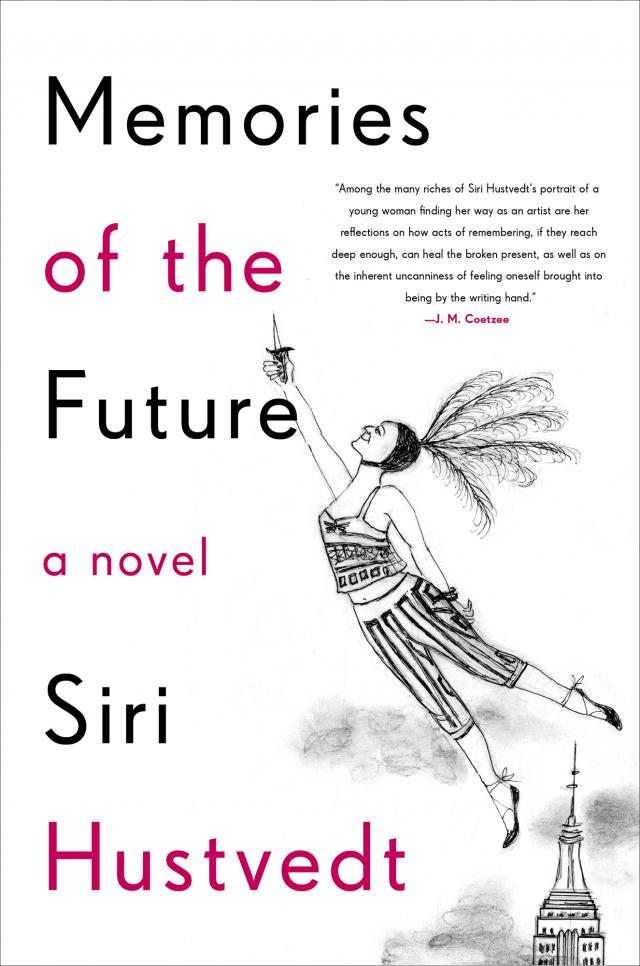


Aunt Irma used to say, “Never say never.” But here is the secret: Never also has time and space, although those coordinates are often forgotten. It may be the Forgotten itself. When you get to the end of the road, take a right, then walk a quarter of a mile until you reach the abandoned house on your left. You will see it. It’s all boarded up. They say a woman squats there. I have never seen her myself, but they say she walks with a limp and that she has seen wonders and terrors. They say she walked out of one story and into another.
CHAPTER EIGHT
I was the only member of the gang who had heard my neighbor through the wall, the only one who had ever seen her. For my friends, Lucy Brite was not a human being so much as pages of gibberish transcribed into my notebook over a period of several months, very little of which had any grounding in known facts. Lindy, Ted, Ted Jr., and the hopeless doctors were creatures of Lucy’s monologues, which then reappeared in her telephone conversations with the mysterious Patty. I had definitely seen and heard Lucy on the sidewalk with the pale young man. I knew for certain that Patty and at least two other women had been in Lucy’s apartment, and while they were there had been up to something that involved drums, a little man, whirlwinds, mother whales, a knife, and a rope.
Each of my friends concocted a possible narrative to explain what was happening to my next-door neighbor. The data were the same; the imaginations were different. Callous as it sounds, the how-to-tell-the-Lucy-story turned into a game we played for our amusement. Although I felt guilty about tossing Lucy around as if she were a tennis ball, I found relief in the various theories that were batted back and forth because I didn’t want to live with the mystery alone. I needed my friends to lift me up and out of the violence that lurked in the fragmentary tale still unfolding in 2C.
In memory, I often see us around the table in Whitney’s loft late in the evening. A stubby candle has burned to liquid in a saucer, wax brimming around its nearly drowned wick, and when I raise my eyes, I see its unstable light refracted in the curve of a wineglass and watch the cigarette smoke drift above our heads. I would like to be able to listen in on us now, to hear our voices, my own among them. I wonder if the high-flown discussions that delighted me at twenty-four wouldn’t sound less than rigorous now. The truth is I am not remembering one dinner but several that have collapsed in memory: 1979, 1980, 1981, and 1982 have mingled in my mind because one dinner after another took place in the same room.
I can’t accurately conjure the faces of my friends any more than I can reproduce our conversations, although I can broadly describe each person’s features. Language hardens visual memory and, after the image has disintegrated, the words survive. But the picture of the five of us is less important to me than the feeling of us, an air of satisfaction that did not belong to one person but was created among us. We were pleased with ourselves, you see, and that self-satisfaction was derived from just the right amount of self-consciousness—not so much that it stiffened our words and gestures, but not so little that we weren’t aware of ourselves as a rumpled, Romantic, lively collection of young artists and intellectuals either.
When we were together, what we had not yet done but surely would do had the power of an enchantment. We were raw youths, and we had swallowed the future whole, which is to say that what we were depended on what we imagined we would become and because we impressed one another, we were illuminated by our mutual admiration. Although human beings are forever projecting themselves into tomorrow, time takes the shape of a funnel as we age. The opening in the distance grows smaller; the passageway narrows. The possible becomes the probable. These days, I clutch the immediate. I am writing toward death.
* * *
The only way I am able to enter Whitney’s old loft now is as a ghost of myself. I can imagine us around the table, but I cannot relive the particular form of contentment we felt because it was founded on expectations that have since vanished. In the notebook, I use “the gang of five” interchangeably with another, more affectionate phrase.
April 15, 1979
I don’t use the expression with them. It lacks irony and reeks of nineteenth-century sentimentality. To be perfectly honest, it smells to high heaven of Dickens himself, but with you, Page, I am entirely free to call them the “Dear Ones.” I had dinner with the Dear Ones last night. Everyone has a different position on the Lucy story. I wonder what she would think if she knew that there were five armchair detectives working on her case. S.H.
I gave no further particulars about the dinner.
As I meditate on the many meals merged into one meal, I see Jacob Ackermann lean back in his chair, the sleeves of a sweater pushed up above his elbows, a Gitane between his fingers. Jacob is our physicist at Princeton, twenty-eight years old, blond with a reddish complexion, born and raised in Paris, a Jew with roots in Palestine, often dressed in narrow white jeans and sneakers. Whitney met Jacob at the Castelli Gallery on West Broadway, where they had discussed Jasper Johns with mutual affection. He drove an old blue-and-white convertible of an American make I wish I could remember. Not one of us understood what Jacob actually did at Princeton, but we loved the idea that he was working to extract tiny secrets from our greater universe.
It was Jacob who first used the word quark in my presence. He described the fermion particles as “smeary,” and he told me the story of Murray Gell-Mann, who had predicted their existence and had named them after a line in Finnegans Wake. Jacob also mentioned up, down, top, bottom, charm, and strange quarks. The language made me think less of Joyce and more of Lewis Carroll, and in that moment physics itself seemed to exist on the other side of the looking glass. Four years later, Jacob would introduce me to another physicist, Walter Feld, by saying, “He’s left string,” a mystifying comment that would be clarified soon after by Walter himself, but in 1979, “Walter Feld” wasn’t even a name to me, and its referent occupied no time or space in my world.
At one of those dinners downtown, Jacob informed me that in theoretical physics one had to break through by thirty, do something big or you were pushed to the sidelines. Jacob had published an important paper, but he led me to believe it had to be followed by something better, and I understood that like dancers’ bodies, physicists’ minds were not allowed to grow old, and this thought made me wonder why certain kinds of thoughts appeared to thrive in young brains while others needed years of tending to mature.
It took me a while to understand that for Jacob much depended on hitting just the right chord in conversation, one that mingled sincerity and cynicism, compliment and joke. I also discovered that along with many of his compatriots, Jacob regarded flirtation as an art. In France the well-turned sentence is sometimes preferable to the acrobatic contortions of the flesh. Bantering with Jacob reminded me that I had traveled far from the Midwest, a feeling of distance I liked. I vividly recall that Jacob once said to me in a voice of measured sadness, “Why do you wear those pants?” and I looked down at the khaki trousers I had always liked to discover that they suddenly disappointed me.
It’s not surprising that Jacob’s position on the Lucy story mixed jocularity with reason. Lucy, he argued, was delusional, insane. He declared that the two Teds, Lindy, the crippled gardener, Sam Haynes, and the magic children were all figments of a psychosis. Hadn’t she alluded continually to “the hospital” and “the doctors”? Jacob argued that she had been on the telephone with her indulgent psychiatrist, Patrick Somebody. When I challenged him to revise his theory to account for the “It’s over” revelation on the sidewalk and the moaning women next door, he grinned and said delusions had been known to be contagious and cited as an example the dozen or so people who insisted they had witnessed a statue of the Virgin in some Italian town square shed three tears of blood. (It strikes me now that this must have made me think of Frieda Frail and my troubles figuring out what to do with her, but I really don’t remember.) I reacted indignantly. I had seen the pale young man outside the building and had been listening to Lucy for months. I was not hallucinating. Then he patted my shoulder and said, “I know you’re not insane, Minnesota, but are you or are you not a romancière?”
Even then, it wasn’t clear that Jacob believed his Lucy-is-psychotic proposition. He enjoyed provocation for its own sake, had been a Maoist for a brief period a few years earlier (a fact that appalled me, but which he seemed to think had its dashing qualities), and despite his agility in the realm of theoretical physics, his psychological insight was not astute. Romancière, the feminine of romancier, is inevitably touched by the condescension the French have shown toward writers with the wrong genitalia for centuries, and that is why this sentence that began with the fact that I was not crazy and ended with the feminized noun for “novelist” has never left me.
I loved to play with Jacob, enjoyed the speedy back-and-forth of our talk, although I couldn’t match his manner. We are still friends. This apparently innocuous comment hurt me because in it I recognized a familiar, patronizing music. Jacob did not and does not make a habit of looking down on me from on high, but at that instant his voice blurred with other voices I had heard over the years of my then still short life. If that particular tonality had played in my presence only once or if it had belonged to a single person, I am certain it would have vanished from my memory, but those demeaning notes have over the course of the years become a nauseating refrain.
And listen to me closely: In hexed repetition, time loses its direction. It springs backward and forward, bounces up and down. It floats to the top and sinks to the bottom, and it turns on its wheel. The melody echoes and reverberates and reaches a crescendo, and that is when it is truly hard to bear. “You’ll make a fine nurse.”
* * *
I closed the door on August Scavelli in Chapter Four to lunge in the direction of Malcolm Silver, the standard hero who has vanished from this book entirely. I will place Gus across from me at the imagined-remembered table, and I will summon Whitney to sit beside him and conjure up the breeze that blew over us many times through the open window on West Broadway. The street had a distinctive odor, but it is one I can only guess at—gasoline and exhaust and human sweat and newsprint and garbage and groceries and dog shit, but much else, too, until the blend becomes indescribable.
The stout, white-haired Gus I still know has obfuscated his younger self, but I can say that at the time he was neither thin nor fat. His body had the pleasant softness of the well fed and well cared for. He had thick dark hair he kept carefully combed, olive skin, wore glasses over his brown eyes, had a capacious memory, and delivered his communications as fast, detailed bulletins, dense with names and dates, whether they were about his hero of the moment, Wim Wenders, the genius of Eisenstein or Jimmy Cagney, the emotional meanings of camera angles, or the ingredients in his mother’s lasagna.
Gus grew up in Tom’s River on the Jersey Shore with his parents, his six brothers and sisters, and his paternal grandfather, who ranted in Italian when family relations became boisterous, which they often did. According to Gus, his passion for the movies was launched by illness. The summer after he turned nine, he began to feel heavy and peculiar and told his mother that his “knees were tired.” His mother then grabbed his face with both hands, a gesture Gus explained was the maternal method of homing in on a single child among seven, and noticed that the lips of her fourth-born had turned ashen. Mrs. Scavelli hustled Gus off to the doctor, who diagnosed the boy with a rare, but transient, form of anemia, and after that, he had to lie in bed for two long months while his sisters and brothers ran in and out of the house, pushing the light screen door ahead of them or slamming it behind them as they skipped or ran to and from games and friends and the beach. I know about the screen door because Gus liked to dress up his stories with particulars. We knew his mother pitied him and therefore spoiled him that summer, that he consumed large amounts of ice cream and cannoli in bed and, as countless children who grow into artists and intellectuals had before him, Gus found himself a resident of other worlds.
He watched every movie he could find on television and indulged his mania for the Million Dollar Movie, which ran the same picture twice every day for a week. Because he was able to see the films again and again, he told me he would rerun the scenes he liked best in his mind before he slept. “I’d walk around in them,” he told us, his eyes bright with memory and humor. Gus’s first movie queen was Fay Wray, the screaming, squirming victim–love object of the great ape, King Kong. The film served as a reiterated joke, and we enjoyed arguing about its pernicious meanings. Hollywood, for better and worse, projects a host of fantasies, fears, and prejudices onto the screen, an often grotesque mélange of American piety and lunacy, especially about sex and race. It was Gus who told me that, in 1925, Samuel Goldwyn tried to lure Sigmund Freud to California with an offer of a hundred thousand dollars, but the author of The Interpretation of Dreams wanted nothing to do with the Dream Factory.
Whitney called Gus “Dr. Plenitude” because he was prone to providing more information than was strictly needed or wanted on his way to a larger point: exact film release dates, the middle names of actors, a director’s eating habits, continuity errors, and disasters on set. These side and back routes were almost always interesting, but there were times when Gus couldn’t find his way back to the main road. Whitney regularly pointed out flaws in the people she liked best, and this rude strategy made her more rather than less wonderful to her friends. I suspect it was because her criticisms were founded on a combination of insight and intimacy and, rather than wound, when the arrows hit their human targets, they made us feel distinguished—not like other people—and therefore understood.
Gus didn’t limit himself to the movies, however. He was drawn to collective dreaming in many forms and took a great interest in fads. He defended the Lucy-as-member-of-crazed-psychotherapeutic-cult hypothesis. He cited psychic fads that had come and gone: nudist colonies, neurasthenia, corn flakes, and eugenics. Rolfing, primal scream, EST, and Z-therapy were currently in vogue. He regaled us with stories of his own cousin, Maria, who had become a Moonie. Gus insisted that the most unlikely people were vulnerable to the pull of idealism, intense emotion, and charismatic leaders. Look at Jonestown. Jones had offered his followers a vision of racial inclusion. They had gone off to make a new world in Guyana. Gus also mentioned the Sullivanians, who were headquartered in buildings on the Upper West Side. He knew the sister of one of them. Her brother had cut all ties with her and his parents, but after the Three Mile Island accident, he had broken his vow and called to warn her to leave New York. He informed her that he was on his way to Florida with the rest of “the family,” that the entire northern part of the East Coast was about to “blow.”
Lucy, Gus believed, had fallen for one psychotherapeutic scam or another. Hadn’t money been mentioned? Most of these cults ran on their followers’ savings. The mumbo jumbo on the telephone and the chanting I had heard through the wall struck him as definitive proof. And who was the pale young man? A member who had broken the rules, been pushed out, and now, bereft without his commune, was imploring the others for readmission.
* * *
Whitney stood by The Crippled Gardener–is-a-play thesis but embellished it slightly to make room for the additional through-the-wall information by citing Stanislavsky. Hadn’t he advocated “emotional memory” as a vehicle for getting inside a role? Hadn’t any number of groups taken this idea pretty far? Acting coaches were known to push their students to “express themselves,” weren’t they? Didn’t that sometimes mean yelling and screaming? Patty was Lucy’s coach. Lucy wasn’t saying “I’m sad” over and over these days, was she? She was out and about with a manila envelope—the script—wasn’t she? She seemed happier, less self-pitying. She invited friends over to her apartment—actor friends. Weren’t they “chanting faint hymns to a cold fruitless moon”? Didn’t those women sound like garbled thespians? Maybe the pale young man had been kicked out of the group, and he wanted back in. That surely happened. Maybe he drank or took drugs. Maybe he had missed rehearsal too many times and, filled with remorse, was begging to be forgiven for his lapses. Whitney believed that Lucy genuinely wanted revenge against her ex-husband, but she believed that Patty was “exploring” those ferocious feelings for Lucy’s role.
And what did Fanny think? “Lucy wants that prick dead. Isn’t it obvious?” Fanny uttered these sentences on April 23, 1979. I am certain because I wrote them down in Mead later that night. Fanny, whom we also called “Tiny”—she measured five foot one—had short brown hair, a heart-shaped face, a large, freckled nose, a wide mouth always rosy with lipstick, and a body with the proportions of a starlet. The curves beneath her chin had secured her work as a stripper and lap dancer while she earned her BA in psychology at NYU. The four friends liked the idea that the fifth friend had so recklessly cast off the restraints of bourgeois nicety that she had actually worn pasties. Fanny had made good money as a dancer and saved for the future, and yet I confess I never liked the thought of some middle-aged man leaning back in a booth, his dick hardening in his suit pants as the barely dressed Fanny undulated over him.


