Bluebird, page 39



And the price paid was terrible. Seven of the eleven girls interviewed for a single documentary had been raped, some multiple times, all by Soviet soldiers. Almost all of them had either seen or knew someone who had died by suicide. Most of them knew many. Suicide after the death of Hitler and at the approach of the Soviet army was rampant, encouraged by fear and the Nazi government. Such as in the village of Demmin, where 1,000 people died by suicide or were murdered by their own friends and family members in a seventy-two-hour period. But it was the guilt—guilt for surviving, guilt for not knowing, guilt for participating, for cheering on a value system that led to the deaths of millions—this is what haunted them. Guilt, individual and collective, is something that still haunts Germany today.
But for the children of the perpetrators—those high in Hitler’s government, running and organizing the concentration camps—the realization was even more terrible. How do you reconcile not only that your truth has been a lie, but that your own parent has done something monstrous? That your parent is the monster? Some coped by turning completely against their parents, others by denying their parent had ever done anything wrong. Others lived a life trying to compensate. And where is the line of responsibility? When is a child or a teenager responsible for their own beliefs, and when are they themselves the victim of abuse?
What gives a person the strength to upend their own beliefs and start again with something new?
“I had never known love. Not from anyone,” said Martin Bormann Jr., son of Hitler’s private secretary and godson of Hitler. “We weren’t taught it. I didn’t know what it was.”
And what would happen, I thought, if someone raised in Nazism, steeped in the trauma and guilt of a terrible past, stepped straight into a belief system that was diametrically opposed to everything they had known before? Where love is undeserved, unearned, and unconditional?
The answer, I hope, is that they would transform.
And that, ultimately, is why I came to write Bluebird.
Because we can transform.
*Quoted material excerpted from “Special Research, Bluebird” published in 1952, available via the Freedom of Information Act Electronic Reading Room of the Library of the Central Intelligence Agency: https://www.cia.gov/library/readingroom/document/0000140401.
Once again, I attempt an impossible task: thanking everyone who deserves to be thanked for helping make a novel come to life. Bluebird was one of the most challenging research projects I’ve done and I had incredible help. Here are some of the people who so willingly gave me their time, patience, and knowledge.
First, to my critique group: Ruta Sepetys, Angelika Stegmann, Amy Eytchison, and Howard Shirley. Bluebird was written during our fifteenth year of writing books together. You have been there from the very beginning and taught me all I know. Thank you for reading lots of pages at the last minute! And a special thanks to Angelika, for her memories of life in Germany.
Lisa and Martin Ogletree. Thank you for opening up your hearts and home, and of course, for allowing me such an intimate peek into the life of Quakers and Elizabeth Whittlesby Hendricks. The meals, car rides, bus schedules, train schedules, videos, and lovely bed made my research easy as well as illuminating. Your friendship made it fun. The looms in the basement are fascinating. I would love to learn.
Patricia Dunham Hunt. Thank you for your interview, dinner, and your memories. They changed me, just like your service to the AFSC has changed so many lives.
Donald Davis, Archivist at the American Friends Service Committee Headquarters in Philadelphia. What an enormous help you were to me. Thank you so much for the guidance and patience. Thank you so much for taking care of such a precious archive of lost history. I will never get over putting that file in the wrong box. I hope you’ve managed to forgive me.
Swarthmore College. Thank you for your carefully curated archive of all things Quaker. And the serendipitous historic map lecture was wonderful.
John T. Reddick, Harlem architect and cultural historian. Thank you for your fast and scrupulous read, and for keeping my facts straight.
Ronald Coleman of the United States Holocaust Memorial Museum Archives. Thank you for your emails and phone calls, your careful explanations, and your dedication to reuniting the refugee files of the AFSC with their families. My appreciation for the work you do, and the work of the museum archives, knows no bounds.
Marla Abraham, Director, Western Region of the United States Holocaust Memorial Museum. Your support of my books and research is so appreciated. Thank you for taking the time to connect me to all the right people.
Lisa Sandell, my one and only editor, my dearest of friends. Thank you for having so much confidence in me when I really had no confidence in me. You are beautiful inside and out.
Kelly Sonnack, my one and only agent and dearest of friends. I rest so easy knowing you have it all in hand. Your strength and wisdom passes right on to me.
Every time I write acknowledgments to my editor and agent, I think four words: fortunate, favored, lucky, blessed.
And speaking of lucky, my people at Scholastic: the incredible David Levithan, Elizabeth Parisi, Ellie Berger, Olivia Valcarce, Lori Benton, Paul Gagne, Leslie Garych, John Pels, Stephanie Peitz, Janell Harris, Brittany Schachner, Claire Rivkin, Dave Ascher, Mark Seidenfeld, JoAnne Mojica, Anne Henderson, and Jenn Epstein. My awesome team in Marketing and Publicity: Sydney Tillman, Rachel Feld, Shannon Pender, Zakiya Jamal, Lizette Serrano, Emily Heddleson, Danielle Yadao, Matt Poulter, Lauren Donovan, Alex Kelleher-Nagorski, and Erin Berger. The intrepid champions in Sales: Alan Smagler, Elizabeth Whiting, Jacquelyn Rubin, Jarad Waxman, Savannah D’Amico, Roz Hilden, Daniel Moser, Nikki Mutch, Sue Flynn, Tracy Bozentka, Chris Satterlund, Terribeth Smith, Betsy Politi, Jody Stigliano, Barbara Holloway, Caroline Noll, and so many others, and of course, Duryan Bhagat-Clark and Randy Kessler, in memoriam. The powerhouse Foreign Rights team: Jennifer Powell, Hannah Babcock, Adriana Funke, Christina Dedios, Rachel Weinert, and Jazan Higgins. And Jana Haussmann and Robin Hoffman of Book Fairs.
It’s a lot of names, and I’m perfectly aware that it can’t be all the names, and that I’ll probably never know all the things those names really do to support my work. Thank you, all of you, for being my fans and my publishing family.
And finally, to the most important people in my life: Elizabeth, Stephen, Christopher, and Siobhan. Thank you for being my precious family, and for being patient through all the distracted moments and missed phone calls. And Philip, the best husband and partner that anyone could ever ask for. You probably didn’t sign up for a wife who looks up from her computer only long enough to say things like “Quick. New York subways, 1946. Tokens or nickels?” Or “All the things about a chronic subdural hematoma, STAT.” And yet, you find it all. In detail. And stick around and make me cups of tea. And do the laundry. I love you.
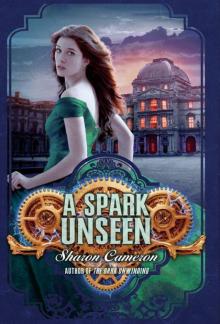
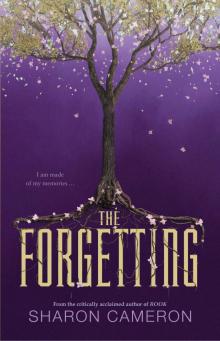
Sharon Cameron’s debut novel, The Dark Unwinding, was awarded the Society of Children’s Book Writers and Illustrators’ Sue Alexander Award for Most Promising New Work and the SCBWI Crystal Kite Award and was also named a YALSA Best Fiction for Young Adults selection. Sharon is also the author of its sequel, A Spark Unseen; Rook, which was selected as an IndieBound Indie Next List Top Ten Pick, a YALSA Best Fiction for Young Adults selection, and a Parents’ Choice gold medalist; The Forgetting, a #1 New York Times bestseller and an Indie Next List selection; its companion, The Knowing; and the widely acclaimed historical World War II novel The Light in Hidden Places, which was a Reese’s Book Club YA Pick.
She lives with her family in Nashville, Tennessee, and you can visit her online at sharoncameronbooks.com or follow her on Facebook, Twitter, and Instagram at @CameronSharonE.
Also by Sharon Cameron
THE LIGHT IN HIDDEN PLACES
THE FORGETTING
THE KNOWING
ROOK
THE DARK UNWINDING
A SPARK UNSEEN
Don’t miss another poignant historical novel from #1 New York Times bestselling author Sharon Cameron.
Turn the page for a sneak peek!
Someone is out there. In the dark.
I open my eyes.
And the dark is the same as always. A blank page. I can smell the cabbage Emilika boiled two floors below us. Feel the sigh beside me that is my sister’s sleeping breath. But the dark has also changed. There’s an echo inside it. A sound my ears have missed.
Someone is here.
Now I am awake.
I fold back the blanket, quiet, listening, stretching my legs to the floor. A mattress spring pops like a gunshot. My sister breathes, but she doesn’t stir.
If someone is here, they are not in this room.
I tiptoe, barefoot, across the boards, and put a finger to the edge of the rug I’ve nailed over the window. The streetlights glare, hard bits of snow glinting like dust as they fall through the light. But the sidewalk below my building is deserted, the windows across the street rows of dead eyes, dark with curtains and dresses and rugs. Like mine are.
In Przemyśl, light is like a candy poster. And it’s not smart to hang signs showing where the sweets are.
I let the rug fall back into place and go to the door, pressing an ear to the wood before I turn the lock. The empty hall outside our room stretches to the other empty rooms of the empty apartment. As it should. Everything is as it should be.
And then a noise shoots through the silence. Louder than a gun. A grenade of fear inside my chest. And I know the sound I have missed.
Someone is knocking on my front door.
They know. They know. They know.
The words beat with my blood.
Another mattress spring pops, and I feel Helena coming up behind me. She doesn’t speak. She is six years old and doesn’t have to be told that this is not the time for questions.
The knocking comes again, louder, this time with a whisper through the cracks.
“Stefania?”
It’s a trick. The Gestapo want me to open the door without a fuss. So they don’t have to break it down. So they can give a nice, unblemished apartment to some nice German officer and his law-abiding wife with clean hair and mended stockings.
Maybe this means they will shoot us outside, like Mr. Schwarzer.
The whisper comes again.
“Open the door! Fusia!”
The Gestapo do not know me by that name.
I run for the door, hands out, fingers already searching for the newly repaired lock. I know it isn’t him. It can’t be him. But I fumble and twist at the lock anyway, then fling open the door. Helena gasps. Or maybe the gasp comes from me. Because the bare bulb hanging in the hallway has shown me that it’s not him. It’s not who I thought it would be at all.
“Max!” I whisper.
Copyright © 2021 by Sharon Cameron
All rights reserved. Published by Scholastic Press, an imprint of Scholastic Inc., Publishers since 1920. SCHOLASTIC, SCHOLASTIC PRESS, and associated logos are trademarks and/or registered trademarks of Scholastic Inc.
The publisher does not have any control over and does not assume any responsibility for author or third-party websites or their content.
This book is a work of fiction. Names, characters, places, and incidents are either the product of the author’s imagination or are used fictitiously, and any resemblance to actual persons, living or dead, business establishments, events, or locales is entirely coincidental.
Library of Congress Cataloging-in-Publication Data available
First edition, October 2021
Jacket photo-illustration © 2021 by Larry Rostant, with supporting imagery © Frank Snykers Photography and Shutterstock.com.
Jacket design by Elizabeth B. Parisi
Author photo by Rusty Russell
e-ISBN 978-1-338-35598-7
All rights reserved under International and Pan-American Copyright Conventions. No part of this publication may be reproduced, transmitted, downloaded, decompiled, reverse engineered, or stored in or introduced into any information storage and retrieval system, in any form or by any means, whether electronic or mechanical, now known or hereafter invented, without the express written permission of the publisher. For information regarding permission, write to Scholastic Inc., Attention: Permissions Department, 557 Broadway, New York, NY 10012.
Sharon Cameron, Bluebird