

The Moon and the Desert, page 31
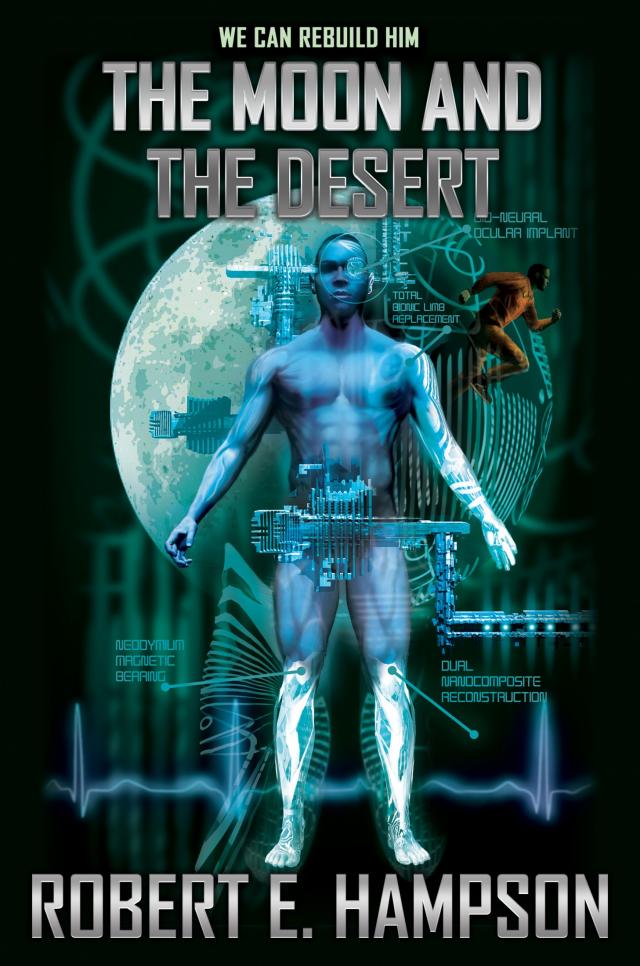


As for treating the crew, he planned to use the decades-old standard treatments of penicillamine and dimercaprol. Both were chelating agents to remove excess heavy metals from the body, although they had different routes of administration. Penicillamine could be taken in pill or liquid form by mouth; dimercaprol, also called “British Anti-lewisite,” would have to be administered by injection into muscle, so he’d have to call each of the crew back in for shots. There was also a newer treatment with alpha-lipoic acid—an antioxidant with good effect at chelating unbound copper from tissues. It was a common dietary supplement, and he’d brought sufficient stock in Bat to treat the crew.
No, the part of his report that would create problems would be the diagnosis of paranoia in First Officer Dvorak, debilitating OCD in Marsbase commander Taketani, and paranoid delusions with schizophrenia-like symptoms in Medical Officer Barbier. Command teams distributed authority precisely so that ultimate authority was not held by any one person. While it was true that a ship’s captain was in full command, questionable decisions could be countermanded when first officer and medical officer agreed. Glenn Shepard had been effectively made captain of Percheron and commander of the returning Marsbase crew, but the command triad was broken. He had declared both of his potential seconds-in-command—as well as the medical officer—unfit for duty.
He was truly alone, so he’d better be right.
Once more, Glenn transited out of the habitat ring to the ship’s core. For the first time since he’d started the medical exams, he realized how much time had passed. He and Yvette had done twelve exams on the ambulatory crew members, as well as two more on Bialik and Takeda. That was fourteen exams—most about thirty minutes, but several had run much longer. They’d also set up three dialysis treatments and the blood, urine, and dialysate analyses. Altogether, he could account for nine hours just on the medical procedures alone. However, that didn’t include the fight with Yvette, her exam, securing her, getting Bialik disconnected, and reading the analyses. It had been twelve hours since he’d entered the med bay, and he was feeling the strain. He should go to the bridge and make the report, then back to his shuttle to eat and rest.
The problem was Yvette—she was unconscious in the med bay, and he needed to make his report and inspect the water tank before she woke up.
All he really needed was a ration bar, some tang, and an extra oxygen canister. He’d need the air if he went inside the water tanks—which he admitted to himself was increasingly likely—but it shouldn’t require too much more than a single recharge. After all, he’d been breathing ship air for some time now. There were spare air packs scattered throughout the ship, and they were compatible with his suit. It was more important to get reports and messages sent to Earth now that he had an answer, or at least the first part of one.
He didn’t even have to go to the bridge to use the comm. The belt pouch of his skinsuit had a ration bar and couple of drink bulbs, and he’d grab an oxygen canister on the way. He dictated a report for Mission Control as he made his way back toward the cargo section. The interface chip in the med bay workstation gave him full access to the medical records and instrument displays on his heads-up display. That same system allowed him to store data and individual views, so he simply attached those files to messages sent directly from his interface to Percheron’s bridge comm console, and from there to Earth.
The eye prosthetic not only wrote visual information to an electrode interfaced to the still-intact retina of his left eye, but read information in the visual association areas of his brain. Their purpose was to help focus and refine visual input depending on where he was looking in his visual field, and on which items he focused his attention. It also functioned as a virtual “keyboard” interface in which all he had to do was focus on letters and numbers superimposed over his vision. Using the interface, Glenn’s search for files to attach to the report had also revealed time-indexed “snapshots” of his day. Each was an audio and video clip of varying length, which occurred both at regular intervals, and at events throughout the day when he’d been most stressed. He knew his bionics spied on him; after all, he’d activated the “bodycam” recording function when he boarded Percheron. This particular system had done him a great favor, though. He was able to find records of the fights with Yvette, Dvorak’s paranoia, and Taketani’s delusional OCD. He attached those records as an addendum to his original report and sent those to Earth as well.
Current communications lag was fifteen-and-a-half minutes each way, just over thirty-one minutes for a round-trip message, assuming that Earth answered as soon as they received his report. However, it would take time for the report to go from the comm station to the flight director, through MMC, and up to the director level at NASA, MarsX and Space Force. It would be hours before he could expect a response. There was no point in waiting, so he also recorded messages to Dvorak and Taketani to briefly describe his findings. He ended each message with the information that medical officer Barbier had attacked him and he had secured her in the med bay. She should be okay for the hour or two it would take him to complete his next investigation, but he wanted others to know where she was in case it took him longer than anticipated.
Glenn found himself standing in front of the inspection hatch for Internal Water Storage Three. Normally at this stage of the voyage, Percheron would still be drawing water from the second of the four large internal tanks. IWS One was meant to service the Percheron and outbound Marsbase crew during the journey from Earth to Mars. With reduced numbers aboard during the stay at Mars as the Marsbase crews switched off down on the planet, IWS Two would suffice for the entire stay at Mars and well into the return journey. The crew would use approximately half of IWS Three for the rest of the trip back to Earth, leaving IWS Four completely in reserve. However, a malfunction in the IWS Two distribution valves occurred forty-five days into the three-month Mars orbit phase.
The remainder of the water in Tank Two was still there, inaccessible until the ship returned to the dockyard at O’Neill Station. Moreover, the water intended for sterilization by exposure to space radiation had been drawn from IWS Four. Not only was nearly one-fourth of their water supply inaccessible, almost the same amount had been lost when Captain LeBlanc blew the hatch and decompressed Cargo Bay One.
There was additional water storage in external water supply tanks—EWS One through Six—but those tanks were much smaller, and were primarily “gray water” tanks, meant to store wastewater from the hygiene facilities, hydroponics, and cooling systems. It could be filtered and recycled—and was, if needed—but as is, it also served as radiation shielding for Percheron’s emergency shelters and core.
Approximately forty-five percent of Tank Three’s water remained. It had been in use full use for only three months, and partial use for a month and a-half before that, so this was to be expected. Free water in zero gee was hazardous to humans—it was possible to get trapped in a bubble and not be able to swim one’s way out. Glenn needed to move the remaining water out of Tank Two, and he had a choice of sending it to IWS One or Four. Tank One was completely empty, while Tank Four was still fifteen percent full. A control console outside the inspection hatch to Tank Three allowed Glenn to transfer the remaining—presumably copper-contaminated—water to Tank One, preserving the hopefully clean water remaining in Tank Four.
CHAPTER 36:
Crisis
USSF Office of Scientific Integration
@OSIGenBoatright
(1/2) We can now report that the unknown illness affecting Percheron has been identified as resulting from an overdose of copper from the treatments intended to reduce fungal and bacterial growth in humid, closed-air spaces. It is not contagious, and has not affected the current Marsbase Two mission. The condition is easily treated, but will take time for individuals to fully recover.
(2/2) Since all Percheron and returning Marsbase personnel are affected to varying degrees—including Acting-Captain Dvorak, Marsbase One Director Taketani, and Medical Officer Barbier—USSF today directed Colonel Glenn A. Shepard to assume command of Percheron and all persons aboard. This office will provide updates on crew condition on a weekly basis.
ChirpChat, November 2043
The access panel had also given him the option to vent the entire contents into space, but Glenn really didn’t want to waste any of it. If the source of contamination was obvious, and could be sealed off, then the water could be filtered and at least used for hydroponics and hygiene. On the other hand, once the tank volume dropped below five percent, it was very difficult to extract the remainder as long as they were still in zero gee. Even the slightest engine thrust or roll of the ship would move the water to the walls of the tank and allow it to be pumped out, but not when there was no gravity of any sort. Therefore, he was going to have to waste the final few percent of the tank’s capacity with reduced pressure.
The diagnostics on the access panel tracked pumping efficiency. Once the water level fell effectively to zero, air would be pumped out as much as possible. The low pressure would cause the remaining water to boil, and the resulting water vapor and residual air would also be pumped as much as possible. When the pump readout indicated that no more water or air could be removed from the tank, Glenn turned off the pumps and opened the valve to re-equilibrate pressure. There would be water droplets and humidity, but there should not be any large globules of water to trap and drown an inspector. It was still enclosed space, so he would simply put his helmet on and turn on the oxygen feed.
He looked at the damaged faceplate and neck seal.
Damn, I should have fixed or replaced that on the walk here, he thought to himself. I’ve been so busy dealing with everyone else’s problems, I haven’t looked after myself. Here I am about to walk into a confined space without a working helmet.
Emergency decompression supplies were located in lockers all over the ship, but the highest concentration was at the hub interface for the rotating habitat ring. He could go back there for a full pressure suit, or check the lockers here. Unfortunately, there were only two in this section, and one was empty except for a plastic bottle filled with a clear liquid. He opened it and sniffed.
Alcohol. High proof, too; from Mishra and Grigorescu’s still, no doubt.
The second locker was nearly empty, containing only a pair of magnetic soled boots, another bottle of clear liquid—actually water this time—a packet of ibuprofen, and a tube of sealant goop.
Glenn figured that this was probably a prank, although he wasn’t sure who it was intended for. “Take two ibu, drink a bottle of water, and change your socks”—or boots in some circles—had been a joke among military medical personnel for many years. On the other hand, the water and pain reliever would help the headache he’d started to feel, and he could smear extra goop on the damaged neck ring for his helmet. He’d have to increase the airflow because of leakage, but at least he’d be breathing suit air.
To open the inspection hatch, Glenn had to enter a code and supply a biometric authorization. He worried, briefly, but command codes had apparently been uploaded along with the change-of-command orders. With that out of the way, he opened the hatch and entered the tank. It was more than large enough for him to stand upright, and the magnetic soled boots would be useful. He entered the tank, stood with his feet anchored to the hinged side of the hatch, and looked around.
The powerful flashlight that he had carried earlier as a potential weapon, was now put to its original use for illumination. The interior of the tank had a featureless metallic sheen, except for a few droplets of water that had condensed on the cold walls when pressure was restored. He touched a gloved hand to the interior wall. It was smooth, polished steel or aluminum, typical of water storage both on-Earth and off.
One area on the far wall of the tank did not reflect the same uniform sheen.
He released the magnetic locks on his boots to try to float or swim over to the opposite wall, but that was a mistake. He drifted slowly away from the wall, and swimming motions only caused him to tumble. He reactivated the magnetic soles and waited to either bump into another wall of the tank, or for his shoes to come close enough to grab. The magnetic force was adjustable—after all, he needed to be able to lift his feet to walk—so he turned the field strength to maximum and was suddenly jerked toward a wall only a foot away. Unfortunately, both feet were not together, and he landed in an awkward near-split.
That hurt! He turned the magnetic strength back down and shuffled his feet back together. As he slowly and gingerly shuffled to the area of discoloration, he called up the schematic of Percheron that he’d stored in his heads-up display buffer when he’d first entered the ship. The compartment on the other side of the discolored bulkhead was a holding tank for bactericide, fungicide, and cleaning agents. It had a valve to pull water from the main tank to mix with powdered chemicals. A fill station in the corridor allowed personnel to obtain the prepared liquid for treating specific problem spots, and a network of special pipes could spray the chemicals in several parts of the ship that required frequent disinfection. As Glenn got closer, he could see a small valve in the middle of the dark patch. That should be a one-way valve which took water from the tank for mixing the chemical cleaners. He reached out to touch it, and the valve fell away, revealing corroded metal.
Bingo!
The entire area around the valve was corroding, explaining the discoloration, and suggesting that it stuck open at some point in the past, allowing chemicals to backflow the water tank. The corrosion would have allowed other metals to leach into the water—aluminum, chromium, nickel, and more, which was why the heavy metal toxicity symptoms were not consistent across the crew.
As he was inspecting the area around the leak, he felt and heard vibration as the inspection hatch closed. Before he could get back to the hatch using the particular shuffle of magnetic boots, he heard the locking mechanism engage. A faint hissing noise became louder as his ears popped.
Vacuum purge! The pressure wouldn’t drop just to the point where the water boiled, but would go all the way down to hard vacuum. Someone had locked the hatch and trapped him in vacuum with limited air and a skinsuit helmet that wouldn’t completely seal.
Glenn’s right eardrum began to hurt from dropping pressure. He popped it several times, and kept his mouth open as he struggled with the manual release for the inspection hatch. Suddenly, he heard a screech of stressed metal. The structure of the tank had been compromised by the corrosion, and would collapse inward as pressure decreased.
If the vacuum didn’t get him, he would be crushed by the imploding water tank.
The hatch had been designed to lock in place with water pressure inside and air on the outer—corridor side—or vacuum on the inside and air outside. Either way, the mechanism dilated the outer rim of the hatch like an iris, so that its diameter increased, and wedged into the frame to secure it from being blown inward or outward by differential pressure. It was an ingenious design that Glenn felt absolutely no particular need to admire. At least, not under the current circumstances.
Manual operation of the hatch, the inner emergency release, was intended to operate when pressure on both sides of the hatch was equal. The only way to operate it with the pressure rapidly dropping was to physically pry it open and break the seal. It would cause decompression of the immediate corridor, but emergency bulkheads would protect the rest of the ship.
There was nothing in the tank that he could use to pry the hatch and crack the seal . . . except . . .
He felt a stabbing pain in his right ear, then felt a pop, and nothing. The only sound now came through the cochlear implant in his left ear. The vacuum had ruptured his eardrum. It was now or never.
He needed a prybar. In its absence, he needed to make one, just as he did back in North Carolina when he’d pried the door off of the overturned car. Nik had dubbed that move the “bionic knife hand.” Glenn put the fingers of his left hand together, palm flat, in a blade shape. He gave a mental command that locked the finger and wrist joints together to keep the whole thing rigid, then moved to a position straddling the hatch and turned the magnetic locks on his boots to maximum. He stabbed down with as much bionic force as he could, driving the hand into the edge of the hatch.
One advantage of bionics was the ability to turn off the sensation of pain. There were still many red lights and indicators in his heads-up display and the helmet indicators told him that the fabric of his skinsuit gloves was compromised. It didn’t work on the first try; he needed to repeat the motion at three more places around the hatch rim, watching the seal deform a bit more each time. The synthetic skin of his fingers as well as the artificial muscle underneath was shredding, but still remained operable enough that when his fingers penetrated the rim of the hatch on the fourth try, he unlocked the fingers, curled them, and pulled.
Much like the car door in North Carolina, the hatch came flying off—but so did the lower half of his arm.
Damn, he hadn’t expected that.
He wanted to stop and gasp for breath, after all, a rush of air just came in through the busted hatch. Unfortunately, the vacuum purge cycle was still ongoing and alarms began to sound in the corridor announcing decompression and risk of vacuum exposure. As he pulled himself out of the tank using his right arm, he saw Yvette standing next to the access control panel.
Oh crap, that’s what I forgot. I’d disabled the lock on the isolation room door.
Yvette looked down at her hands in horror.
Glenn suspected she just realized what she’d done. He swung himself toward the panel and reached for it with his left hand.
His missing left hand.
The movement caused him to twist awkwardly. He grabbed a handhold with his right hand, pulled himself over to the console, and canceled the vacuum purge. The rush of air stopped; both ends of the corridor were already sealed with emergency pressure doors, and he felt a muted sense of the pressure in his right ear along with a stabbing pain in his right eye as normal pressure was restored.


