

The Revolutionary Temper, page 52
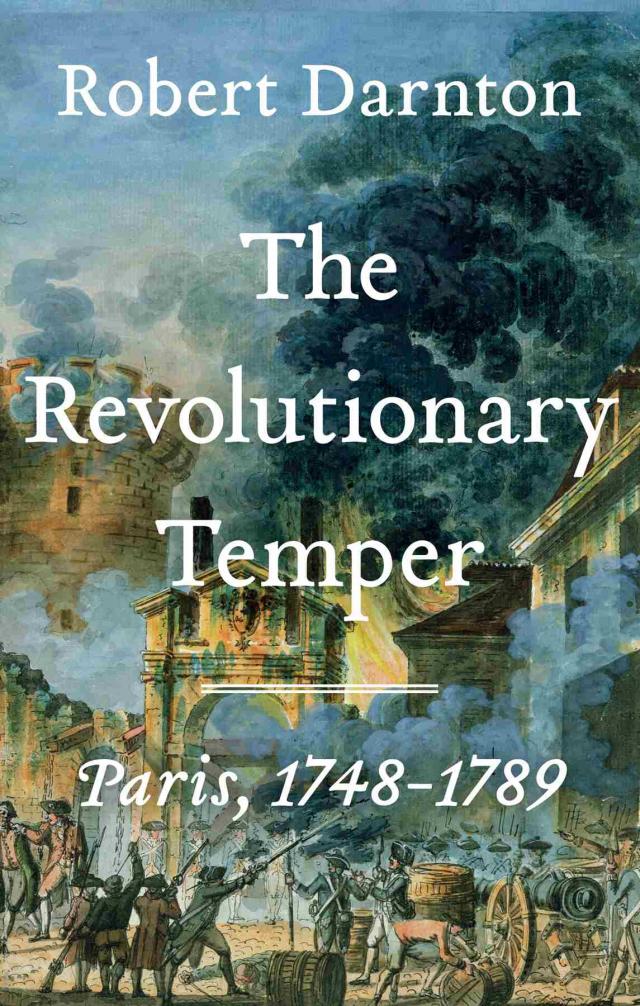


The destruction did not begin immediately on July 15, however, because Parisians expected to be attacked by the 30,000 troops stationed outside the city. They erected barricades, set up cannon, and hauled paving stones to rooftops in readiness to hurl them at the invaders during battles in the streets. The maréchal de Broglie, in his capacity as commander of the royal forces and the new minister of war, ordered the regiments to march on Paris. But the men refused to move. Meanwhile, the executive committee of the Commune declared itself permanent. It ordered the militia, now commonly called the Garde bourgeoise, to take possession of the Ecole militaire and other strategic sites, including positions high up on Montmartre, which the enemy might use to bombard the city. The committee named Lafayette as colonel general of the Garde and Bailly as mayor of Paris. By the end of the day, it was clear to most Parisians that power had definitively shifted. It was now located in the revolutionary Commune, a political body organically connected to sixty local districts, and in the Garde bourgeoise, a military force capable of resisting invasion and keeping order in the streets.
After exiling Necker, the king remained determined to support his counterrevolutionary ministers, despite several appeals for Necker’s return by the National Assembly. Louis retired to bed on the night of July 14–15, unaware of the events in Paris. By virtue of his position as Grand Maître de la Garde-Robe, the Duc de Liancourt entered the bedroom and informed the king, as later reported in the newspapers, that a “revolution” had erupted and that many troops had joined it. On July 15, Louis appeared before the National Assembly and supplicated, “Help me … assure the salvation of the state.”22 All the regiments dispatched to Paris, he announced, would be withdrawn—that is, there would be no repression. A delegation of deputies set off to bring the good news to the capital. It was received rapturously; a Te Deum was celebrated in Notre Dame; the entire city was illuminated by candles lit in windows; a salvo of musket fire gave the signal, and five hundred workers began to dismantle the Bastille.
The National Assembly persisted in requesting the recall of Necker on July 16. Late in the day, the king gave in. A courier galloped off after midnight to bring the summons to Necker, who by then had reached his château in Coppet, Switzerland. The newly appointed ministers resigned, and their leading supporters from the court—d’Artois, Conti, Condé, and others—took flight, many of them in disguise. Parisians delighted in swapping anecdotes about their escape—the Duchesse de Polignac dressed as a chambermaid and the Prince de Lambesc as a stable groom.
Louis confirmed the transfer of power by coming in person to Paris on July 17. He arrived without a military escort, despite warnings that his life could be in danger. The Garde bourgeoise, more than 100,000 men, lined the route from Passy to the city center and served as a barrier to protect the king from the crowds, which shouted “Long live the nation!” but not “Long live the king!” When the king arrived at the outskirts of Paris, Bailly presented him with the keys to the city. Then the royal carriage continued to the Hôtel de Ville, followed by a long procession: two cavalry units, several battalions of the Garde bourgeoise accompanied by cannon, other soldiers, Lafayette, and three hundred deputies from the National Assembly. The Revolution, like the Ancien Régime, displayed itself on parade, yet in a different manner: it expressed power, not status.
When the king descended at the Hôtel de Ville, he passed under a vault made by the bayonets and swords of the Garde bourgeoise. Once inside, he ascended a throne and listened to speeches laced with patriotic sensibilité. Reports in newspapers said that tears ran down his cheeks and that he was at a loss for words. Bailly replied for him, attached a new cocade to his hat (blue and red separated by the white of the Bourbons), and showed him to a balcony, where the king looked out over many thousands, now shouting “Long live the king!” The air filled with their cries and with cannonades, fanfares, drum rolls, and general exhilaration. The king had accepted the new order. He departed for a Te Deum in Notre Dame and then returned to Versailles, where Necker was expected to form a new ministry and the National Assembly set about writing a constitution. “Everything will change, morals, opinions, laws, customs, usages, government,” Ruault informed his brother. “In very little time, we will be new men.”23
* * *
The Revolution did not end there, far from it. One astonishing event succeeded another during the next three months: the Declaration of the Rights of Man and of the Citizen; the peasant uprising known as the Great Fear; the abolition of feudalism; another threat of a military counterrevolution; and the march on Versailles led by market women, which brought Louis back to Paris and made him a potential hostage of an increasingly radical movement deep within the Parisian population. But by July 14, the Parisians had become revolutionaries. It was a long process, built up over the years by events and the perception of events. Although individuals experienced it in different ways, it took place collectively. It was the force that drove the storming of the Bastille, a revolutionary temper.
CONCLUSION
THE REVOLUTIONARY TEMPER
BY THE END OF 1788, the outlook of most Parisians had been transformed. They had not adopted all the convictions that would prevail among the revolutionaries by the end of 1789 and that would develop into radical republicanism during the next five years, for those convictions also emerged in response to events. But the experience accumulated during the previous four decades made Parisians ready to overthrow the regime in 1789.
The foregoing chapters have provided a close reading of events and the perception of events as they were reported in the information system of eighteenth-century Paris. Abstracting from those details, the revolutionary temper can be said to have consisted of the following elements:
HATRED OF DESPOTISM. Parisians felt threatened by arbitrary power, primarily in the hands of ministers and the police rather than the king, which took various forms, such as troops patrolling the streets, lettres de cachet, and the forced registration of royal edicts. Although the Bastille contained only seven prisoners on July 14, 1789, and its attackers set out to capture its munitions, it loomed in the collective imagination as the supreme symbol of despotism. To be sure, the meaning of “despotism” was fluid, despite Montesquieu’s attempt to fix it firmly in political theory and its constant use in parlementary rhetoric. The term could be applied to any perceived abuse of power, such as the restraints imposed on trade by corporations, the authority over doctors by the Parisian faculty of medicine, and the domination of literature by the Académie française. But “despotism” became a call to arms in 1789 because it was aimed at a crucial target, the power of the government embodied by the Bastille.
LOVE OF LIBERTY. The positive side of Parisians’ hatred of arbitrary power was the desire to live free from the threat of its interference in their lives. “Liberty” like “despotism” could convey several meanings, depending on the context of its use. By 1789 it was employed increasingly in the singular, rather than the plural, which often referred to privileges such as the “liberties” enjoyed by the provincial estates. Instead of understanding liberty as a privilege (private law that favored some at the expense of others), Parisians came to think of it as a right that belonged to everyone (general law, which applied equally to all citizens). Liberty meant acting and speaking freely, without fear of police spies and lettres de cachet; reading independent journals, unhampered by censorship; and obeying laws determined by citizens, not proclaimed by Versailles.
COMMITMENT TO THE NATION. France’s humiliation in foreign affairs, especially during the Seven Years’ War, provoked disgust with the leadership of Versailles. Parisians came to feel that the nation should take charge of its destiny, that the nation was the source of legitimate authority, and that they owed fidelity to the nation as citizens rather than subjects. Therefore, they asserted the right to participate equally in the exercise of sovereignty, which they took to be inherent in the French people, not divided among estates or concentrated in the king. They infused this principle with passion, speaking and feeling as patriots. The émotions populaires that drove violence in the streets became absorbed in a sense of participating in a common, national destiny.
INDIGNATION AT DEPRAVITY AMONG THE ARISTOCRATIC ELITE. While objecting to the privileges of the nobility in general, Parisians directed most of their hostility at les grands, the upper aristocracy and the super-rich. They considered courtiers as parasites who inhabited an alien world of luxury and vice. In their view, decadence and despotism were joined in a system that drained wealth from the common people and spread corruption through the body politic.
DEDICATION TO VIRTUE. The ideal of virtue served as the positive counterpart to the scorn for decadent, aristocratic moeurs. Parisians valued personal integrity, devotion to domestic life, and humanitarianism (bienfaisance). While they celebrated virtue as the guiding principle of their private lives, Parisians especially revered it as a force in public affairs. It inspired commitment to the cause of the nation on the part of citizens and was the dominant quality they required in their leaders. It tended to be homespun, as exemplified by ideal types—Quakers, American farmers, noble savages, the Swiss—yet virtue inhered, at least potentially, in everyone, even noblemen and priests. Above all, it was patriotic.
MORALIZING. Parisians responded to sentimental appeals, which exalted virtue and condemned vice. Denunciation came to be seen as a patriotic duty, wit as a symptom of aristocratic worldliness. To be sure, Voltairean ridicule continued to be a powerful weapon, especially in attacks against religious dogmatism. Yet Voltaire himself set a tone of moral indignation in the Calas Affair, and Rousseau turned moral passion against the Voltairean ideal type of the mondain. In the balance of the passions, tears came to outweigh laughter. Among public figures, Mirabeau eclipsed Beaumarchais.
DISENCHANTMENT WITH THE MONARCHY. By the end of his fifty-nine-year reign, Parisians had lost faith in the sacred character of Louis XV, whose personal immorality made him literally lose the royal touch. Because he would not renounce his mistresses, he could not receive absolution for his sins, take communion, and cure subjects suffering from the King’s Evil (scrofula) by touching them. He lost contact with Parisians in many ways after their outpouring of affection for him during his illness in Metz in 1744. After 1745, he avoided appearing in Paris and even built a road to circumvent it during his journeys from Versailles.
Much of the aversion to Louis XV derived from the notoriety of his mistresses. Although Parisians found nothing objectionable about royal mistresses in general, they were appalled by the increasingly negative mythology that surrounded the de Nesle sisters (perceived as a matter of incest), Madame de Pompadour (a commoner, unsuited for a king), Madame du Barry (a prostitute), and the supposed “harem” of the Parc aux cerfs. After his death—attributed to smallpox contracted by sex with an adolescent procured by his valet—Louis XV appeared to be a dirty old man.
Louis XVI, by contrast, was widely believed to be impotent, at least during the first seven years of his reign, when he failed to beget children. Although he resumed touching those who suffered from scrofula, he did not acquire charisma, and, in the rumors that accompanied the constant change of ministers, he was scorned for inconsistency and incompetence. Meanwhile, Marie-Antoinette fell victim to the rumor mill that made her out to be depraved, especially after the Diamond Necklace Affair. The public’s hatred of the queen compounded the desacralization that sapped the power of the Crown and undercut the legitimacy of the political system.
BELIEF IN THE POWER OF REASON. While losing faith in the sacred power of the king, Parisians acquired faith in the ability of man to decipher the laws of nature. (I say man, because the world of science was exclusively masculine, despite the exceptions of some extraordinary women such as Voltaire’s mistress, Madame du Châtelet.) At the beginning of the century, Newton had demonstrated that all bodies acted in accordance with an invisible force, known as gravity. The revolution in chemistry revealed that many such forces were at work in the world. To Parisians who assumed that the world was composed of four elements, earth, air, fire, and water, Lavoisier seemed to demonstrate that man could turn water into air, producing visible effects. The Montgolfiers harnessed some of that air to make man fly. Franklin demonstrated that man could tame lightning, a natural phenomenon driven by the invisible force of electricity. Scientific fads in the 1780s convinced Parisians, at least for a while, that man could cure all disease and even walk on water. It seemed credible that he could discover the laws governing society and, as Condorcet maintained, that he could adapt them to a new order of self-government.
DETACHMENT FROM THE CHURCH AND ATTRACTION TO THE ENLIGHTENMENT. The moral authority of the Catholic Church suffered from the Jansenist and Jesuit controversies. Sympathy for Jansenism ran deep, not merely among partisans of the Parlement but also among the common people who responded to the spiritual appeal of the Jansenist convulsionaries. By supporting the upper clergy’s persecution of Jansenists, the state alienated many Parisians, and it did not win them back when it abolished the Jesuit order. Instead, it reinforced older strains of anticlericalism, while resentment grew against the wealth and power of the upper clergy and Voltaire occupied the high moral ground in the Calas Affair.
Despite their differences, Voltaire and Rousseau stirred indignation at injustice and appealed to principles grounded in the empirical view of knowledge popularized by the Encyclopédie. The philosophes in general figured prominently in public life, spreading secular values such as tolerance, liberty, and equality before the law. How deeply those values penetrated society is difficult to measure, but they certainly undermined the commitment to orthodox beliefs among the educated classes, including many nobles and even priests. Whatever their ultimate beliefs, Parisians were conscious of living in an age of “philosophie” or “lumières,” phrases that appear often in contemporary diaries and journals, long before their afterlife as “the age of Enlightenment” (“le siècle des Lumières”) in cultural history.
POLITICAL ENGAGEMENT AND RESISTANCE TO TAXATION. At the beginning of the century, Parisians generally subscribed to the notion that politics was the king’s business, le secret du roi. By 1789 they participated in politics, not directly but through the feedback mechanism of “public noises,” which made them heard in Versailles. Ministers took increasing heed of public opinion after 1749, when it was a crucial element in the fall of Maurepas. By the time of Turgot and Necker, they wrote elaborate prefaces to royal edicts in order to justify their policies to the public. Necker’s Compte rendu of 1781 exposed “the king’s secret” in the form of a budget. From then until the end of Louis XVI’s reign, the state’s finances were subject to public debate.
The cumulative pressure of the state debt from the War of the Austrian Succession to the American war made increased taxation unavoidable, and quarrels over taxes took the form of conflicts between the Parlement of Paris and the Crown. The same scenario—remonstrances, lits de justice, exiles, and arrests—repeated itself, sharpening Parisians’ awareness of political conflict. Taxation of all kinds compounded the hardships of the poor, and it was resented by all groups as unjust, unequal, and even unnecessary, because it was often attributed to the need to cover “depredations” in Versailles. Parisians did not express any deep attachment to the Parlement, but Maupeou’s coup in 1771, accompanied by an enormous pamphlet literature, produced a shift in attitudes. Parisians began to think of themselves as “citizens” and “patriots” united in opposition to a despotic ministry. The state’s debt precipitated a more serious crisis in 1787, when Calonne failed to rally public opinion behind a reform program that included new taxes. Parisians perceived his program as another threat of despotism, while the surrounding pamphlet literature repeated the themes of the “Maupeouana” of 1771–1774. The suppression of the Parlement by the Brienne-Lamoignon ministry in 1788 looked like a replay of the ministerial despotism of Maupeou-Terray seventeen years earlier. When Parisians took to the streets—and Frenchmen rose in revolt throughout the kingdom—they supported the Parlement’s demand for the convocation of the Estates General. They did not promote the power of the Parlement per se, and abandoned it after September, when it committed itself to the 1614 format of the Estates General, which favored the privileged estates.
FAMILIARITY WITH VIOLENCE. Parisians were frequently exposed to violence, much of it meted out by the state in the form of hangings, beheadings, whippings, and the breaking of prisoners on the wheel. During political crises, troops patrolled with bayonets attached to their muskets, and on several occasions they fired into crowds. The crowds themselves turned violent, as in the stampeding and mauling of spectators after the fireworks of February 13, 1749, and May 30, 1770—official “réjouissances” (joyful celebrations) that left memories of massacres. The collective memory also kept alive scenes where the crowds turned against the authorities, notably the uprising of May 23, 1750, triggered by the rumor that the police were kidnapping children, and the “flour war” of May 3, 1775, ignited by the belief in a famine plot. On both occasions rioters briefly gained control of Paris, overwhelming the police.





