

Abortionist, page 21
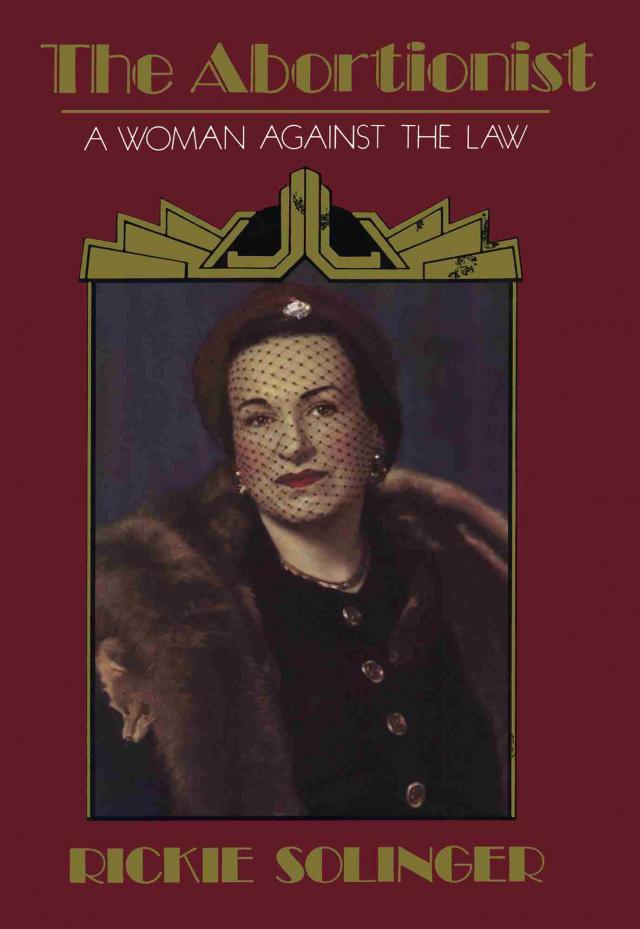


The very same week that the City Council was debating its response to the punchboard emergency, Ruth Barnett’s whole world fell apart. After at least sixty-five years of official avoidance and passive acceptance of abortion activities in Portland, the silence ended with a coordinated investigation of the abortion scene. The Oregon Journal dropped its bomb on July 6, 1951, and Ruth Barnett was at ground zero.
On the day the police marked for raiding the Stewart Clinic, Ruth and her husband Earl Bush were up at their ranch in the eastern part of the state for a long holiday weekend, and Maggie called up there to let Ruth know what had happened. Maggie remembers, “I called the ranch, and I said, ‘Trouble downtown,’ and ‘Git to gittin!’ I didn’t know whether the ranch phone had been tapped and so I said, ‘Take the long way and stop where a friend has a nightclub.’ She knew I meant go through Washington State and stop at the Evergreen Hotel where Leo Jeroff had a club. The ‘git to gittin’ was a signal from childhood. If Mama said that to me when I was staying too long somewhere, it meant ‘get home now!’ ”
Years later, Ruth remembered Maggie’s call. It came while she and Earl and their guests were out, cowboy-style, “riding the range, hunting strays in the canyons and draws of the sagebrush country.” Ruth drove to the tiny hamlet of Riley to return Mag’s call from the only phone for miles that wasn’t hooked up to a party line. Ruth recalled, “Maggie said, ‘There’s a warrant out for your arrest,’ and she told me about the raiding party of sixteen who stormed into the office like they were players in a big, Hollywood-type production. ‘Brave lads in blue,’ Maggie said, ‘stomping up and down, flashbulbs poppin’.’ They even had a hospital alerted, and an ambulance standing by, in case they found a patient on the table.”
The news was stunning. Ruth drove back to the ranch in a daze, but her memories of that afternoon remained sharp for the rest of her life. “Earl and our guests were waiting on the patio. I told them what had happened. They were as stunned as I, blankly silent for a moment, then we all began talking at once. ‘I’ve got to get back to Portland,’ I said. ‘Please, Earl, we’re going the long way. I don’t care how much extra driving it means—five hundred, even a thousand miles. I’m going to walk into that courthouse and give myself up. They’d like to catch me at a roadblock, with a lot of fanfare and pictures and newspaper headlines saying I was arrested while trying to get away. I’m not going to be trapped like that. I’ve never run away from anything and I’m not going to start now’ ” Ruth and Earl started out for Portland immediately. Ruth knew the days of tolerating abortion in Portland were over for now. Suddenly, after decades of looking the other way, the authorities had decided to redefine Ruth’s practice as a crime and bring her in.
She and Earl drove half the night, taking the long way around. “About one a.m.,” Ruth remembered, “we reached Pendleton, the round-up city, where we stopped long enough to buy the late-edition Portland newspapers. Then we continued homeward. I turned on the map light and saw my name in big black headlines for the first time in my life. ‘How bad is it?’ Earl asked. It was a few moments before I could answer him. ‘Worse than I ever imagined,’ I said.
“Here was my life’s work vilified and smeared. I had long believed that every woman has the right of abortion if she believes it is necessary. How could I believe otherwise after talking to thousands of women—sick, lame, frightened, and hungry—in need of help. I had worked hard to make my establishment a beautiful and friendly place, where every possible safeguard was taken against infection and accident. And where—most important of all—none need fear that today’s secret would become tomorrow’s idle gossip. I was proud of the clinic and justly so. And now the newspapers made it appear something between a plush-lined house of ill fame and an abattoir catering especially to the young. All my years of work for hapless women had been drowned in a torrent of newspaper sensationalism.
“We were a few blocks from the Columbia River ferry that would take us into the state of Washington when Earl stopped in front of a small all-night cafe. The parking lot was quiet and dark. Through the lighted window I could see the clock on the wall. It was three a.m. We went in, sat down at one end of the horseshoe counter. We were the only customers, but not for long.
“Headlights flashed through the windows as a state police car drove up and parked beside ours. Two officers emerged. One went to the rear of Earl’s car, took a slip of paper from his pocket and beamed his flashlight on the license plate as I watched through the window. It seemed an eternity before he shook his head. They were looking for my license number, not Earl’s. The officers came into the cafe and sat down at the other end of the counter, opposite us. They looked us over casually. Earl finished his coffee, paid the check and we walked out as slowly and nonchalantly as we could.
“In a few minutes we were on the ferry, heading for the Washington shore. By six a.m. we reached the Evergreen Hotel in Vancouver, Washington. Fourteen hours of high-speed driving was exhausting. Earl took a hot bath and went to sleep. I lay awake, restless and fearful of what the next day would bring.
“Vancouver, Washington, lies just across the Columbia River from Portland. After a few hours rest we drove across the Interstate Bridge and directly to the Multnomah County Jail, stopping only once to telephone my attorney.
“While an officer at the courthouse took my name and address, the room began filling up with people. Although Saturday is usually a quiet day, word of my arrival to turn myself in got around quickly. Reporters and photographers appeared as out of nowhere and were soon buzzing around us. A uniformed officer stopped by the desk and said apologetically, ‘Dr. Barnett, I’d rather have been anywhere else in the world than in your office yesterday.’ Then the flashbulbs started popping and the reporters began their questions. My attorney said, ‘No comment.’ ”
No comment was issued from another prominent quarter in the city that day, and in the days following Ruth Barnett’s arrest: the lady mayor had nothing whatever to say on the subject of the abortion bust. She kept mum despite the fact that the raids carried out on July 6th amounted to the most spectacular operation of her tenure. That week, Mayor Lee continued to preside over a City Council glued to the subject of punchboards. In retrospect, her obsession throughout the month of July with the manly vices of gambling and liquor offenses renders her silence on the subject of what the newspapers were calling the “abortion nests” very curious indeed. A law enforcement operation of the magnitude of the abortion bust must have required the sanction of the mayor’s office. But the bust seems to have been made with the understanding that the mayor could keep her distance from this most female of vices. Dorothy Lee could handle gangsters and slot machines and even prostitutes without flinching or mincing words, but the subject of abortion revealed the limits of her mettle. This time she would only enjoy the reflected glory; her law enforcement team had scored, and Portland would be a cleaner town for it.
However squeamish the mayor was, she knew—and the D.A., the police, and certain newspapermen knew—that abortion was a crime whose time had come. All over the country, as women were being exhorted in the postwar years to return to the domestic sphere and focus on raising children, it was inevitable that abortion would come under fire. The news was coming in from southern California, from Cincinnati, from New Jersey, and points south, that long-practicing abortionists, and particularly female practitioners, were being arrested. As for Mayor Lee, her administration needed a boost, a big boost, in order to remind its constituents that effectively eradicating vice was the number-one priority. It is possible that someone clever figured that a summer abortion bust would mean a highly publicized trial the next spring, just what Lee needed to kick off her 1952 reelection campaign, which some of her advisors in the summer of 1951 believed to be on shaky ground.
Whatever arrangements had been made behind the scenes, by the middle of 1951 it was clear that the authorities were ready to go after Portland’s abortionists in a big way. It was not, apparently, an altogether easy decision, despite the favorable climate. After all, having abortion on the front pages for days and weeks could have its downside for politicians and law enforcement. Splashy arrests of people like Ruth Barnett, who everyone knew had been operating unmolested for years, would surely underscore the fact that the authorities had neglected abortion for as long as anyone could remember. In addition, the favorable climate notwithstanding, the mayor and her minions were taking the chance that Portlanders receiving the news would simply shrug, expressing the belief that abortion was an essential fact of life that did little to corrupt the city and its officials.
In many cities, the powers that be knew the same thing that Myer Tulkoff, a law professor, knew about the risks of abortion raids and prosecution in the early fifties. Tulkoff argued that “many citizens and public officials look upon criminal abortions with toleration, the citizens because they don’t care, and some officials because it is easier for them to convince themselves there is nothing morally reprehensible in accepting bribes or protection from abortionists.” And, he added, “it is very difficult to obtain evidence to secure convictions.”
Paul Keve, a probation officer in the early fifties who’d made himself an expert in these matters, pointed out at the time that “abortion is an art so much in demand and so well-paid that it attracts practitioners [who are] intelligent and aggressive and skilled at hiding their activities.” Plus, he said, “the skillful abortionist who performs his work with care is extremely difficult to catch,” because he is “solidly protected by clients who protect him because their own need of protection is just as great.”
One engine pushing hard on the politicians and police to make their move in Portland despite the difficulties was a newspaperman named Rolla Crick, a young, crackerjack reporter who specialized in covering the vice busts after World War II. Many years later, Crick remembered that he did not have a personal agenda at the time. It was a simple matter for him: he saw a news story that wasn’t being covered. As Crick put it in 1992, “Abortion was an unpopular subject and no one really cared. So they didn’t want to waste their time on it. It was a law on the books no one prosecuted and I wanted to know why, and that’s the way I went into it.”
According to Maggie, Crick’s agenda was a little more personal than he let on. “The Oregonian and their star reporter, Wallace Turner had been working on busting the gambling and pinball and slot machine rackets that were run by Lonnie Logsdon and coining gold like mad. After several secret grand jury meetings, the D.A., police, and Oregonian reporters conducted a mass raid on about a dozen spots simultaneously and scooped the hell out of the Oregon Journal and their white-haired boy, Rolla Crick. So nothing would do but dear little Rolla—and I’ve no doubt he had plenty of help—conceived the idea of a secret indictment and similar raid on all the abortionists’ offices.”
Whether or not his project was meant to even the score, Crick was a seasoned journalist, and he knew he would need cooperation to build a good story. So he shopped around. The medical community, a natural ally and a possible source of good information, was not enthusiastic about Crick’s plan. As he put it, “The medical people and medical examiners at the time, I mean if you looked at the board, they had split opinions on whether or not anything should be done. After all, these were M.D.’s who wouldn’t do abortions themselves but it was nice to have somebody to refer a patient to. Not all were that way, but some were. So the board wasn’t all that eager for the big crusade.”
Crick also went to the Multnomah County D.A., John McCourt, and laid out his idea. At first McCourt expressed only guarded interest. “He wasn’t certain what the public mood was. He didn’t know what the people would do if he moved against the abortionists.” The more the D.A. walked around the idea, however, the more attractive it began to look. As Crick put it, “After a while, McCourt liked the idea of looking and getting lots of publicity because he was running for office again.” By this time, the D.A. may also have gotten the okay from Dorothy Lee.
Later, after the raids had taken place and the public appeared to support them, Crick and McCourt vied with each other for the credit, but it appears certain that early on, the newspaperman was the catalyst. Once McCourt signed up, though, he spared Crick nothing. If Crick would do the legwork, he said, and share everything, he’d see to it that the reporter got whatever he needed to do a good job. First, McCourt arranged for Crick to get access to the files of the State Board of Medical Examiners, in which there were a couple of relevant names. As Crick remembered, “We got some names to start with and then I talked to those women and when they became assured that we were not going to parade their names through the press, then they would talk.” Crick found early on that not everyone went to Ruth Barnett, although the ones who did gave her very high marks for her work. Other women had had very unpleasant experiences and didn’t mind telling what they knew if it would help. “Dr. George Buck, for example, was a brutal man, he really was. Some of Dr. Buck’s cases went bad, really bad. The women would talk about how brutal it was. He was medically qualified, but his bedside manner was awful.” Buck’s patients were willing to talk, as long as they were sure their identities would be protected. “One woman would tell us about other abortion patients, because she had become aware of the abortion business from other patients or some friend of a patient or somebody. Like that, that whole thing spread out.”
McCourt also assigned personnel to the newspaperman, in the form of a rookie policewoman who played the part of Crick’s girlfriend. Together, the ersatz lovers did the legwork over a period of weeks during the summer of 1951. “We went from place to place,” according to Crick, “and gave them a story about her need for an abortion, and gradually we established they were in the abortion business, and by one excuse or the other, we would get out of there and go on.” (Maggie always said Crick should be “hung by the balls” for entrapment because of this strategy.)
Crick went methodically about the business of building his case. It took some time, but the effort was paying off. Day by day he was amassing more than enough evidence to support the most spectacular raid Portland had ever seen, as well as a major spread in the newspapers and, it would turn out, Portland’s highest journalism award for the year 1951. Two things were clear from the beginning of the investigation, and Rolla Crick took careful note of both. The first was the prominence of Ruth Barnett. As Crick recalled, “I first realized how large the abortion operation was when we zeroed in on Ruth Barnett. She was the largest operator, and to give her credit, she was a very good operator. We soon found out that if you wanted an abortion, the place to go was Barnett’s. Lots of doctors were referring patients to her. They didn’t want their names used or anything, but that’s what they were doing.”
The second point that Crick picked up quite early on was the fact that getting an abortion in Portland was not a dangerous affair, even though it was a crime. Years later he said, “I know some of the pro-abortion people would hope that you could prove how dangerous it really was in those days. In Portland, anyway, I couldn’t say that it was as life-threatening as they claim.” The reporter was aware, even as he pushed for a full-scale investigation and a major crackdown, that women’s lives were not put at risk by Portland’s abortionists.
On a daily basis, Crick reported back to his editor at the Oregon Journal and also to John McCourt, the Multnomah County D.A. He passed on the material that was pointing toward a major exposé. What would become most evident by the first week in July was that both Crick’s editor and the D.A. were willing to capitalize on the starring role of Ruth Barnett. But both men would choose to ignore Crick’s point that abortion in Portland was not a dangerous proposition.
It was nearly nine years since Ruth Barnett had returned to Portland from Reno to practice her trade in safety, undisturbed by the law. But by 1951, there were no safe havens anymore, as politicians and law enforcement officers undertook the job of persuading Americans in cities across the country that abortion was a serious crime and its practitioners were dangerous criminals.
Chapter Seven
* * *
PRIME-TIME CRIME
Portland, Oregon, wasn’t the only town in the fifties where a determined newspaperman focussed the minds of local authorities on abortion. It would not be too much to say that in those years, as newspapers flourished and competed heatedly with each other and with the emerging medium of television for customers, a reporter following his nose for news would likely find an abortion exposé to be good for circulation.
Ernie Warden was Rolla Crick’s counterpart in Wichita. He worked his beats in the same postwar climate, capitalizing on his ability to fill the prime news holes with “purge” stories of all kinds. In Wichita in the early fifties, federal and local investigators swarmed across the city exposing gambling rings, grain price-gouging rackets, and liquor scandals. Just as in Portland, no one breathed a word about abortion, even though it wasn’t much of a secret that Wichita was a major abortion center in the Midwest. But once Ernie Warden determined to expose the abortion trade in the early 1950s, Warden’s editor, the D.A., and the police all piggybacked on the reporter’s zeal, now that the time was right. Then, day after day, the cops staked out the “abortion mill,” peering through windows, taking secret pictures. When the story broke, the Wichita Beacon ran screaming headlines across page one, such as the one that declared, “ABORTION RING SMASHED HERE: LOCAL POLICE SWEEP DOWN ON VICE HOME, ELEVEN WOMEN TAKEN IN RAID UPON WICHITA ABORTION MILL.” In Wichita, Warden pursued Grace Schauner, the proprietor of the “mill,” all the way to jail.





