

Abortionist, page 10
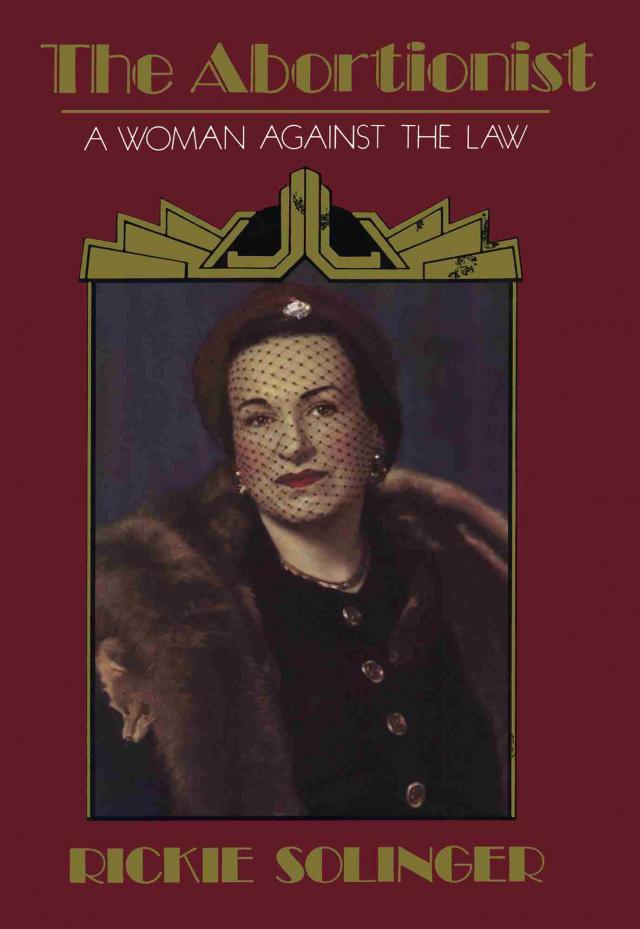


Rankin’s twenty years as a “tax factor” left him with an appreciation of the need to prepare the ground for profit. He understood that this meant cultivating proper allies and arranging for protection. In the fall of 1934, while he was waiting for Watts to come down from Portland, Rankin began to look about for a well-placed collaborator, and he also began to boast. An L.A. pharmacist who ran into Rankin at the time described him as “a very bold and very busy man who knew what he was about.” He remembered that Rankin came to see him and “he had no hesitation in bandying about the names of state and county officials. He had no hesitation in saying he dominated the narcotics division of the district attorney’s office and the State Board of Medical Examiners and some other offices, too.” A doctor whom Rankin called on during the same period recalled him boasting that it had cost him sixty thousand dollars in San Francisco and thirty thousand in L.A. to “fix things.”
Rankin carried himself with savoir faire and, according to many of his contacts, he had charm. He projected know-how and success, and it wasn’t long before his search for a strategically located partner was rewarded. The man he found was William Byrne, an employee of the California Board of Medical Examiners. Byrne had been a special investigator for the board for seven years when he ran into Rankin. By this time he was bored with earning his meager living by stalking misbehaving chiropractors, malfeasant osteopaths, careless abortionists, and other assorted practitioners accused of violating the state medical practice act. He was ready to step up his income, and when Rankin came to see him, Byrne let the entrepreneur know that he was for sale.
Beginning in the fall of 1934, Byrne began to perform services for Rankin. He first made himself useful by arranging to have murder charges dropped against an abortionist whom Rankin had picked to head one of his offices in southern California.
About the same time that Rankin began wooing Dr. Watts in Portland in July of 1934, he also started to pay a series of calls on one Paul De Gaston in his bungalow on Harold Way in Hollywood.
Rankin considered De Gaston an exotic specimen, but well qualified to join his enterprise. Indeed, De Gaston was an unusual type. He’d been raised in China, where he was born in 1892, by a Swiss mother and a French father who was a missionary doctor. In China Paul received what he called “private tuition,” though his mother often took him on trips to England and Germany to further his education. After a prolonged trip to Leipzig in 1908, where Paul studied chemistry, his father determined that the young man was ready to begin his studies in medicine. To that end, he was sent to Paris in 1911. The ordinary course of study to obtain a medical degree from the Sorbonne in those days was nine years. But Paul De Gaston was bright and his courses abroad had prepared him to finish the program in only five. When he graduated in the spring of 1916, De Gaston later told Rankin, “I got ambitious at the first recruiting station I saw in April 1916, so I volunteered in the French army. I was in such a hurry that I left Paris without my diploma.” Soon after the war was over, he came to the United States and over the next fifteen years pursued the main chance in a style that Rankin could recognize.
De Gaston lived in those years in Portland, Maine, and in San Francisco, Los Angeles, and points in between. He served briefly in the U.S. Army, tried briefly to become an executive in the steel business, attempted numerous sales ventures, and then arrived in Hollywood in 1925 with plans to become a movie star. His worldly flavor was initially interesting to several directors willing to cast him in bit parts to see what he could do. But apparently De Gaston could not do much in this line, and soon enough directors and would-be actor alike knew that he did not have a future in the entertainment business. Still, he stayed around on the fringes, occasionally getting jobs in musical stage plays or travelling with small acting troupes. During the fourteen years between 1916 and 1930, Paul De Gaston never practiced medicine. In fact, he never touched a surgical tool of any kind in all those years. Nevertheless, in order to support himself, he began in the early thirties to perform occasional abortions.
In June 1934, Rankin heard De Gaston’s name from one of his many knowledgeable friends and went to see him, hoping the man would contribute in one way or another to the fledgling organization. As the doctor remembered it, Rankin told him that he knew De Gaston was an abortionist. He said, “We are doing the same work. I have a proposition for you. Maybe you would like to take a little vacation from your business, and we will do your work. Then we will give you half of whatever comes in while you are away.” De Gaston was not interested in this offer, but when Rankin came back the next month and offered him his own abortion office in Hollywood, with half the proceeds, De Gaston accepted. Rankin continued to visit periodically during the summer, until the deal for De Gaston to open up the Hollywood location was completed on August 8th.
Two days later, on August 10, 1934, Marion Eilert, a hairdresser, died at De Gaston’s house after having an abortion. De Gaston was promptly arrested on three charges: murder, abortion, and practicing medicine without a license. Over the next eight months, De Gaston’s crimes were aired in several courtrooms, but the man was never convicted of any crime, despite the fact that Louise Eldridge, the young woman who had brought Marion to the abortionist, testified to an excruciating set of details regarding the event.
De Gaston was exonerated despite the additional fact that William Byrne, in his capacity as investigator for the State Board of Medical Examiners, made a report on the death of Marion Eilert to the city attorney of Los Angeles. The report included the information that on the day of the woman’s death, De Gaston called Louise Eldridge at her office after the abortion to allay her worries about Marion. He told her, reported Byrne, that the girl was all right and in good condition. He said she had been unwell the night before, after the abortion, but that she was back to normal now. Then De Gaston said something threatening to Louise that she didn’t understand. After assuring her that everything was okay, he now seemed to be implying that the situation was far more complicated. He said, “She is all right, but if they hang me I will shoot you first.”
While Byrne was preparing and presenting his report on Eilert’s death, he was simultaneously getting rid of the evidence. As he explained later, Rankin told him that the best way to handle the situation was to make sure none of the state’s witnesses (except Eldridge) wanted to appear in court. Rankin told Byrne, “Naturally, then they will have to dismiss the whole thing.” Implementing Rankin’s directive, Byrne set out to put the heat on the doctors and druggists who had sent cases to De Gaston, ensuring that no other state witness besides Eldridge appeared at the trial, and thus ensuring acquittal.
After De Gaston was, indeed, acquitted of the murder and abortion charges, he faced a second trial for practicing medicine without a license, a charge he wanted to fight. But Rankin advised him, with a surprising show of delicacy, that it would be “in poor taste” to fight the medical charge, and not to worry, he and Byrne could fix it up for a couple of hundred dollars. This time, he said, they would see that the case was postponed when it came up for trial, they would then get it postponed again the next time, and finally the case would be dismissed. Once again, Byrne took care of the details, and by mid-winter 1935, De Gaston was free to join Rankin’s stable. The doctor lost no time making himself useful. Between February 20, 1935, and the end of that month, after Dr. Watts had observed and approved his technique, the man who had just lately caused Marion Eilert’s death performed forty abortions in the Signal Oil Building at 811 West Seventh Street in downtown Los Angeles.
De Gaston’s legal troubles had not bothered Rankin. Despite Marion Eilert’s death, Rankin remained eager to employ De Gaston and, in fact, now saw the doctor’s difficulties as an opportunity to create a special tie between himself and the abortionist. He figured that now he could buy De Gaston’s services very cheaply, in exchange for the “legal assistance” he and Byrne had provided.
The fact was, Byrne’s handling of De Gaston’s case had been both savvy and timely from Rankin’s point of view. Without Byrne’s intervention, the foreign doctor may well have gone to jail. Yet in these years, it was standard practice for a physician-abortionist, even one with a death on his hands and no license, or with other problems equally troubling, to be given what may charitably be called the benefit of the doubt.
It was not only in Rankin’s orbit that such things could be arranged, or only in California where opportunities were golden. All over the country in the illegal era, doctors could arrange for the intervention they required when abortion was involved. In Brooklyn, for example, one year after De Gaston was acquitted of all charges associated with Marion Eilert’s death, another doctor who caused the death of a woman was charged with filing a false death certificate and forging hospital records in an effort to cover up his part in the fatality. The death certificate stated that the woman had died of “fibronyoma uterus contributory to vasomotor collapse.”
The case against this doctor couldn’t have been stronger. In the days before he was indicted, the doctor admitted to investigators that he had performed the abortion and had made out a false death certificate. At his trial, three gynecologists, including Dr. Charles Gordon, who at the time was Chairman of the Kings County Medical Association, and the Chairman of the County Committee on Maternal Welfare and the Director of Obstetrics and Gynecology at Kings County Hospital, all testified that the cause of the woman’s death was a botched abortion. Nevertheless, this doctor too was acquitted at trial and resumed his abortion practice at once.
In addition to fixing the legal process, there was a second sort of service William Byrne was able to provide his partner as the abortion venture was getting off the ground. In 1934, he began to pay visits on small-time practitioners up and down the Pacific coast, to let them know that their practices were now a subject of interest to Mr. Rankin. When Byrne visited the offices of abortionists like Dr. Simon Parker who’d had a medical practice in Long Beach for twenty-three years, he reminded the doctor that he was an investigator for the California Board of Medical Examiners. He explained to Parker and all the doctors he called on that Reg Rankin and his associates had taken over the abortion business on the coast. He made it very clear that any doctor who intended to perform abortions in the region henceforth had best become one of Rankin’s boys or be prepared to be put out of business.
Doctors like Simon Parker and John Folsom in Oakland were impressed with special agent Byrne’s sincerity, and they agreed to become Rankin’s employees. In fact, these abortion doctors were just a few of the many practitioners around the country in the Depression years who were subjected to these kinds of pressures.
In the illegal era, state anti-abortion statutes provided lucrative opportunities not only for a West Coast thug like Reg Rankin. On the contrary, opportunities flourished everywhere because abortion was illegal and in demand in all parts of the country. In New York City, for example, an East Side dentist, Dr. Abraham Ditchik, performed a similar service in 1934 for State Assistant Attorney General Sol Ullman. Ullman was the Attorney General’s designate to the New York State Committee on Medical Grievances, a group of ten doctors who heard and decided all charges of malpractice against physicians. Ullman sent Ditchik out to visit, threaten, and extort substantial sums of money from practicing abortionists around the state. A review of Ditchik’s activities in the thirties included details of his meetings with many abortion doctors. One such doctor was Henry L. Blank, who met with the dentist in September 1934. Ditchik told Blank that a complaint had been lodged against him with the Medical Grievance Board and that he would take care of it for ten thousand dollars. Ditchik hinted strongly that he was on familiar terms with Sol Ullman. He also said that if Blank did not pay, he would lose his license. The abortionist was inclined to believe Ullman’s emissary, so he agreed to pay sixty-five hundred dollars, two thousand down and the balance in monthly installments. Ditchik assured Blank that the money was going directly to Ullman and that sixty-five hundred dollars bought two years’ protection. Any complaints brought against Blank for the next twenty-four months, he said, would be disposed of. In addition, the dentist agreed to advise the abortionist of the way the Medical Grievance Board worked and to warn him of impending visits by investigators. Over the next two years, Blank was visited by representatives of the Board several times, but no complaints were filed against him.
A report prepared in 1939 that detailed Ditchik’s activities included testimony from eight doctors who claimed to have paid the dentist $35,150 since 1933. The doctors gave Ditchik money after being told that payment was necessary if they didn’t want to be prosecuted by the Medical Grievance Committee for performing abortions. The report concluded that none of the doctors who paid was ever punished even though complaints had been filed against at least three of the eight. Two doctors who refused to pay up, however, were brought before the board and had their licenses suspended.
With the same climate prevailing on the West Coast, Rankin was emboldened to speak freely to the doctors he recruited, and to make both large demands and large promises. He told a doctor in Los Angeles, for example, that since his chain of offices was operating with the knowledge of the Medical Board there was absolutely no danger of prosecution, and the doctor should feel completely safe in referring clients to them. To underscore his claims, Rankin sent Byrne to the doctor’s office so he could hear it from the horse’s mouth.
In Seattle, Norman Powers, a physician and surgeon for thirty years, received Rankin at his office in the summer of 1935. He remembered that Rankin was charming at first. “Mr. Rankin told me that he was from California and that he wished to see me about entering into an association of doctors that he represented in California. The doctors had offices in different cities. He said I had been recommended to him, and now he wanted to find out if I would care to join the association. He told me he would take me down to California and introduce me to the various men in the association, and after I had seen the men and the various offices, then if I cared to make up my mind to join them, he would be glad to have me, and if I didn’t care to join, why I could consider the trip as a vacation, and he would take me down, pay my expenses and bring me back the same way. He said that if I did join, I would be paid a thousand dollars a month.”
Powers was, indeed, interested in the proposition, and he pressed Rankin for more information. Like the other doctors, he wanted the money, but the risk was a big concern. As always, Rankin insisted there was no risk. He promised “ample protection” and told Powers he need only speak to the other doctors down in California to find out how safe they felt. “He said he would introduce me to all the men so that I could satisfy myself that there was protection for the doctors.”
Rankin poured on the charm with Powers because he needed him right away in California, but other doctors in Seattle were not treated with such solicitude. On the same trip up north, Rankin saw a number of other practitioners. He chose one to be his man in Seattle, and put the heat on the rest to get out of the business or go elsewhere. The man he chose to run his operation was Eric R. Wilson, a doctor who had shared an office with Powers for some time.
Rankin’s first order of business after muscling his way into control of the abortion scene in Seattle was to bring in De Gaston to train Powers and Wilson in what he called the “Watts method.” De Gaston arrived in town in late June, still deeply beholden to Rankin and Byrne for having engineered his freedom. He was aware that paying back his debt entailed doing what they told him to do. It was less clear to him how long his bondage would last.
The first thing Rankin demanded when De Gaston arrived in Seattle was that he change his name. On the morning of June 26th, the two men met in the lobby of the Earl Hotel and Rankin told De Gaston to sit tight, right there in the lobby, and keep his mouth shut while Rankin went down to the King County Medical Society and checked up on what name was available for De Gaston to use in that city. De Gaston did as he was told, and later that day Rankin informed him that from now on his name was Dr. F.T. Read. As De Gaston remembered it later, Rankin said, “You are supposed to be from Glendale, California, and in case anybody asks you, you are a graduate from Bennett University in Chicago, a school that’s out of business.” Rankin added, “You don’t look much like that fellow Read, but no one’s going to know that around here.”
As Dr. F.T. Read, De Gaston spent the summer training Powers and Wilson and making trips to Portland to train Ed Stewart, as well. By August 1935, Wilson and De Gaston were set up in a suite of offices on the sixth floor of the Security Building in downtown Seattle as Rankin’s employees. Business was brisk, but none of the players was satisfied. Early on, Rankin sensed trouble from Wilson. He suspected him of fudging the numbers and holding back receipts. He also suspected that Wilson was undermining his control over De Gaston.
In September, Rankin and Byrne decided to take a trip up to Seattle to scope out the situation. Rankin wanted to find out if Wilson was a cheat, and Byrne had begun to think that maybe it was time to ease himself out of the medical investigator’s office in L.A. Maybe there were some opportunities up in Washington. Specifically, it seemed a good time to take over the M.A.C. office in Seattle, and he made the trip an opportunity to talk to the Washington State Director of Licenses about going in with him. Byrne told De Gaston that fall that it was not “good policy” to openly pay off the Director of Licenses in cash, but that “if he could be induced to join the M.A.C., he could get his payoff that way and leave everybody alone.”


