

38 Londres Street, page 1


Also by Philippe Sands
Books
The Last Colony
The Ratline
East West Street
City of Lions (with Josef Wittlin)
The Grey Zone (ed.)
Torture Team
Lawless World
Principles of International Environmental Law
Justice for Crimes Against Humanity (ed.)
From Nuremberg to The Hague (ed.)
Bowett’s Law of International Institutions
Film
My Nazi Legacy
Podcast/Radio
The Ratline
La Filière
Performance
East West Street: A Song of Good and Evil
The Last Colony
A Borzoi Book
First U.S. Edition Published by Alfred A. Knopf 2025
Copyright © 2025 by Philippe Sands
Penguin Random House values and supports copyright. Copyright fuels creativity, encourages diverse voices, promotes free speech, and creates a vibrant culture. Thank you for buying an authorized edition of this book and for complying with copyright laws by not reproducing, scanning, or distributing any part of it in any form without permission. You are supporting writers and allowing Penguin Random House to continue to publish books for every reader. Please note that no part of this book may be used or reproduced in any manner for the purpose of training artificial intelligence technologies or systems.
Published by Alfred A. Knopf, a division of Penguin Random House LLC, 1745 Broadway, New York, NY 10019. Originally published in hardcover in Great Britain by Weidenfeld & Nicholson, an imprint of The Orion Publishing Group Ltd, a division of Hachette UK, in 2025.
Knopf, Borzoi Books, and the colophon are registered trademarks of Penguin Random House LLC.
Library of Congress Cataloging-in-Publication Data
Names: Sands, Philippe, [date] author
Title: 38 Londres Street : on impunity, Pinochet in England, and a Nazi in Patagonia / Philippe Sands.
Other titles: Thirty-eight Londres Street
Description: New York : Alfred A. Knopf, 2025. | Includes bibliographical references and index.
Identifiers: LCCN 2025012933 | ISBN 9780593319758 (hardcover) | ISBN 9780593319765 (ebook)
Subjects: LCSH: Political crimes and offenses—Law and legislation. | Trials (Political crimes and offenses) | Pinochet Ugarte, Augusto—Trials, litigation, etc. | Rauff, Walter—Trials, litigation, etc. | State-sponsored terrorism—Law and legislation—Chile—History—20th century | Holocaust, Jewish (1939–1945) | Crimes against humanity (International law)—History | Chile—Politics and government—1973–1988. | War crimes—History—20th century.
Classification: LCC K543.P6 S26 2025 | DDC 345.83/02322—dc23/eng/20250519
LC record available at https://lccn.loc.gov/2025012933
Ebook ISBN 9780593319765
penguinrandomhouse.com | aaknopf.com
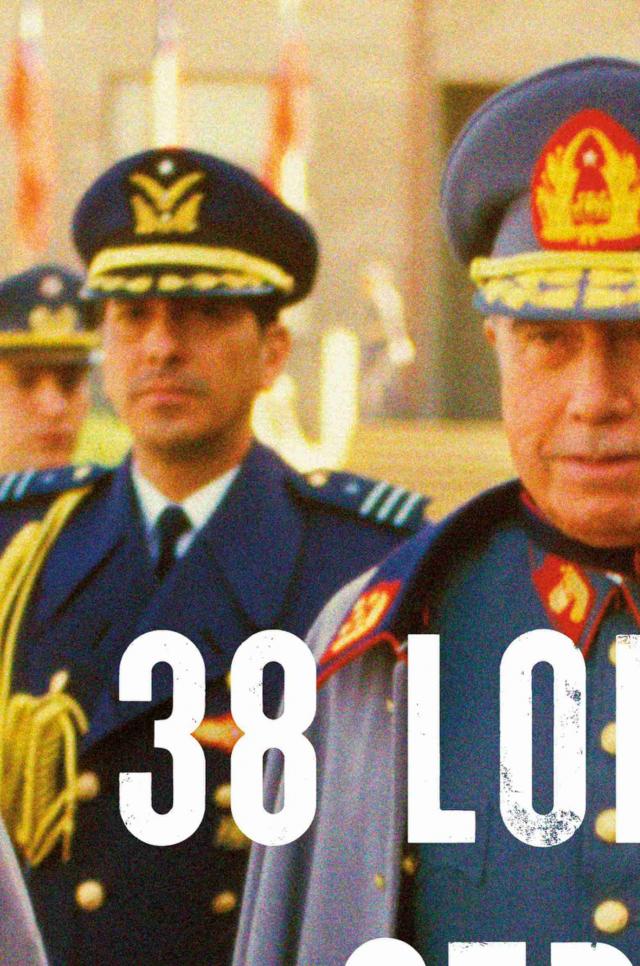
Cover image: General Augusto Pinochet, Sept. 11, 1983 in Santiago, Chile. Ila Agencia/Gamma-Rapho/Getty Images
Cover design by Ariel Harari
The authorized representative in the EU for product safety and compliance is Penguin Random House Ireland, Morrison Chambers, 32 Nassau Street, Dublin D02 YH68, Ireland, https://eu-contact.penguin.ie.
ep_prh_7.3a_153301507_c0_r0
Contents
Dedication
Epigraph
Map: Chile
Map: Santiago
Map: London
Note to the Reader
Principal Characters
Prologue
Part I: Arrest
London, October 1998
Nights in Chile
Santiago, 1963
Part II: Justice
London, November 1998
Map: Punta Arenas, Porvenir and Dawson Island, 1974
Map: Punta Arenas, 1974
Punta Arenas
London, December 1998
Part III: Immunity
Nights in Patagonia
Santiago, 1979
London, March 1999
Part IV: Escape
Nights in the Museum
Dawson Island
London, April 1999
León
London, October 1999
Concepción
London, January 2000
Part V: Impunity
The Deal
London, March 2000
El Mocito
La Pesquera Arauco
Map: San Antonio, Cartagena and Santo Domingo
San Antonio
The Judge
Epilogue: Two Men, Two Faces
Epigraph
Acknowledgements
Notes
Sources
Illustration Credits
Index
A Note About the Author
_153301507_
For Natalia
There is not any thing
that hath bred greater troubles
than the libertie which is giuen to the wicked
to offend with all impunitie.
Jean Bodin, 1577
I am a monument.
Walther Rauff, 1979
I am an angel.
Augusto Pinochet, 2003
Note to the Reader
I played a minor role in the unprecedented and historic legal proceedings that followed the arrest of Augusto Pinochet in London, on the evening of 16 October 1998. It offered a front-row seat in one of the most important international criminal cases since Nuremberg. Time has passed, but I have not forgotten the experience, the stories or the characters.
Many years after the arrest and the events that followed, I was researching a book about the Ratline, the route used by a Nazi to escape from the city of Lviv and Europe to South America. In the archive of an Austrian family, I came across a letter written by a former Nazi leader named Walther Rauff. Hunted for crimes against humanity and genocide, the SS man offered advice to an old comrade. A decade later, I learned, the author of the letter moved to Patagonia, in southern Chile, where he would manage a cannery that packed the flesh of king crabs into small tins.
It had not occurred to me that Pinochet and Rauff might be linked, but it turned out that the lives of the two men were deeply intertwined. This is the story of a journey to uncover their connection and its consequences, one that touches on matters of history, law, politics and literature. It evokes ideas about memory, and the line that is said to separate fact and fiction, truth and myth. And it touches on the right of a former president to claim immunity from criminal prosecution for actions taken during his presidency, an issue recently addressed by the U.S. Supreme Court.
On the lives of these two men, I have sought to describe fairly what I have learned, relying on documents, archives, testimonies and conversations. The account is not a complete version, or the only version. On such matters, where so many individuals are involved, there will be many perspectives and recollections. We know from daily life that two people who experience the same moment may see things differently, that memories are fluid and that what happened may be open to interpretation.
This is my interpretation, based on what I have seen, heard or read. It is a personal journey. It is about justice and memory and impunity, across time and place, about the threads that weave together our strange lives, in which questions and coincidences so often arise.
Philippe Sands
London and Bonnieux, March 2025
Principal Characters
Augusto Pinochet Ugarte, b. 1915, Valparaíso; Chilean Army, President of Military Junta and Chile, 1973–1990
Lucía Hiriart, b. 1923, his wife
Walther Rauff, b. 1906, Köthen, Germany; German Navy; SS and Gestapo; manager, Pesquera Camelio
Edith Rauff, b. 1898, his second wife
Walther Rauff II, b. 1940, his son
Walther Rauff III, b. 1967, his grandson
Chile
Carlos Basso, b. 1972, journalist and university teacher
Sergio Bitar, b. 1940, government minister, economist, Dawson Island detainee
José Camelio, b. 1907, founder of Pesquera Camelio
José (Porotin) Camelio, b. 1932, son, Pesquera Camelio
Humberto Camelio, b. 1934, son, Pesquera Camelio
Eduardo Camelio, b. 1960, grandson
Mariana Camelio, b. 1996, great-granddaughter, poet
Alfonso Chanfreau, b. 1950, student, Londres 38 detainee, husband of Erika Hennings
Manuel Contreras, b. 1929, Army, DINA Director
Hernán Felipe Errázuriz, b. 1945, lawyer and diplomat
Pedro Espinoza, b. 1932, Army, DINA Deputy Director
Eduardo Frei, b. 1942, President (1994–2000)
Samuel Fuenzalida, b. 1956, Army and DINA conscript
León Gómez, b. 1953, history teacher, Londres 38 detainee
Erika Hennings, b. 1951, director of the Londres 38 organisation, detainee, wife of Alfonso Chanfreau
José Miguel Insulza, b. 1943, Minister of Foreign Affairs and Secretary-General
Ricardo Izurieta, b. 1943, Army, Commander-in-Chief
Miguel Krassnoff, b. 1946, Army, DINA
Ricardo Lagos, b. 1938, lawyer, economist, President (2000–2006)
Miguel Lawner, b. 1928, architect, Dawson Island detainee
Orlando Letelier, b. 1932, economist, government minister, Dawson Island detainee
Osvaldo (Guatón) Romo, b. 1938, torturer
Miguel Schweitzer Speisky, b. 1908, law professor, government minister
Miguel Schweitzer Walters, b. 1940, his son, lawyer, ambassador, government minister
Carmelo Soria, b. 1921, UN diplomat
Laura González-Vera, b. 1932, medical doctor
Carmen Soria, b. 1960, journalist
Cristián Toloza, b. 1958, psychologist and civil servant
Jorgelino Vergara (El Mocito), b. 1960, ‘junior waiter’ to Manuel Contreras
Germany
Gerd Heidemann, b. 1931, journalist, Stern magazine
Karl Wolff, b. 1900, Supreme SS and Police Leader
Spain
José María Aznar, b. 1953, Prime Minister (1996–2004)
Carlos Castresana, b. 1957, prosecutor
Juan Garcés, b. 1944, lawyer, Allende adviser
Manuel García-Castellón, b. 1952, judge, Court No. 6, Audiencia Nacional
Baltasar Garzón, b. 1955, investigating judge, Court No. 5, Audiencia Nacional
United Kingdom
Thomas Bingham, b. 1933, judge
Tony Blair, b. 1953, Prime Minister (1997–2007)
Nico Browne-Wilkinson, b. 1930, judge, Appellate Committee, House of Lords
James Cameron, b. 1961, barrister, counsel to General Pinochet
Michael Caplan, b. 1953, partner, Kingsley Napley law firm, solicitors to General Pinochet
Leonard Hoffmann, b. 1934, judge, Appellate Committee, House of Lords
David Hope, b. 1938, judge, Appellate Committee, House of Lords
Alun Jones, b. 1949, barrister, counsel to Crown Prosecution Service
Jean Pateras, b. 1948, interpreter, Metropolitan Police, Scotland Yard
Jonathan Powell, b. 1956, Chief of Staff to Tony Blair (1997–2007)
Gordon Slynn, b. 1930, judge, Appellate Committee, House of Lords
Jack Straw, b. 1946, Home Secretary (1997–2001)
James Vallance White, b. 1938, Fourth Clerk at the Table, House of Lords
Prologue
Santiago, August 1974
A Chevrolet refrigerated van trundled along La Alameda, which connected the Moneda Palace to the University. Near the ancient Church of San Francisco it turned right, to enter the Barrio París-Londres, constructed around the intersection of two streets, Calle Londres and Calle París. The neighbourhood, once the garden of an ancient hermitage, was home to poets, writers and artists.
The van moved over the cobblestones before coming to a stop before a low grey stone building, number 38. Referred to simply as Londres, elsewhere the street might have been Londonstrasse, or Rue de Londres, or Londres Street.
Men in civilian clothing opened the van’s rear doors and a group of men and women in blindfolds tumbled out and entered number 38. One was a twenty-year-old student of history, arrested for sub-version. He wasn’t sure where he was, but through a gap in the blindfold he glimpsed the black and white floor tiles that marked the entrance. A chessboard, the headquarters of the Socialist Party.
He was led up a few stone steps and into the building, separated from his companions and taken to a side room where he was instructed to sit. Another person, a woman, sat next to him.
‘My name is León.’
‘My name is Hedy,’ the woman replied.
They waited. After a while, he was escorted to a staircase that wound up the back of the building, to the first floor. In another room, a guard ordered him to remove his clothing. Naked, he was made to lie on his back on the frame of an old bed, metal and cold. His wrists and ankles were tied to the frame. He was splayed, like a pig on a spit.
He heard low voices, and wondered if one had a German accent. As he lay, he made out the shape of an old typewriter, tall, elegant. He heard other voices and noticed a scent, cheap and familiar. The sounds approached, the scent sharpened. Flaño, a perfume that would come to induce a sense of anxiety and fear.
Later, when he was back in the room on the ground floor, a young man was carried in and deposited on the floor, in a heap. Alfonso, someone whispered, a philosophy student, in a dreadful condition. Shortly, a young woman was brought to him, another detainee. The two spoke a few words before the philosophy student was bundled out of the building, put in the back of a refrigerated van, and driven away.
He was never seen again.
London, October 1998
Twenty-four years later.
Four police officers gathered outside Room 801, on the eighth floor of a medical clinic on a street in the centre of London. An interpreter was present, late on that Friday evening in October. They entered the room, where an eighty-two-year-old man lay in bed, recovering from an operation on his back. Augusto Pinochet.
The interpreter, a lady with bouffant hair, informed him in Spanish that he was under arrest and told him his rights. ‘You are charged with murder,’ she said, ‘by a Spanish judge who wishes to extradite you to Madrid to be put on trial for a genocide you perpetrated in Chile, for torturing people and making them disappear.’
Two weeks later, in Paris, I greeted my wife at the large wooden gates that marked the entrance to the Pantin cemetery, on the outskirts of the city. This was where my grandfather was buried. We embraced. ‘I’ve just received an approach from Augusto Pinochet’s lawyers,’ I told her. ‘They would like me to argue that he is immune from the jurisdiction of the English courts and could not be extradited to Spain, for genocide or any other crimes.’
‘Will you do it?’ she asked in a firm voice. I reminded her of the ‘cab-rank principle’, the rule that required barristers to act like taxi drivers, to take every fare, to turn down none because of politics or personality.
‘Will you do it?’ she asked again.
You know the rule, so yes, that was my inclination.
‘Fine,’ she said in a tone that was both irritated and sweet, ‘but if you do it, I will divorce you.’
Hagenberg, Austria, June 2015
Seventeen years later.
I was on the upper floor of an ancient and dilapidated castle in northern Austria, making my way through the family archive of a long-dead Austrian couple. I found an old letter, written after the war, sent to Otto Wächter, on the run in Rome. The writer was a man named Walther Rauff, dispensing advice from Damascus in Syria:
Maintain an unshakable toughness, don’t be shy about the work you do, and don’t spend time harking back to better times. Accept the current situation and you can achieve a lot and climb back up the ladder…The main thing is to get out of Europe…and focus on the ‘reassembling of good forces for a later operation’.
Go to South America, Rauff told Wächter, who had once overseen the extermination of hundreds of thousands of Jews and Poles in Lviv, and then added: ‘I will pursue things along these lines.’
I learned that the writer of the letter was also an SS man on the run. He was notorious for his role in overseeing the policy to use vans to gas Jews and others to their deaths, and then to kill hundreds of thousands of people across Europe, to make them disappear. Indicted for these acts of mass killing, Herr Rauff avoided capture and made his way onto the Ratline. Years later, he ended up at the end of the world, in Patagonia in southern Chile, the manager of a king-crab cannery.
Rumours about his past followed him. So did rumours about his connection to General Pinochet. ‘Everybody knows,’ said a taxi driver in downtown Santiago.
Part I


