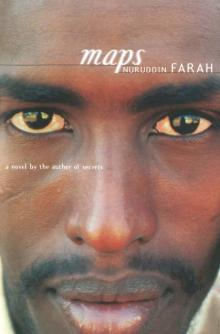
Secrets: a Novel, page 2


He nodded his head but said nothing. Nonno was given to drawing pleasure from my changes of mood and to appreciating my habit of abandoning my child’s nature and assuming that of an adult, not only in the register of my language, choice of vocabulary, but in my bodily gestures too. For I was a good mimic and was adept at becoming other persons if I chose to.
“That’ll make your mother most unhappy,” he said.
This wasn’t the first impetuous confrontation I had had on the nature of fatherhood. I was barely seven when I insisted that I had made a woman pregnant, and no one succeeded in persuading me that I had not. At four years of age, I remember seeing a drawing of the sun which my father had done in very bright colors, and ascribing to my old man immense powers beyond a mortal’s. I believed, in those days, that girls were molded into feminine shape in their mothers, who were able to procreate their daughters without help from a man, and that boys emerged as boys out of their fathers’ penises.
Nonno was saying, “If you do not wish to displease your mother, then you must abandon the idea of drawing anomalous attention to your beginnings.”
My mind was elsewhere, concentrating on the erratic movements of a flycatcher perched on the dead branch of a nearby tree, a flycatcher hesitating whether to pursue its insect prey, which was restless and frightened, a victim in flight.
With neither speaking, Nonno and I sat eating our fruit salad in the afternoon’s lacework of bright sunshine and crisscross shadows. And I watched birds flying solo or in pairs or in flocks, my grandfather’s stare fixed almost all this time on a singular bird which moved its head in the repeated figure of seven.
“What’s so special about Sholoongo?” he asked.
I started to say something, but stopped just in time.
I dared not betray Sholoongo, my secret-sharer whose daredevilry never ceased to amaze me, who would sneak into my bed in the dark after her half brother had started to snore in his bed in the same room. I dared not speak of how thrilled I was when I thought of the diabolical nature of what we were up to, so excited that I was able to meet her challenges with equal bravado. Where other boys’ braggadocio underlined for me their overly explicit male self-awareness, with her our secretiveness redeemed us, or so I believed. I doubt that I enjoyed the sexual aspect of our relationship, considering my sex had not broken. But then nor had my voice.
I had my first taste of her one night when I dared the lark in her, after slipping into her bed for what seemed to be an innocuous cuddle. Innocent or not, her abundance sought me out, she touched my groin, and I was all erection. I must have know what I was doing, for I held my sex between my thumb and forefinger and asked if she could find some cavity for it to dip its head in. She chuckled in derision and spoke loud enough I feared Timir might wake up; but he didn’t. She said, “My, my,” as she pinched my sex where it hurt, “yours is no bigger than a navel button. Are you sure you are your father’s son? Because he hangs down like a leather strop.”
(Looking back, it embarrasses me to think how my male ego was hurt whenever women whom I desired happened to be so indiscreet as to emphasize my smallness. Insulted and naturally annoyed, I even called one of them a whore. But that was years later.)
Nonno was now saying, “What’s so special about Sholoongo?”
“I like her for her outlandishness,” I said. “Full of fun!”
Maybe to hide his discomfort, Nonno prevaricated, and then equivocated, and finally spoke like an elder addressing a few words of advice to a youngster. He said, “Apart from the obviousness of there being a blessing or a curse, you as an offspring are there, I suppose, to reform your progenitor’s arrogant ways. And you’ve done wonderfully!”
Maybe he felt that I understood his meaning, because he spoke at length as though he were at an elders’ council meeting, rhetorical, quoting proverbs, paraphrasing poems, supporting his arguments with a rehashed myth here, a legend there. He was a great orator, quite impressive. If I paid little heed to what he was saying, it was because I was of the dubitable view that he was talking to himself, not to me. And I let him. But I began to talk to myself too, and I said, as to myself, “She is fun, Sholoongo is. She is great fun.”
The expression on his face darkened at first. A moment later his features widened with a ghost of a grin, one which was meant to perform a specific task, the kind of grin that might transform itself into a frown.
“You take care!” he said.
In his way he was telling me to leave. And I rose.
Then we heard a huge blast coming from the direction of the river, a little to the right of his woods. We had barely given ourselves time to think what it might be when Nonno’s housekeeper arrived to announce that a crocodile had swum away with one of his laborers. More men arrived, one of them guessing that the gunshot we had heard came from Fidow’s matchlock, Fidow being Nonno’s general factotum. Nonno went into the bungalow and came out armed with a gun, and made to leave with several of his farmhands brandishing spears and all manner of clubs and axes. I sensed that he was determined either to recover the man from the crocodile’s jaws or to kill it. It was common knowledge that this particular crocodile was a nuisance, a greedy beast which, having tasted human blood and made off in the recent past with two little girls and their mother, was bound to return. In my grandfather’s village in those days, the crocodile was suspected of having swum away with lots of other humans, in broad daylight at that.
He remained outside the excitement generated by the threat posed by the voracious crocodile. His voice calm, he spoke in the tone of a man who may not come back soon. He said to me, “I suggest you take home with you the pot of honey, and that you take care.”
Alone, I felt light in the head and in my heart too, and was rather too eager to be reunited with Sholoongo, my calf-love, whom I would feed on the honey collected by Fidow and given to me by Nonno. The question was, would she take me in?
A glint of yet another piece of daredevilry now glittered in Sholoongo’s left eye as she pulled me away from where a woman neighbor was engaging her half brother Timir in meaningless banter. A gossip, Barni was giving the latest about the son of a neighbor, whose parents had married him off before his fourteenth year to his first cousin and playmate. I knew the woman to be childless and thrice divorced, I knew her to be older than my own mother, and it was common knowledge that she had her own place in a rooming house a couple of gates away. Barni had no profession as such and, like many women in urban Somalia, had no obvious means of support.
Sholoongo told me that Barni was rather keen on establishing closer ties with her and Timir, her half brother, in view of her interest in their father, Madoobe. I cannot remember who explained to me that their father had charmed the underpants off Barni. Once a sailor, Madoobe made his living taming wild horses, which he exported to the Middle East and out of which, it was rumored, he made a mint. What’s more, he was reputed to have been the first Somali ever to employ an ostrich as a guard to mind his horses and zebras, a feat which turned him into something of a celebrity.
“Listen to her,” Sholoongo said, glancing in Barni’s direction in derision. “Bla, bla, bla, my God, she never stops, and doesn’t take my father’s no for an answer.”
I quoted my mother’s wisdom that love is subservient. No one could explain what Barni saw in Madoobe, whose moods were determined by the rise and fall of his fortunes, whose disappearances tended to be shrouded in mystery, away one month, back the next, never condescending to be questioned about what he had done in the intervening period. I knew that Madoobe was asleep at this hour and that Barni would hang around all day if need be, patient like a groupie waiting for an instant’s sight of her idol.
But now that we were out of Barni’s and Timir’s hearing I could tell that Sholoongo was up to some mischief. For she held right under my nose a piece of paper on which someone had sketched in pencil what I took to be a pair of prominent lips, with a thumb protruding out of a corner. Not knowing what to make of it, I looked at her grin. To me, she wore the expression of a pirate who had made a sortie into a treasure trove.
“Tell me what you see!” she ordered.
I grunted out a few words, because I didn’t wish to admit defeat, or that I might get it wrong. On my second attempt at working out the meaning of the sketch, I saw a figure seated in yogic communication, a sadhu with a missing leg. Scarcely had my thoughts formulated than I realized that I was actually holding the drawing upside down. To cover my embarrassment, I said, “What did Timir think? Have you shown it to him?”
“My half brother sees the hand of a vet busily pulling out a calf’s forelegs in an attempt to deliver it of its mother,” she responded.
Silent, I concentrated all I had by way of a gaze on her chin, which sported a singularly long hair, so lovely to fondle. Then at her insistence I demonstrated what I saw, now that I had the drawing the right way up. To do so, I extended a middle finger, with nearly all the other fingers remaining folded away, then pouted my lips as if I were sucking a half-bent forefinger. Finally I rubbed my index finger against my lower lip.
She said, “Fingers, mouths and lips, corks!”
I felt hot blood running into my cheeks and toward my eyes. For a moment I could not see anything, neither could I hear anything, not even my own heartbeat. Meanwhile Sholoongo, who had numerous inelegant ways of reaching for my crotch, was suddenly fondling me until I rose. She whispered that I was a cork and she a bottle, as her finger caressed my fly. In her idiom she used to say that she was the hole in a flute and I the finger. It was much, much later, with my ears drained of the tepid blood of lust, that I could hear Barni’s voice. I cannot be certain of what she said, but it sounded like “When you have no luck to ride!” In my memory then I was able to taste my fortune in my own saliva, a river of blood, thimblefuls of the finest quality, Sholoongo’s, finger-licking savory!
When next I picked up the thread of Barni’s conversation with Timir, the woman was speculating that Madoobe’s heart was “as hard as the calluses on a camel’s tongue.” Timir nodded his head, not because he agreed with her, but because he wished to get away from her.
For my part, I was prepared to pursue Sholoongo to the ends of the earth, hoping that she might be in the generous mood of taking me into her. “A thumb in a mouth, teeth closing in on the nail!” As she did, I heard a shout “Ouch, you’re hurting me! Go easy, please!”
I sensed from the first instant my mother set eyes on Sholoongo that she would disapprove of her. In fact she said as soon as the girl was out of earshot, “Beware, she is as dangerous as live wire.” And her advice? “If I were you, I would treat her with caution, and wouldn’t touch her with my bare hands, as if she were static.”
In those days I was interested in the origins of things, how rivers came into being and why they ran and where. I put a legion of questions to Nonno about where babies began and how, where the dead ended up, and whether, once interred, the buried awoke in the dark of their tombs and were immediately reborn, and if so in what form, child or another grown-up, or did they stay curled up, like baby snakes knocked senseless on the head? I was a self-questioner, my head teeming with the drone of unpacified anxieties buzzing inside it, like angry bees. Was maybe this why I wanted to change my name, because its origins made no sense to me? If every given name had its tensions, I used to muse, and every newly acquired one its birth pangs, why, so did every new friendship. Then surely my and Sholoongo’s friendship was no exception?
It upset my mother to hear me speak fondly of anybody except my immediate family. (“There is nothing like blood,” she would say, her loyalty to her family imbued with such conviction I would wait until I was out of her view before a smirk spread across my features. After all, I knew of a different kind of blood, Sholoongo’s, of which I partook, a secret ritual to which my mother was not privy.)
As far as I knew, I was not an unhappy child, but my mother had reasons to suspect that I should be. Perhaps she could not help it, being a worry pot, bubbly and bursting with aqueous energy. At the sight of me and Sholoongo, especially on the days when she was under the weather, my mother would be transformed into a flood of words, an avalanche of emotions, the corners of her eyes mere assembly points for her tearful expostulations. After dark, when asleep, my mother’s cheeks would prove to be stained. Could it be that she wept as she dreamt? At daybreak there would be vapor circling just close enough to her eyes, moist like early morning mist.
My mother suspected others of wanting to undermine her influence over me, her only son. She took pride in her intuitive powers, which she claimed alerted her in good time to the inwrought patterns of Sholoongo’s long-term designs on my destiny. On occasion, Nonno would intercede. Not that his interventions, his attempts at allaying her unfounded fears, ever worked. I recall hearing him once when I eavesdropped, “Come, come,” he said, in the tone of a parent silencing a plaintive child, “the boy is not yet ten, for goodness’ sake, and Sholoongo is only fourteen!”
My mother didn’t find Timir vulgar or threatening. To her, he was the saintly figure in a household of fiends. Her instincts never warned her of his unhealthy influence over me. “In my dreams,” my mother once said, “Sholoongo is long-nailed, and is endowed with a stout head, protruding teeth, with legs that are abnormally short, with rounded ears which resemble a ratel’s. She is busy forever digging, without a moment’s break.”
Even though all attempts to persuade her that Sholoongo had no long-term designs on me proved unfruitful, the fact is my grandfather and father never tired of trying. Pale with fright, my mother, when cornered or asked to see reason, would repeat one of her frequent nightmares: of a honey badger chewing its way into her viscera. My father would speak a gentle rebuke, suggesting that she relax. Nonno would counsel self-restraint, reminding her that she might be accused of untoward prejudices. “It isn’t the poor girl’s fault that she was abandoned to a suckling lioness,” he would argue. “Besides, what evidence have we that she has the power to alter her human nature to that of an animal?”
My saliva thickening as though it were dough fermenting, I would explain to my mother that it had been at her own insistence that I was introduced to Sholoongo, her brother and father too. I would remind her that it was my father who had described them, when he first got to meet them, as “a threesome of originals, as unique as they are fascinating to know, clowns of a tragic reenactment of a sexual farce.”
Her head slightly inclined in the attitude of someone who is hard of hearing, my mother would listen very intently to every bend in my every phrase, register my pauses and watch the curves in my words: she might have been listening for some evidence that I had been bewitched. Then she would cry out most passionately, “I lie in the haunted darkness of my sleep, separated as I am from your father by my nightly visions of horror. Hardly have I fallen asleep than I have a night filled with ominous dreams in which ratels chew their way into my viscera, elephants go amok, their huge ears raised in fury, nightly visions in which a hippopotamus crashes through the flimsy fences of my slumber. Where there are graves, these are desecrated, the bodies dug up, exhumed and then buried anew, not in the ground but up in the trees, in nests meant for birds the size of owls. In the blink of an eyelid, the mounds of the newly dug-up earth assume the appearance of anthills, with many openings woven with spiderwebs. My fear is most intimate, and I wish I could rid myself of it, but I can’t.”
I sought Nonno’s opinion. Why was it that the girl’s presence fed my mother’s unconscious with a fodder of frightful dreams? In his reply Nonno drew my attention to “the idea” of ratels, which, he said, were “partial to the pupae of wild honey, nocturnal animals with the habit of making deep burrows in the earth.” There was a subterranean link, he went on, between a ratel’s feeding on carrion and my mother’s belief in Sholoongo’s animal powers, the power of transforming her human nature into the animal of her choosing.
As for Timir, her half brother!
He arrived, his skin as flaky as the arid desert from which he had come, some provincial capital in the interior of the country whose residents were as immune to thirst as camels. I had been infatuated with his sister, and didn’t have many friends in those days. Because my father liked Timir, my mother acquiesced to the suggestion that I strike up a friendship with him. My father was present on the day we first met, and he gave me a valedictory encouragement, suggesting that I teach the city ways to Timir, from whom I would learn the culture of the pastoralists who form the majority of our country.
How could I ever forget the detailed attention paid to all the arrangements to ensure that my meeting with him would be crowned with immediate success! It might have been a marriage, my father assuming responsibility for its being consummated. There was a period of supervised courtship lasting almost a month, with my father present in his role as an overseer, a counselor. In the meantime, our two families were in each other’s houses like the hands of thieves in one another’s pockets. Nonno was persuaded by my mother to lend Madoobe, their father, half of the required funds for him to finance his horse-taming business.
The truth about the boy was sadly more complex, for not only did he help me precious little, nor teach me anything about the culture of the nomads, but he was more interested in what he referred to as his “sex eruptions” than in the burgeoning fabric of my ideas about the origins of things. At least Sholoongo and I shared a keenness of spirit, a genuine interest in the beginnings of things. She unraveled mysteries, taught me the basics about what I took to be something akin to the Sufi tradition, offered the clearest feminist interpretation of the Carraweelo myth yet. Carraweelo is the queen to whose reign may be traced the period when the male order of society in the Somalia of old replaced the country’s matriarchal tradition, with women accused of betraying the vision of society and of failing to rule in a just manner.