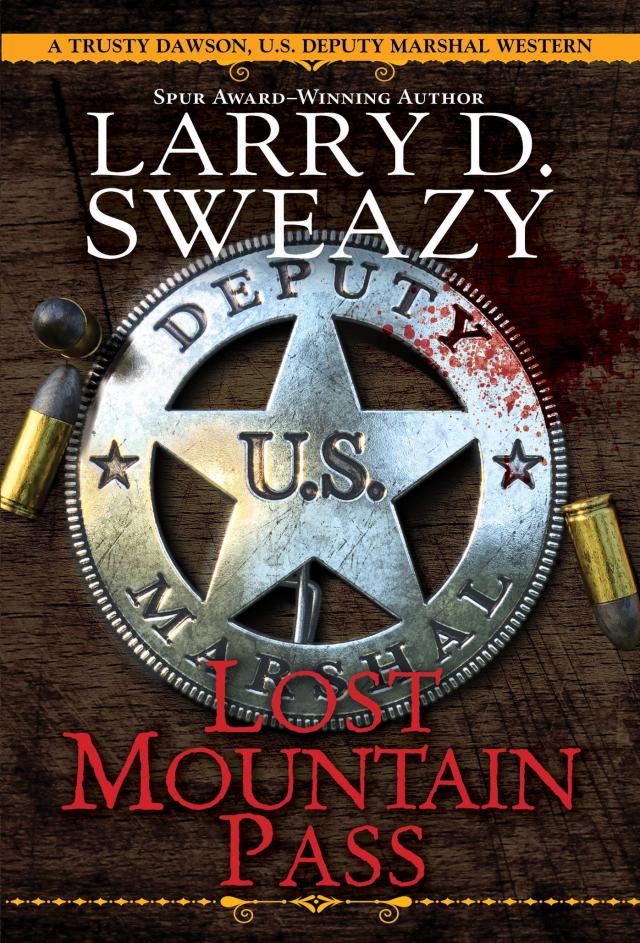
Lost Mountain Pass, page 4


“She’s askin’ about you, boss,” Haden said, stopping a foot in front of Calhoun. Haden was a typical skinny, blue-eyed, Black Irish who had come across the water in search of food, as long as it wasn’t in the form of potatoes. Age had settled in his belly, round as a bonnet and just as soft, but there was still a young slant to his face even with the gray stubble in his beard. Gladdy was a younger version of his brother, only dirtier and shorter.
“And she thought to send you to fetch me for no cause, then?” A twitch rode up Vance Calhoun’s high cheek on a spark of anger that came to rest in his dark gray eyes.
Haden shook his head, clacking his sidearm against the knife sheath he wore on his belt. “No, boss. It was Sally Hoyle who sent me to ferret you out. There was pain in the new missus’ belly and a worried note in old Sally’s voice ’less there’s a storm of some kind brewin’ on the horizon. I figured I’d best get you home as quick as I could.”
* * *
The Bar-C-Bar Ranch sat in a lush valley bordered by the jagged Red River to the north and a line of perfect barbed wire to the south. Four thousand acres equated to a square six miles long and six miles wide, but the land Calhoun owned was shaped more like a hatchet with a long handle than a square. From one end of the property line to the other it was a good ten-mile ride. Long enough for a man like Vance Calhoun to relax once his horse’s hooves touched ground that he owned the deed to. But there was no relaxing on this day, not with an alarm set about the fate of his first-born child at stake.
Calhoun rode a grullo Chickasaw horse, gray as a shadow with a dun mask and bottom-of-the-well black eyes as serious and deep as its rider’s. The horse was fast off the hoof and only got faster at Calhoun’s relentless urging. Head down and free to push itself, the joy runner knew how to get its owner home on the tip of the wind, spry and fast, every snake hole and trip-worthy rock on the trail committed to memory. The gelding could have made the ride with his eyes closed, which was a good thing because Calhoun was not an expert horseman. He was smart enough not to get in the way of the gelding’s desire; the horse loved to be given its head more than anything. Even an idiot would have known that about the beast, horseman or not. If there was ever a time Calhoun needed the grullo’s independence and speed, that time was now.
The afternoon sun beamed down on the land that had welcomed the turn of the earth from winter to spring. The vibrant color of fresh green was everywhere the eye fell. Crisp, new, and pulsating with promise, especially for a man who traded in cattle and relied on healthy grasses to grow his wealth. Blooms that would bear fruit as the seasons passed offered a sweet fragrance to the air—nectar to contribute to the drunkenness of the waking world, animals and insects alike. Even though the ground and the sky throbbed with hope and opportunity, all Calhoun could see were the clouds brewing over the hills, white puffs tinged with gray, casting greedy dark fingers over the highest ridge. There was wind and bad weather in those innocent-looking clouds, he was sure of it.
It had only been hours ago when Calhoun had lost sight of the season, and the situation he had found himself in allowed his old ways to dominate his changed present. His young wife, the once-widowed Jessica Marberry Tennyton, high-blooded from St. Louis, was a beauty made of curved porcelain and golden locks that gave her the look of a regal painting no matter the light or time of day. The pregnant Jessica demanded that Calhoun, more than thirteen years her elder, change his ways, once and for all. An argument had ensued. Cross words had been spoken, not for the first time, or the last given the position each of them, man and woman, had taken in their lives with minds of their own. Both were accustomed to mounting a campaign and winning their way—by force or desire, one way or the other. Young Jessica was as spirited and fast as the grullo, proud of making her own rules and hell-bent on answering to no one, not even to Vance Calhoun, much to his chagrin and surprise. He didn’t scare her, intimidate her, or hold any power over her, or so she had convinced him with her expert gun-handling skills and unwillingness to back down from him; she dared him to strike her. He didn’t, but he wanted to. They were a lot alike, headstrong, independent, reluctant to need anything that they couldn’t provide for themselves. That had been the attraction. There had been a lot to like about the woman, the girl really in comparison to the women that Calhoun usually found himself attracted to and in bed with.
Life with Jessica had started with a whirlwind romance, one that had surprised Calhoun, had come unexpected, out of nowhere, on a quick trip to St. Louis intended for business, not love. Her father, Theodore Marberry, was a railroad owner who was interested in negotiating shipment fees, saving the grueling, risky, and often unprofitable cattle drives. Dinner at the man’s fine house had proved more fateful than Vance Calhoun could have ever imagined. He’d had no idea that Marberry had a young daughter, widowed and childless, living in the stately home with him. Calhoun was smitten with Jessica at first sighting. She glowed golden like a Roman statue lit from the inside out—and she seemed to like him, too, which had been even more of a surprise.
Vance Calhoun had never been a man to seek out a mate, a partner, or a relationship that required sharing a bed for more than an hour. The company of a woman usually came with the exchange of a coin and the change of bedsheets. He could walk away, confident that no emotional transaction had been made, and carry on with his life; romance was for fools. An heir, or a family, had never been in Calhoun’s plans. Not until he laid eyes on Jessica Marberry—whose married last name was Tennyton—and was given the indication that she could be his if he was lucky enough to throw all of his chips into the game of love and pull an inside straight. All he had to do was learn how to live with a woman and be willing to trade her beauty for the individual that came along with it, opinionated and strong as she was—all packaged up in a luscious body that could never be bought for only one night. Having and keeping Jessica Marberry Tennyton was a long-term investment—a deal that Calhoun still wasn’t sure was going to pay off. He was as shocked as everybody else that Jessica had said yes to his marriage proposal and had been willing to leave the comforts of St. Louis for his ranch in Paris, Texas. He had been more surprised when Jessica came up pregnant weeks after the wedding.
The grullo sped toward the ranch house with Calhoun leaning forward in the saddle. The house was a modest single-story three-bedroom affair with a wraparound porch that sat on a ridge overlooking a creek. Shaded by a grove of towering oaks, and within walking distance of a well-outfitted horse barn, the house seemed simple and small, especially in comparison to the new three-story Victorian house in St. Louis that Jessica was accustomed to.
A bunkhouse sat opposite the barn, and at any given time, there were between ten and twenty hands working on the ranch, the O’Connor brothers included. A cook and maid, Miguel and Maria, lived in a small cabin a hundred yards up the creek. Both were Mexican, married long enough to grow white-haired and into a pair who looked like they belonged together; a set of brown-skinned salt and pepper shakers from the old country. Sally Hoyle, Calhoun’s only true trusted adviser, was his sister, a colonel’s widow since the war. She had come to live in the house with him and was in charge of all things domestic until Jessica had showed up. Then it was an old cat learning to adjust to a young cat who had an eye on the future, unconcerned about fitting in, or what the older sister’s role or relationship with her brother was. Sally had mellowed in her territorial warfare at the first show of Jessica’s bulging belly, but only because she had no children of her own and knew Vance was in need of an heir himself. The air between Sally and Jessica had never warmed, and there had remained a cautious distance even after the pregnancy was certain. Jessica was queen of the house, and Sally was a mere servant, no better than the Mexican, Maria. Calhoun didn’t notice the power struggle or care about it. He had his own place in the house to find with Jessica in charge.
If there had been any drink or drunkenness left inside of Calhoun’s body from his visit to the Silver Sargent Saloon, it had drained out on the ride home via sweat and worry. He hadn’t considered anything could go wrong with the pregnancy. Jessica was young, healthy, and untroubled throughout the whole ordeal as the child grew inside of her. Calhoun had, of course, seen healthy cattle lose calves at birth, or shortly after to the scours—relentless diarrhea that left the young calves dead in a matter of hours, and the mother cow bereft by the loss. There was nothing more melancholy than a grieving cow. Unless, of course, Calhoun was willing to look in the mirror when he was taken by one of his own dark moods, which, of course, he was not. He expected the baby to come like they always did, in secret, behind closed doors, with women huddled around the bed, coaxing the child into the world safely without any problems at all.
There was the possibility that Haden O’Connor had read the signs wrong and misunderstood Sally’s message and intent. There was still hope for that, even though Calhoun could feel it in his bones that something was wrong. His luck had been on a good streak for too long. Something was bound to go awry, all things considered.
The grullo hustled across the final paddock with Calhoun barely aware that he was mounted atop a horse. His focus was on the house. Even from a distance, he could see Sally pacing the front porch, waiting for him to arrive. She met him on the hard dirt that separated the house and the barn. Haden and Gladdy followed, but kept on going, intent on putting up their horses. Their job was done. Calhoun was home. It was hard to tell by the look on Sally’s face whether he had made it on time, or if his worst fear had come true.
Calhoun jumped off the horse and rushed to his sister, a stout woman a head and a half shorter than he was. She wore black hair that was losing the battle of time to strands of gray, pulled up tight with a braid at the back. Sally Hoyle was a severe-looking Scotswoman even when she laughed, which was an event rarer than a blue moon.
“What were you thinkin’ leavin’ at a time like this?” Sally said, accosting Calhoun with dagger-sharp eyes and a hard look that was just short of provoking a slap to his face. She had done that before, especially when they were children. Calhoun didn’t fear his sister, but she had her ways of lording over him, making him uncomfortable so he would toe the line. He respected her, and if there was anyone on this earth who could tell him what to do and how to do it, it was Sally Hoyle.
Calhoun rubbed the sore knuckle of his right hand with his left, pushing away the thought of the stagecoach rider. “I needed to blow off some steam.”
“With that woman in the state she’s in? With the baby about to come?” Sally’s brogue wasn’t as thick as Calhoun’s. She had tried her best to rid her tongue of Scotland the best she could, but her attempts betrayed her when she was angry. Especially when she was angry.
“What do I know about birthin’ babes?” Calhoun said. Haden and Gladdy had disappeared inside the horse barn. It was just Sally and Calhoun standing before the house. A slight breeze had kicked up into a wind, riding over the top of the southwestern hill. He could taste rain on the tip of his tongue and feel a change of temperature in the air. “Am I too late?”
“The baby is born.” Sally stiffened, looked away from her brother for a brief moment. “Maria is seeing to it.”
“It’s okay, then?”
“She is fine. Healthy with a deep set of lungs.”
“A girl?” There was disappointment in Calhoun’s voice.
“Yes, you’ll have to think of a name for her.”
“I’ll leave that to Jessica.”
Silence settled between the two of them like an iron partition had been dropped from the sky. Sally didn’t need to say anything. Calhoun could read her face. His feet headed for the door, but his sister grabbed him back. “That might be a problem,” she said.
“What do you mean? Is she all right?”
“The birth was too much for her. There was a lot of blood.”
“Is she dead?” Vance Calhoun’s knees started to quake, and the feeling in his body began to fade. His mouth was as dry as a desert and his hands trembled like an old man’s.
“No, she is not dead, but she’s not responding. I sent Miguel after the doctor. He should be here shortly.”
“Did she call for me? Say anything? Anything at all?”
Sally looked away, unable to bear the sight of her brother on the verge of collapsing. “Are you sure you want to know?”
“Yes,” he yelled, “tell me what she said.”
“She called for a man named Samuel over and over again,” Sally said. “She didn’t ask for you one time, brother. Not one time.”
Chapter 4
Kosoma, Indian Territory, May 1888
Three graves had been hastily dug and stood open, waiting for the Darby brothers’ arrival. The sky above was clear with the sun ticking toward the western horizon quicker than Trusty would have liked. He was more than a little annoyed about the judge’s intervention in Amelia Darby’s decision to attend the burial of her brothers.
A red-tailed hawk screeched overhead, its white underbody contrasting dramatically with its russet fan tail. The raptor wasn’t interested in the burial or the bodies in the coffins. Death and human flesh were better left to vultures; this bird was on the hunt to feed its young, unconcerned about the human drama underneath it. A perfect shadow of the wings floated over the trio, causing Trusty and Judge Hadesworth to look up, the brims of their hats shielding their eyes. Amelia didn’t move, didn’t flinch. Her focus was on the wagon and its load of coffins. Her face was white as the hawk’s belly and just as void of emotion as the bird’s piercing yellow eyes. Not one tear had fallen from Amelia’s own eyes, and Trusty had found her coldness troubling from the moment she had snuck up on him and asked him for his protection.
Poor Man’s Hill was more of a bump than a hill, dotted with neglected wood crosses and lazy cairns of rocks built to placemark the final resting spots for the dead. There were no gravestones. That took money and effort. As far as Trusty knew, the closest limestone carver’s shop was located in Missouri. Kosoma was a ten-minute ride behind them, with the cemetery offering a full view of the tightly constructed town. The railroad, void of a train, looked like a perfectly healed scar as it ran north and south without its own end and beginning. Lost Mountain poked up into the distance, an hour’s ride away. The pass was hidden, unreachable. They should have been there by now.
The Teamster had brought the wagon full of coffins to a stop at the head of the open graves. Both men, the Teamster and the preacher, sat staring at Trusty and the pair of riders who rode with him with distrust and anger in their beady eyes. Amelia continued to sit stiffly in the rigid saddle on her skinny ride, while Judge Hadesworth waited next to her. He watched over the girl like a concerned parent, or a husband waiting for his wife to fall off a horse, overcome with emotion by the situation. There didn’t appear to be anything to worry about as far as Trusty was concerned. It was hard to tell whether Amelia was still breathing or not. She looked like a statue upon the horse, who Trusty felt sorry for. The beast looked wore out, on its last shoe, in need of a pasture to be put out in. He wondered if the beast could make it to Muskogee.
“We don’t need no trouble,” the Teamster finally said, followed by a spit of tobacco juice to the dry ground. He was a hatless man with stringy black hair and wore a jaw that jutted out a little too far. The man’s face cast a comical shadow to the ground, even though there was nothing to laugh at at the moment. A crow could have easily shit on the man’s chin without going to any trouble at all. He wore work clothes that looked like they hadn’t been peeled off his skin in weeks, and he looked even more unhappy about being in the cemetery than Trusty did.
Trusty was a little surprised by the depth of the Teamster’s glare. “This here’s the Darby sister come to pay her respects. We’re not here for trouble.”
“We know who she is,” the driver said. “Everybody in Kosoma knows who Amelia Darby is, don’t they, Miss?”
Amelia didn’t acknowledge the man. She stared at the coffins with her granite eyes. It was as if she was in the world all alone with no one around her.
The preacher didn’t have any trouble letting the Teamster do all of the talking. He was dressed in black, holes patched on his elbows, with a gambler’s bowler perched atop his head. A three-day crop of whiskers prickled up on his sun-drenched face, and a cigarillo dangled from his dry, cracked lips. The only way to tell the man was a true representative of the Lord was the faded Bible clutched in his left hand, though Trusty needed more confirmation than that to believe the preacher was who he was showing himself to be. He let his mind wander to the two hired men who had showed themselves after the hanging and let himself connect the two men in front of him with those two. He eased his hand to his side and restrained his fingers from unsnapping his holster. The air was unsettling.
“Some folks think there should be four graves instead of three,” the preacher finally said, joining in the conversation.
A sudden reach of wind swirled through the cemetery, kicking up a small dust devil beyond the graves. Amelia lowered her head, refusing to offer an “I told you so” to Trusty, though that’s what he would have said aloud if he were her.